


Aluminum castings are heat treated to make them stronger, more dimensionally stable, or better suited to demanding service conditions. The process is not one thing: it is a family of cycles with different temperatures and different outcomes. Which cycle fits your part depends on the alloy, the casting process, and what the drawing actually requires. This guide covers the three steps, the T4-T7 tempers, typical temperatures, and which casting processes can safely take which treatment, so you can specify the right cycle the first time.
Why heat treat aluminum castings?
Aluminum castings in the as-cast condition have usable but limited strength. Heat treatment dissolves alloying elements into the aluminum matrix, then lets them precipitate back out as fine particles that block dislocation movement. You get higher tensile strength, better hardness, and more stable dimensions after machining.
Not every casting needs this. A housing that carries no load at room temperature may be fine as-cast, and paying for a cycle it does not need is wasted money. Specify heat treatment when the design cannot meet its strength or stability requirement as-cast.
How heat treatment works: solution, quench, and age
Aluminum heat treatment follows three steps:
- Solution treatment — heat the casting to roughly 480-540°C so alloying elements dissolve fully into the aluminum matrix.
- Quenching — cool the part rapidly, usually in hot water, a polymer bath, or forced air, to lock those elements in solution.
- Aging — reheat to 150-200°C for a set time so fine precipitates form and strengthen the material.
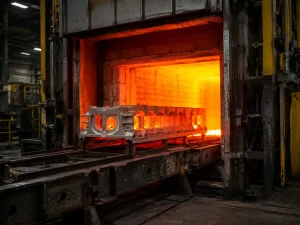
The solution step sets up the chemistry, the quench freezes it in place, and aging does the strengthening. Two details matter on the shop floor. The transfer from quench to aging is timed: 15-20 seconds is a typical allowance before the quench effect starts to degrade, so the quench bath should sit next to the furnace. And castings packed too tightly heat unevenly, so loading is part of the specification.
Tempers explained: T4, T5, T6, T7
The temper designation records which steps the casting received. Each temper is a different balance of strength, ductility, and stability, so the choice belongs in the material spec, not the vendor’s discretion.
| Temper | Steps applied | Typical result | Common use |
|---|---|---|---|
| T4 | Solution + quench + natural aging | Good ductility, moderate strength | Parts formed or straightened after casting |
| T5 | Artificial aging only | Moderate strength, low distortion and blistering risk | High-pressure die castings (A380, ADC12) |
| T6 | Solution + quench + artificial aging | Highest strength for most heat-treatable alloys | Structural sand, gravity, and low-pressure castings (A356, A357) |
| T7 | Solution + quench + overaging | Slightly lower strength, better dimensional stability | Hot service or corrosive environments |
T4 is quenched and then left to age at room temperature over days. It gives good ductility and moderate strength, which suits parts that need forming or straightening after casting.
T5 skips the solution step and goes straight to artificial aging. The strength gain is modest, but distortion and blistering risks stay low, which makes T5 the standard temper for high-pressure die castings in A380 and ADC12. For A380, the numbers show it: tensile strength moves from about 310 MPa as-cast to 345-360 MPa in T5 and up to roughly 380 MPa in T6, with yield climbing from 130 MPa to 190-210 MPa. Not every die-casting alloy responds well to T6, though; porosity and silicon content limit the gain.
T6 is the full cycle (solution, quench, artificial aging). It delivers the highest strength for most heat-treatable alloys and is the standard structural choice for sand, gravity, and low-pressure castings in A356 or A357. When the drawing calls for a load-bearing aluminum casting, T6 is usually the answer.
T7 runs the full cycle but overages the part, holding it at aging temperature longer or hotter than a T6 cycle. That trades a little peak strength for better dimensional stability and stress-corrosion resistance. Choose T7 when the part runs hot or sits in a corrosive environment.
Typical temperatures and times
Typical solution-treatment temperatures fall in the 480-540°C band, and artificial aging runs 150-200°C. Furnace manufacturers quote slightly wider ranges (454-566°C for solution, 100-218°C for aging), while foundry practice usually lands in the middle. The alloy standard and the heat treater’s furnace are the final word.
| Alloy | Process | Typical cycle | Result |
|---|---|---|---|
| A356 | Sand / gravity / low-pressure | T6: solution ~535°C + quench + age ~155-160°C | High strength, good elongation |
| A357 | Sand / gravity / low-pressure | T6: solution ~540°C + quench + age ~155°C | Highest-strength aluminum casting alloy in common use |
| A380 | High-pressure die casting | T5: age only, no solution | Moderate gain, no blistering risk |
| ADC12 | High-pressure die casting | T5: age only | Similar to A380, better flow for thin walls |
Temperatures and hold times are alloy-specific and furnace-specific, so the heat treater should confirm the cycle against the specification before you commit parts.
Heat treatment by casting process
The casting process determines how aggressively you can heat treat, because the microstructure (especially porosity) is set before the furnace is involved.
| Casting process | Heat treatable? | Typical tempers | Main constraint |
|---|---|---|---|
| Sand casting | Yes | T4, T6, T7 | Widely heat treated; T6 common for A356/A357 |
| Gravity (permanent mold) | Yes | T4, T6, T7 | Good response; T6 common for structural parts |
| Low-pressure die casting | Yes | T4, T6, T7 | Same family as gravity; good for pressure-tight parts |
| High-pressure die casting | Limited | T5 (T6 in select alloys) | Trapped gas expands during solution treatment, causing blistering |
Sand, gravity, and low-pressure castings share the same heat-treatable alloy family (A356 and A357) and routinely take T6. Their porosity levels are low enough that a solution cycle does not cause surface blisters.
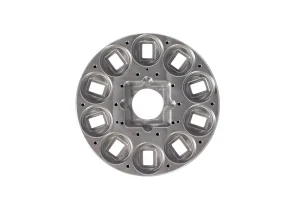
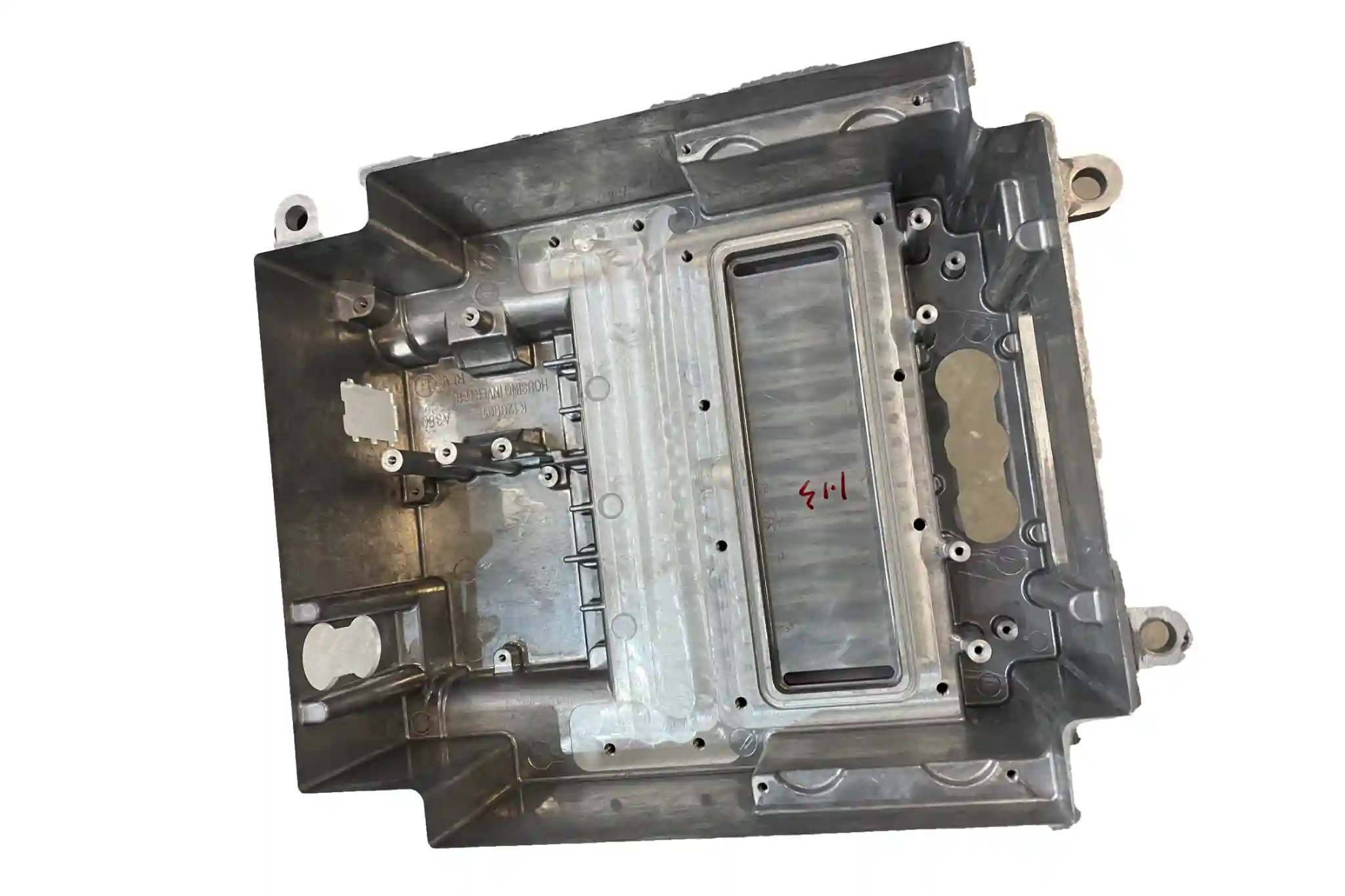
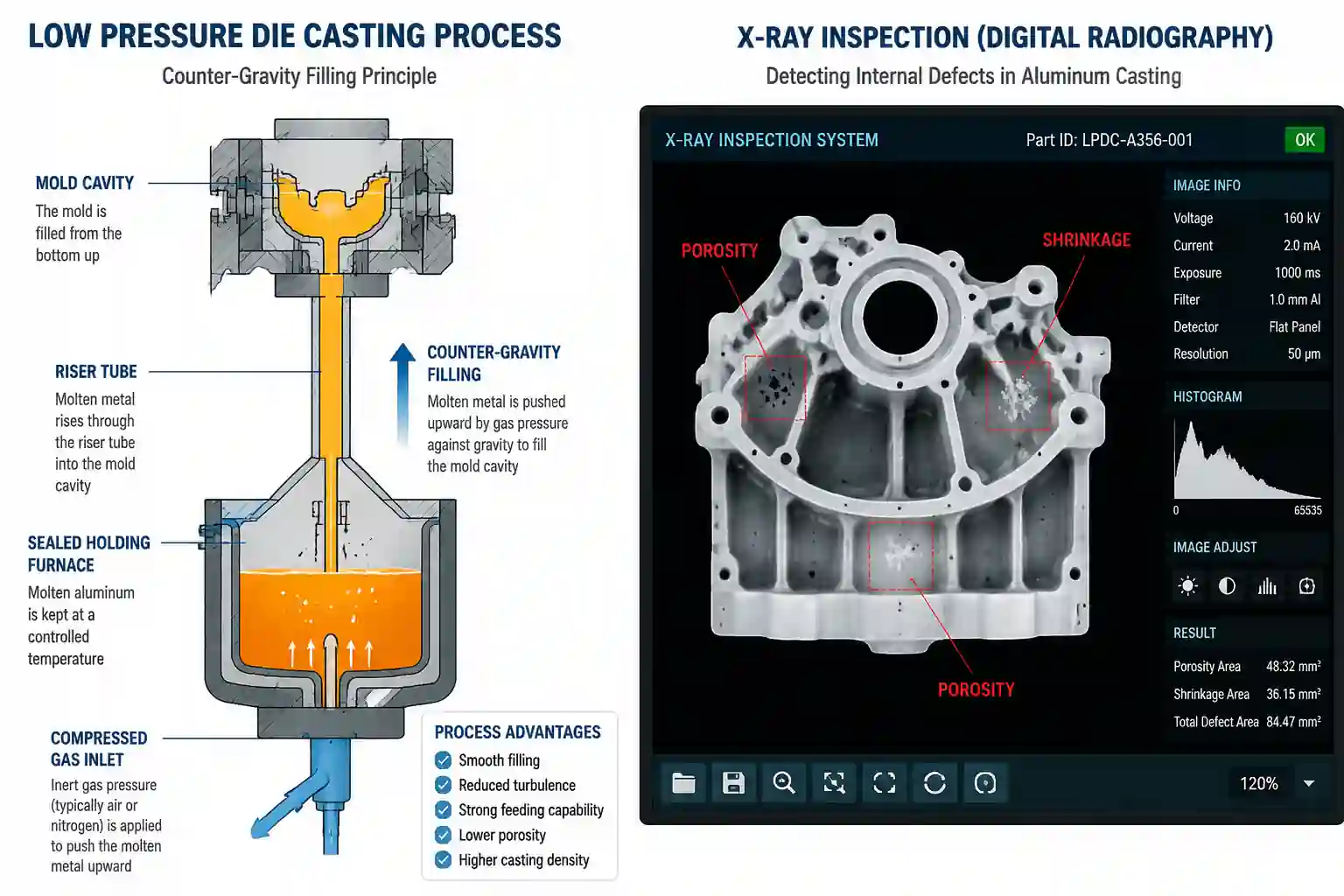
High-pressure die castings are the exception. Rapid solidification traps small bubbles of gas inside the material, and a full solution cycle makes them expand, which weakens the part and can blister the surface. That is why A380 and ADC12 parts get T5 instead of T6, and why a designer who wants a fully heat-treated T6 part should specify a sand, gravity, or low-pressure casting instead.
What heat treatment costs and risks
Heat treatment is not free, and it is not risk-free. The main costs are the furnace cycle itself, fixturing, and any straightening or re-machining that distortion makes necessary. The main risks are deformation and, in die castings, blistering.
Distortion is the most common quality problem. The immersion rate into the quench bath matters: typical guidance runs 0.15-3 m/s depending on section thickness, and polymer quenchants plus proper fixturing reduce the risk. For precision parts, plan a machining allowance or a straightening step after heat treatment.
Less obvious: heat treatment changes the surface and can affect finishing, so heat treat before final machining and before coating or anodizing where adhesion matters.
FAQ
Can all aluminum castings be heat treated?
No. Only heat-treatable alloys (the 2xx, 6xx, and 7xx series, plus casting alloys like A356 and A357) respond to precipitation hardening. High-silicon die-casting alloys like A380 can be aged (T5) but generally not solution-treated (T6) without blistering risk.
Why is T5 used for die castings instead of T6?
Die castings trap gas during rapid solidification. A full solution cycle heats the part high enough for that gas to expand, causing surface blisters and internal damage. T5 skips the solution step, so it strengthens the alloy without the blistering risk.
Does heat treatment distort aluminum castings?
It can. Quenching creates thermal gradients that warp thin sections, and parts with uneven wall thickness are most at risk. Fixturing, polymer quenchants, and controlled immersion reduce distortion; a machining allowance after heat treatment is the practical safety net.
What is the difference between T6 and T7?
Both run the full cycle. T7 adds overaging, trading a little peak strength for better dimensional stability and stress-corrosion resistance. Choose T7 for parts that run hot or sit in corrosive service.
Conclusion
Heat treatment turns a usable casting into a structural one, but only when the alloy, process, and temper are matched. T6 remains the workhorse for sand, gravity, and low-pressure castings in A356 and A357; T5 is the practical answer for high-pressure die castings; T7 covers hot and corrosive service. Specify the temper at the drawing stage and confirm the cycle against the alloy standard. If you are unsure which cycle fits your part, send the drawing and service conditions to our engineers for a sand casting or post-casting heat treatment recommendation.