



LM6 is a British aluminum-silicon casting alloy known for its excellent fluidity and corrosion resistance. This page provides technical information regarding its chemical composition, mechanical properties, typical casting processes, and application suitability for aluminum casting projects.
What Is LM6 Aluminum Alloy?
LM6 is a British aluminum-silicon casting alloy commonly used for aluminum castings that require complex shapes or inherent corrosion resistance. It is frequently evaluated for gravity casting and sand casting projects, and may also be reviewed for low pressure casting depending on part geometry and specific project requirements.
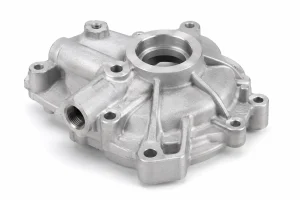
Typical parts produced with this material include covers, housings, marine fittings, pump parts, decorative castings, brackets, and general engineering components where good filling behavior and environmental durability are important. LM6 is generally not selected for applications requiring maximum structural strength.
LM6 Chemical Composition
The chemical composition of LM6 is formulated with a relatively high silicon content to ensure ease of casting for complex geometries.
| Element | Reference range |
| Si | 10.0–13.0 % |
| Fe | ≤ 0.6 % |
| Cu | ≤ 0.1 % |
| Mn | ≤ 0.5 % |
| Mg | ≤ 0.1 % |
| Ni | ≤ 0.1 % |
| Zn | ≤ 0.1 % |
| Pb | ≤ 0.1 % |
| Sn | ≤ 0.05 % |
| Ti | ≤ 0.2 % |
| Al | Balance |
Silicon is the primary alloying element in LM6, which supports the material’s fluidity and filling behavior. The relatively high silicon content allows the alloy to flow into and fill complex mold features effectively. Impurity elements should be controlled according to the required standard and specific project specification to maintain material integrity.
LM6 Mechanical Properties
Mechanical performance in LM6 castings is influenced by section thickness, the casting process employed, cooling rates, and the required inspection standards.
| Property | Reference value |
| Tensile strength | 150–220 MPa |
| Yield strength | 80–150 MPa |
| Elongation | 2–5 % |
| Hardness | 50–75 HB |
These values are provided as reference data and are not guaranteed results. Actual performance depends on the project-specific manufacturing conditions, section thickness, and quality control measures.
LM6 Physical and Thermal Properties
Physical and thermal properties are important for evaluating part mass, solidification behavior, and performance in operating environments.
| Property | Reference value |
| Density | about 2.65–2.68 g/cm³ |
| Melting range | about 570–640 °C |
Casting Processes for LM6
LM6 can be evaluated for different casting methods depending on part shape, wall thickness, production volume, tooling cost, and performance requirements. At Minhe foundry, we can review drawings and casting requirements to help evaluate the suitable casting route for the project.
Gravity Casting
LM6 may be used for gravity casting or permanent mold casting when good fluidity, consistent surface quality, and repeatability are required for the component.
Sand Casting
LM6 may be evaluated for sand casting when the part size, lower production volume, complex geometry, current development stage, or tooling cost makes sand casting a suitable manufacturing route.
Low Pressure Casting
LM6 may be reviewed for low pressure casting depending on the part geometry, feeding requirements, surface quality needs, and pressure-tightness expectations.
LM6 Casting Characteristics
LM6 is selected when fluidity, corrosion resistance, and the ability to cast complex shapes take precedence over maximum structural strength.
- High fluidity: The high silicon content provides excellent filling behavior for intricate or thin-section designs.
- Corrosion resistance: LM6 exhibits good inherent resistance to atmospheric and marine environments.
- Complex-shape suitability: Ideal for casting parts with fine details or difficult geometries.
- Moderate mechanical strength: Provides sufficient strength for general engineering and decorative applications.
- Machining adaptability: Castings are generally suitable for post-casting machining when datum surfaces and allowances are planned.
- Surface finishing suitability: Compatible with various finishing methods to enhance protection and appearance.
Common Applications of LM6 Castings
LM6 is commonly evaluated for components where corrosion resistance and casting precision are important.
- Marine and outdoor-related components: Marine fittings, housings, and external enclosures.
- Pump and fluid equipment: Pump covers, valve components, and fluid-related parts.
- General engineering parts: Support brackets and industrial components.
- Housings and covers: Equipment covers, protective housings, and electronic enclosures.
- Decorative or complex-shape aluminum castings: Intricate cast parts where finish and detail are critical.
- Thin-section castings: Parts requiring high fluidity to fill thin wall sections properly.
Surface Finishing for LM6 Castings
Surface finishing for LM6 is determined by the required appearance, level of environmental protection, and assembly requirements.
- Shot blasting: Used to clean the casting surface and provide a uniform finish.
- Powder coating: Applied for protective or decorative purposes to enhance durability.
- Painting: Utilized when specific color coding or environmental protection is required.
- Machined sealing surfaces and mounting faces: Surfaces requiring precision should be assessed for integrity relative to potential casting porosity.
- Project-specific surface preparation: Additional treatments may be applied based on the intended service environment.
LM6 Aluminum Casting Capabilities
At Minhe foundry, we support LM6 aluminum casting projects for housings, covers, pump parts, marine fittings, brackets, and other engineering aluminum components. Our team can review drawings, part geometry, wall thickness, casting process selection, surface finishing, machining allowance, and inspection requirements before production to ensure manufacturing feasibility.
- LM6 casting production: Support for gravity and sand casting projects tailored to project-specific requirements.
- Casting process evaluation: Professional review to determine the most suitable casting route based on geometry and volume.
- Surface finishing support: Assistance with shot blasting, powder coating, painting, and surface preparation.
- Post-casting machining: Support for machining needs where precision surfaces or mounting features are required.
- Inspection and quality control: Planning of material confirmation, dimensional inspection, and other quality checks based on project specifications.
FAQ
What is LM6 aluminum alloy?
LM6 is a British aluminum-silicon casting alloy known for good fluidity and corrosion resistance. It is commonly used for aluminum castings with complex shapes, thin sections, or corrosion resistance requirements.
What is LM6 aluminum equivalent to?
LM6 may be compared with other high-silicon aluminum casting alloys, but it should not be treated as an exact universal equivalent without checking the required standard, drawing specification, chemical composition limits, and certified material report.
What is the difference between LM6 and LM25?
LM6 and LM25 are both British aluminum casting alloys, but they are used for different priorities. LM6 has higher silicon content and is often selected for good fluidity, corrosion resistance, and complex-shape castings. LM25 is an Al-Si-Mg alloy more commonly evaluated for engineering castings where heat treatment response and balanced mechanical performance are required.