



A356 is a common aluminum-silicon-magnesium casting alloy used in various engineering applications. Due to its balanced casting characteristics and the ability to achieve enhanced mechanical properties through heat treatment, it is typically evaluated for gravity casting, low pressure casting, and sand casting projects, including structural castings, housings, brackets, pump bodies, wheels, and end covers.
This guide outlines the definition, chemical composition, mechanical properties, process suitability, characteristics, typical applications, surface finishing, and manufacturing capabilities for A356 aluminum castings.
What Is A356 Aluminum Alloy?
A356 is an Al-Si-Mg aluminum casting alloy used in engineering castings where requirements for strength, weight, castability, and post-processing precision are balanced.
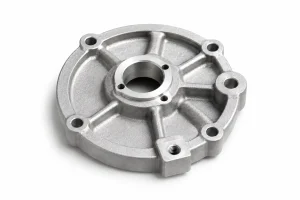
The alloy is commonly used for gravity casting. Depending on part geometry, strength requirements, and inspection standards, it may also be evaluated for low pressure casting and sand casting projects. It is a heat-treatable alloy, with the A356-T6 condition being an important specification for structural applications. A356 is generally not treated as a primary alloy for thin-wall high-pressure die casting; HPDC projects more often evaluate alloys such as A380 or ADC12.
A356 Chemical Composition
The chemical composition of A356 influences its flowability during casting and its strengthening response after heat treatment.
| Element | Reference range |
| Si | 6.5–7.5 % |
| Mg | 0.25–0.45 % |
| Mn | ≤ 0.1 % |
| Zn | ≤ 0.1 % |
| Fe | ≤ 0.2 % |
| Al | Balance |
Silicon (Si) aids casting fluidity and filling behavior. Magnesium (Mg) is related to heat treatment response and strength improvement. Iron (Fe) should be controlled, as excessive Fe may affect ductility and casting quality. The final composition should be confirmed by the specific drawing standard and material certificate.
A356 Mechanical Properties
The mechanical performance of A356 is influenced by the casting process, heat treatment condition, wall thickness, porosity level, and the inspection standard applied.
| Property | Reference value |
| Tensile strength | about 228 MPa |
| Yield strength | about 165 MPa |
| Elongation | about 3.5 % |
| Hardness | about 70 |
| Shear strength | about 180 MPa |
| Fatigue strength | about 60 MPa |
| Density | about 2.685 g/cm³ |
| Temperature range | about 555–615 °C |
These values are provided as reference values. If higher strength is required for a project, A356-T6 or other specified heat treatment conditions should be reviewed, as actual properties depend heavily on these variables.
Casting Processes for A356
A356 is compatible with several casting routes. The choice of process depends on part geometry, production volume, and required mechanical performance.
Gravity Casting
A356 is commonly used for gravity casting / permanent mold casting. This process is suitable for small-to-medium batch production where good surface finish and mechanical properties are required for components like brackets and housings.
Low Pressure Casting
A356 and similar Al-Si-Mg alloys are often evaluated for low pressure casting. This process can offer stable filling and feeding control for structural aluminum castings, depending on part structure and pressure tightness requirements.
Sand Casting
A356 may be evaluated for sand casting when part size, production volume, or the development stage of a component requires this approach. CNC machining is often used in conjunction with sand casting to meet dimensional tolerances.
Characteristics of A356 Aluminum Casting
A356 is often selected for projects that require a specific balance of mechanical strength and castability. The following characteristics are related to the material itself and should be evaluated together with casting process, heat treatment condition, and inspection requirements.
-
Castability: A356 provides useful casting fluidity for gravity casting and may be evaluated for low pressure or sand casting depending on part geometry.
-
Heat treatment response: As an Al-Si-Mg alloy, A356 can respond to heat treatment such as T6 when higher strength or hardness is required.
-
Machining adaptability: The alloy is compatible with standard post-casting operations, allowing machined assembly surfaces when machining allowances are properly designed.
-
Strength-to-weight balance: A356 offers a practical balance between mechanical performance and reduced part weight for many engineering castings.
-
Structural casting suitability: It is commonly used for structural aluminum castings such as housings, brackets, pump bodies, wheels, and end covers.
Common Applications of A356 Castings
A356 is commonly used for aluminum castings that require a practical balance of castability, heat treatment response, and structural performance. Final suitability depends on the specific design and service requirements.
-
Automotive: Used for wheels, brackets, motor covers, connectors, and medium-strength structural castings.
-
Industrial equipment: Utilized for pump bodies, housings, covers, mounting bases, and mechanical connectors requiring balanced castability and machining.
-
Fluid handling and pressure-related equipment: Applied in selected housings or pump components where porosity, shrinkage, and machining allowances are controlled for leak tightness.
-
Mechanical structures: Suitable for load-bearing brackets, bases, seats, and various structural components.
-
Power and electrical equipment: Found in motor housings, end covers, heat-dissipation housings, and related mounting structures.
Surface Finishing for A356 Castings
Surface finishing for A356 castings is selected based on appearance requirements, corrosion protection, assembly needs, and the final working environment. Because A356 parts are often used as housings, brackets, covers, pump bodies, and structural aluminum components, finishing should be considered together with casting quality and the required inspection standard.
Common finishing options include:
-
Shot blasting: Used to clean the casting surface, remove light scale, and create a more uniform surface appearance after casting.
-
Powder coating: Used when the casting requires a protective or decorative coating layer with better surface coverage and corrosion resistance.
-
Painting: Applied when color, appearance, or environmental protection is required for the final component.
-
Surface preparation before assembly: For sealing areas, bearing bores, mounting faces, and assembly surfaces, surface condition should be checked together with casting defects such as porosity, shrinkage, or exposed pores.
A356 Aluminum Casting Capabilities
Minhe supports A356 aluminum casting projects for structural parts, housings, pump bodies, brackets, end covers, wheels, and other engineering aluminum components. Our team can evaluate the drawing, casting process, wall thickness, heat treatment condition, surface finishing, and inspection requirements before production.
-
A356 casting production: Support gravity casting, low pressure casting, and sand casting evaluation for A356 aluminum components based on part geometry, wall thickness, production volume, and quality requirements.
-
Heat treatment support: Review project-specific heat treatment requirements such as A356-T6 when higher strength or hardness is required.
-
Surface finishing support: Support finishing options such as shot blasting, powder coating, painting, and project-specific surface preparation.
-
Post-casting machining: Support drilling, tapping, milling, boring, sealing surface machining, datum preparation, and machining allowance planning when A356 castings require further precision processing.
-
Inspection and quality control: Support material confirmation, dimensional inspection, CMM inspection, leak testing when required, and defect control for porosity, shrinkage, and machining-exposed pores.
FAQ
What is A356 aluminum equivalent to?
Alloys such as AlSi7Mg, G-AlSi7Mg, and LM25 are frequently compared with A356. They are not direct, universal equivalents, and any material substitution must be verified against specific project drawings, international standards, and certified material reports.
What is the difference between A356 and 356 aluminum?
The primary difference lies in the impurity limits, particularly for elements like iron and other trace impurities. A356 is a higher-purity version with tighter controls, which generally results in improved ductility and better response to heat treatment compared to standard 356.
What is the difference between 6061 aluminum and A356?
6061 is a wrought aluminum alloy intended for forming processes like extrusion or rolling, whereas A356 is a casting alloy designed for solidification within molds. Because of these distinct metallurgical goals, they are processed differently and are generally not interchangeable for the same part design.