



FAQS
Find answers to common questions about our casting factory, materials, quotation requirements, machining support, surface finishing, lead time, and quality control.
Frequently Asked Questions
Answers to common questions about our foundry, casting capabilities, materials, quality control, and project support.
We operate as a custom casting factory for industrial metal parts. Based on project requirements, we can support casting production, secondary machining, and related finishing processes for custom components used in a wide range of industrial applications.
We produce custom cast parts such as housings, covers, valve bodies, pump components, brackets, machinery parts, and other structural or functional metal components. The suitable process depends on part geometry, material, quantity, and performance requirements.
Depending on the application, we commonly work with ductile iron, gray iron, carbon steel, stainless steel, aluminum alloys, and brass. Material selection is usually based on strength, wear resistance, corrosion resistance, weight, service environment, and machining needs.
Yes. We support custom casting projects based on customer drawings, 3D files, or physical samples. After reviewing the part design, application, and production requirements, we can evaluate a suitable casting route and any needed machining or finishing operations.
For quotation, it is helpful to provide 2D drawings, 3D models if available, material requirements, order quantity, dimensional tolerances, machining scope, surface finishing requirements, and application details. Samples or reference photos can also help for existing parts.
The minimum order quantity depends on the casting process, tooling cost, material, part size, and project type. Prototype and small-batch orders may be possible for some parts, while larger quantities are usually more economical for repeat production.
Yes. We can provide secondary machining after casting, such as drilling, tapping, milling, turning, boring, trimming, and machining of critical mounting or sealing surfaces when required by the final application.
Yes. Depending on the project, finishing options may include shot blasting, sand blasting, painting, powder coating, plating, polishing, and other protective or decorative surface treatments.
Our cast parts are commonly used in pumps and valves, industrial machinery, automotive components, agricultural equipment, construction machinery, and other industrial applications. The exact production route depends on the part structure, material, and service conditions.
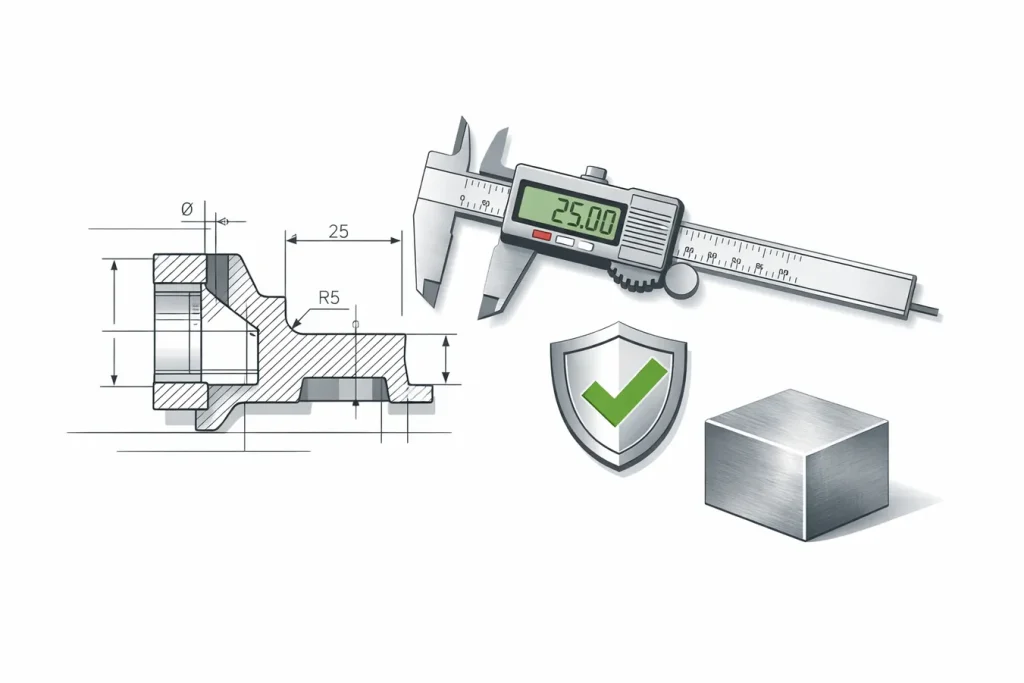
Quality control may include raw material checks, mold or tooling review, process inspection, dimensional inspection, surface inspection, and additional testing when required. Production and inspection can be managed under an ISO 9001-based quality management approach, depending on the project requirements and quality expectations.
Yes. For quality-focused casting projects, production and inspection can be managed under an ISO 9001-based quality management system. The specific inspection flow still depends on the part requirements, material, tolerance, and project specification.
Lead time depends on tooling requirements, part complexity, material, machining scope, finishing requirements, and order quantity. Sample production usually takes longer for new projects, while repeat production is generally faster after process confirmation.
We focus on custom industrial castings with support for drawing review, process planning, machining, and finishing. Customers work with us for practical engineering communication, coordinated production support, and a quality-focused process aimed at more stable repeat production.