



Aluminum Casting Services
We provide custom aluminum casting services for industrial and commercial projects, supporting sand casting, gravity casting, and subsequent machining and surface finishing requirements.
• Maximum part size: up to 1000 mm × 1000 mm
• Part weight range: 0.2 kg to 50 kg
• Secondary machining: CNC machining for holes, threads, and critical surfaces
• Surface finishing: polishing, coating, anodizing, and sand blasting
• Tolerance: according to drawing and application requirements
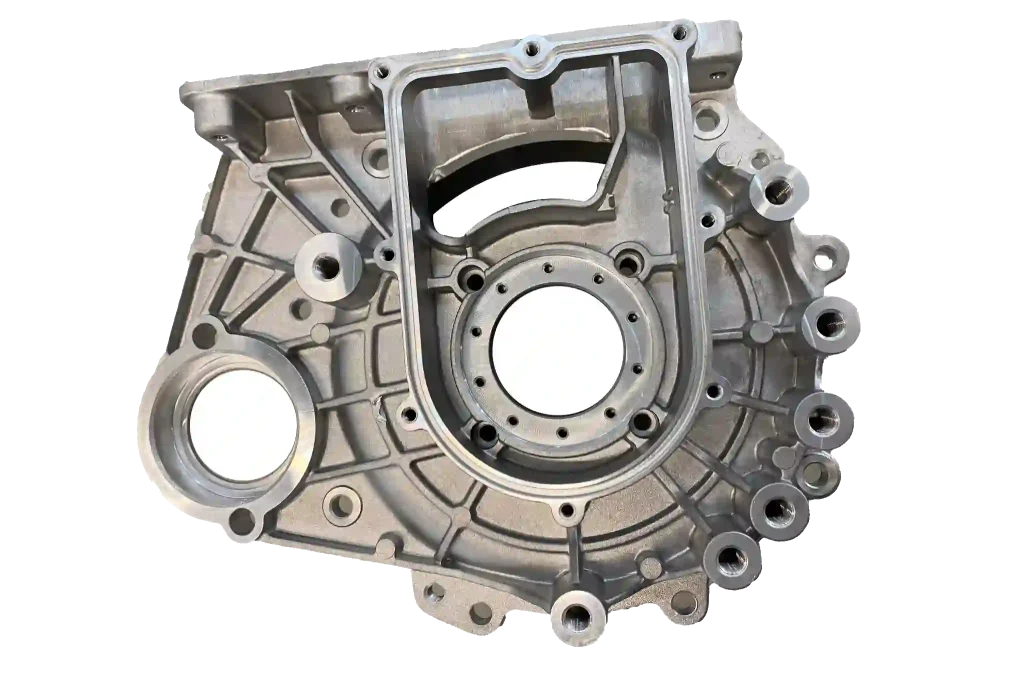
Minhe Aluminum Casting Solutions
Minhe supports aluminum casting projects from early drawing review to final product delivery. With an ISO 9001 quality management system, we focus on stable execution across process coordination, casting production, secondary machining, and surface finishing. For housings, covers, brackets, and other commonly used aluminum cast parts, we pay close attention to dimensional consistency, surface quality, and batch production stability to meet different structural and application requirements.
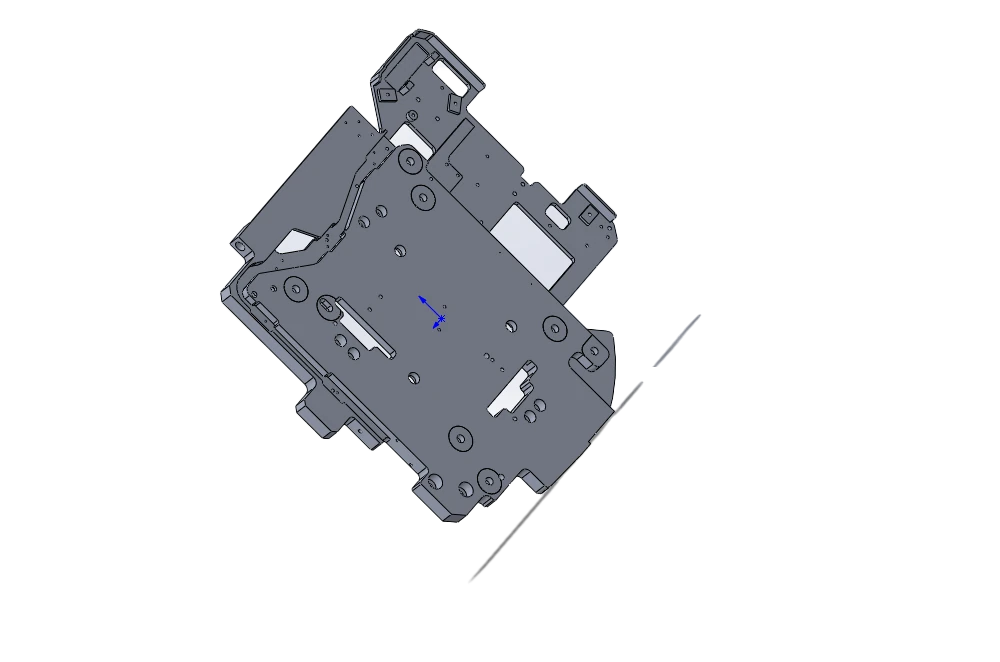
Common Aluminum Casting Alloys
| Alloy Grade | Key Properties | Typical Applications | Example Parts |
|---|---|---|---|
| A356 / A356-T6 | Heat-treatable Al-Si-Mg alloy with good castability, strength-to-weight balance and machining adaptability. | Gravity, low pressure and sand cast structural aluminum parts. | Wheel Hub, End Cover, Pump Housing, Structural Bracket |
| G-AlSi7Mg (EN AC-42100) | European Al-Si-Mg casting alloy commonly compared with A356, with good castability and heat treatment response. | Gravity and low pressure cast parts for EU engineering projects. | Hydraulic Housing, Pump Body, Structural Frame, Gear Carrier |
| LM25 | British Al-Si-Mg casting alloy with good corrosion resistance, castability and heat treatment potential. | General engineering, gravity casting and sand casting components. | Pump Housing, Valve Body, End Cover, Structural Bracket |
| LM6 | High-silicon aluminum casting alloy with very good fluidity and corrosion resistance. | Complex-shape castings, marine parts and general-purpose aluminum cast parts. | Cover, Housing, Marine Fitting, Thin-wall Casting |
| ZL101A | Chinese Al-Si-Mg alloy with good castability, heat treatment response and balanced strength. | Low pressure, gravity and sand cast parts for machinery and industrial equipment. | Pump Body, Motor Housing, Support Bracket, End Cover |
| ZL104 | Aluminum casting alloy with good fluidity, moderate strength and suitable machinability. | General structural castings, machinery housings and pump components. | Machine Housing, Pump Casing, Mounting Base, Bracket |
| A380 (EN AC-46000) | Widely used die-casting alloy with good fluidity, strength and pressure tightness. | High-volume thin-wall die-cast housings and covers. | Transmission Housing, Motor Housing, Gearbox Cover, Tool Body |
| ADC12 | JIS die-casting alloy with good fluidity, machinability and dimensional stability. | Complex thin-wall die-cast parts for automotive, electronics and industrial uses. | Gearbox Cover, Motor Housing, Electronic Housing, Bracket |
| A360 (EN AC-43400) | Die-casting alloy with better corrosion resistance and ductility than A380. | Precision housings, enclosures and brackets for demanding environments. | Pump Housing, Gearbox Case, Hydraulic Manifold, Sensor Housing |
Supported Aluminum Casting Processes
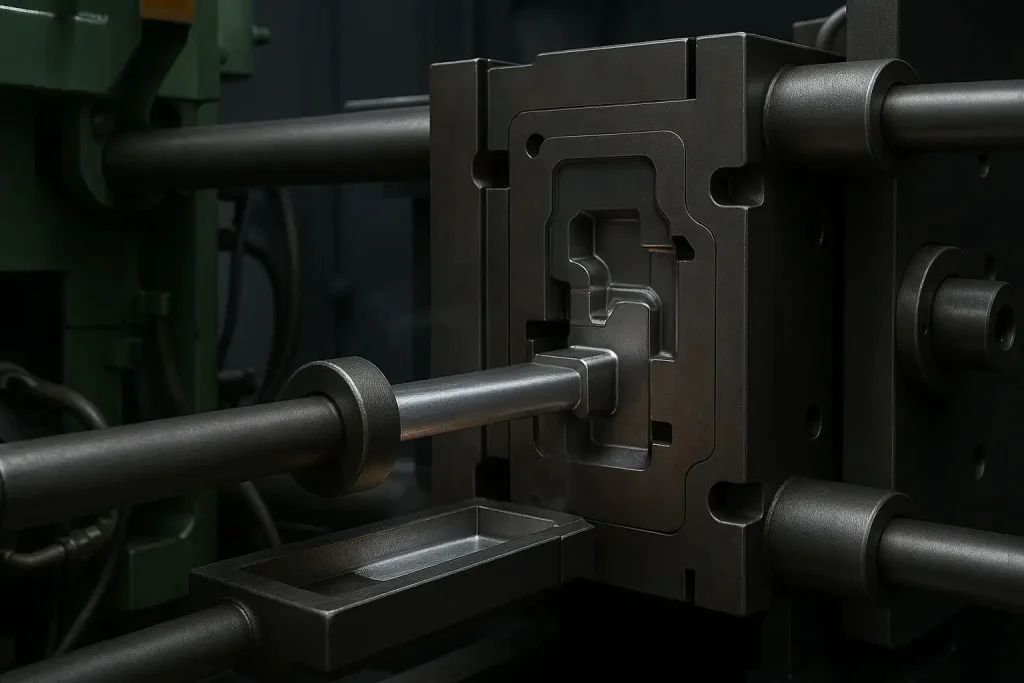
Aluminum Die Casting
Suitable for high-volume production of aluminum parts with repeatable geometry, good dimensional consistency, and relatively smooth surface finish. It is commonly used for housings, covers, brackets, and other lightweight components that benefit from efficient production.
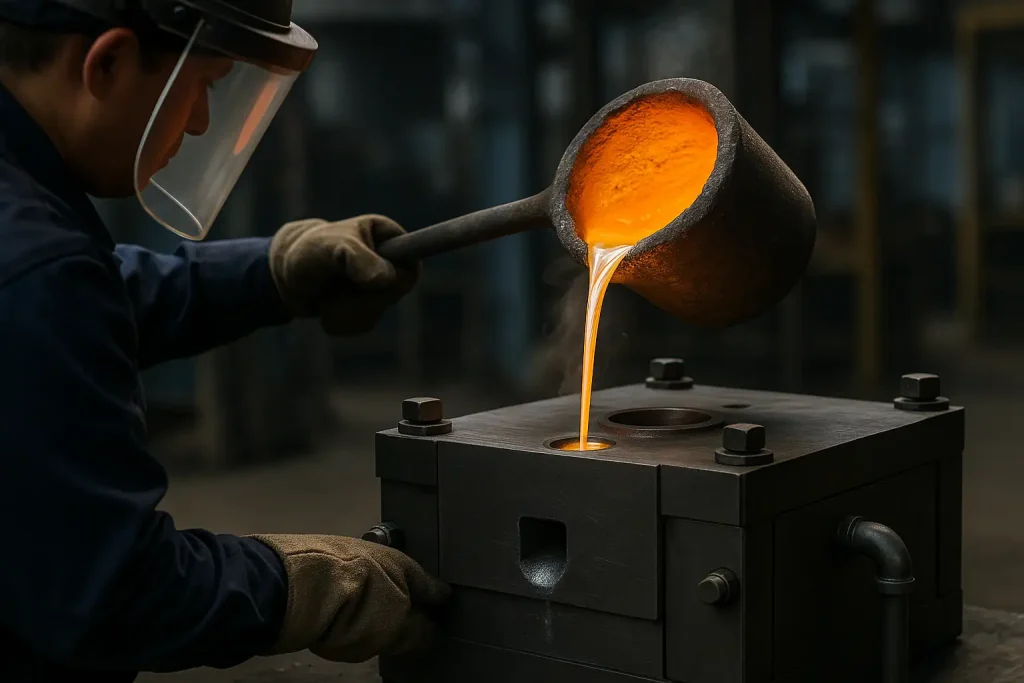
Aluminum Gravity Casting
Suitable for aluminum parts that require better mechanical properties, stable wall thickness, and a cleaner structure than sand casting. It is commonly used for valve bodies, pump housings, automotive parts, and medium-volume components with higher strength and surface requirements.
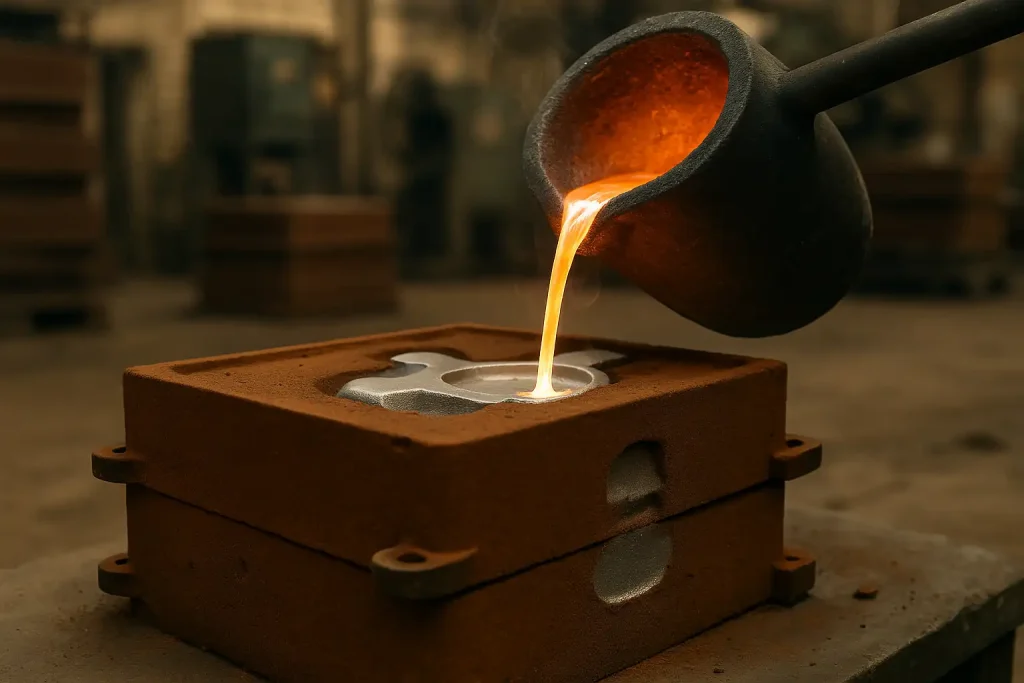
Aluminum Sand Casting
Suitable for larger aluminum castings, lower-volume production, and parts with less demanding surface finish requirements. It is often used when tooling flexibility, part size, or project cost is a more important factor.
Aluminum Casting Applications by Industry

Building Hardware
Aluminum castings are widely used in automotive applications where lighter weight, dimensional consistency, and good machinability are important. Common applications include housings, covers, brackets, and structural parts used in engines, transmission systems, and other vehicle assemblies.
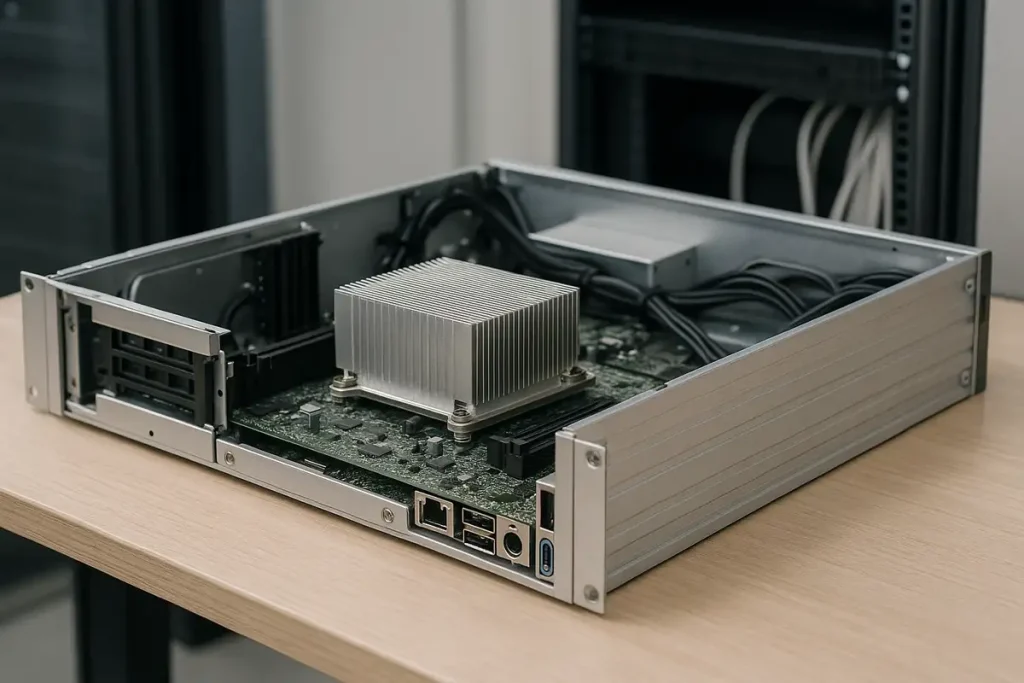
Electronics & Equipment Housings
Aluminum cast parts are commonly used for equipment housings, enclosures, heat-dissipation parts, and lightweight structural components. Their good machinability and relatively low weight make them suitable for industrial equipment, control systems, and electronic assemblies.
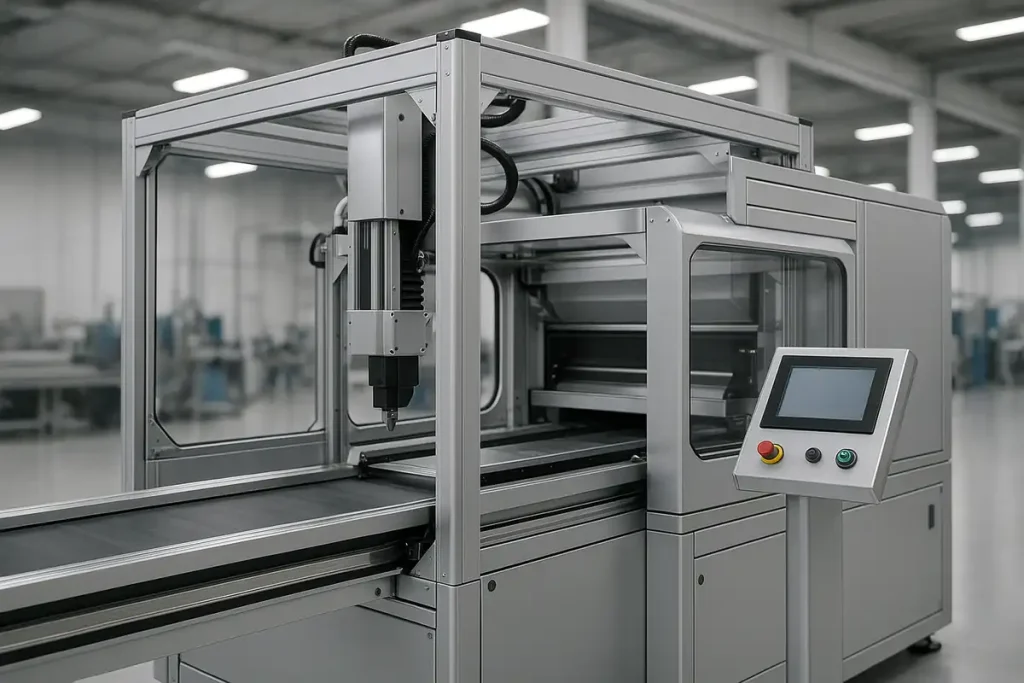
Industrial Machinery
Aluminum castings are suitable for machinery housings, support parts, covers, mounting structures, and other functional components used in industrial systems. They are often selected when part weight, machining efficiency, and practical production cost all matter.

Power & Energy Equipment
Aluminum castings are used in power and energy equipment where lower weight, corrosion resistance, and practical machining are important. Common applications include equipment housings, structural supports, covers, and aluminum parts used in utility and energy-related systems.

Consumer & Lightweight Products
Aluminum castings are suitable for lightweight products and equipment parts where appearance, reduced weight, and machining efficiency all matter. They are commonly used for housings, covers, brackets, and other aluminum parts in consumer and light industrial applications.
Post-Processing for Aluminum Castings
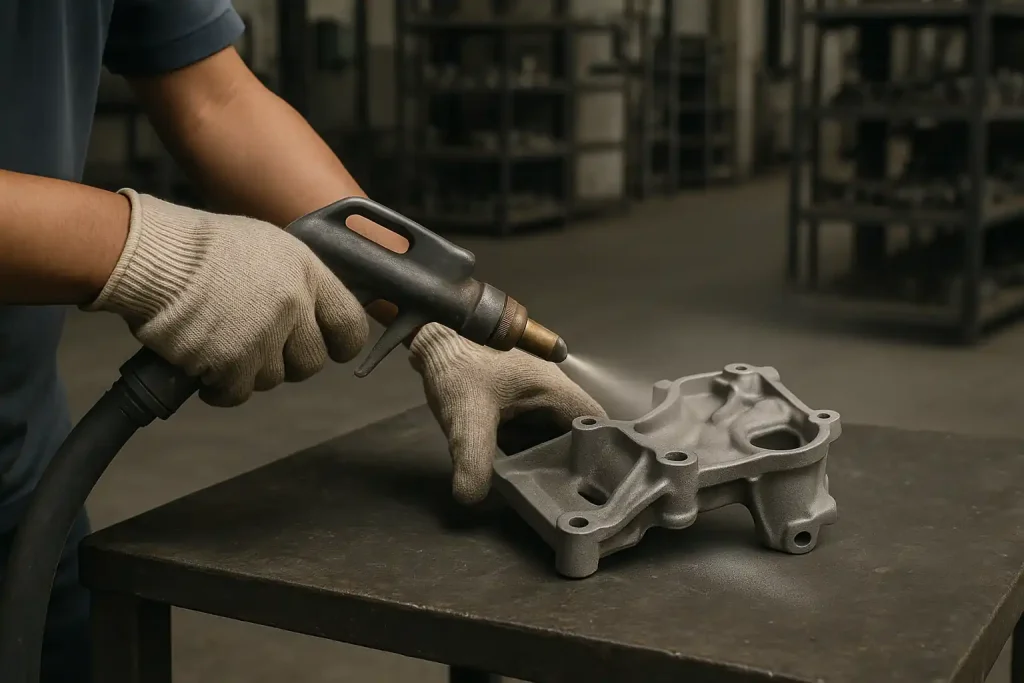
Surface Preparation
Removes casting flash, burrs, oxide layers, and surface residue through trimming, deburring, shot blasting, or cleaning, creating a clean and uniform base for machining or finishing.
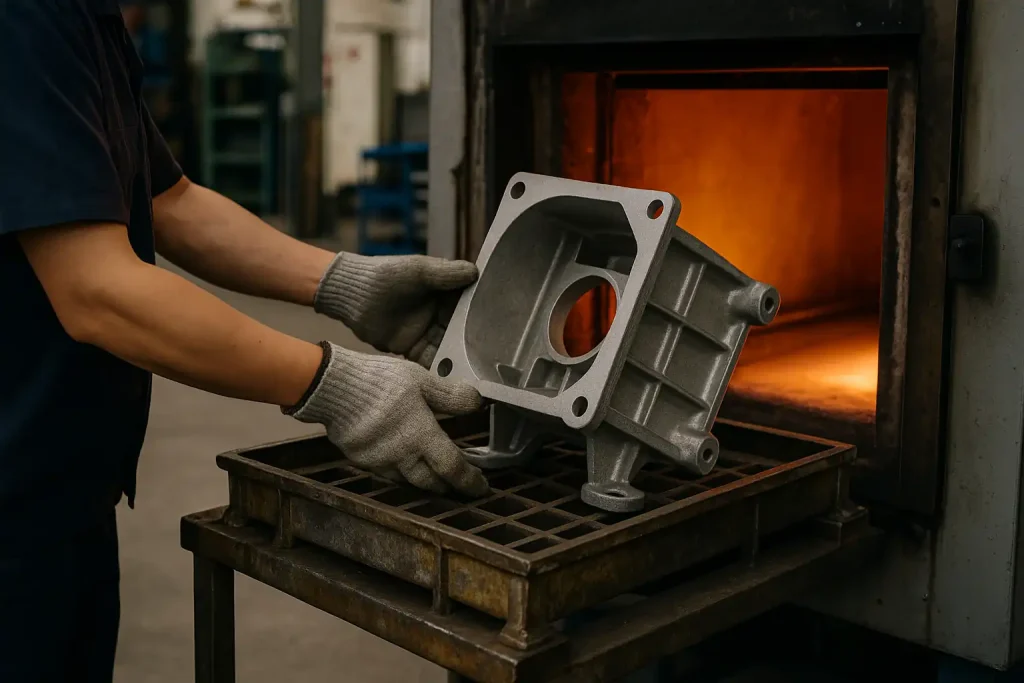
Heat Treatment
Can improve mechanical properties and dimensional stability through processes such as T5, T6, or other alloy-specific heat treatment methods, depending on casting alloy and application requirements.
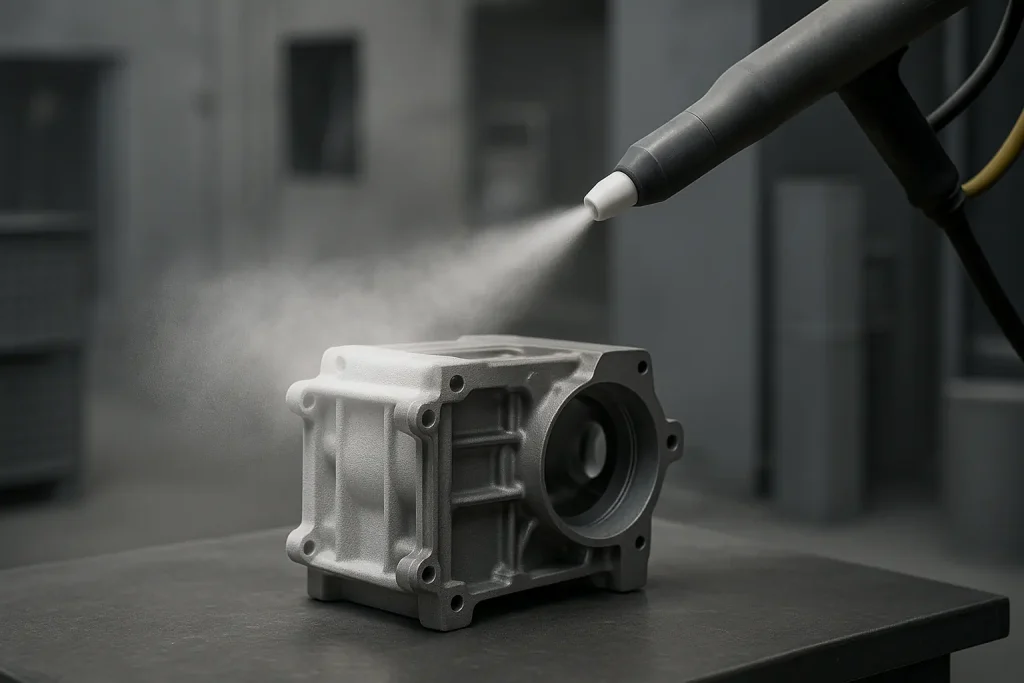
Surface Coating
Surface finishing can improve corrosion resistance, appearance, and application-specific performance. Common options may include powder coating, anodizing, painting, or other protective treatments depending on project requirements.
Advantages of Aluminum Casting
-
Lightweight Structure
-
Good Machinability
-
Good Corrosion Resistance
-
Suitable for Complex Shapes
-
Cost-Effective for Many Applications
-
Good Compatibility with Secondary Operations
What Is Aluminum Casting?
Aluminum casting is a manufacturing process in which molten aluminum alloy is poured into a mold to form parts with the required shape. It is suitable for producing a wide range of custom aluminum components and is commonly used for housings, covers, brackets, and other parts that require lower weight, good machinability, and practical corrosion resistance.
Typical Aluminum Casting Parts
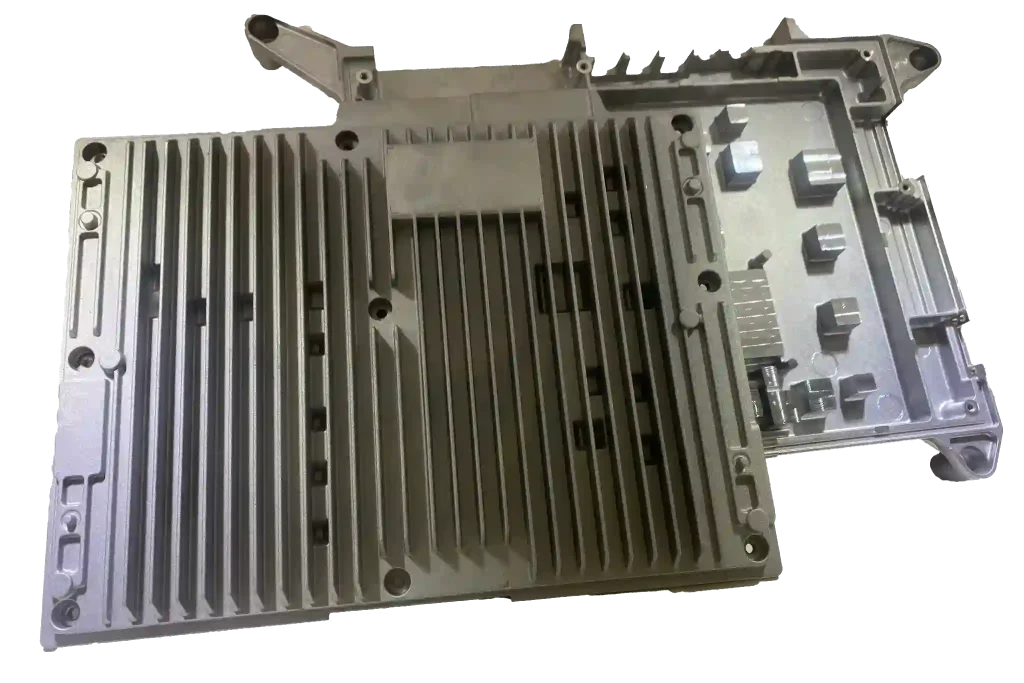
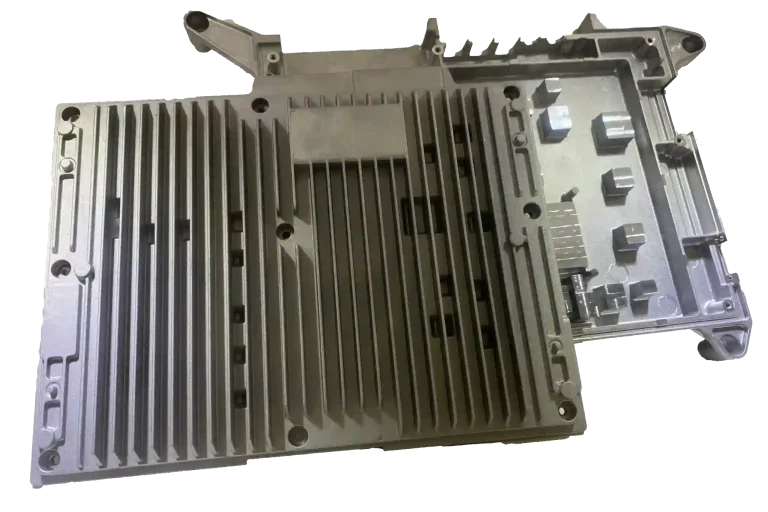
Heat Sink Base Plate
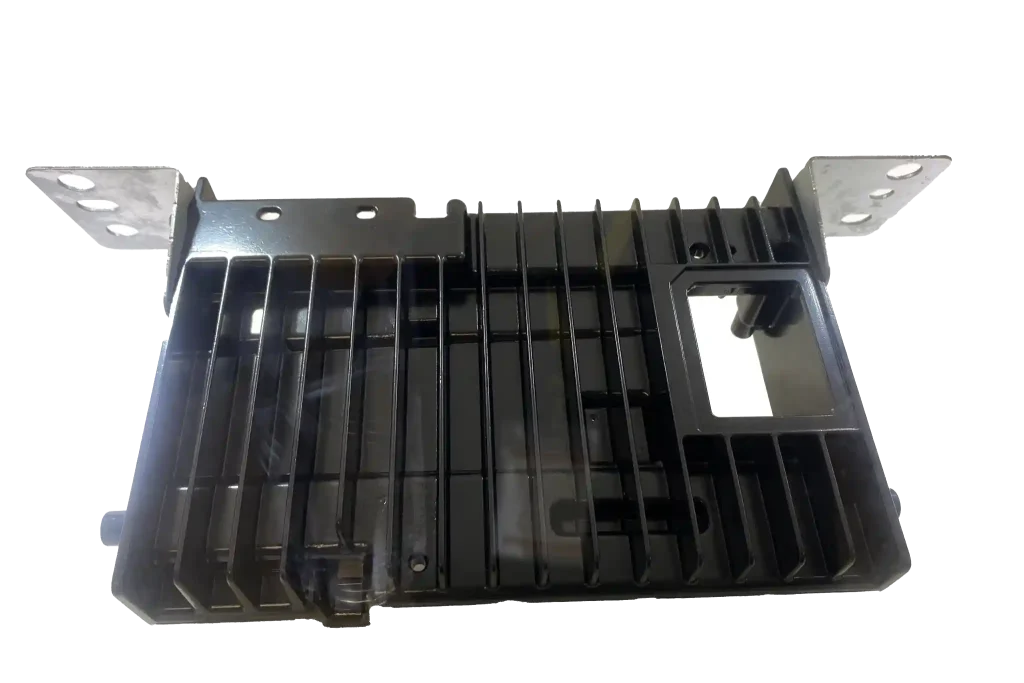
Fan Housing
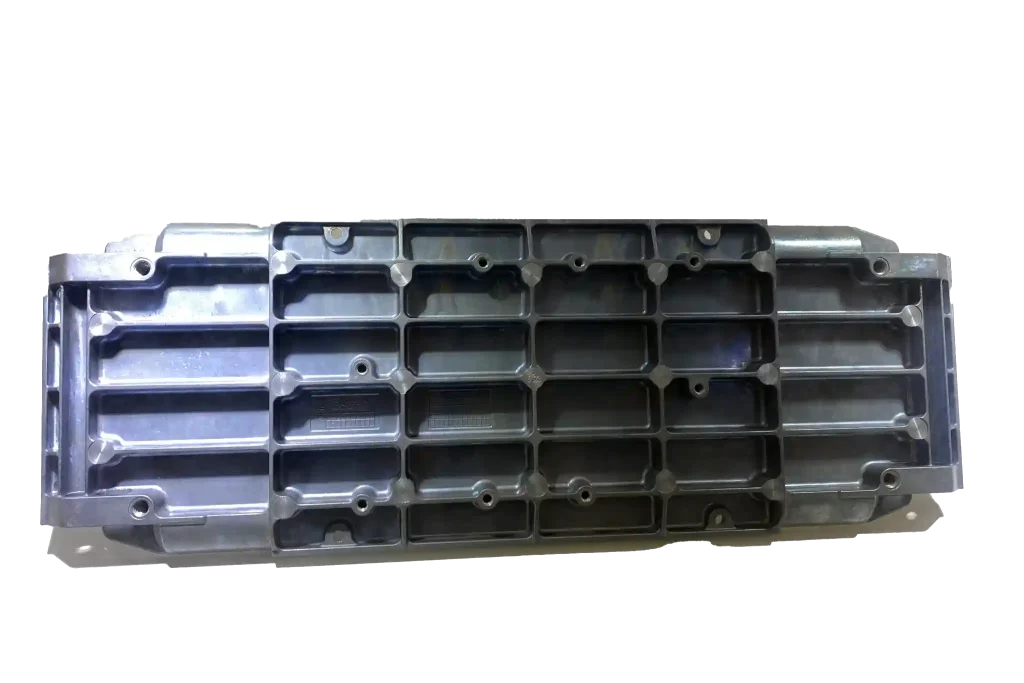
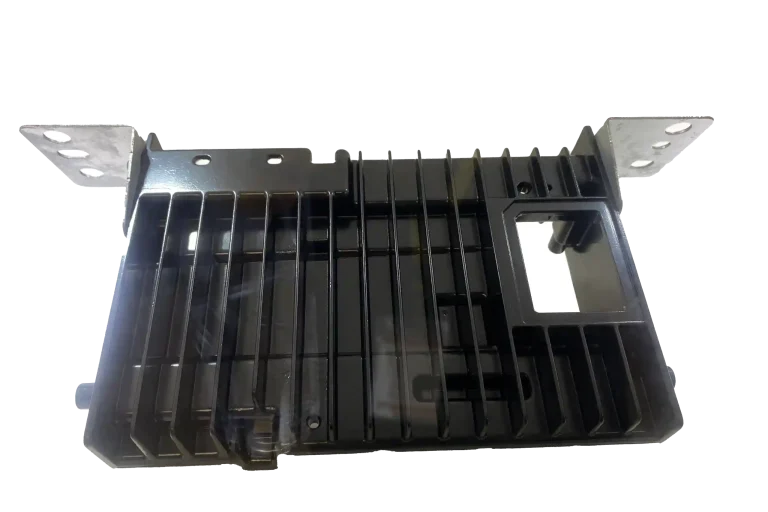
Finned Cooling Plate
Gearbox Cover Housing
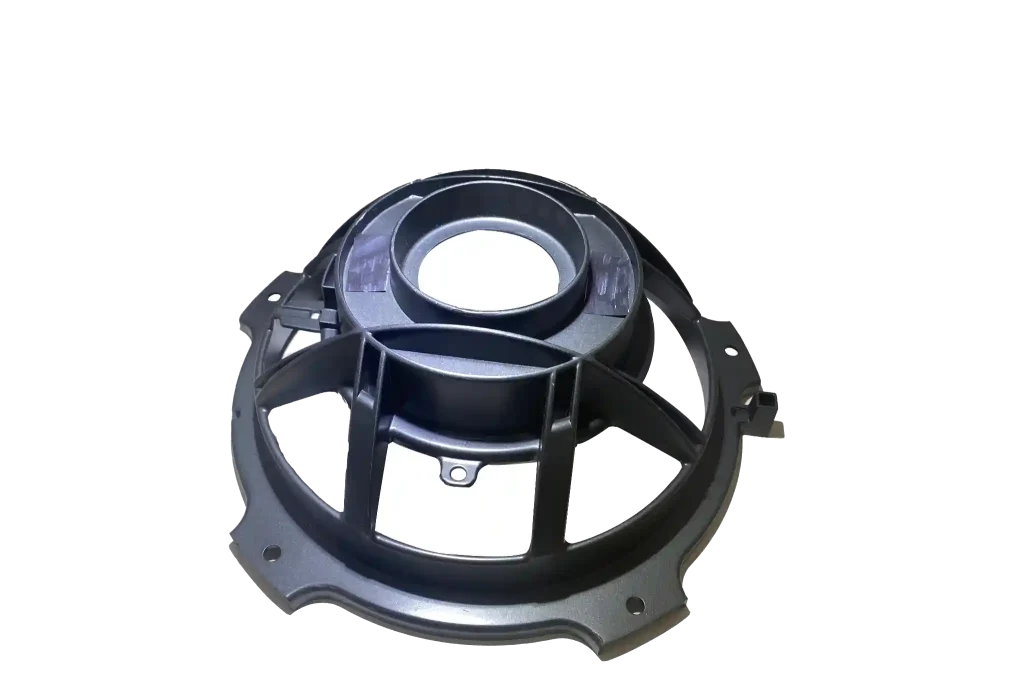
Motor End Cover
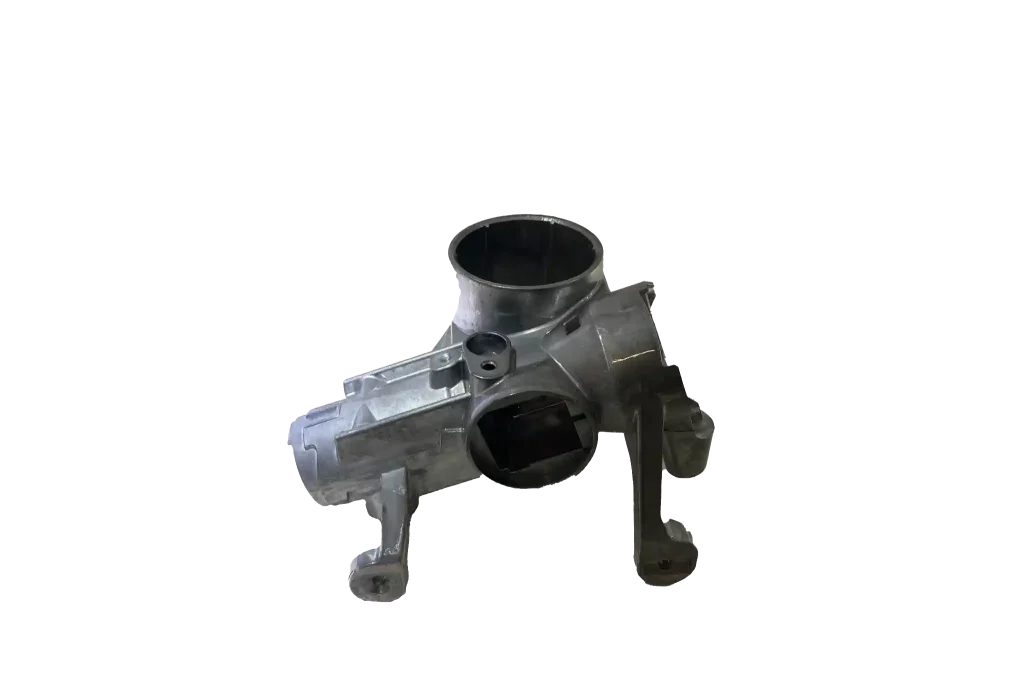
Mounting Bracket
Quality Assurance for Aluminum Castings
Quality control covers multiple key stages, from material verification and drawing review to final inspection before shipment, helping improve dimensional consistency, surface quality, and production stability for aluminum cast parts.
Material Verification
Drawing and Process Review
In-Process Control
Dimensional Inspection
Surface and Visual Inspection
Final Inspection Before Shipment
FAQ – Frequently Asked Questions
- Lightweight
- Corrosion-resistant
- Excellent for complex shapes
- Good thermal conductivity and dimensional stability
- Die Casting
- Sand Casting
- Permanent Mold Casting
- Investment Casting (Lost Wax)
- Centrifugal Casting
- Anodizing – for corrosion resistance and appearance
- Powder Coating – for durable, decorative finishes
- Painting or Polishing – based on application requirements
- Optimizing mold design
- Using vacuum or pressure-assisted casting
- Employing non-destructive testing (NDT)
- Applying post-treatments such as impregnation