



Construction Machinery Casting
Construction machinery casting is used to produce metal components for heavy equipment that require structural support, load-bearing stability, transmission protection, and functional assembly. These cast parts are commonly applied in excavators, loaders, bulldozers, lifting equipment, road construction machinery, and other machines that operate under demanding working conditions.
Typical construction machinery casting applications include housings, covers, brackets, supports, flange-related parts, mounting sections, and other functional metal components. In these projects, practical strength, stable production, and machining compatibility all influence the final casting solution. Minhe supports custom construction machinery casting projects with material selection, casting, machining, and inspection based on part drawings and project requirements.
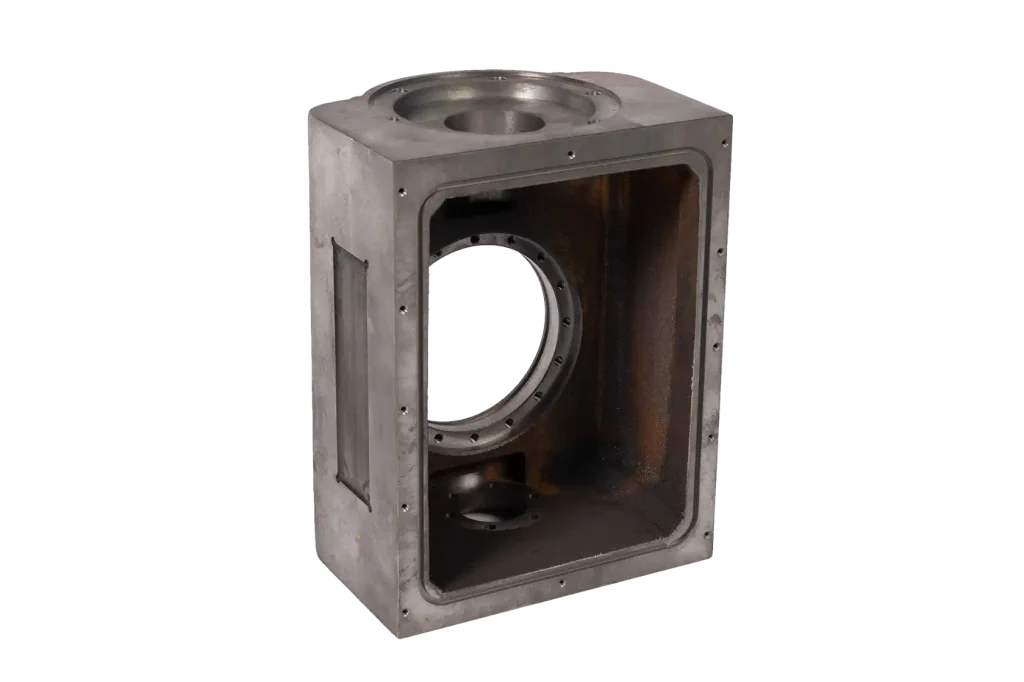
Typical Construction Machinery Cast Components
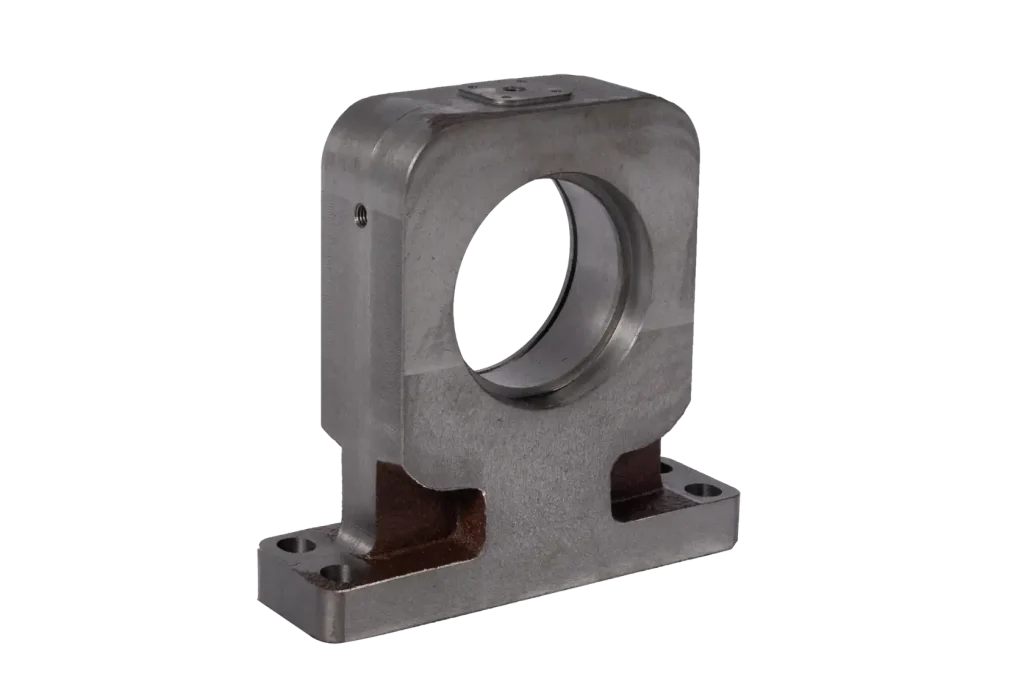
Construction machinery cast parts often include a range of structural and functional components used for load-bearing support, equipment connection, enclosure protection, and assembly positioning. Common projects may involve housing parts, support structures, mounting components, and other cast parts designed for stable operation under demanding working conditions.
1. Gearbox Housings
Used for enclosing transmission-related structures and supporting internal mechanical assemblies in construction machinery. Common material options include gray iron, ductile iron, or cast steel depending on load and service conditions.
2. Bearing Supports
Applied where stable shaft positioning and load support are required in rotating assemblies. Ductile iron and cast steel are often considered where strength and service stability are important.
3. Mounting Brackets
Used for equipment connection, installation, and positional support across different construction machinery structures. These parts are commonly selected based on structural demands and machining requirements.
4. Flange Components
Suitable for joining, positioning, and supporting connected parts in construction machinery assemblies. Material choice usually depends on part function, connection strength, and service conditions.
5. Pump Housings
Commonly used in hydraulic and fluid-related systems where structural stability and machining compatibility are important. Typical material options include gray iron, ductile iron, and selected cast steel grades.
6. Structural Supports
Used in reinforced machinery assemblies where strength, connection stability, and structural support are important. These parts are often selected based on higher load requirements and long-term service conditions.
7. Housing Covers
Used to protect internal assemblies and improve component durability in demanding working environments. Material selection depends on weight targets, service conditions, and production practicality.
8. Mounting Bases
Applied for installation support and stable structural connection in construction machinery systems. Common material options include gray iron, ductile iron, and cast steel.
9. Support Frames
Used for reinforcement and load transfer in machinery structures that require stable long-term support. Ductile iron and cast steel are commonly considered where structural strength is important.
10. Connection Parts
Suitable for joining and supporting different components in construction machinery assemblies. Material choice depends on part function, assembly requirements, and downstream machining needs.
Common Cast Parts for Construction Machinery
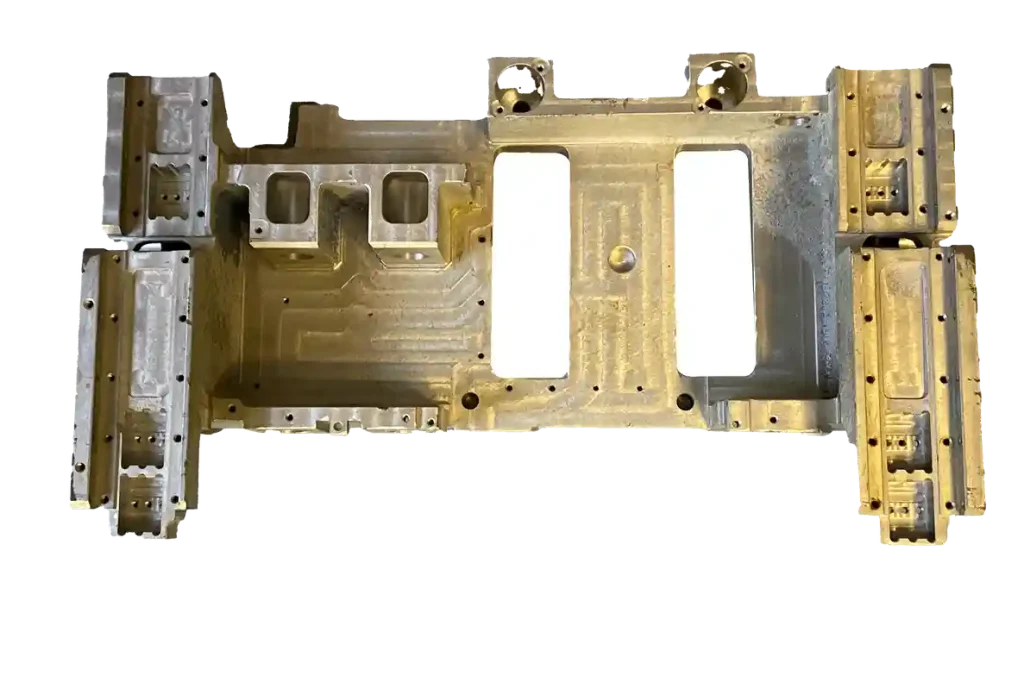
Transmission Housing
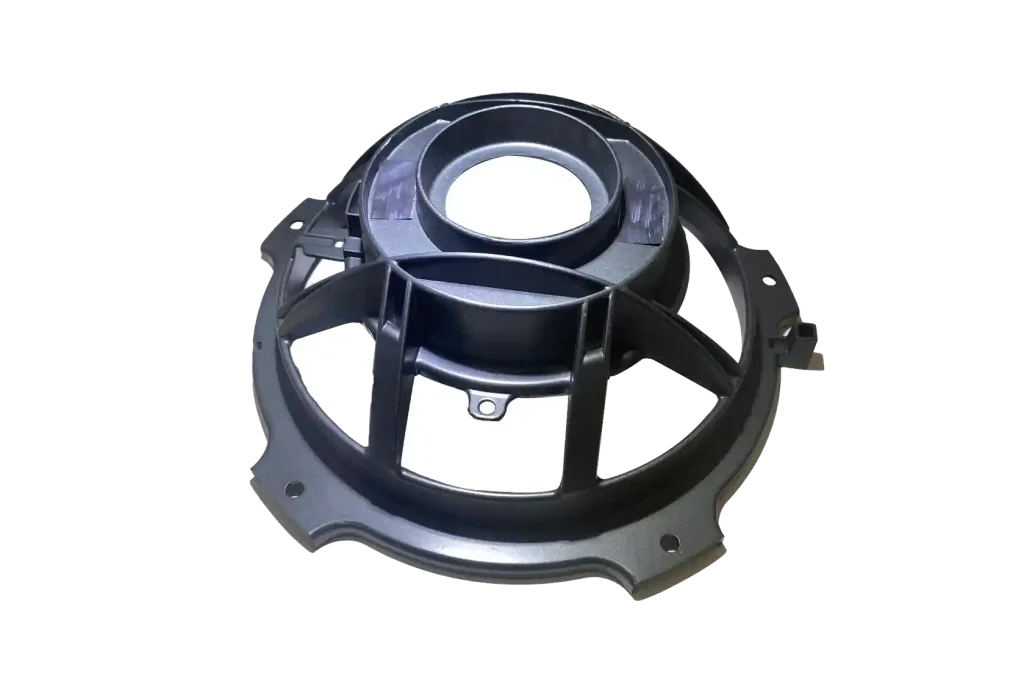
Bearing Support Housing
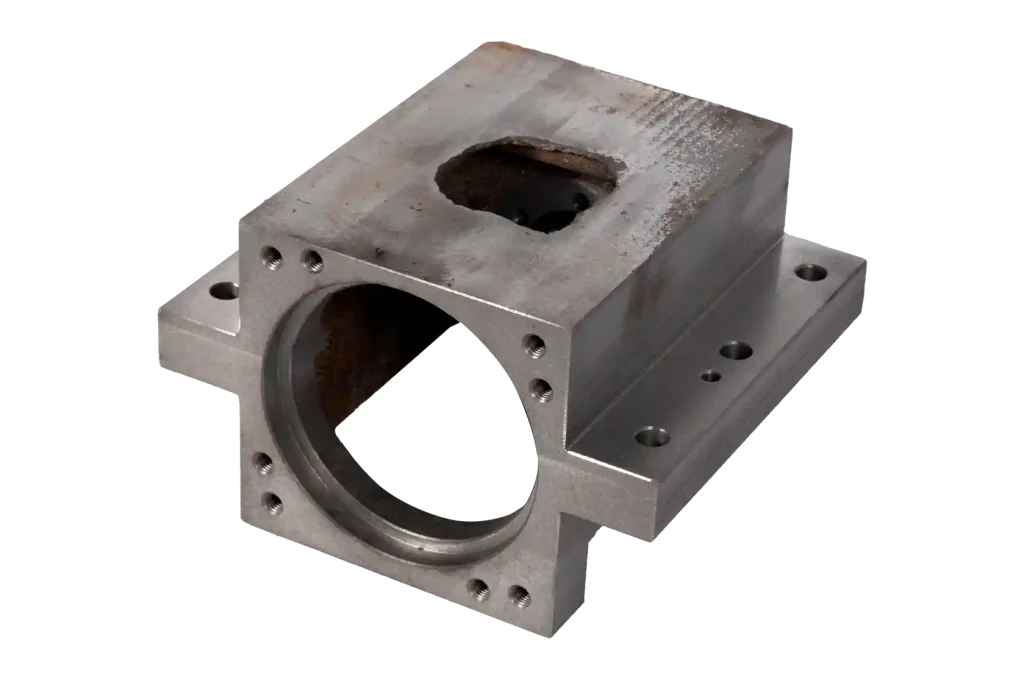
Mounting Housing Block
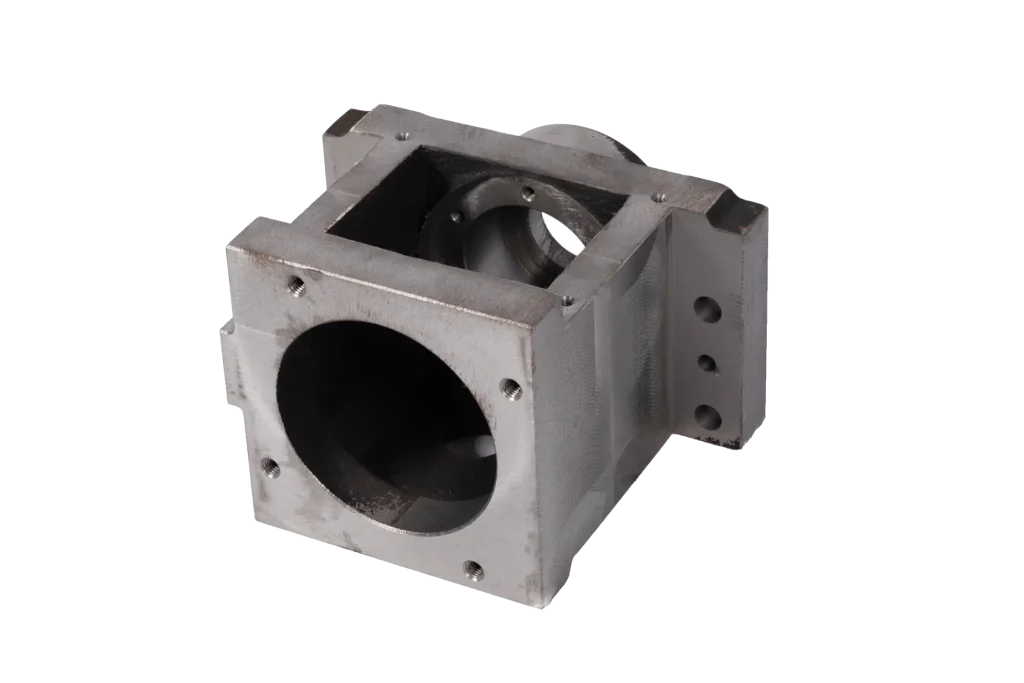
Support Housing Block
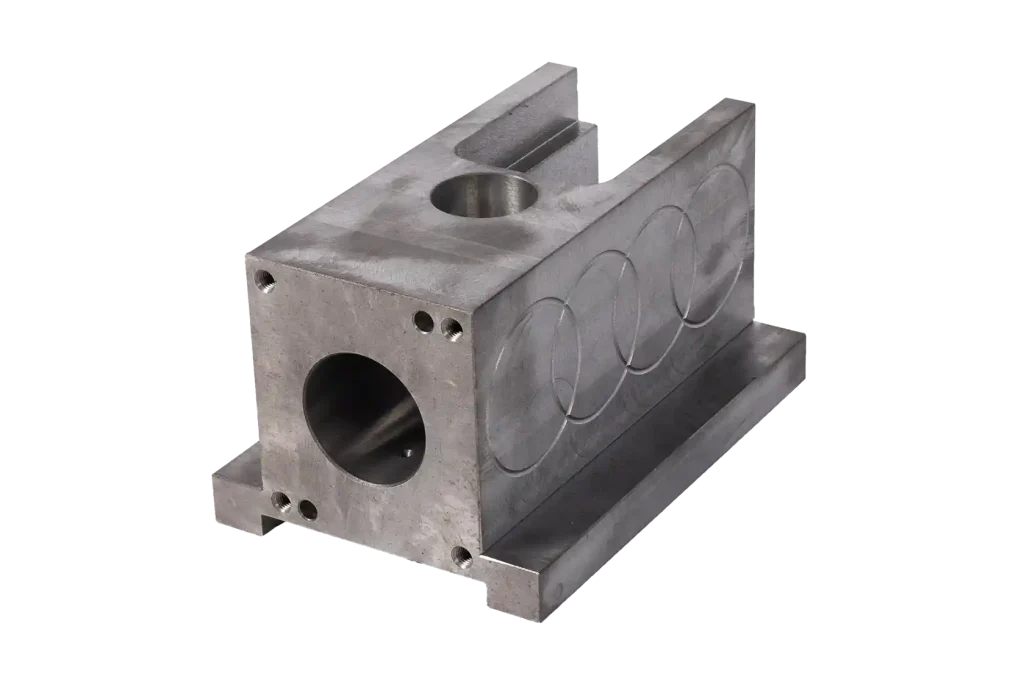
Mounting Support Block
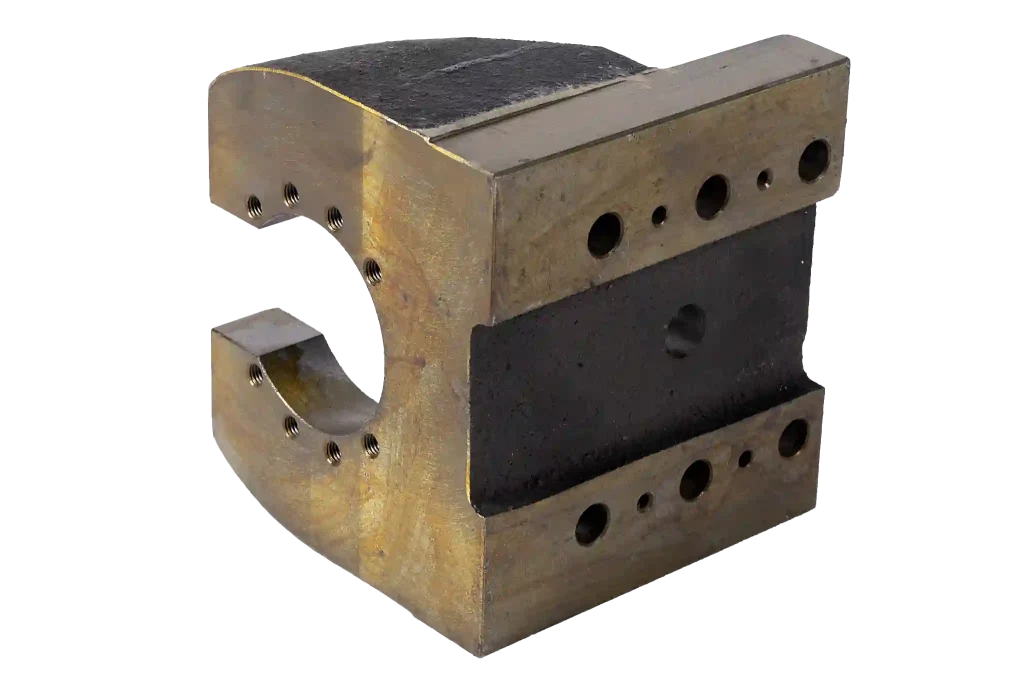
Structural Support Block
Common Materials for Construction Machinery Castings
Construction machinery castings are commonly produced in ductile iron, gray iron, cast steel, and selected aluminum alloys. The most suitable material depends on part function, working conditions, load requirements, wear resistance, and machining needs after casting. With experience in custom cast parts for different structures and service conditions, Minhe supports material selection based on part drawings, production practicality, and follow-up machining requirements.
Ductile Iron
Choose ductile iron when the part requires better strength, toughness, and reliable load-bearing performance. It is commonly used for support parts, bearing-related structures, and other construction machinery castings under higher working loads. Its main advantage is balanced strength and castability, although it is usually heavier than aluminum options.
Gray Iron
Gray iron is suitable for housings, covers, and general structural parts where castability, machining performance, and cost efficiency are important. It is often selected for gearbox housings, protective covers, and other construction machinery components. Its advantage is stable casting and good machinability, but it is less tough than ductile iron.
Cast Steel
Cast steel is used for heavier-duty construction machinery components that require higher mechanical strength and more demanding service reliability. It is often considered for reinforced structural parts and connection-related assemblies. Its strength is a key advantage, while higher production cost is a common trade-off.
Aluminum Alloys
Aluminum alloys may be selected for lighter-weight parts where reduced mass, corrosion resistance, and easier machining are priorities. They are more suitable for selected housings, covers, and functional components where lower weight is important.
Construction Machinery Casting Methods
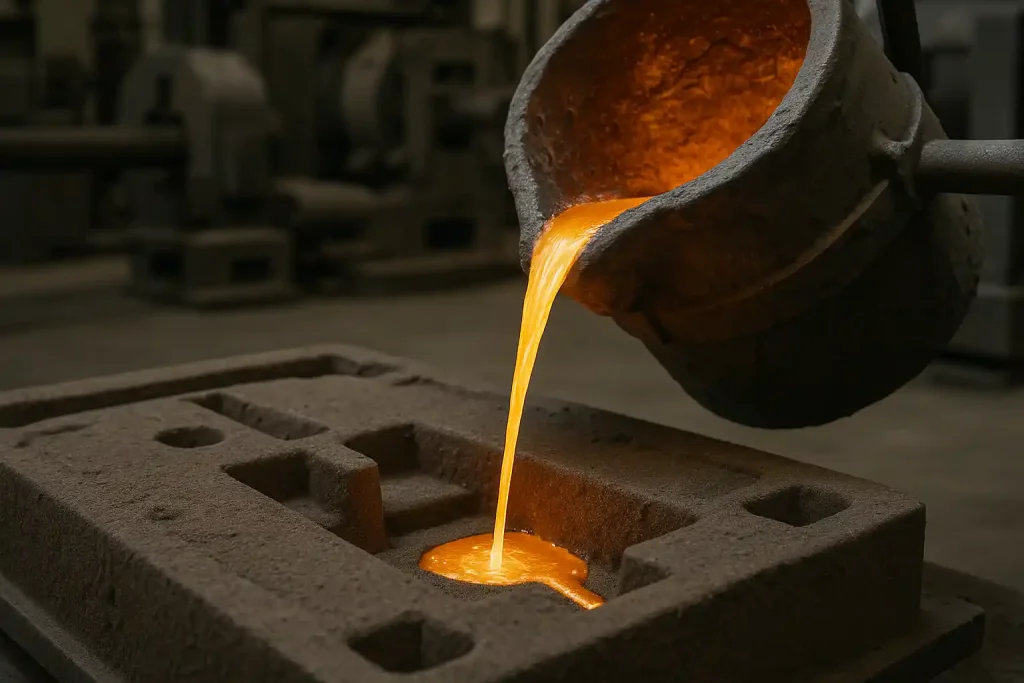
Sand Casting
Suitable for larger, heavier, and more complex construction machinery castings where design flexibility, practical tooling cost, and material adaptability are important. It is often used for housings, brackets, supports, and other general structural components.
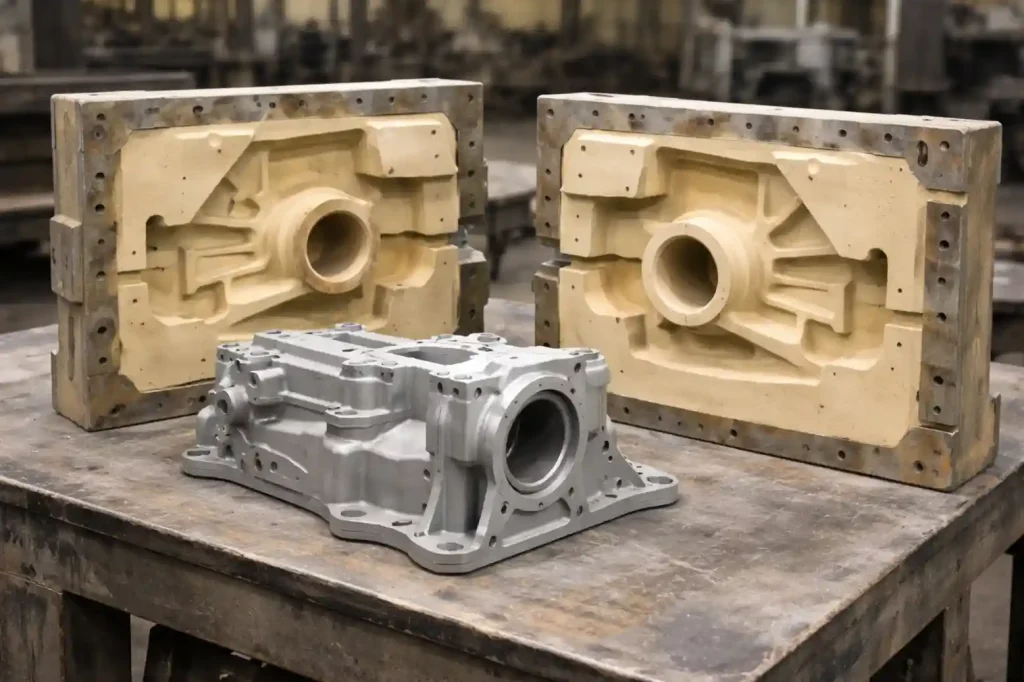
Shell Molding
Provides better dimensional consistency and surface quality for smaller or more detailed construction machinery castings. It is often used for connection-related parts, covers, and selected medium-sized components that require cleaner casting results.
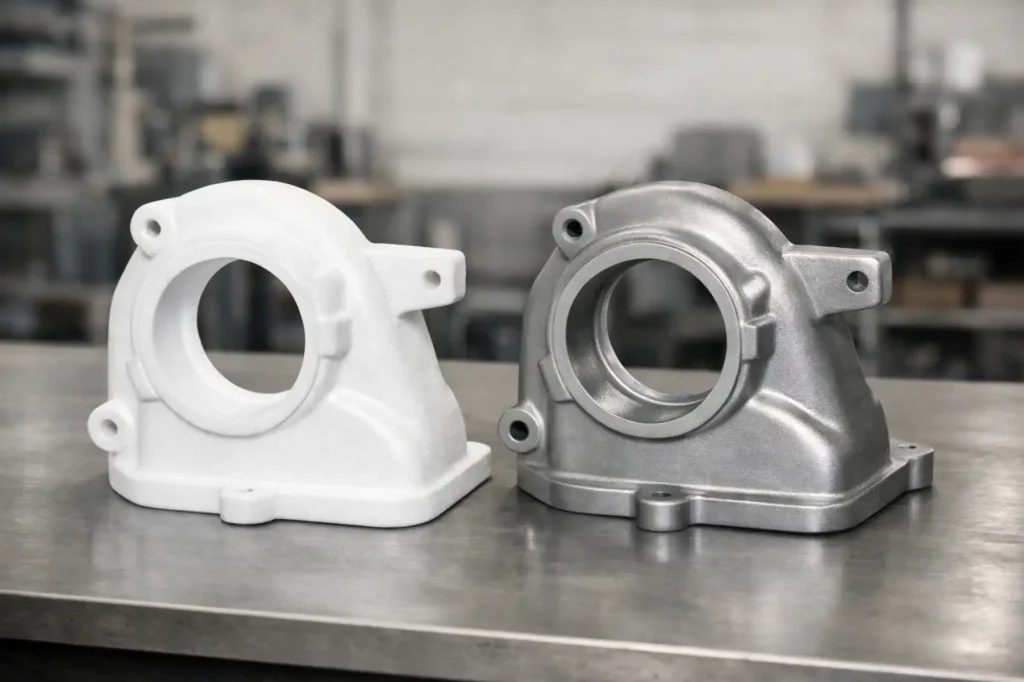
Lost Foam Casting
Suitable for castings with more integrated geometry and fewer parting line limitations. It is often considered for construction machinery parts where design flexibility, part consolidation, and reduced machining demand are important.
Why Minhe for Construction Machinery Castings
Construction machinery casting projects often require a practical balance of structural strength, production feasibility, assembly fit, and stable long-term performance. Minhe focuses on combining actual working conditions, part structures, and post-processing requirements to support more suitable casting solutions and smoother project execution.
- Structural Requirement Review: Evaluating load-bearing areas, connection features, and assembly-related positions of common construction machinery cast parts—such as housings, supports, and brackets—to determine more suitable production solutions.
- Material Selection Support: Narrowing down suitable material options based on load conditions, wear resistance, service environment, and downstream machining requirements.
- Machining Coordination: Considering the relationship between cast structures and machining processes in advance for mounting surfaces, interfaces, hole positions, and other assembly-related features.
- Stable Project Execution: Supporting smoother transitions across casting, inspection, machining, and delivery to improve production consistency and long-term project implementation.