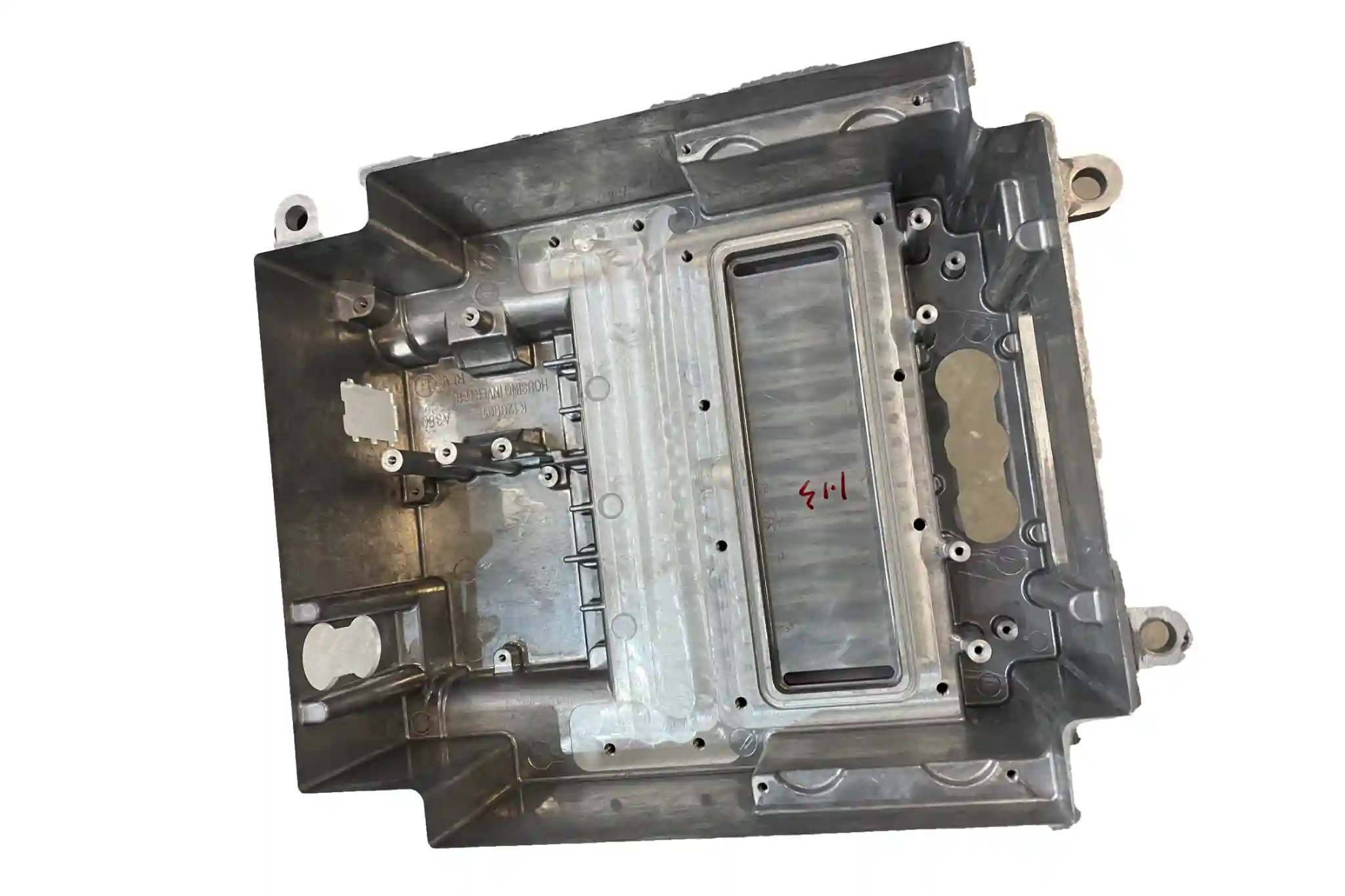



After production, aluminum castings are inspected for defects. Cracks are one of the defects these inspections may reveal.
Types of Cracks in Aluminum Castings
Hot Tears
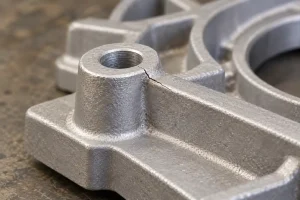
Hot tears form near the end of solidification, often where changes in wall thickness restrict shrinkage. At this stage, the casting has not fully solidified. If it is pulled while the remaining molten aluminum cannot feed the area, a crack may form. Hot tears are usually irregular and may show oxidation on the surface.
Cold Cracks
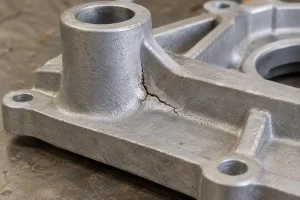
Cold cracks form after the casting has fully solidified. They may appear around sharp corners, holes, and changes in wall thickness. Uneven cooling or restricted shrinkage can leave tensile stress in these areas. Forces applied during demolding or machining may also cause a crack or extend an existing one. The fracture surface may be relatively straight and have a metallic appearance.
Heat Treatment Cracks
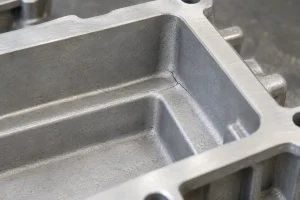
In this article, heat treatment cracks mainly refer to quench cracks after solution heat treatment. The surface and interior of a casting cool at different rates. If local tensile stress becomes too high, the casting may crack, particularly around sharp corners, holes, and changes in wall thickness. Distortion may occur as well.
Causes of Cracks in Aluminum Castings
Part Design
Part design can increase the risk of cracking. An abrupt change in wall thickness causes adjacent sections to cool and shrink at different rates, making the connection more vulnerable. Sharp internal corners concentrate stress. Where a rib meets the main body, excessive thickness can delay solidification and increase the risk of cracking if shrinkage is restricted.
Mold and Core Problems
A sand core that does not give way can restrict shrinkage during solidification and cooling. Cracks may then form around holes or thin-wall connections. If a metal core grips the casting, pulling it out or demolding the part may crack the surrounding thin walls.
Local Hot Spots
Thick sections and areas where several walls meet often solidify later than the surrounding metal. Insufficient feeding or uneven cooling can contribute to cracks in these areas. The timing of mold opening and part removal also affects how the casting cools and where forces act on it.
Porosity and Inclusions
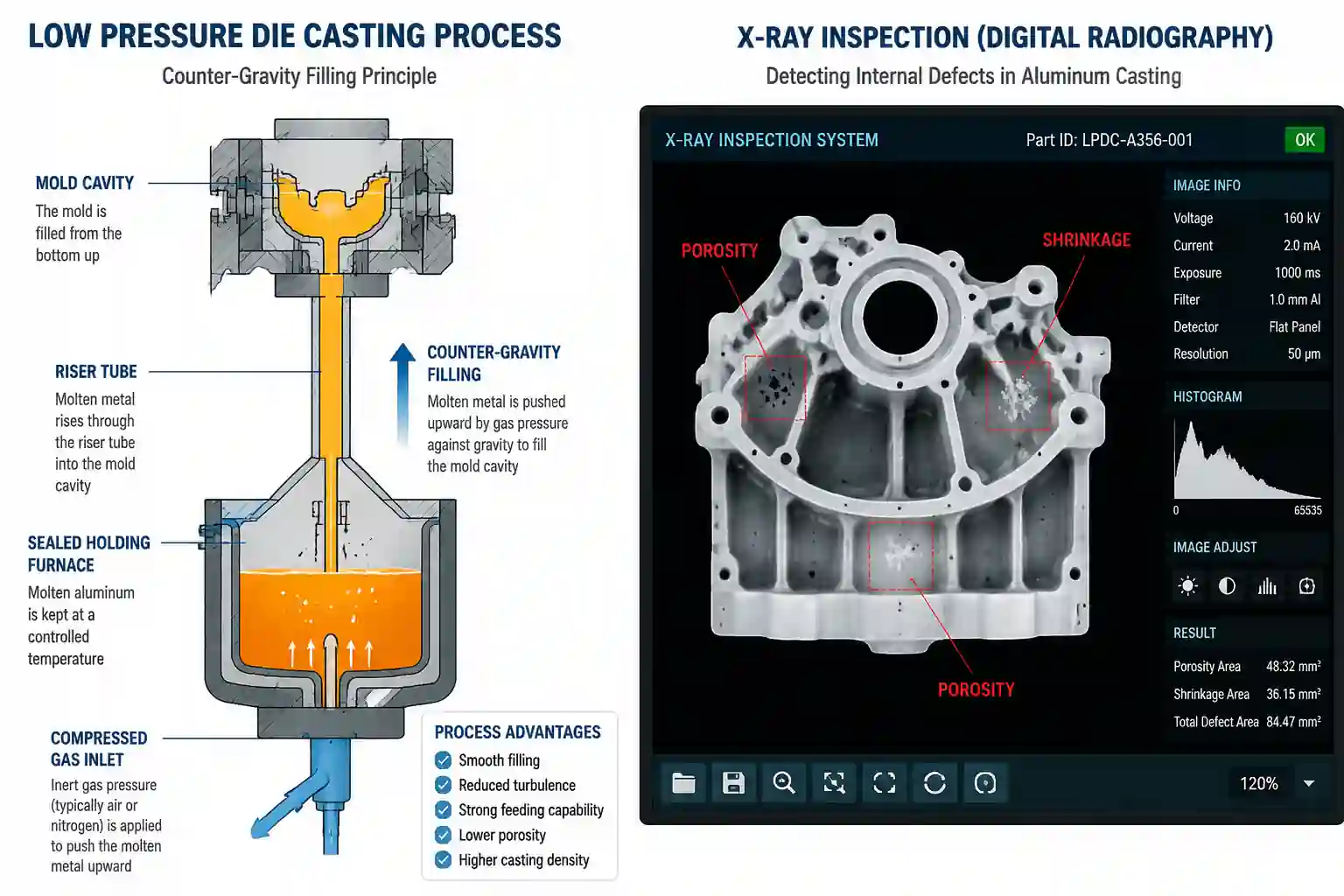
Excess hydrogen in molten aluminum can leave gas pores after solidification. Oxide films and other inclusions drawn in during pouring can create weak areas inside the casting. Cracks may start or grow at these points as the casting shrinks or is loaded later. Some hidden defects only become visible after machining removes the surface layer.
Quenching Temperature Differences
Thin walls, thick walls, and internal cavities in a housing can cool at different rates during quenching. Large temperature differences may distort the part or cause local cracks. The alloy and part geometry also affect the outcome.
How to Prevent Cracks in Aluminum Castings
Improve Part Design
Replace sharp internal corners with radii and use gradual transitions between thick and thin sections. Avoid excessive thickness where ribs join a wall so these areas cool and carry stress more evenly.
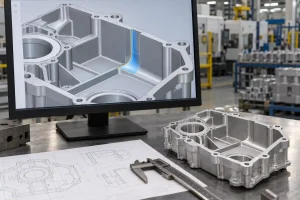
MinHe’s aluminum casting services include drawing review, casting, and subsequent machining, allowing design changes to be addressed alongside the manufacturing process.
Reduce Shrinkage Restraint
In sand casting, a core must hold its shape while still allowing the casting to shrink. In permanent mold casting, draft angles, core withdrawal sequence, and demolding time affect the forces around cored features.
Control Cooling and Feeding
In sand casting, chills can accelerate local cooling, while risers feed aluminum into areas that have not yet solidified. For gravity and low-pressure casting, mold temperature and local cooling can be adjusted.
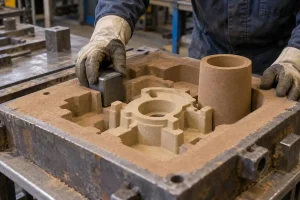
MinHe offers all three casting processes and can select a manufacturing method based on the part’s wall thickness, geometry, and production volume.
Treat the Molten Aluminum
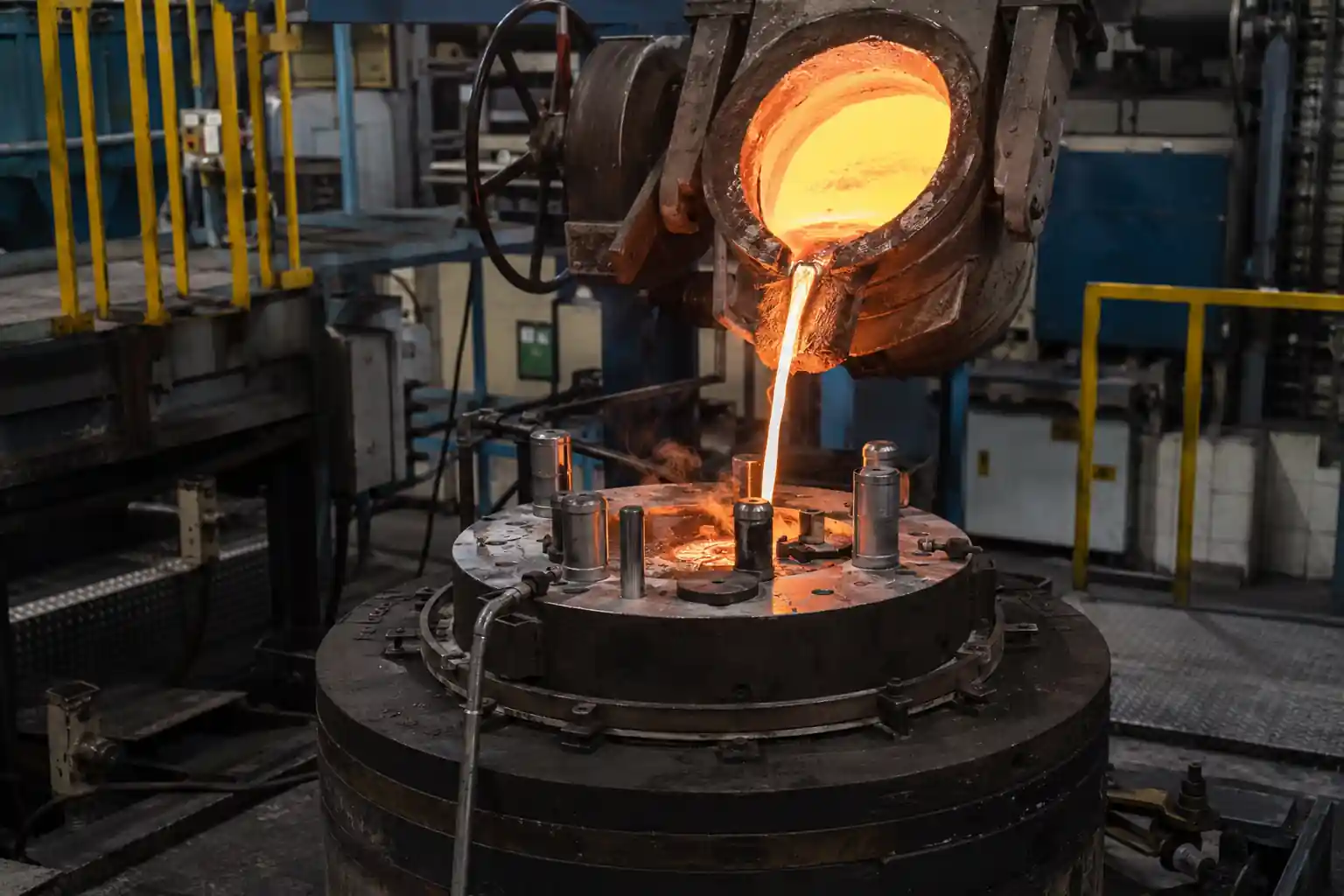
Degassing reduces hydrogen in the melt, while skimming and filtration remove inclusions. Keeping the metal flow steady during transfer and pouring also limits the entrainment of oxide films. Melt treatment addresses internal defects; it does not remove shrinkage restraint caused by the part design or mold.
Adjust Quenching Conditions
Warm water or a polymer quench solution can slow cooling for some castings. Fixtures should not block the coolant from reaching cavities and internal surfaces. After a change in quenching conditions, the casting must still meet the strength and hardness requirements on the drawing.
How to Repair Cracks in Cast Aluminum
Whether a local crack can be weld-repaired depends on the drawing, crack location, and part application. Where repair is permitted, the casting must still meet its load-bearing or sealing requirements after welding.
Clean the Crack
Remove oil, oxides, and damaged metal from the crack and the surrounding area. Then prepare a groove along the crack. The joint surface must be clean before welding.
Preheat the Area
Some thick-walled or complex castings are preheated before welding to reduce the temperature difference around the repair. The preheat temperature depends on the alloy, wall thickness, and existing heat treatment condition.
AC TIG Welding
AC TIG welding can repair cracks in some aluminum castings. The filler metal must match the casting alloy and the part’s intended use; one filler cannot be used for every casting.
Inspect After Welding
Allow the casting to cool according to the repair procedure, then clean and finish the weld. Sealed parts require a leak test, while liquid penetrant testing can check for surface-breaking cracks. Appearance alone cannot establish whether a load-bearing or sealing area meets its requirements.
A casting cannot return to service if the drawing prohibits weld repair or the repaired part fails its acceptance requirements.
Conclusion
Cracks can form during solidification, cooling, or heat treatment. Some can be repaired when the project permits welding. If cracking repeatedly occurs in the same location, the part design, mold, or cooling conditions also need attention.
MinHe provides aluminum sand casting, gravity casting, low-pressure casting, and subsequent machining. Send us photos showing the crack location or drawings for a new part, and we can provide a manufacturing proposal and quotation.