


Magnets do not stick to aluminum. Aluminum is paramagnetic, meaning its response to a magnetic field is so weak that engineers and buyers treat it as non-magnetic in practice. The one exception is when the magnet moves: eddy currents form inside the aluminum and create a push-back, braking-like effect. One more point worth making upfront: non-magnetic does not mean weak. Titanium is one of the strongest engineering metals, and it is not magnetic either. This article covers why aluminum doesn’t stick to magnets, the types of magnetism, what actually changes aluminum’s behavior, a comparison table of common metals, and where this property matters in real products.
Is Aluminum Magnetic?
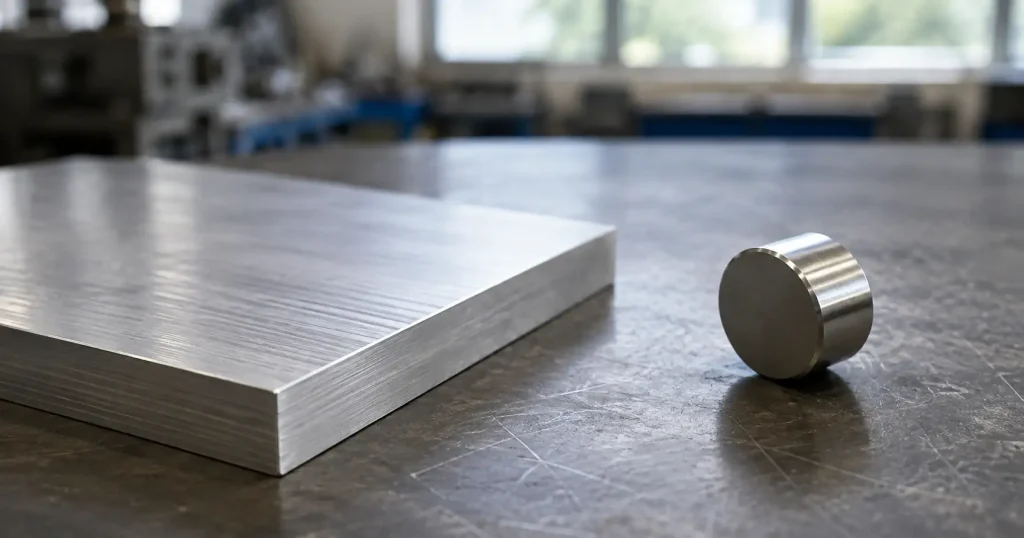
In the practical sense, no. Aluminum will not be attracted to a magnet the way iron is, and it cannot be permanently magnetized. Hold a magnet against an aluminum plate, a beverage can, or a sheet of foil, and you will feel no pull.
Does a Magnet Stick to Aluminum?
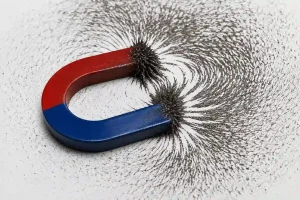
No. Aluminum’s magnetic susceptibility is around 2.2 × 10⁻⁵, while ferromagnetic metals run about an order of magnitude higher or more. With that gap, an ordinary magnet simply has nothing to grab onto, whether the aluminum is a plate, a can, or foil.
Can Aluminum Be Magnetized?
Not permanently. Inside a very strong field, such as an MRI environment, aluminum shows a slight temporary response, but it returns to normal the moment the field is removed. One situation can make aluminum parts look magnetic: a surface coating such as nickel or ferrite. The magnet sticks to the coating, not the aluminum.
When Can Magnets Affect Aluminum?
A magnet sitting still next to aluminum does nothing. Once the two move relative to each other, the picture changes. Aluminum conducts electricity well, so a changing magnetic field induces loops of current inside it, called eddy currents. Those currents generate their own field that opposes the original one, so the magnet feels resistance and slows down. Drop a strong magnet through a thick aluminum tube and it will not fall quickly; it drifts slowly to the bottom. Magnetic braking on high-speed trains and roller coasters, and eddy-current separators in recycling plants, all work on the same principle.
Why Is Aluminum Not Magnetic?
To answer that, it helps to look at where magnetism comes from. Metal magnetism comes from electron spins, and whether those spins can line up into ordered regions.
Aluminum Is Only Barely Paramagnetic
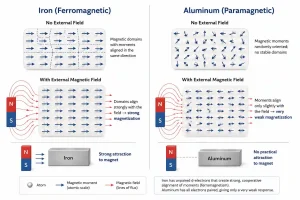
Aluminum has unpaired electrons in its electron arrangement, which gives it a small positive response to a magnetic field, so it is classified as paramagnetic. But the response is tiny, and aluminum has no magnetic domains the way iron does, so everything returns to zero the moment the field disappears. Data sheets list aluminum’s susceptibility at about 2.2 × 10⁻⁵: small, positive, and effectively negligible in real use.
Why Iron Is Magnetic but Aluminum Is Not
Iron is different. Large numbers of its electron spins align in the same direction, forming magnetic domains. When an external field arrives, the domains line up with it and stay that way, which is why iron is attracted to magnets and can become a permanent magnet. Aluminum’s face-centered cubic lattice does not support that domain structure, so its spins never line up into a stable pattern. The difference between iron and aluminum is not that one is magnetic and the other is not, but whether the material can form and hold magnetic domains.
Types of Magnetism
Materials behave three ways in a magnetic field, depending on how their electron spins line up: ferromagnetic, paramagnetic, and diamagnetic. Aluminum is paramagnetic. Which of the three a metal belongs to decides whether a magnet picks it up.
Ferromagnetism
Iron, nickel, cobalt, and carbon steel belong here. Large numbers of electron spins align in the same direction to form magnetic domains, so these metals are strongly attracted to a magnet and stay magnetized afterward. Almost everything that sticks to a magnet in daily use is in this family. Stainless steel needs to be split by grade: ferritic and martensitic types attract, while most austenitic grades such as 304 and 316 largely do not. The magnet test is a quick separator—if it sticks, the part contains ferromagnetic material; if it does not, that does not mean the part is not metal.
Paramagnetism
Aluminum, titanium, and magnesium belong here. Their electron arrangements include unpaired electrons, which gives a small positive response to a magnetic field, but no domains form inside, so the attraction is too weak to notice. Aluminum is the textbook example: the magnet falls off, and even in a strong field the metal only shows a temporary response.
Diamagnetism
Copper, gold, silver, and lead belong here. Their electron spins pair up in opposite directions and cancel out, producing an extremely weak repulsion from a magnetic field. Like paramagnetic metals, they are undetectable with an everyday magnet, and most austenitic stainless steels behave this way in practice as well.
Factors Affecting Magnetism of Aluminum
Several factors influence aluminum’s magnetic behavior, but the effects are small and never change the practical answer.
Temperature and Field Strength
Paramagnetic materials follow Curie’s law: as temperature rises, thermal agitation disrupts the electron spin alignment and susceptibility drops. On the other side, a stronger external field makes aluminum’s response slightly more noticeable—but only enough to move from undetectable to barely measurable, still far from attracting a magnet.
Impurities and Processing
High-purity aluminum behaves predictably, and impurities, cold working, or casting have very little effect on its magnetism. What can make an aluminum part magnetic is surface treatment: after nickel or ferrite coating, a magnet sticks to the coating. That detail matters when buying aluminum parts with surface finishes.
Aluminum Alloys and Magnetism
The vast majority of aluminum alloys remain non-magnetic. The exception is alloys that deliberately add iron, cobalt, or nickel, such as Alnico, which is itself a ferromagnetic material used in magnet products. When selecting material, check the alloy composition rather than relying on the word aluminum alone.
Aluminum vs Other Metals: Magnetic Comparison
Putting common metals side by side makes the picture clear:
| Material | Magnetic type | Attracted to magnet? | Common uses |
|---|---|---|---|
| Iron | Ferromagnetic | Yes | Structures, motor cores |
| Carbon steel | Ferromagnetic | Yes | Fasteners, structural parts |
| Nickel | Ferromagnetic | Yes | Plating, alloying |
| Cobalt | Ferromagnetic | Yes | High-temperature alloys, magnets |
| Aluminum | Paramagnetic | No | Structures, heat sinks, power transmission |
| Titanium | Paramagnetic | No | Aerospace, medical, chemical |
| Copper | Diamagnetic | No | Cables, heat exchangers |
| Austenitic stainless (304/316) | Paramagnetic/weak | Largely no | Food, chemical equipment |
How Aluminum Compares to Other Metals
The non-magnetic metals do not all work the same way. Aluminum and titanium are paramagnetic, with a very weak attraction; copper, gold, and silver are diamagnetic, with a very weak repulsion. A shop magnet cannot tell the difference, but precision instruments can. What matters most is the simple rule: ferromagnetic behavior is essentially limited to the iron, nickel, and cobalt family, and almost every other common metal does not stick.
Are Magnetic Metals Stronger Than Non-Magnetic Metals?
No. This is one of the most common misconceptions. Titanium is among the strongest engineering metals and it is not magnetic; many high-strength aluminum alloys are not magnetic either. Strength comes from alloy composition and heat treatment, not from magnetism. Steel just happens to be both strong and ferromagnetic. Choose material by grade data, not by a magnet—the same applies to cast iron versus cast steel, where the decision should rest on mechanical properties and cost.
Applications of Nonmagnetic Aluminum
The fact that aluminum does not attract magnets or disturb magnetic fields is a requirement in several industries. Here is how it is used.
Electronics and Telecommunications
Electronic equipment is sensitive to magnetic interference. Aluminum’s extremely weak paramagnetism plus good conductivity make it a natural fit for electromagnetic shielding housings and damping parts, and transformer and motor windings use aluminum to cut weight. Power transmission lines use aluminum cores for their light weight, good conductivity, and low cost.
Medical Equipment
MRI machines sit in strong magnetic fields, where any ferromagnetic part is a safety risk and distorts imaging. Aluminum parts do not respond to the field, so MRI frames, tables, and support structures use it extensively. Medical instrument housings also favor aluminum for its stable, non-magnetic behavior.
Aerospace and Transportation
In aerospace, aluminum’s low density and non-magnetic behavior are two reasons it is used for fuselages and structural parts—these components are the last place you want even a trace of magnetic response. On the ground, magnetic braking systems on high-speed trains and roller coasters use aluminum or copper plates for eddy-current damping: the plate moving through a magnetic field generates resistance and stops the motion without contact.
Construction and Infrastructure
Windows, curtain walls, and structural profiles use aluminum for corrosion resistance and light weight, and its lack of magnetic response suits environments with magnetic-field requirements. The casting process used for an aluminum part does not change its non-magnetic behavior.
Conclusion
Aluminum does not stick to magnets and cannot be magnetized, and its behavior in magnetic fields is stable and predictable—an advantage, not a defect. For day-to-day material selection, three points cover most cases: the magnet test quickly separates ferromagnetic from non-ferromagnetic metals; alloy composition determines magnetism (almost all aluminum alloys are non-magnetic, Alnico being the exception); and surface coatings can make an aluminum part appear magnetic. If you need non-magnetic aluminum parts, from casting to CNC machining and batch production, they can be made to drawing and alloy specification.
Frequently Asked Questions
Will a magnet stick to aluminum?
No. Aluminum is paramagnetic, and its attraction is too weak to notice in daily use.
Can aluminum be magnetized?
Not permanently. It shows only a slight temporary response in a strong field and returns to normal when the field is removed.
Are aluminum alloys magnetic?
Almost all are not. Alloys containing iron, cobalt, or nickel, such as Alnico, are the exception.
Is aluminum foil magnetic?
No. Foil behaves the same as sheet aluminum—a magnet will not stick.
When does aluminum react to a magnet?
When the magnet and the aluminum move relative to each other, eddy currents form and produce resistance or deceleration, rather than attraction.