


Low-pressure die casting (LPDC) is used for repeat production of aluminum wheels, structural parts, and functional housings. It offers more control over filling and solidification than gravity casting, while placing less emphasis on very thin walls and rapid cycles than high-pressure die casting. The underlying process dates back to the early twentieth century, when low-pressure permanent-mold casting was first patented. It later became an established production method for aluminum castings.
Understanding how LPDC fills and feeds a mold makes its strengths and limits easier to assess. The sections below explain the process, suitable materials, part design, common applications, and how it compares with other casting methods.
What is low-pressure die casting?
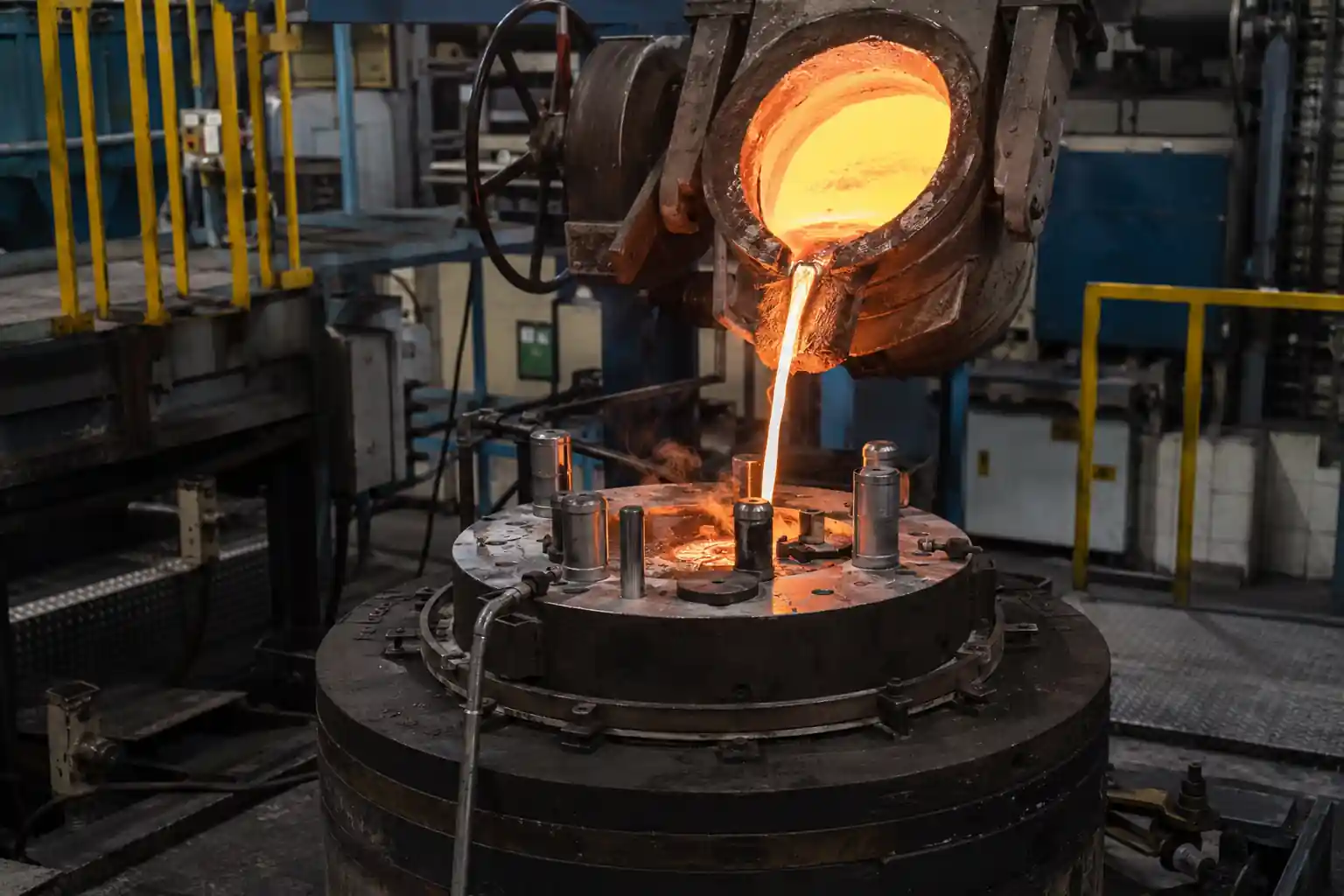
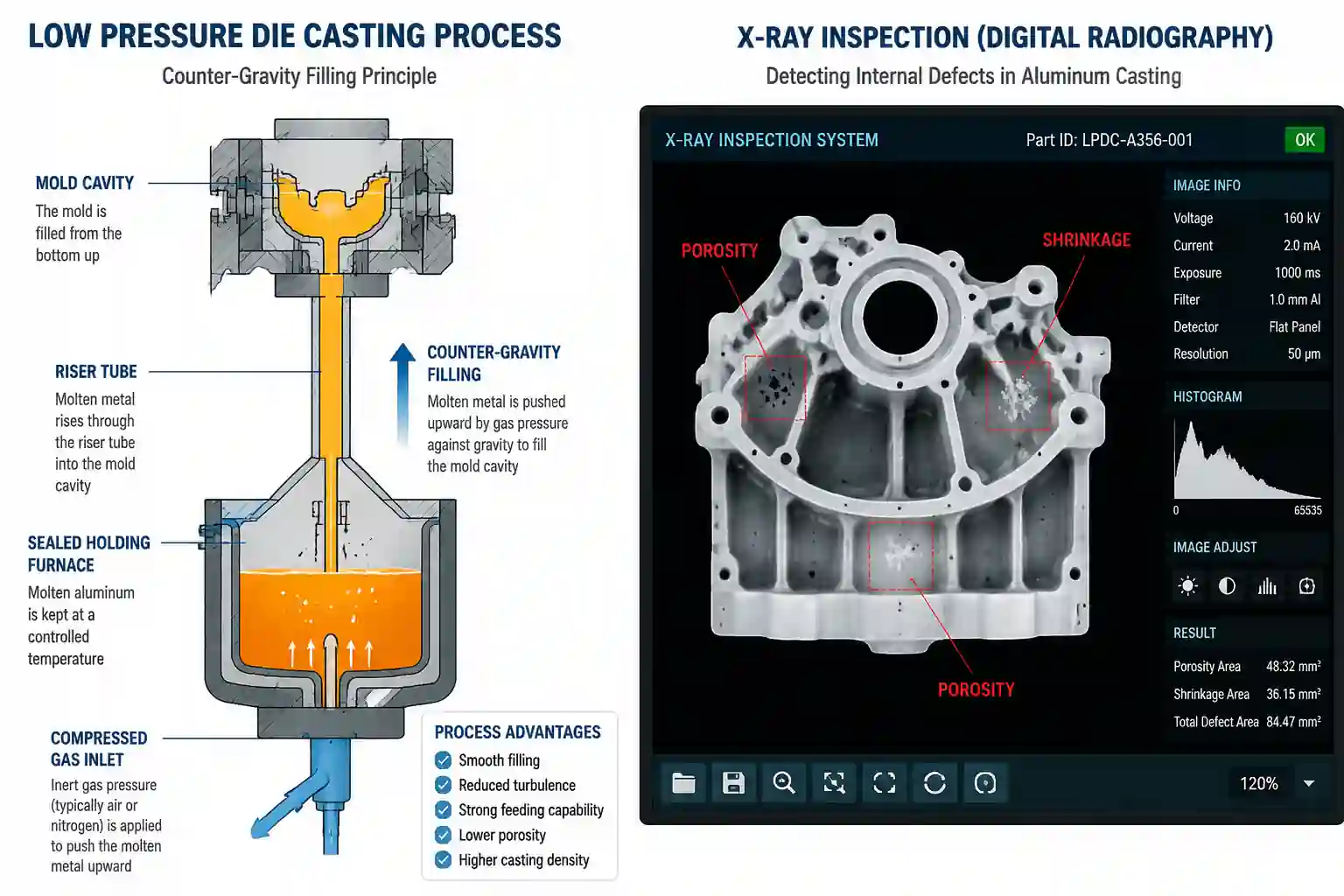
Low-pressure die casting uses gas pressure to move molten metal from a sealed holding furnace, through a riser tube, and into a mold above it. Pressure is maintained as the casting solidifies, allowing more liquid metal to feed areas that are shrinking. In production, the rate of pressure increase must suit the part: too fast, and the metal may fold over itself and entrain air; too slow, and remote sections may begin to freeze before they fill.
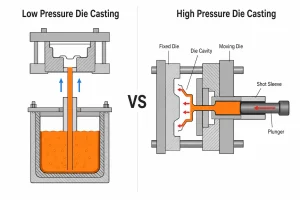
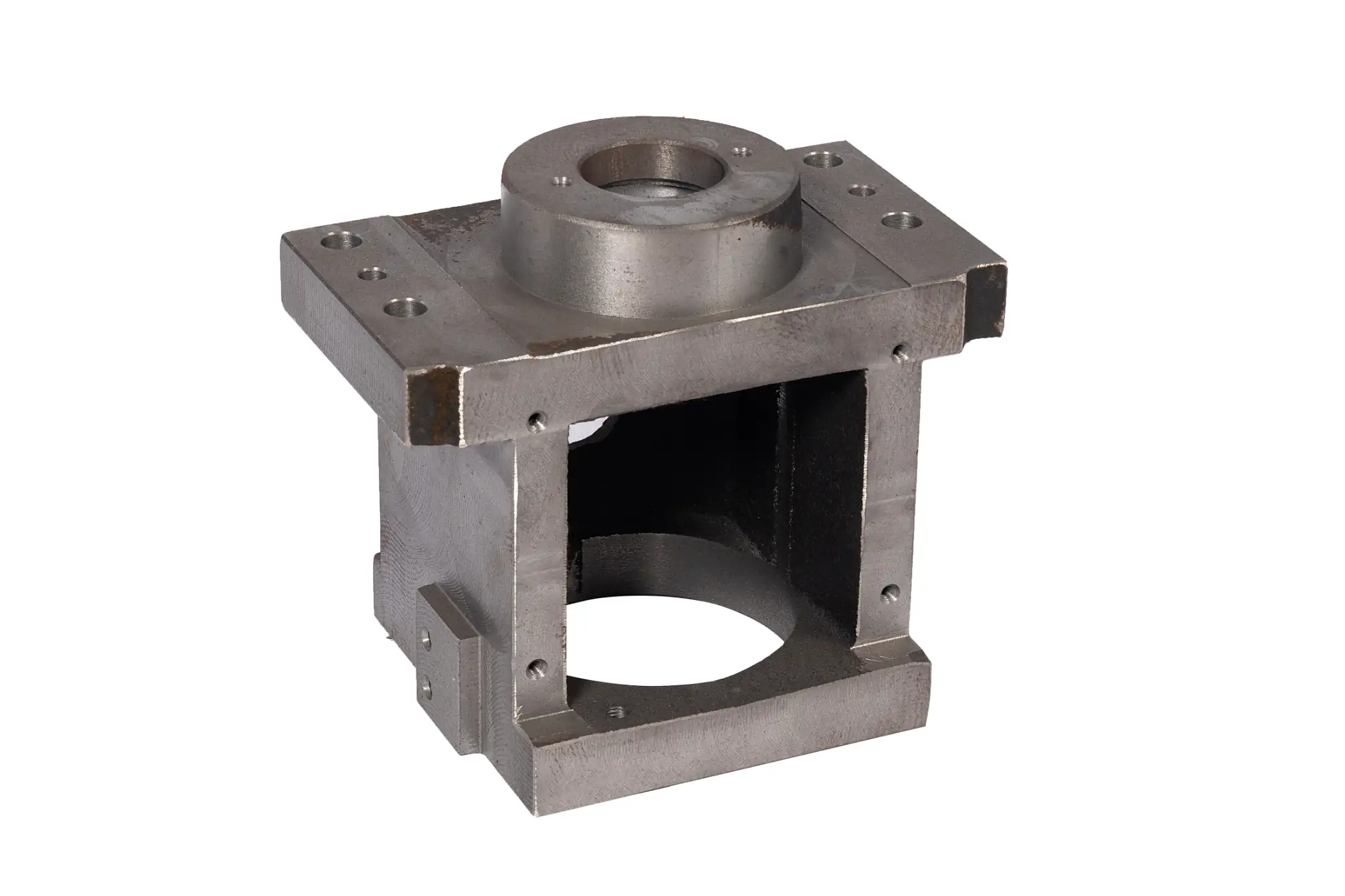
This combination of controlled filling and continued feeding reduces the risk of air entrapment and shrinkage defects. Minhe’s low-pressure die-casting service covers custom castings weighing 0.5–50 kg, including housings, end covers, brackets, and pump and valve components. Its listed alloys include A356 and ZL101. The company supports drawing review, casting, CNC machining, and dimensional inspection under an ISO 9001 quality management system.
How does low-pressure die casting work?
Production can be divided into five stages:
- Prepare the die and melt. The metal die is cleaned and preheated. A coating may be applied to the cavity surface to manage local cooling and aid release. The aluminum melt is prepared before entering the holding furnace; if the part needs internal passages, sand cores are positioned before the die closes.
- Raise and fill the metal. Pressurizing gas enters the sealed space above the melt. It pushes the metal up the riser tube, through the gate, and into the die, usually from the bottom upward. Air leaves the cavity through vents. The pressure increase is set with the melt level, rise height, and part geometry in mind.
- Hold pressure and feed the casting. Pressure remains in place while the metal solidifies, supplying liquid metal to compensate for shrinkage. Feeding works only while the route to the shrinking area remains liquid. Once that route freezes, additional pressure cannot send metal through it.
- Release pressure and remove the casting. After the connection between the casting and its feed path has solidified, furnace pressure is released. Metal still liquid in the riser tube flows back into the furnace. The casting cools further before the die opens.
- Trim and finish. Excess metal at the gate is removed. Depending on the part specification, the casting may then undergo heat treatment, machining, or surface finishing. Bearing bores, mounting faces, and sealing surfaces are commonly machined; load-bearing or sealed parts also require inspection suited to their function.
Advantages and limitations of low-pressure die casting
Main advantages
- Controlled filling. The machine can adjust furnace pressure in stages to control metal rise and cavity filling. A suitable fill rate reduces the risk of folding and entrained air.
- Continued feeding. Pressure supplies liquid metal during solidification, reducing the risk of shrinkage cavities and porosity where the feed path remains open.
- Repeat production. A reusable metal die, together with controlled process settings, makes blank dimensions and machining allowances easier to maintain across a production run.
- Less metal left in the riser. When pressure is released, metal that has not solidified in the riser tube returns to the furnace.
Main limitations
- Thin sections are difficult to fill. Metal loses heat as it moves through the die. A distant, narrow section may start to freeze before filling is complete, especially when the flow path is long.
- Cycles are longer than in high-pressure die casting. The process must allow time for filling, pressure holding, and solidification before the casting can be removed.
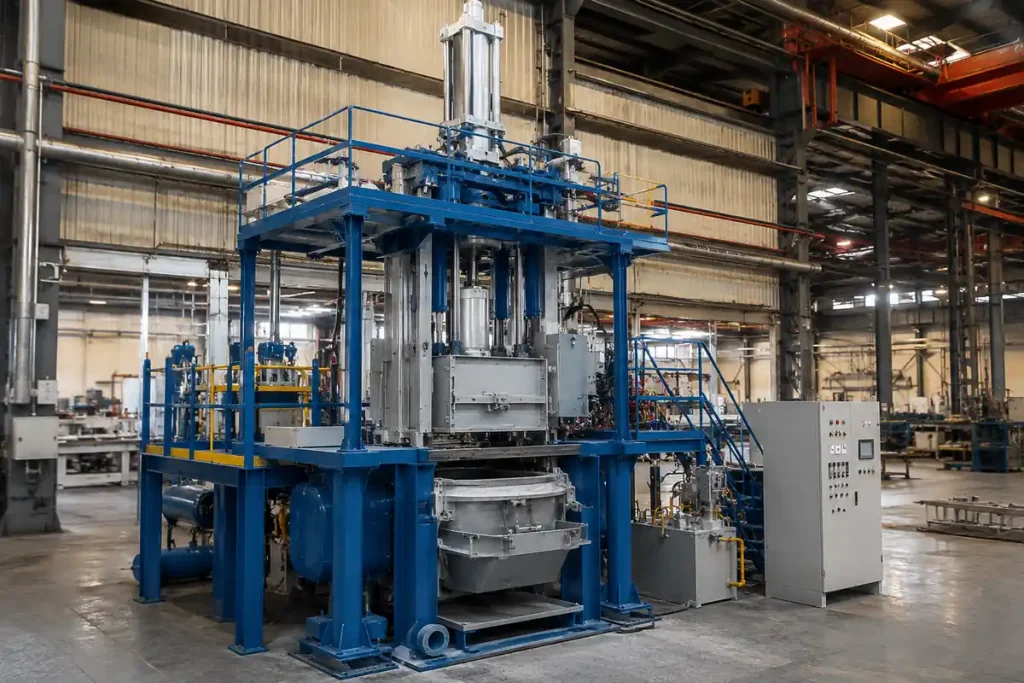
- Upfront investment is higher than for sand casting. A metal die, sealed holding furnace, and pressure-control system are harder to justify when the design changes frequently or production volume is low.
- Internal cavities add work. Enclosed passages often require sand cores. Those cores must be made, positioned, vented, and removed after casting; poor core control can affect passage shape or introduce defects.
Design considerations for low-pressure die casting
Wall thickness transitions
Keep the main walls reasonably consistent and make changes in section gradual. Because low-pressure filling is relatively slow, a thin section far from the gate may freeze early, while an abrupt thick section can form a hot spot.
Bosses and ribs
Avoid large solid masses where bosses and ribs meet; hollow out a boss when its function allows. LPDC can feed a thick region during solidification, but not if a thinner section between that region and the metal supply freezes first.
Gates and feeding paths
Position the gate so that thicker areas remain connected to the liquid-metal supply while they solidify. Pressure in the holding furnace can compensate for shrinkage only while that path stays open.
Internal passages
When a sand core forms an internal passage, provide secure core location in the die design. Bottom-up filling places buoyant force on the core; movement can change the wall thickness around the passage.
Machining allowance
Leave adequate material on bearing bores, mounting faces, and sealing surfaces for final machining. A reusable die helps produce similar blanks from cycle to cycle, but these functional features still need to be finished to the drawing requirements.
For more detail on wall thickness, gating, and other part features, see Minhe’s low-pressure die-casting design guide.
What materials are suitable for low-pressure die casting?
Aluminum alloys are the main materials used in LPDC. Their casting behavior allows the metal to rise through the tube and fill the die at a controlled rate, while pressure feeding addresses shrinkage during solidification. The suitability of a particular alloy also depends on the properties required after casting:
- A356: Silicon supports mold filling, while magnesium allows the casting to be strengthened by heat treatment. Controlled filling and feeding make A356 a common choice for load-bearing aluminum castings.
- A357: This aluminum-silicon-magnesium alloy typically contains more magnesium than A356 and responds to heat treatment. Controlling internal shrinkage is particularly important when the finished part must meet demanding mechanical requirements.
- ZL101: Another heat-treatable aluminum-silicon-magnesium casting alloy. It can fill a die under low pressure, while maintained pressure feeds thicker sections as they solidify.
- AlSi10Mg: Its higher silicon content supports filling of more complex shapes. LPDC is used for castings with varying section thicknesses, where the thicker areas also need an effective feeding path.
- ADC12: This alloy has good casting fluidity and can be used for selected LPDC parts. That fluidity does not, however, remove the process limits on extremely thin walls or long flow paths.
- AM50 magnesium alloy: Specialist LPDC production is possible with AM50. Controlled filling and feeding can reduce entrainment and shrinkage defects, although magnesium requires equipment and melt handling suited to the alloy.
What are the common applications of low-pressure die casting?
Aluminum wheels, steering knuckles, and selected suspension parts. These components face repeated loads, so internal defects matter. Controlled filling and pressure feeding help manage defect risk, with heat treatment and inspection specified according to the part’s requirements.
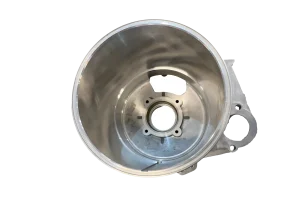
Motor housings, end covers, and selected gearbox housings. These parts need repeatable blanks for production. Bearing bores, mounting faces, and other critical interfaces are then machined to their required dimensions.
Cylinder heads and selected engine blocks. Sand cores can form internal air or coolant passages. LPDC also provides a way to feed thicker sections during solidification, provided those sections remain connected to the metal supply.
Pump housings, valve bodies, and hydraulic housings. These parts may contain passages and sealing interfaces. Filling and feeding control help reduce internal defect risk, while the machined part must still pass the specified leak or pressure test.
How does low-pressure die casting compare with other casting processes?
The table gives a general comparison of common aluminum casting methods. Actual results depend on part geometry, tooling, equipment, and production setup.
| Factor | Sand casting | Gravity die casting | Low-pressure die casting | High-pressure die casting |
|---|---|---|---|---|
| Filling method | Usually gravity poured | Gravity filled into a metal die | Gas pressure raises metal through a riser tube | A plunger injects metal at high speed |
| Mold | Disposable sand mold | Reusable metal die | Usually a reusable metal die | Reusable metal die |
| Internal cavities | Sand cores offer flexibility | Sand cores can be used | Sand cores can be used | Often requires slides or other tooling solutions |
| Thin-wall filling | Depends on the sand-molding process | Limited by rapid cooling in the metal die | Fill rate is adjustable, but very thin walls remain difficult | Generally better suited to thin, detailed sections |
| As-cast surface and dimensions | Rougher surface; lower precision | Generally better than sand casting | Broadly comparable with gravity die casting | Generally finer detail and closer dimensions |
| Shrinkage feeding | Mainly through risers | Risers and solidification control | Continued metal supply during pressure holding | Brief intensification, limited once the gate freezes |
| Production speed | Varies widely with molding method | Moderate | Moderate, with time required for pressure holding | Usually faster |
| Upfront investment | Usually lower | Requires a metal die | Requires a die and pressure-supply equipment | Usually higher |
| Suitable production volume | Flexible for small runs; automated lines can produce at scale | Stable, repeat production | Stable medium-to-larger production runs | High volumes help spread tooling cost |
| Typical use | Large parts or designs still being revised | Established aluminum parts made repeatedly | Wheels, structural parts, functional housings | High-volume thin-wall housings |
Compared with gravity die casting, LPDC gives the foundry more control over filling and keeps supplying metal during solidification. That makes it useful when a repeat-production part places particular demands on internal defect control. High-pressure die casting is usually faster and better suited to thin, detailed parts made in large volumes.
Sand casting offers more flexibility when quantities are small or the design is still changing. Once a part is established, gravity die casting may be sufficient if it fills and feeds well without a pressure system. A sealing requirement alone does not determine the casting method; the finished part still needs to meet its specified test.
Conclusion
LPDC combines controlled bottom-up filling with continued feeding during solidification. It is well suited to repeat-production aluminum wheels, structural parts, and functional housings where internal defects matter. Very thin walls, long flow paths, or a need for the fastest possible cycle may point to another process.
For a specific project, send the drawing, expected volume, and performance requirements to Minhe’s engineering team. We can review the part structure and discuss a casting route, subsequent machining, and the required inspection.