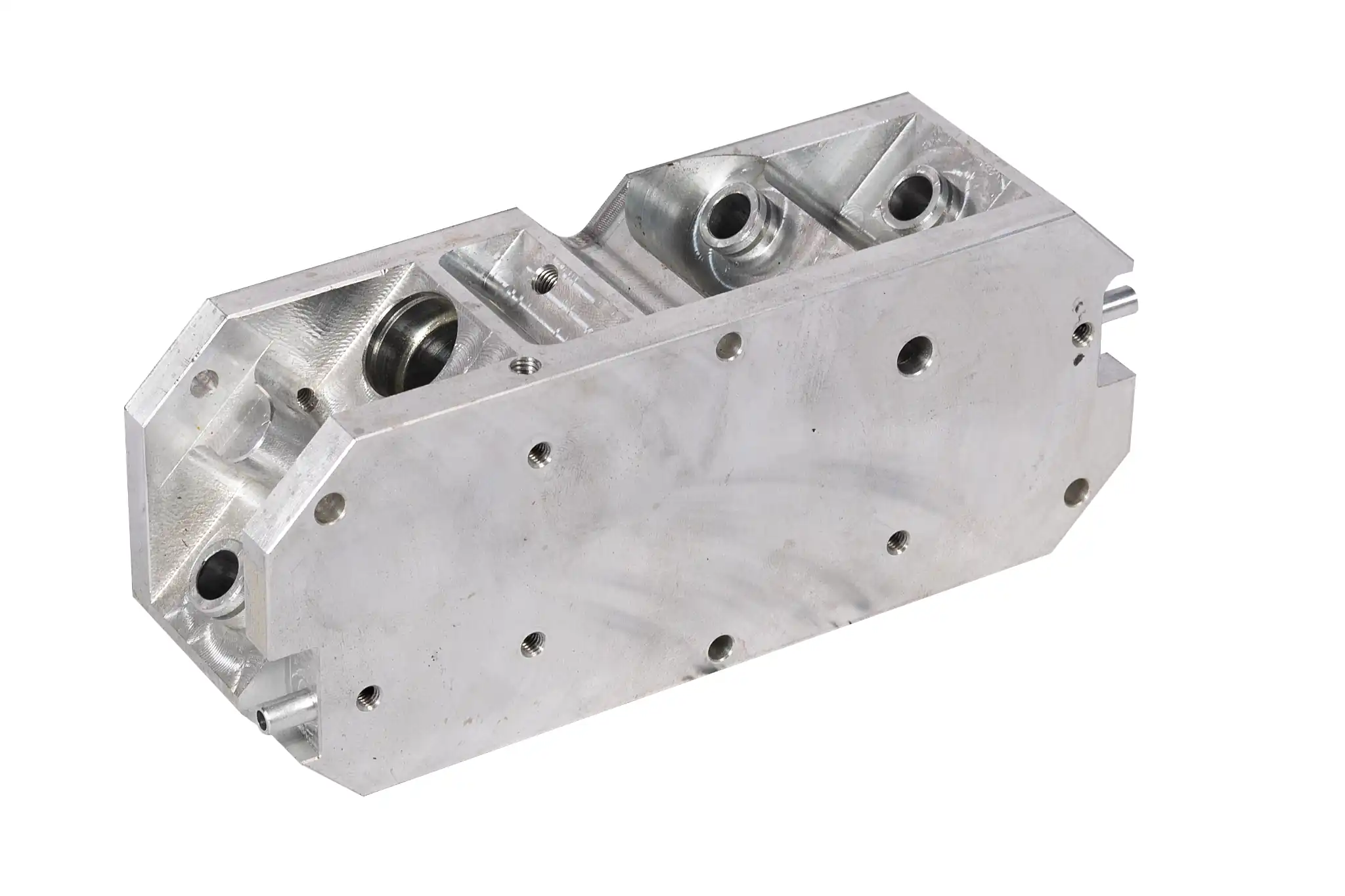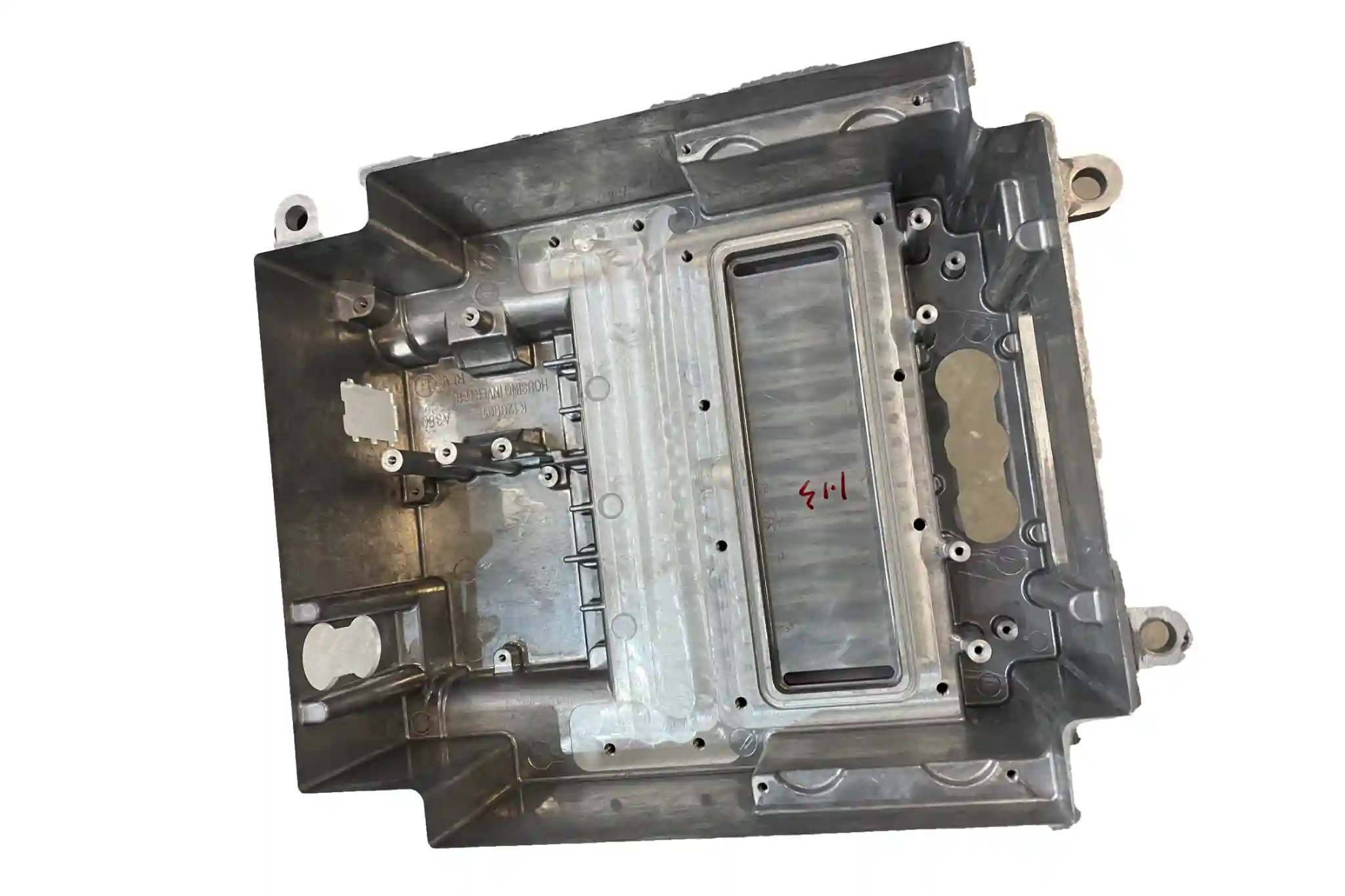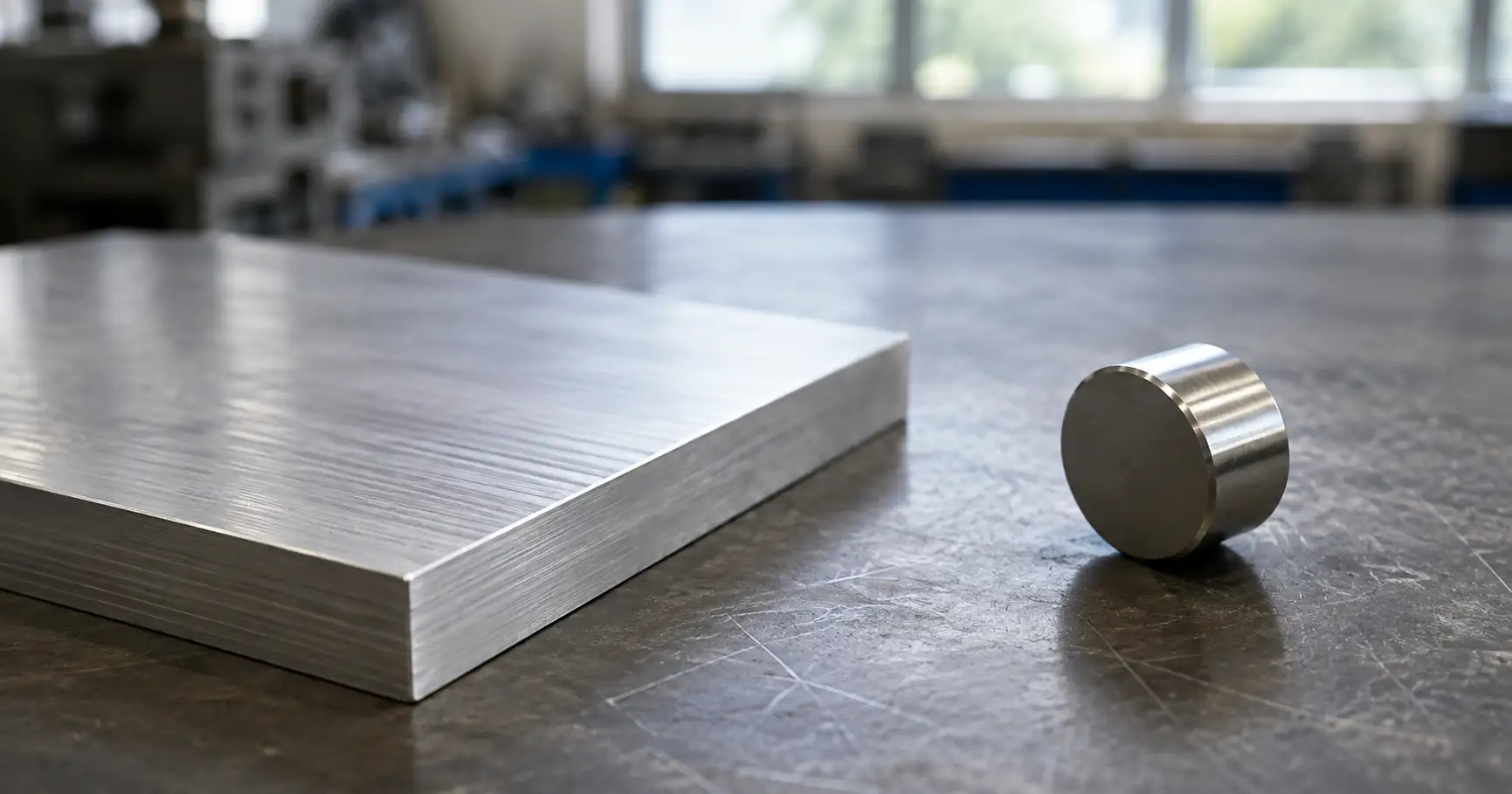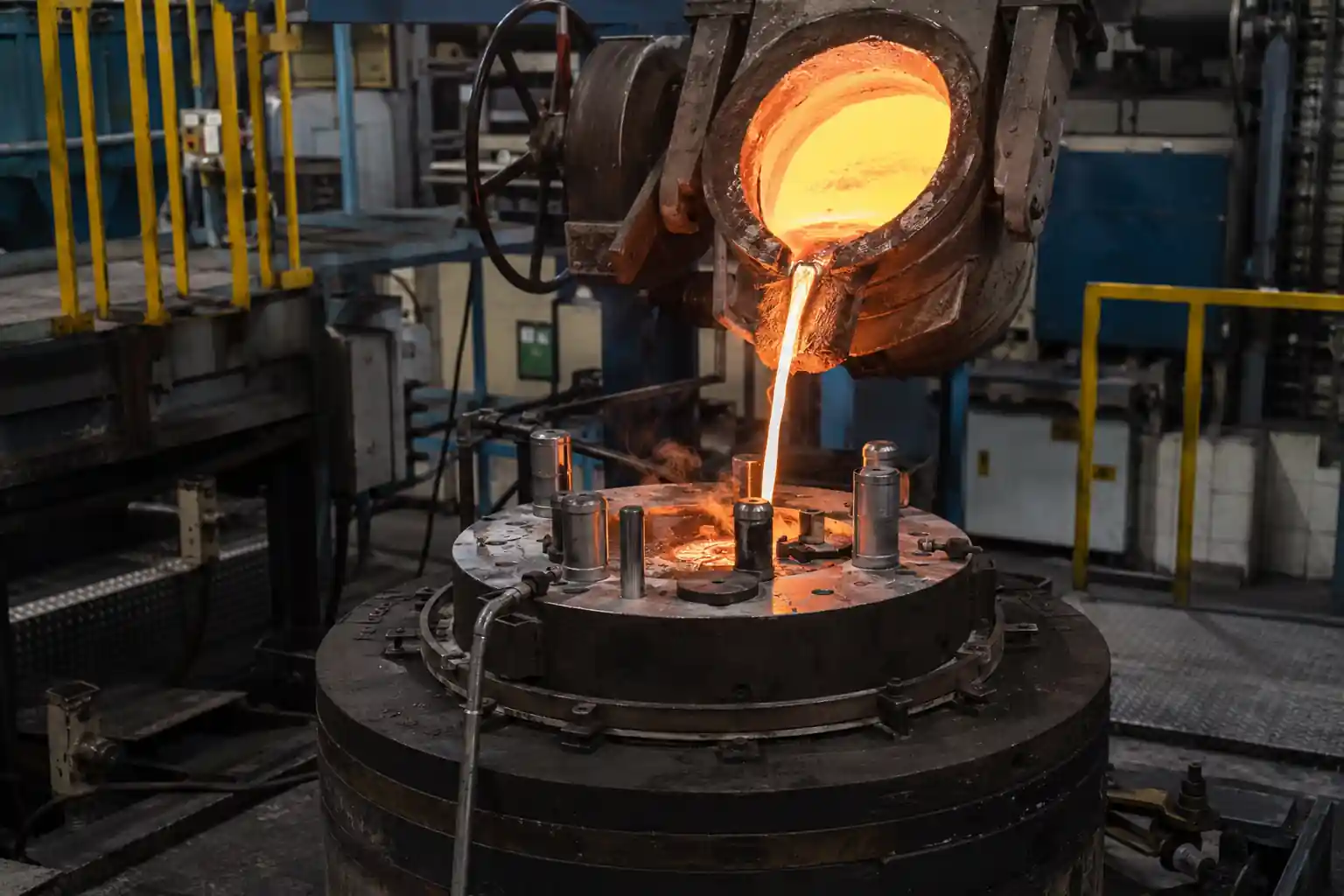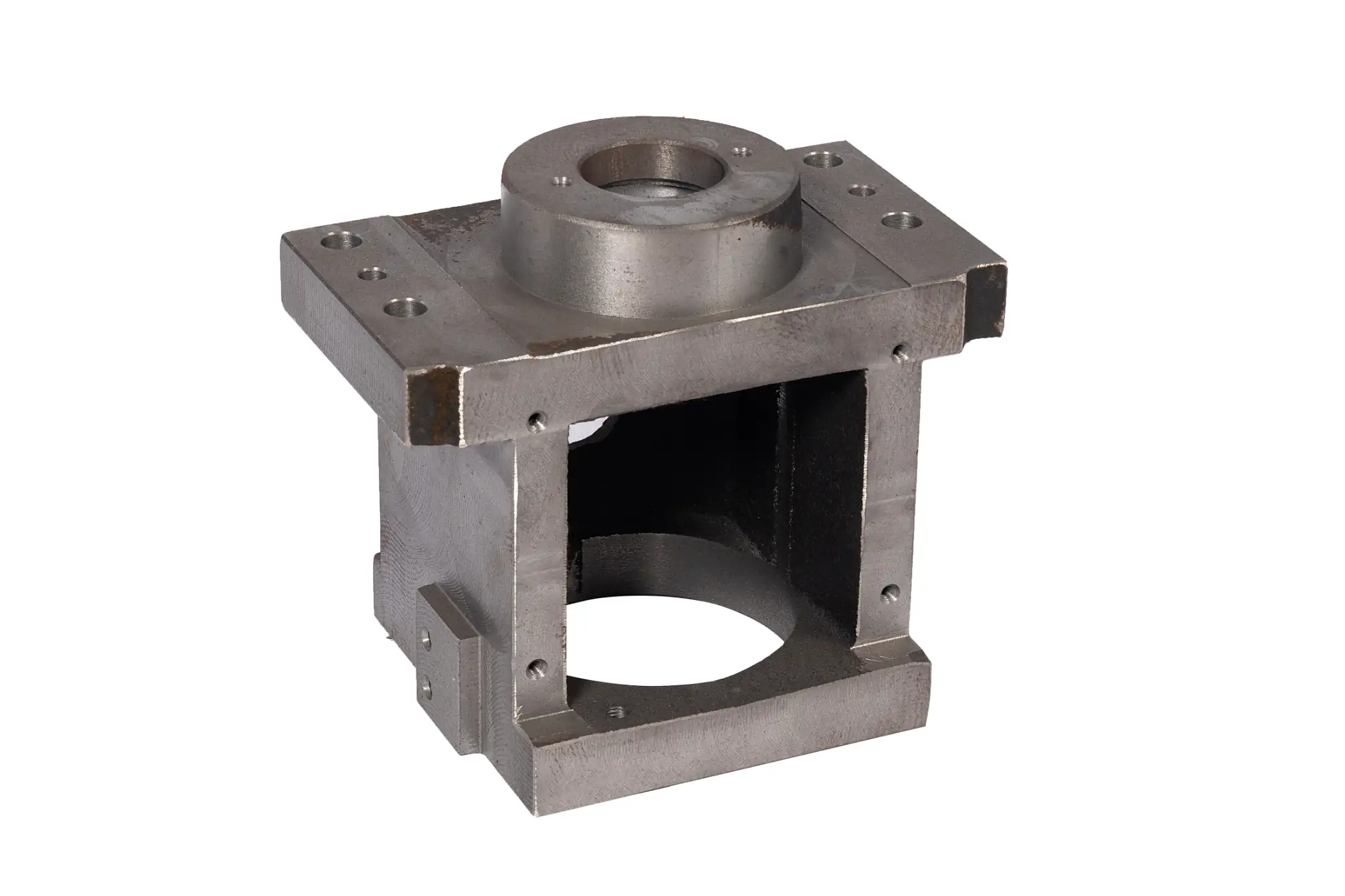



If you are currently evaluating casting routes for aluminum housings, brackets, flanges, pump parts, or structural supports, the differences between low pressure casting and gravity casting will directly impact mold costs, blank consistency, and subsequent machining risks. The real question is often not which process is inherently “better,” but which one is better suited to the specific manufacturing requirements of your current project. This guide analyzes the process selection logic based on molten aluminum filling methods, part characteristics, and full-cycle cost considerations.
What Is Low Pressure Aluminum Casting?
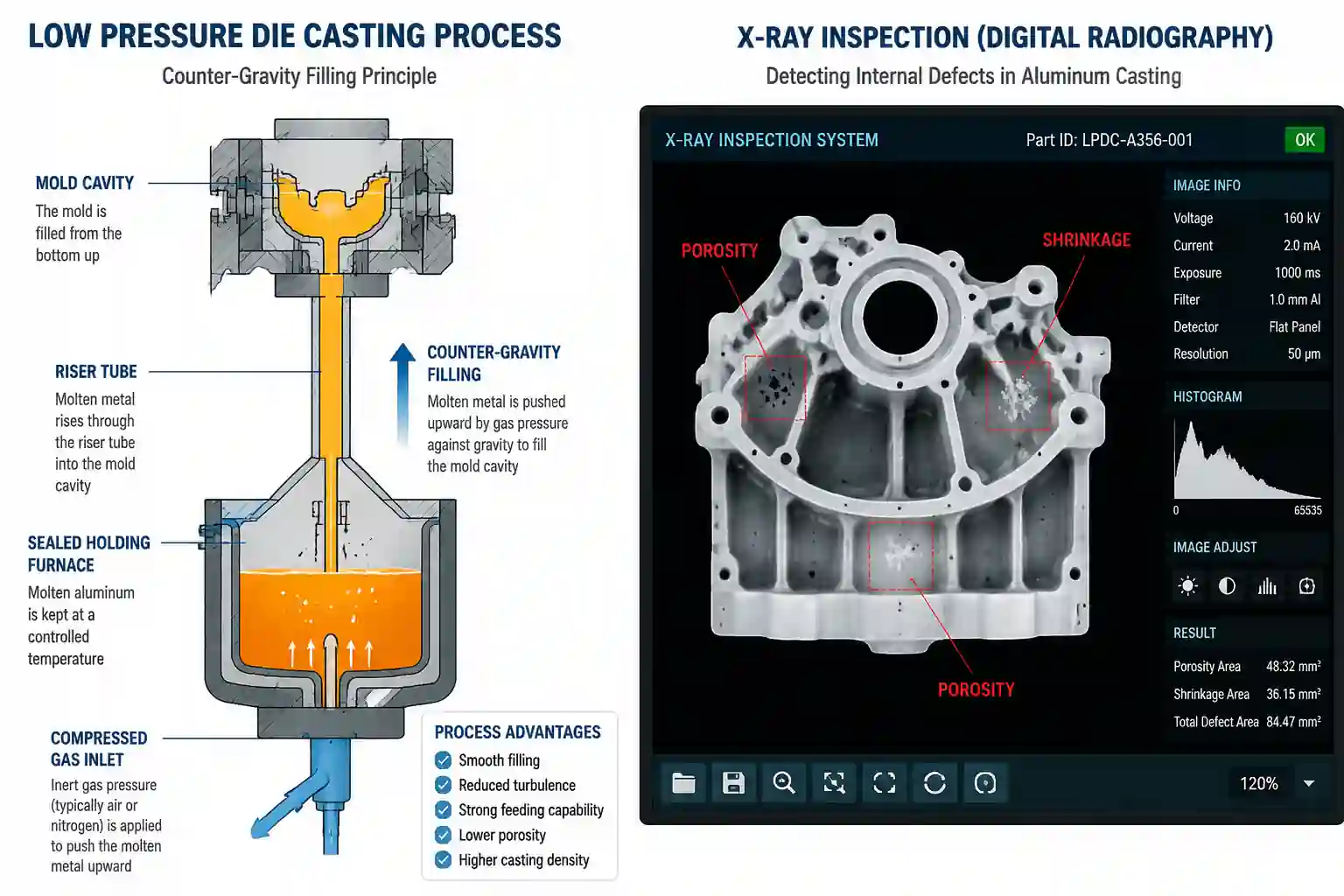
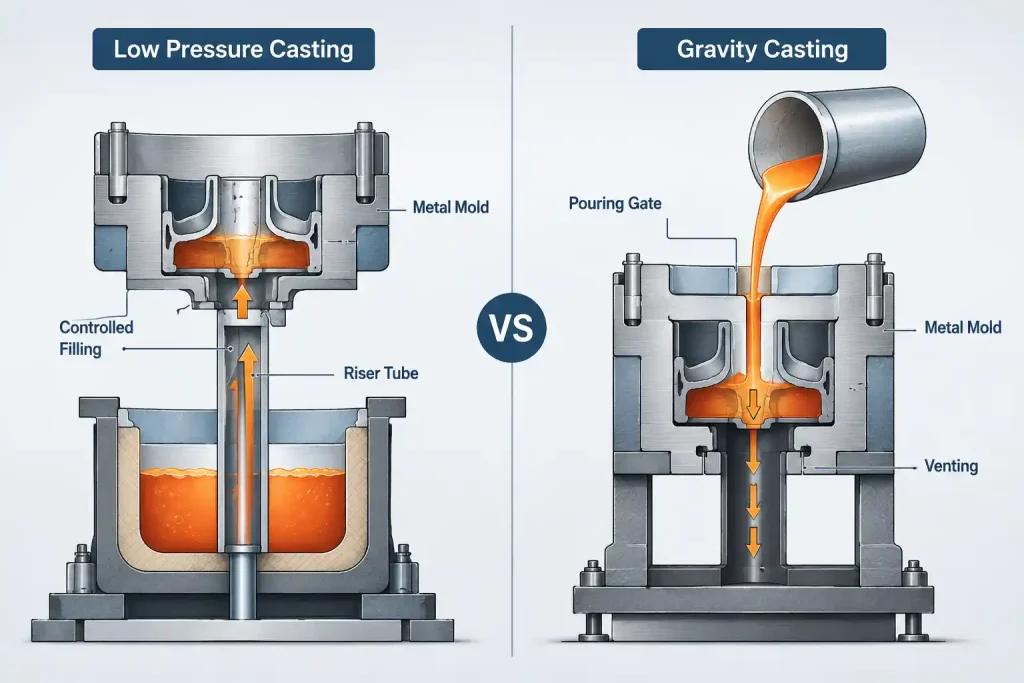
In low pressure casting, molten aluminum is held in a crucible and pushed into a metal mold by controlled low pressure applied through a riser tube. The molten metal typically enters the mold cavity from below, and both filling speed and pressure can be precisely regulated via process parameters, with sustained pressure often applied during the solidification phase to assist with feeding. For aluminum parts that require controlled filling and stable blanks, low pressure aluminum casting is often evaluated during early process planning.
What Is Aluminum Gravity Casting?
Aluminum gravity casting relies on the natural force of gravity to flow molten metal into the metal mold, using a relatively straightforward equipment and tooling system. In practice, pouring speed, mold temperature, and venting design are the critical factors for controlling filling quality. For aluminum parts with a relatively direct shape and clear pouring path, gravity casting can be a practical permanent mold option.
What Are the Differences Between Low Pressure and Gravity Casting?
Understanding the differences in filling methods, mold systems, and process control is essential for project evaluation.
| Assessment Dimension | Low Pressure Casting | Gravity Casting |
| Filling Method | Gas pressure pushes metal into the mold | Natural gravity flow into the mold |
| Filling Stability | Controlled and repeatable | Depends on pouring speed and venting |
| Internal Quality | Better control of porosity, shrinkage, and density | Depends on pouring, venting, and feeding design |
| Molds and Equipment | More complex | Simpler |
| Initial Tooling Cost | Higher | Lower |
| Production Volume | Suitable for stable medium to high volume | Suitable for small to medium volume |
| Machining Risk | Good blank consistency, easier to control | Better for fewer machined surfaces or moderate quality needs |
| Typical Parts | Housings, hubs, pump parts, structural parts | Brackets, flanges, covers, connectors |
The fundamental difference lies in how the molten aluminum enters the mold: low pressure casting adds pressure control, a riser system, and a holding phase; while gravity casting relies more on the coordination of pouring control, mold temperature, and venting design. These differences not only affect the part’s quality but also dictate the subsequent mold design, quality control requirements, and production pacing.
When to Choose Low Pressure Casting?
Low pressure casting is best suited for projects that prioritize machining consistency and internal quality. It is worth prioritizing in early evaluations when parts exhibit the following characteristics:
- Internal Quality Requirements: If the casting cannot have exposed porosity or shrinkage, or must pass rigorous pressure/leak tests, low pressure casting is the primary consideration.
- High Ratio of Machining: If there are many machined surfaces, consistent machining allowances directly impact scrap risk related to internal defects.
- Stable Batch Delivery: For projects already in stable mass production, the process control capability of low pressure casting effectively reduces fluctuations caused by manual operation.
- Demanding Feeding Requirements: Parts with localized thick sections or complex wall thickness transitions benefit from sustained pressure-assisted feeding to optimize solidification quality.
When to Choose Gravity Casting?
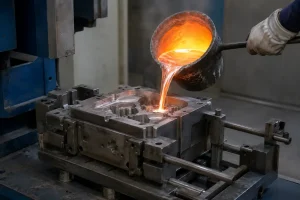
Gravity casting offers unique advantages in initial investment and development pace; it is not merely a “low-cost substitute”:
- Simple Structural Parts: If the part structure is straightforward with clear pouring paths, gravity casting allows for a more economical mold configuration.
- Development and Trial Phases: For product development, small-batch trials, or projects with moderate demand, gravity casting offers greater flexibility in mold maintenance and rapid modifications.
- Robust Quality Performance: For aluminum parts with uniform wall thickness and moderate internal quality requirements, gravity casting achieves reliable dimensional accuracy and surface finish.
- Design Iteration: If the design is likely to undergo modifications during the project, gravity casting usually facilitates faster and easier mold adjustments.
Which Process Fits Common Aluminum Parts?
In actual projects, process selection must return to the specific part type and manufacturing risks involved.
| Part Type | Recommended Direction | Logic |
| Housings | Low Pressure or Gravity | Choose LP for sealing/machining needs; Gravity for simple shells |
| Hubs/Load Parts | Lean toward Low Pressure | High requirements for filling stability and consistency |
| Brackets | Lean toward Gravity | Simple structure; more cost-effective tooling investment |
| Flanges | Lean toward Gravity | Regular shape; suitable for economical gravity pouring |
| Pump Parts | Lean toward Low Pressure | Focuses on internal quality, sealing, and machining stability |
| Supports | Case-by-Case | LP for high load/machining; Gravity for standard structures |
It should be noted that the same part may require different processes depending on wall thickness variations, machined feature placement, sealing requirements, and batch size. The table above serves only as a preliminary decision-making tool, not an absolute rule.
Cost and Production Considerations
When making selection decisions, it is advisable to consider the entire production lifecycle. A lower initial mold quote does not necessarily represent the lowest total manufacturing cost, as scrap rates, rework risks, machining allowances, and quality fluctuations significantly impact the cost structure.
Low pressure casting requires higher upfront investment, but if the project involves extensive machining or requires strict scrap rate control, the better blank consistency may offset some of the initial costs and improve long-term manufacturing stability. Gravity casting, meanwhile, offers clear economic advantages in terms of upfront investment and mold maintenance costs.
About DFM Review for Aluminum Casting Projects
Even if the part type has been preliminarily determined, the final process still requires assessment of drawing details. An early Design for Manufacturing (DFM) review can help determine whether low pressure casting or gravity casting better meets actual manufacturing conditions. For broader process planning, these routes should also be compared with other aluminum casting routes based on alloy grade, machining allowance, and production volume.
During the review, assessing drawing requirements, wall thickness, material grade, machining allowances, volumes, and quality standards can confirm which route is more conducive to meeting project needs.
Conclusion
Both low pressure casting and gravity casting are suitable for aluminum alloy parts, with differences primarily stemming from filling methods and process control. Low pressure casting is better suited for projects requiring high internal quality, machining stability, and long-term batch consistency; gravity casting is more appropriate for cost-sensitive, fast-paced development, and straightforward small-to-medium batch parts. Final selection should be based on a comprehensive judgment of performance targets, production volumes, mold budgets, and post-machining requirements.