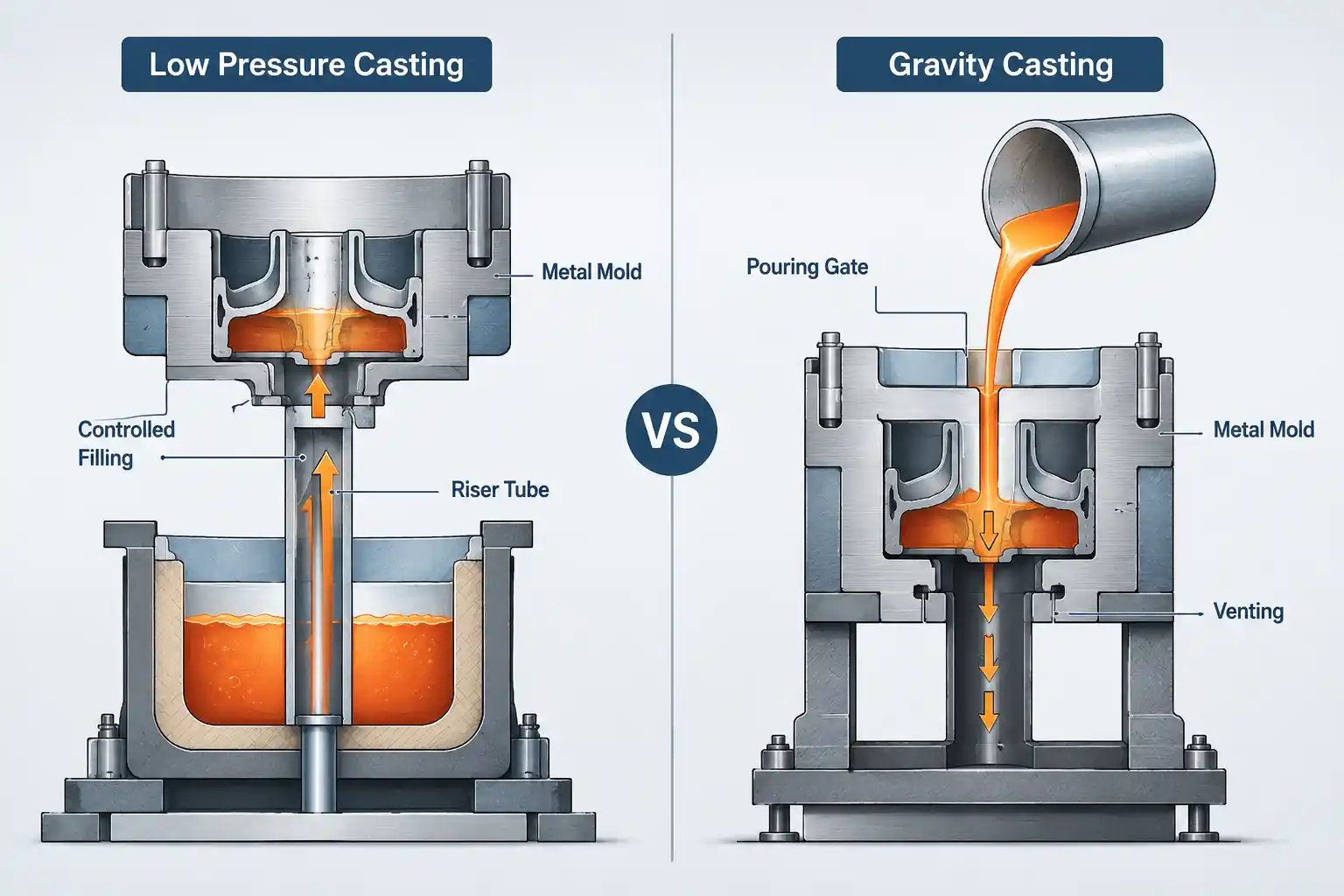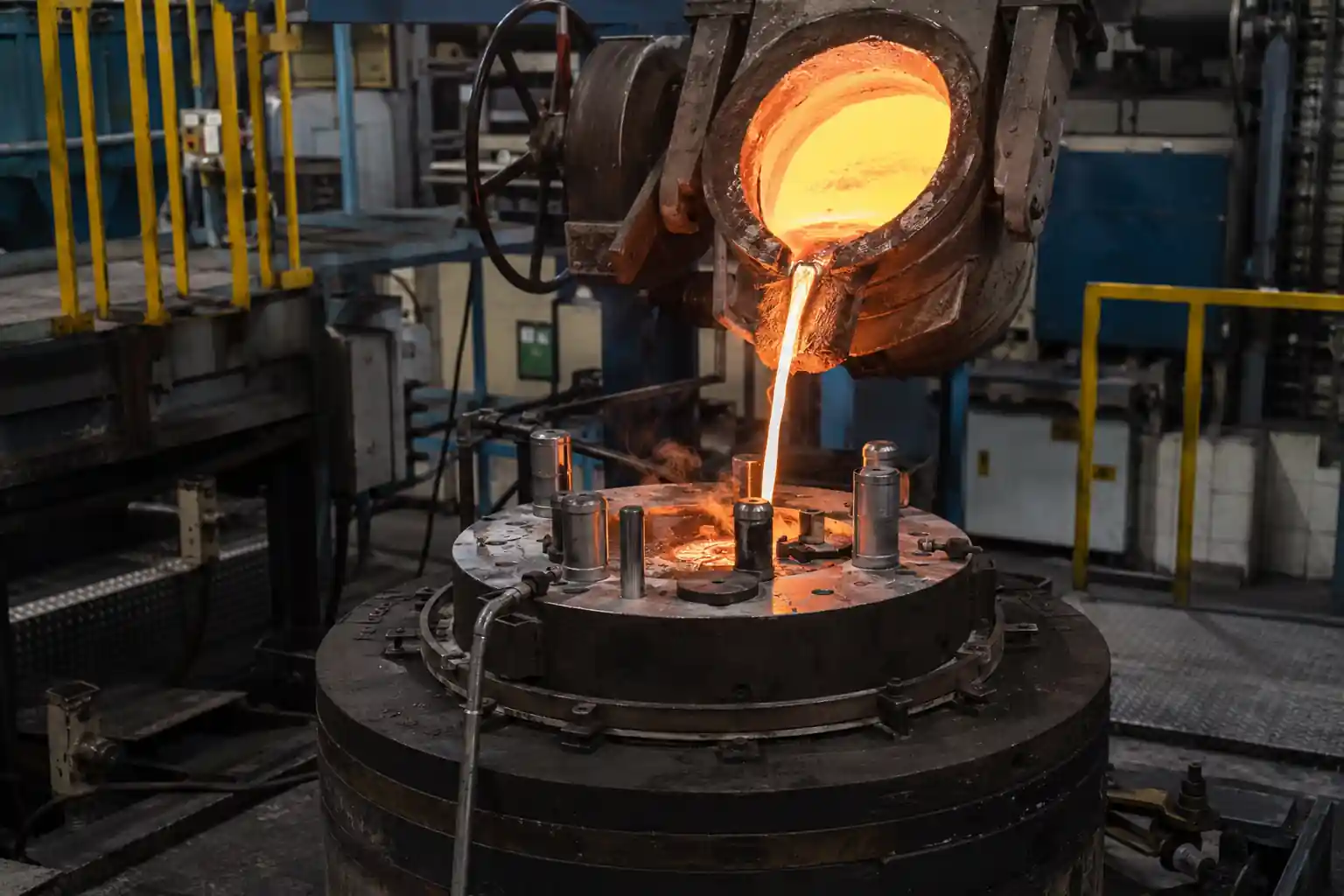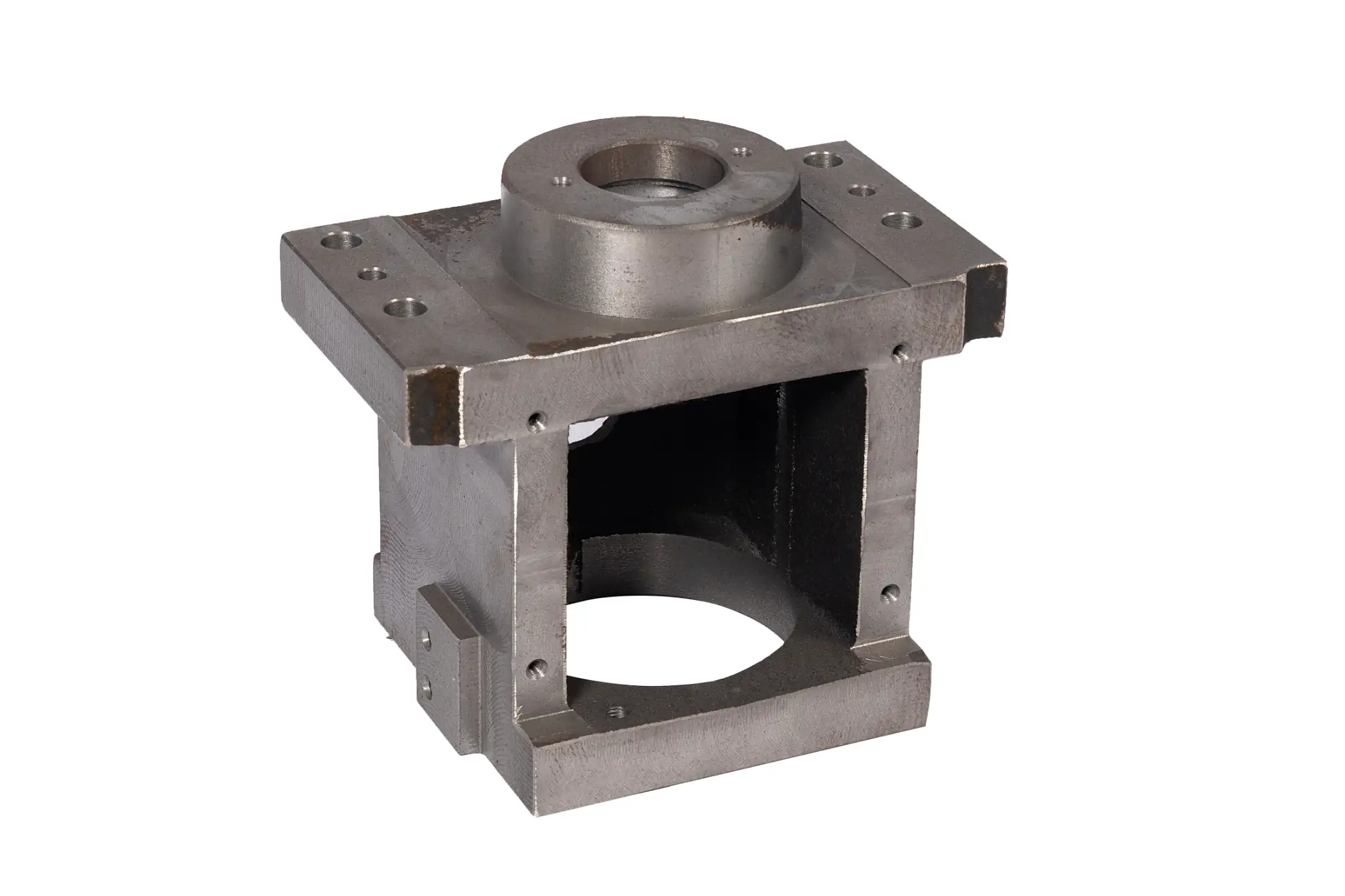



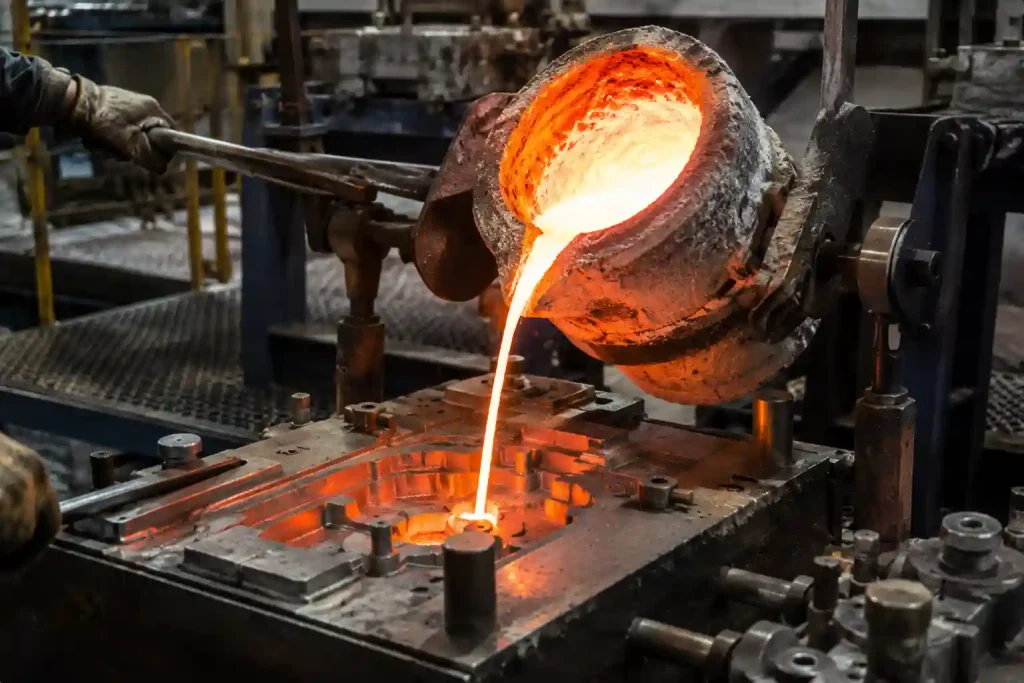
Gravity die casting (GDC) involves pouring molten aluminum into a metal die where it solidifies under gravity. The quality of the final part depends on how smoothly molten aluminum enters the cavity, how air escapes, how thick sections are fed during solidification, and how consistently die temperature, pouring temperature, pouring speed, and melt quality are controlled.
Part Design
Part geometry influences the metal flow path, solidification sequence, and dimensional stability. During the project launch, suppliers review drawings to evaluate specific geometric features.
Wall Thickness and Transitions
Wall thickness affects how metal fills the cavity and the rate at which it solidifies. Significant variations in thickness lead to uneven solidification rates; thick sections retain heat longer and create hot spots, while thin sections cool faster and may cause misruns or cold shuts. Gradual thickness transitions help mitigate stress concentrations and balance heat distribution. If transitions cannot be avoided, adjustments to local radii or feeding design are often necessary.
Radii, Bosses, and Machining Allowance
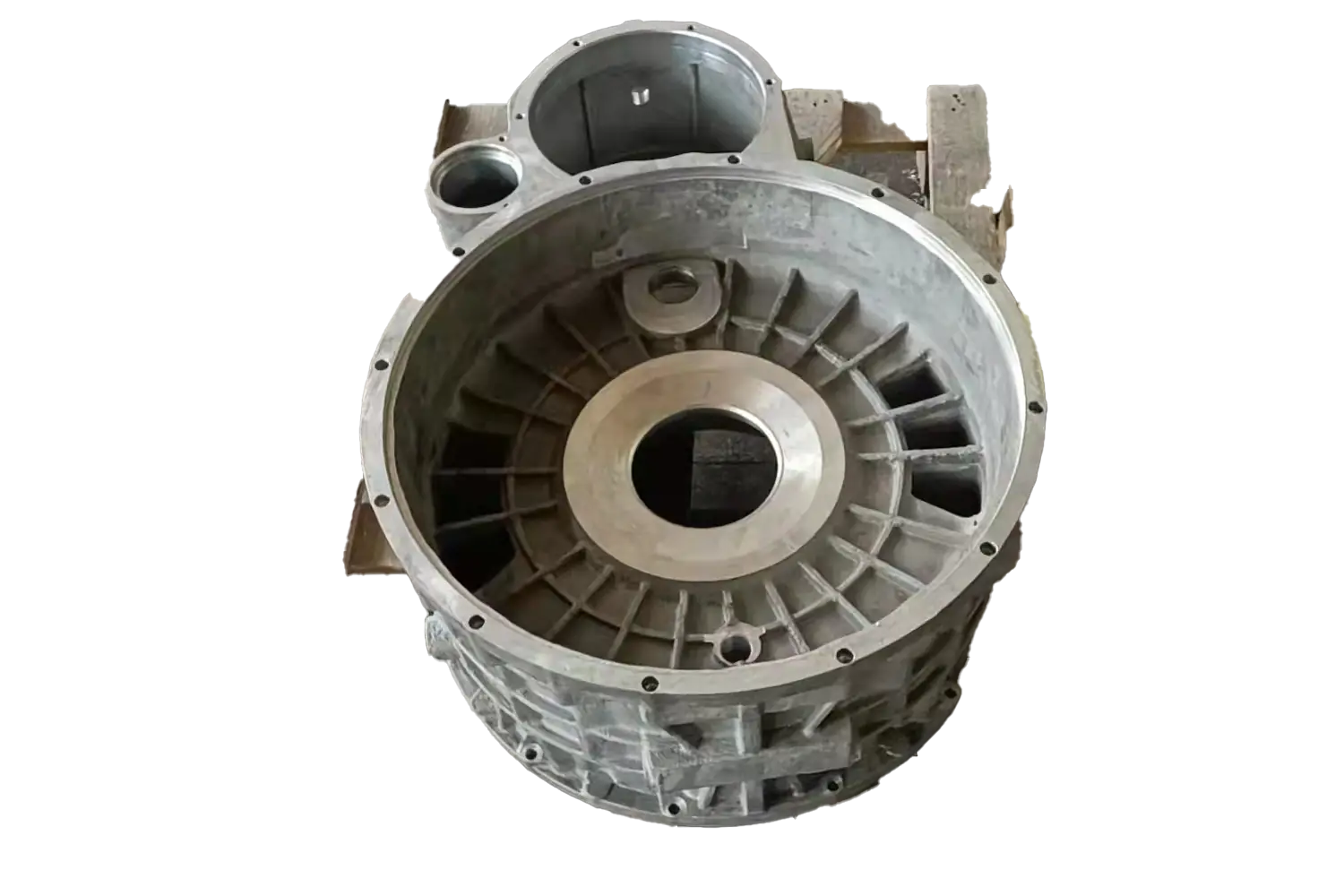
Internal radii help guide metal flow and reduce turbulence. Bosses, mounting pads, and machined faces can create local heavy sections that serve as heat reservoirs. Machining allowance should account for casting variation, draft, potential distortion, and the requirements of subsequent CNC machining. Excessive allowance increases machining time and may expose internal porosity, while insufficient allowance may prevent the surface from being cleaned properly during machining.
Die Construction, Temperature, and Coatings
The metal die not only forms the casting shape but also controls how heat is removed from different areas of the part.
Parting, Ejection, and Removal
Parting line placement influences ejection, flash, venting, and gating layouts. Ejection mechanisms should be designed to balance forces across the component. Suppliers consider ejection layout during die design to ensure that the casting—while still hot and relatively weak—is not subjected to uneven forces that could cause deformation or surface damage.
Die Temperature and Cooling
Die temperature affects filling, surface condition, solidification speed, and dimensional stability. If the die is too cool, it may lead to premature solidification and cold shuts; if it is too hot, it can increase cycle times and affect local solidification. Through optimized cooling channel layout, local cooling, or die preheating, thermal balance is achieved. These parameters are adjusted during trial casting to maintain consistent thermal fields.
Coatings and Release Agents
Die coatings provide release functionality and act as a thermal barrier to regulate heat transfer. Coating thickness and uniformity affect heat transfer and surface quality. Too much coating changes local heat transfer and may affect cavity dimensions; too little may cause sticking, tearing, or rough surface finish. Coating thickness and spray frequency are routinely checked during production.
Pouring Position, Gating, and Venting
Even with a well-designed part, poor pouring position or gating design can cause unstable filling. Suppliers must evaluate how metal enters the cavity, where air escapes, and how thick sections are fed.
Pouring Position
The pouring position is selected based on part geometry to allow metal to enter the cavity smoothly and avoid turbulence or air entrapment caused by free-fall. Side filling or bottom-assisted filling may be considered to help guide oxide film movement and control the filling sequence.
Gating and Venting
The gating system controls the speed and direction of molten aluminum entering the cavity. Abrupt entry, sharp turns, or poorly sized gates cause turbulence, oxide inclusions, or air entrapment. Vents should be placed near last-to-fill areas, metal convergence zones, or areas prone to trapped air. Gating and venting paths should be checked together with gating direction and solidification requirements during trial casting.
Feeding and Risers
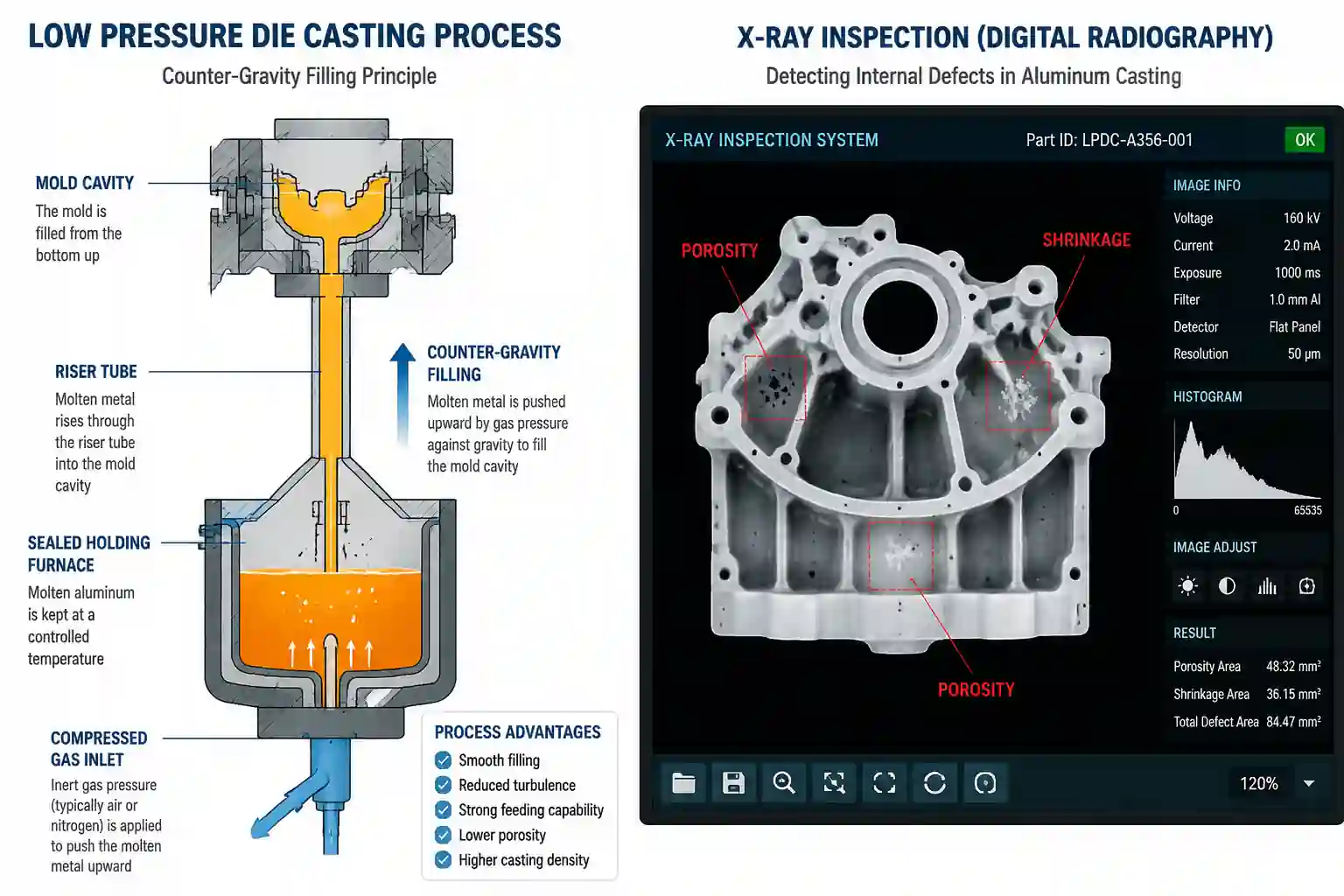
Aluminum shrinks during solidification. Risers feed thick sections, bosses, mounting pads, flange edges, and hot spots. Risers must remain molten longer than the casting area they feed; if the feeding path freezes too early, shrinkage porosity may remain inside the casting. Shrinkage may only appear after machining, sectioning, X-ray inspection, or pressure testing, making the verification of riser size and position during trial casting essential.
Pouring Conditions
Pouring temperature, pouring speed, and die temperature should be considered as an integrated process.
Pouring Temperature
Temperature must provide enough fluidity to fill the cavity without being unnecessarily high. Low temperature reduces fluidity and may cause misruns or cold shuts. High temperature may increase oxidation, hydrogen absorption, mold thermal load, coarse grains, or shrinkage risk. The proper window depends on the alloy, wall thickness, casting weight, die temperature, and transfer time.
Pouring Speed
Pouring speed should match venting capacity, gating design, and casting structure. Too fast may cause turbulence, splashing, and air entrapment. Too slow may cause temperature loss and incomplete filling. Mechanical pouring can help improve repeatability, though manual pouring is effective when operators maintain consistent pouring height, ladle position, and pouring time.
Aluminum Melt Quality and Treatment
Melt quality affects internal soundness, leak-tightness, and machining performance.
Material Composition
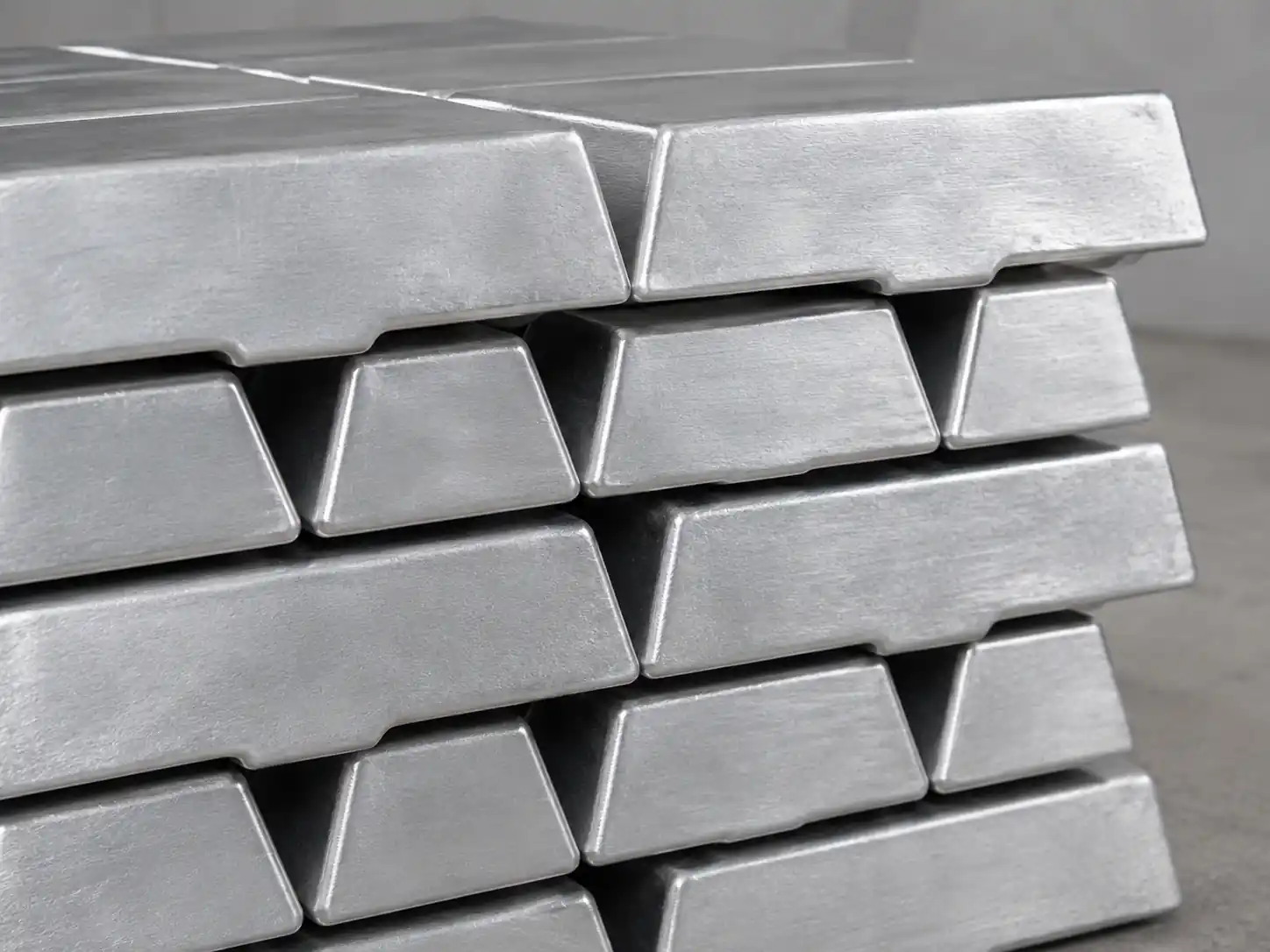
Alloy composition should meet drawings or relevant material standards. Stable composition helps keep fluidity, solidification behavior, and mechanical properties within the expected range.
Degassing and Filtration
Degassing reduces dissolved hydrogen in molten aluminum. Ceramic filtration helps reduce oxide films, inclusions, and fine non-metallic particles. These are melt treatment steps, not universal solutions for all defects; if pouring creates turbulence, oxide films can still be entrained even after filtration.
Holding and Transfer
The holding temperature should remain within a suitable process range. Severe melt agitation during transfer and charging should be avoided to lower the risk of secondary oxidation, and ladles should be dry and preheated.
Sand Cores and Internal Structures
For castings with internal cavities, passages, or complex geometry, sand cores require careful consideration.
Core Positioning and Support
Cores must be secured by core prints or supporting features to ensure stability against the buoyancy and impact of molten aluminum. Core movement affects internal cavity position, wall thickness, and machining allowance.
Core Venting and Sand Removal
The binder in sand cores can release gas when exposed to high-temperature molten aluminum. Core venting paths should allow gas to escape through core prints. Internal cavities should also be designed with sufficient clearing paths to ensure sand removal after casting, avoiding potential issues with trapped sand or stress-related damage.
Trial Casting and Batch Stability
A stable gravity die casting process is usually confirmed through trial casting rather than by design assumptions alone.
Trial Casting Inspection
Inspection may include visual measurement, machining verification, leak testing, pressure testing, X-ray inspection, or section analysis depending on part requirements. Trial results help identify filling issues, shrinkage, core movement, or machining allowance problems. Porosity near last-to-fill areas often indicates venting problems, while shrinkage in thick bosses may indicate feeding or die temperature issues.
Process Adjustment
Based on trial results, suppliers adjust ingate position, runner size, vent location, riser size, die temperature, coating thickness, pouring temperature, or pouring speed. The goal is to confirm a process window that can be repeated during batch production.
Batch Inspection and Process Records
During mass production, key data—such as melt temperature, heat or lot number, degassing status, casting weight, and visual inspection results—are recorded. Process records help trace later problems, such as machining porosity, leakage, shrinkage exposure, or dimensional shift, back to pouring temperature, melt condition, venting, feeding, or die temperature. Batch stability depends on keeping these process conditions consistent.