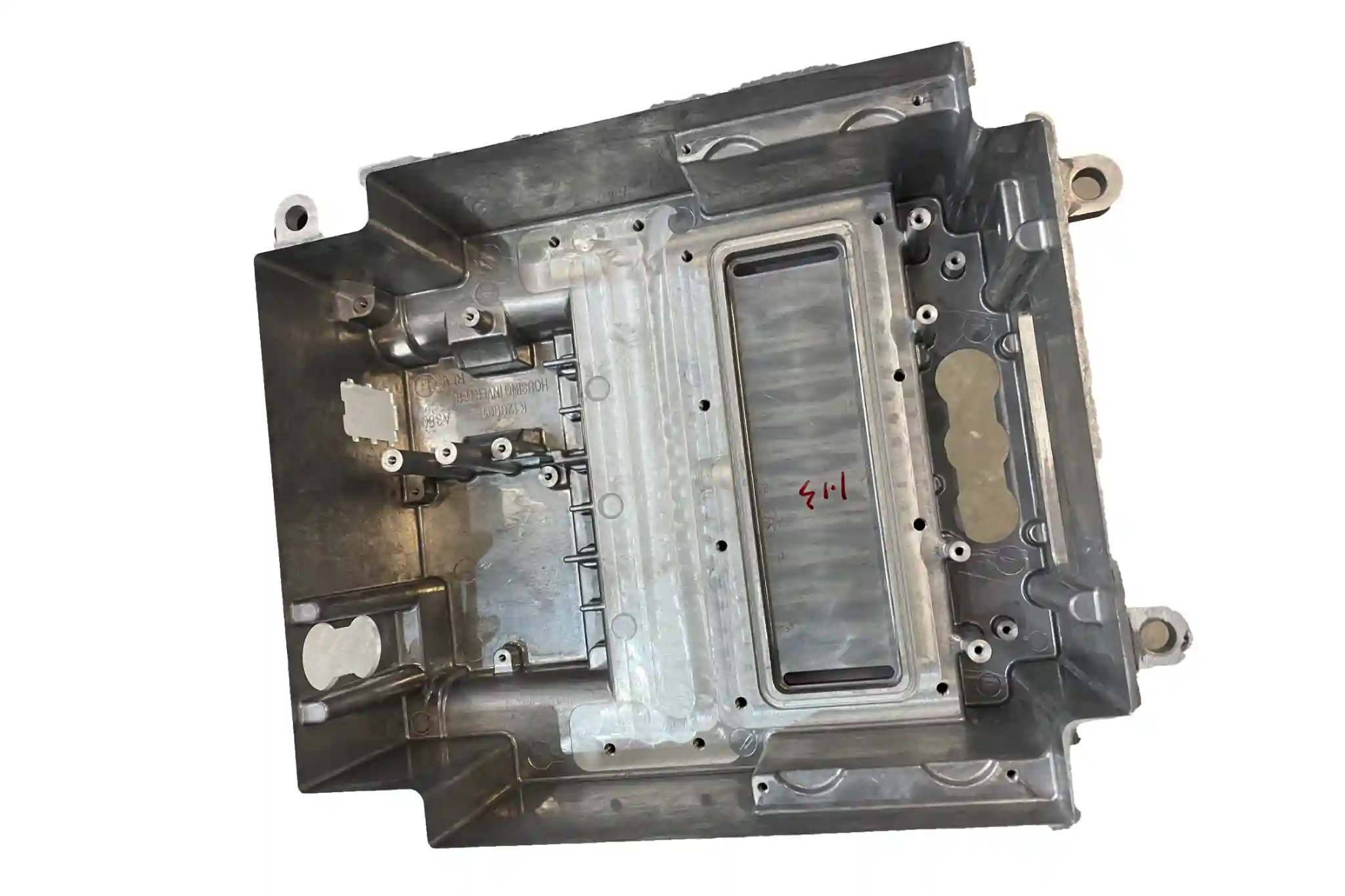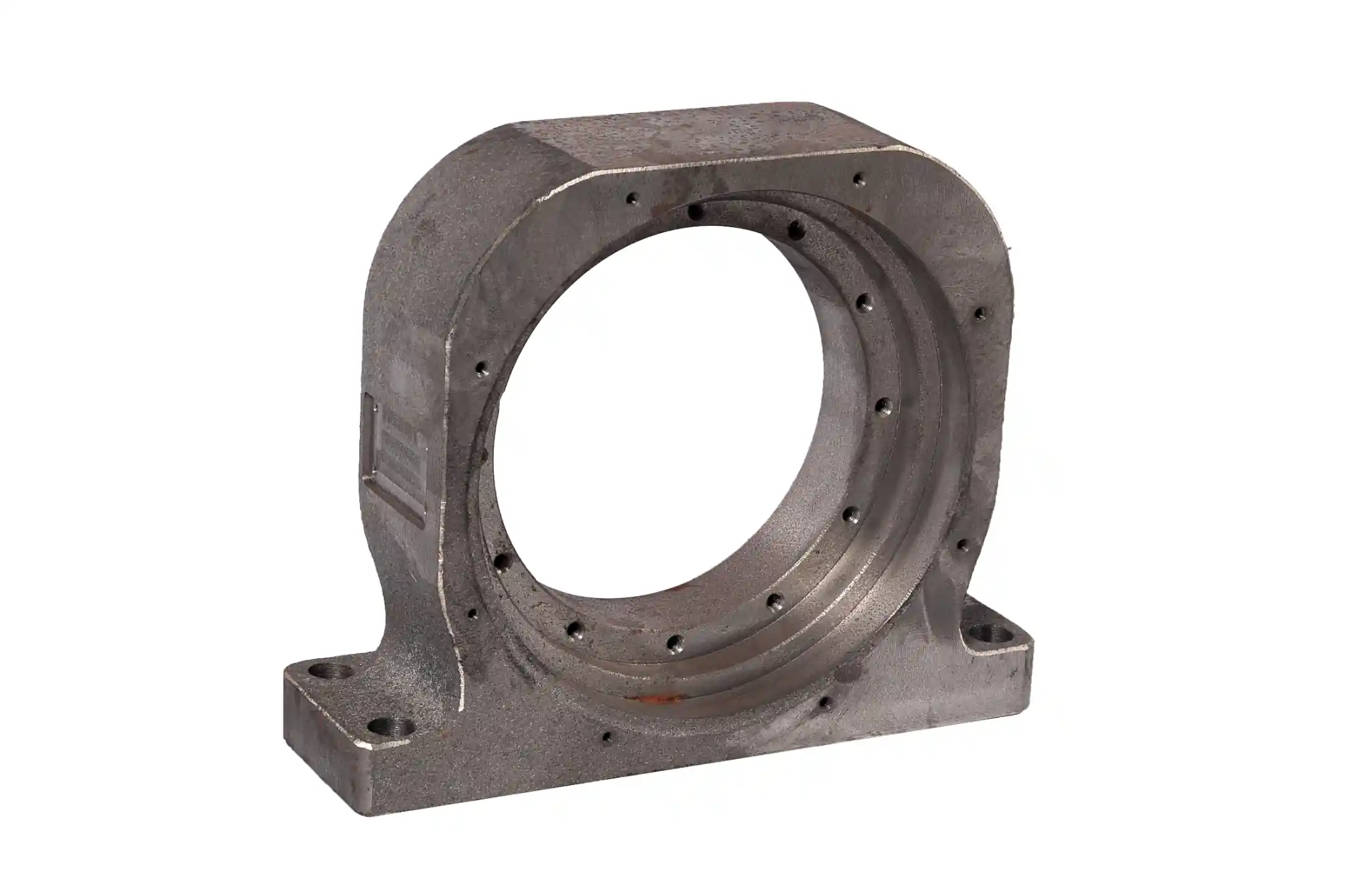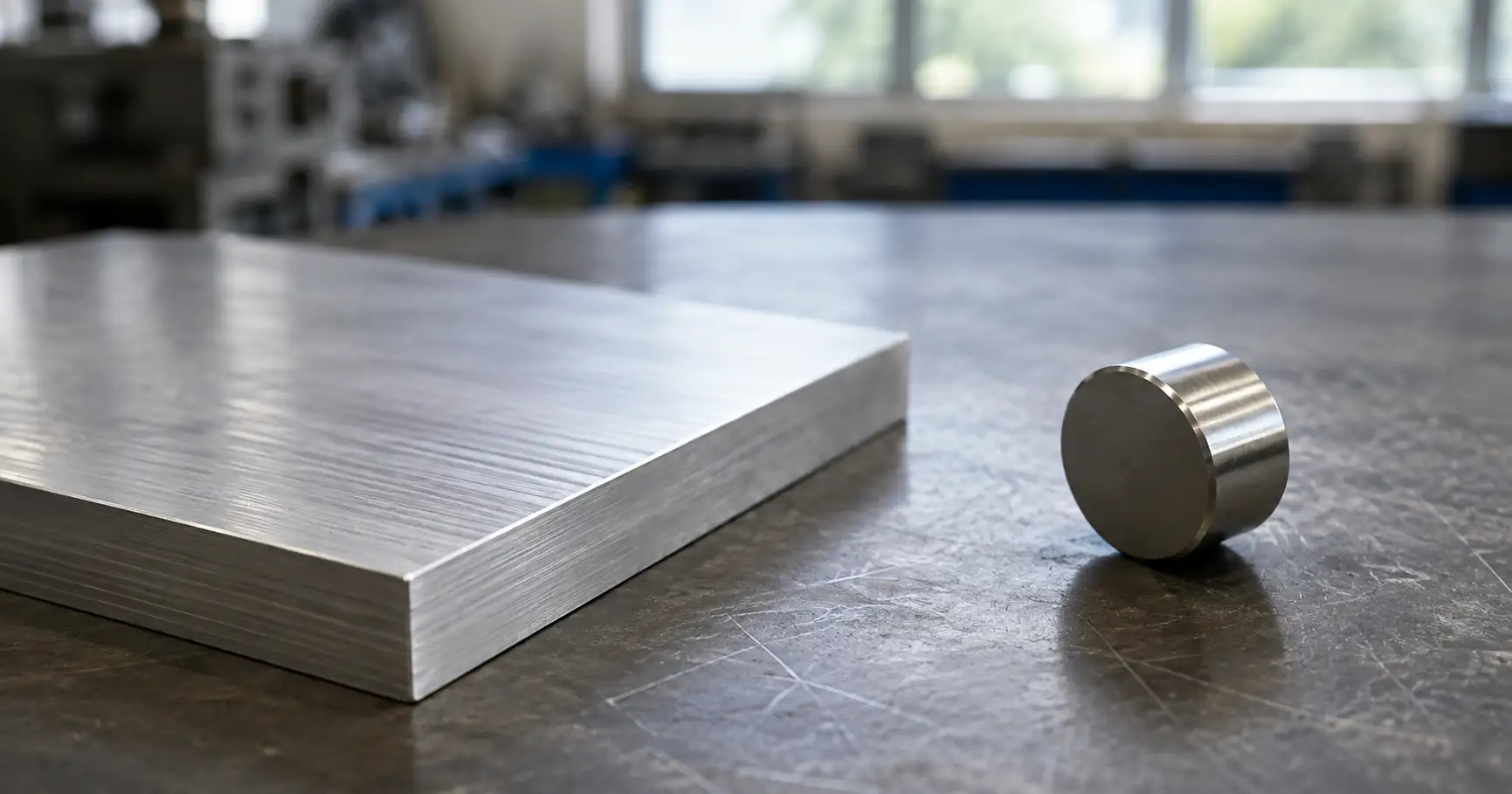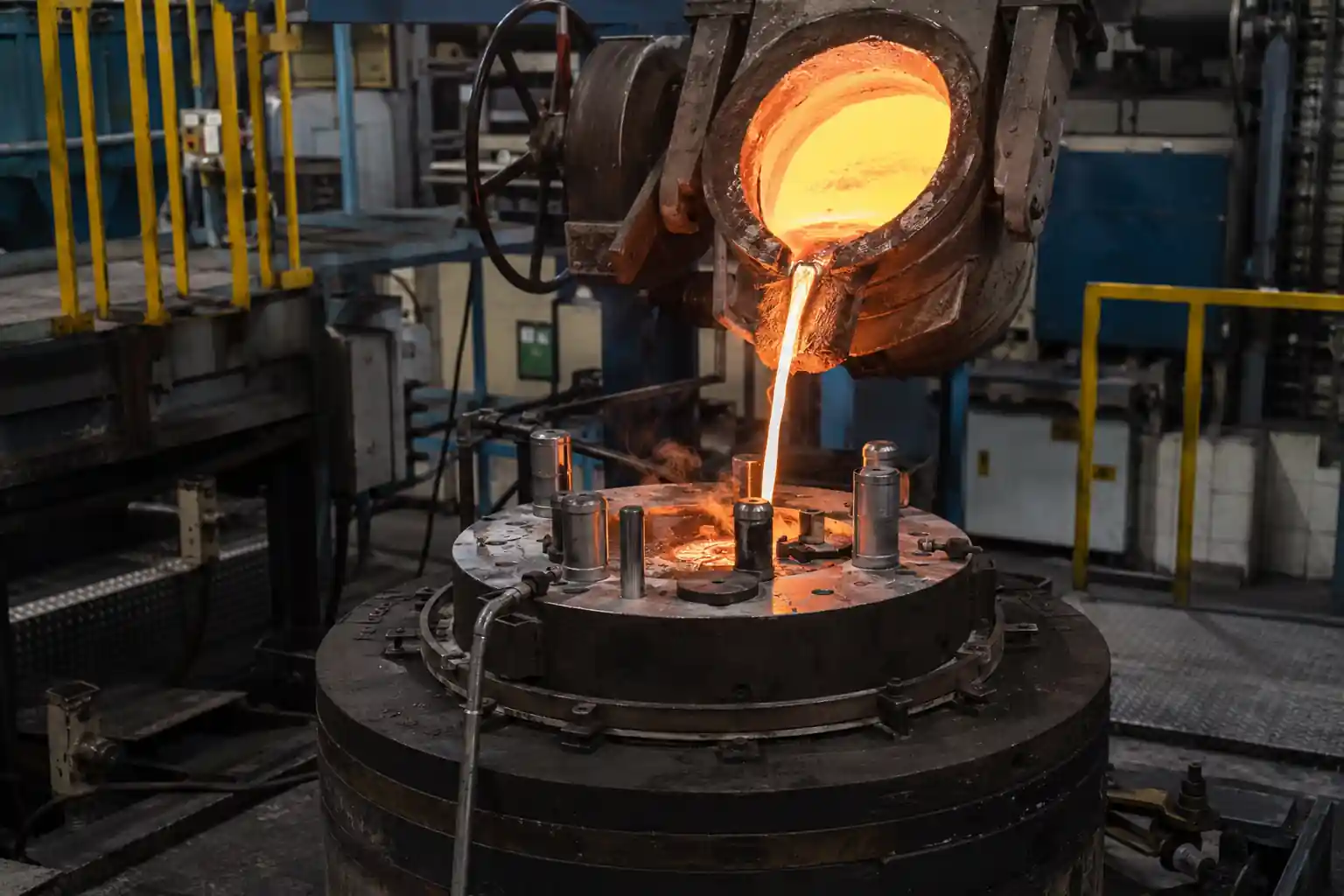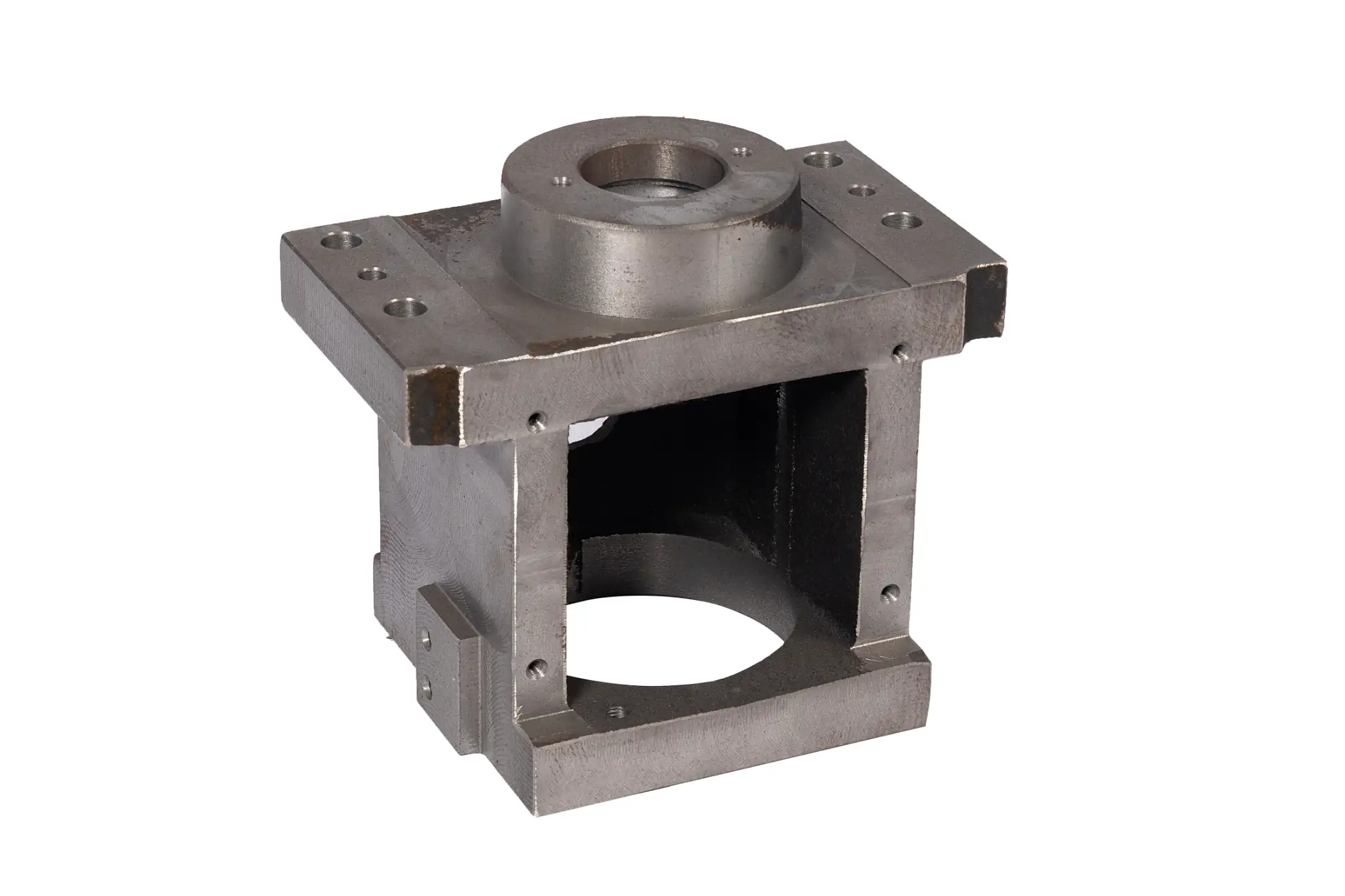



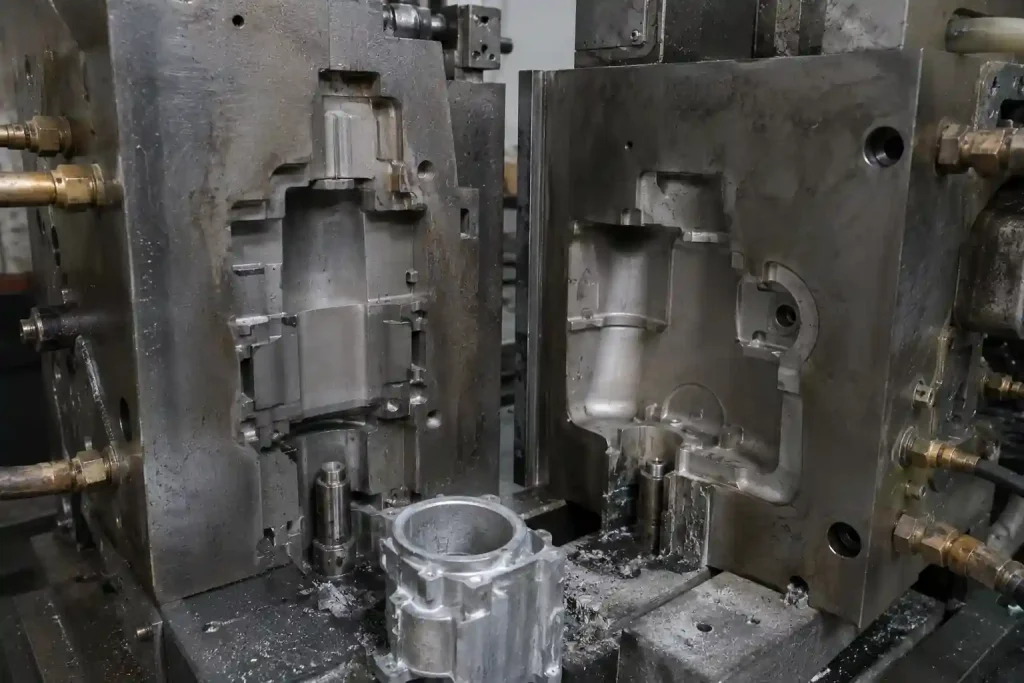
Casting tooling is the foundation of metal casting. Metal casting is a process in which molten metal is poured into a mold cavity and cooled and solidified to obtain the required part. A well-designed tooling plan can effectively reduce trial production risks and is a key factor in helping a project move smoothly from prototyping to batch production.
MinHe is a leading metal products manufacturer in China, specializing in custom metal parts. MinHe’s foundry mainly uses three casting processes: low-pressure casting, gravity casting, and sand casting. Its products cover a wide range of materials, including aluminum, iron, steel, and copper. Different materials and casting processes require different tooling designs, so MinHe evaluates each mold plan based on drawings, production volume, and quality standards to determine whether it is suitable for trial casting, machining, and batch production.
What Is a Casting Mold?
A casting mold is tooling used to hold molten metal and form the shape of a casting during the casting process. After molten metal enters the mold cavity, it fills the space defined by the mold, cools, and solidifies.
A casting mold usually refers to the mold body that directly forms the casting. Casting tooling has a broader meaning. In addition to the mold itself, it may also include patterns, core boxes, gates, risers, venting, cooling, positioning, and ejection structures.
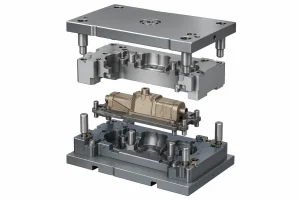
Casting molds can take different forms, such as expendable molds, permanent molds, sand molds, metal molds, single-piece molds, and multi-piece molds. Different mold forms are usually related to the casting process, part structure, and production volume.
Types of Casting Tooling in Different Casting Processes
Different casting processes use different forms of molds and tooling, depending on the mold material, part structure, and production volume.
Sand Casting
Sand casting usually relies on patterns, core boxes, and sand molds to form the casting. It is suitable for large parts, low-volume production, or castings with complex internal cavities.
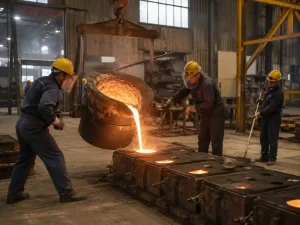
Common casting tooling includes:
- Pattern: Determines the casting shape inside the sand mold and serves as the basis for sand casting tooling.
- Core box: Produces sand cores and is related to internal cavities, channels, and wall thickness stability.
- Pattern plate: Holds the pattern in place and improves molding efficiency and repeatability.
- Sand mold: Holds the molten metal and forms the casting profile, affecting surface condition and dimensional stability.
- Gating and riser system: Controls metal flow and feeding, which is related to shrinkage, cold shuts, and complete filling.
Investment Casting
Investment casting usually starts with wax patterns produced by a wax injection die, followed by shell building, dewaxing, and pouring.
Common casting tooling includes:
- Wax injection die: Determines wax pattern consistency and is important for stable batch production.
- Wax pattern: Replicates the final casting geometry and affects shape details and dimensional performance.
- Wax pattern assembly: Arranges multiple wax patterns and the gating system, affecting pouring layout and later cleaning.
- Gating system: Controls the path of molten metal entering the shell and is related to filling and defect control.
- Shell-making support tooling: Helps with wax pattern positioning and shell stability, reducing batch variation.
Gravity Casting
Gravity casting usually uses metal molds and is often applied to medium- and low-volume aluminum alloy parts such as brackets, end covers, housings, cover plates, and flanges.
Common casting tooling includes:
- Metal mold: Provides repeatable forming capability and is related to dimensional stability and surface quality.
- Mold cavity: Determines the casting shape, profile, and main dimensions.
- Metal core or sand core: Forms internal holes, cavities, or local complex structures.
- Venting structure: Releases air and gas from the cavity, reducing the risk of gas porosity and incomplete filling.
- Ejection structure: Affects demolding stability; poor design may cause deformation or ejector marks.
Low-Pressure Casting
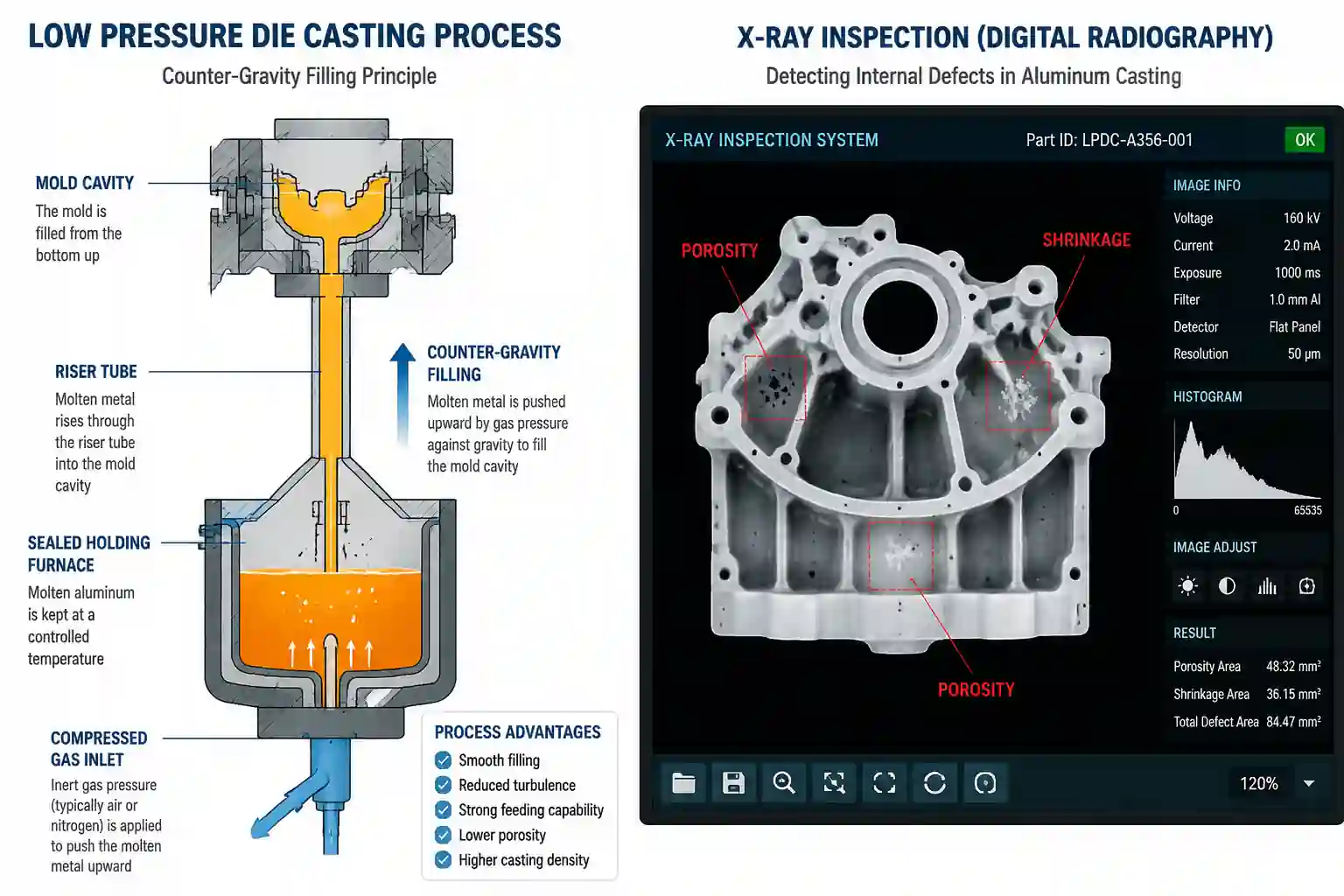
Low-pressure casting usually uses a metal mold and feeds molten metal into the cavity from below under controlled low pressure. This type of tooling focuses more on stable filling, feeding, venting, and mold temperature control.
Common casting tooling includes:
- Metal mold: Forms the casting shape and main structure, and is related to batch consistency.
- Riser tube interface: Connects the molten metal feed path with the mold entrance and affects filling stability.
- Gate design: Determines where molten metal enters the cavity and how it flows.
- Venting system: Reduces air entrapment and gas porosity risk, especially for leak-tight parts.
- Cooling channels: Control solidification sequence and hot spots, affecting shrinkage, deformation, and mold life.
- Ejection structure: Helps the casting release smoothly and reduces deformation or local damage.
High-Pressure Die Casting
High-pressure die casting uses a complex die casting mold and is suitable for high-volume, thin-wall, and complex parts.
Common casting tooling includes:
- Fixed die and moving die: Form the main die structure and determine the mold opening method and parting line position.
- Die cavity: Determines the casting shape, main dimensions, and local details.
- Slides: Form side holes, undercuts, or complex external features.
- Ejector pins: Push the casting out of the die; pin location is related to appearance and deformation risk.
- Runner and gate system: Controls metal flow direction, speed, and filling path.
- Overflow and venting slots: Release air and collect cold metal at the flow front, reducing gas porosity and cold shut risk.
- Cooling channels: Control mold temperature, shorten cycle time, and improve dimensional stability.
Functions of Casting Tooling
Casting tooling does more than form the part shape. It also affects dimensions, surface condition, defect control, machining allowance, and batch production stability.
Dimensional Control
Metal shrinks during solidification and cooling. Mold design needs to consider shrinkage rate, deformation tendency, draft angle, and machining allowance.
If compensation is insufficient, the casting may have hole position deviation, uneven wall thickness, poor flatness, or unstable critical dimensions.
Surface Quality
Mold material, cavity surface, sand mold quality, parting line, ejector pin position, and demolding method are all related to the casting surface condition.
If the mold is worn or poorly maintained, the casting may show rough surfaces, increased flash, visible demolding marks, or local surface defects.
Defect Control
Gate, runner, venting, and cooling design affect molten metal flow and solidification sequence. Poor venting may increase gas porosity risk. Insufficient feeding may cause shrinkage cavities or shrinkage porosity. Unreasonable flow paths may increase cold shuts and incomplete filling.
For aluminum housings, pump bodies, and pressure-retaining parts, these defects may only become visible after CNC machining, leak testing, or assembly.
Machining Allowance
Many industrial castings require CNC machining on critical faces, holes, threads, and assembly references. During mold design, machining areas, machining allowance, and raw casting references need to be confirmed.
If machining allowance is insufficient, the raw casting may look acceptable but still fail to meet final dimensional or assembly requirements.
Batch Stability
In batch production, mold condition affects raw casting dimensions, surface condition, and defect variation. Mold wear, blocked vents, uneven cooling, or changes in the ejection structure can all cause batch-to-batch differences.
Long-term production projects usually need to consider mold maintenance, regular inspection, and necessary mold repair plans.
What Determines Casting Tooling Cost?
Casting tooling cost is not fixed. It is usually related to casting process, part structure, mold material, production volume, inspection requirements, and the number of trial and modification rounds.
When comparing quotations, buyers should not only look at the initial tooling cost. They also need to judge whether the tooling plan is suitable for stable production.
Casting Process
Different casting processes have different tooling costs. Sand casting patterns are usually lower in cost and suitable for low-volume or large parts. Gravity casting and low-pressure casting metal molds cost more, but they usually provide better dimensional repeatability and production stability.
High-pressure die casting molds are usually the most expensive and are more suitable for high-volume, thin-wall, and complex parts.
Part Size
The larger the part, the larger the mold usually becomes. This increases requirements for mold material, machining equipment, and manufacturing time.
Large castings may also require more complex lifting, positioning, and trial production preparation.
Structural Complexity
Deep cavities, thin walls, undercuts, complex ribs, and multiple parting lines all increase mold design and manufacturing difficulty.
The more complex the structure, the higher the possibility of trial adjustments and mold modification.
Internal Cavities and Cores
If the casting has internal channels, holes, or complex cavities, core boxes and sand cores are usually required.
More sand cores mean more complex positioning and higher risks of core shift and dimensional variation. This can increase tooling cost as well as trial validation and quality control difficulty.
Mold Material
Wood patterns, resin patterns, aluminum molds, cast iron molds, steel molds, and tool steel molds differ in cost, service life, and modification flexibility.
Low-volume projects may be more suitable for lower-cost and easier-to-modify tooling materials. High-volume projects usually require more durable metal molds or die casting molds.
Production Volume
Target production volume affects the tooling investment level. Low-volume projects focus more on initial tooling cost, while high-volume projects focus more on mold life, production efficiency, maintenance cost, and long-term stability.
If the project has a long-term supply plan, mold life and maintenance cost should be evaluated early.
Trial and Modification
After mold manufacturing, trial production is usually required. Trial samples need to be checked for dimensions, surface quality, machining allowance, and defects.
For sealed or pressure-retaining parts, leak testing, pressure testing, or other inspections may also be required. If dimensional deviation, shrinkage porosity, gas porosity, cold shuts, or insufficient machining allowance are found after trial production, mold modification may be needed.
Conclusion
The value of casting tooling often becomes clear after trial production. When a drawing is converted into a mold, pattern, or core box, factors such as shrinkage allowance, parting lines, core positioning, venting, and machining areas are already built into the production plan. If these details are not reviewed carefully at the beginning, later mold modification and process adjustment can become more limited.
As custom casting projects continue to increase, casting tooling is no longer limited to traditional mold making. 3D printed patterns, rapid prototypes, adjustable soft tooling, optimized cooling in metal molds, and machining or inspection fixtures are playing a larger role in the transition from prototype to batch production.
For MinHe, tooling evaluation is usually carried out together with process selection for low-pressure casting, gravity casting, and sand casting. The final tooling plan should support casting formation, post-casting machining, and production volume, rather than being treated only as a single mold quotation.