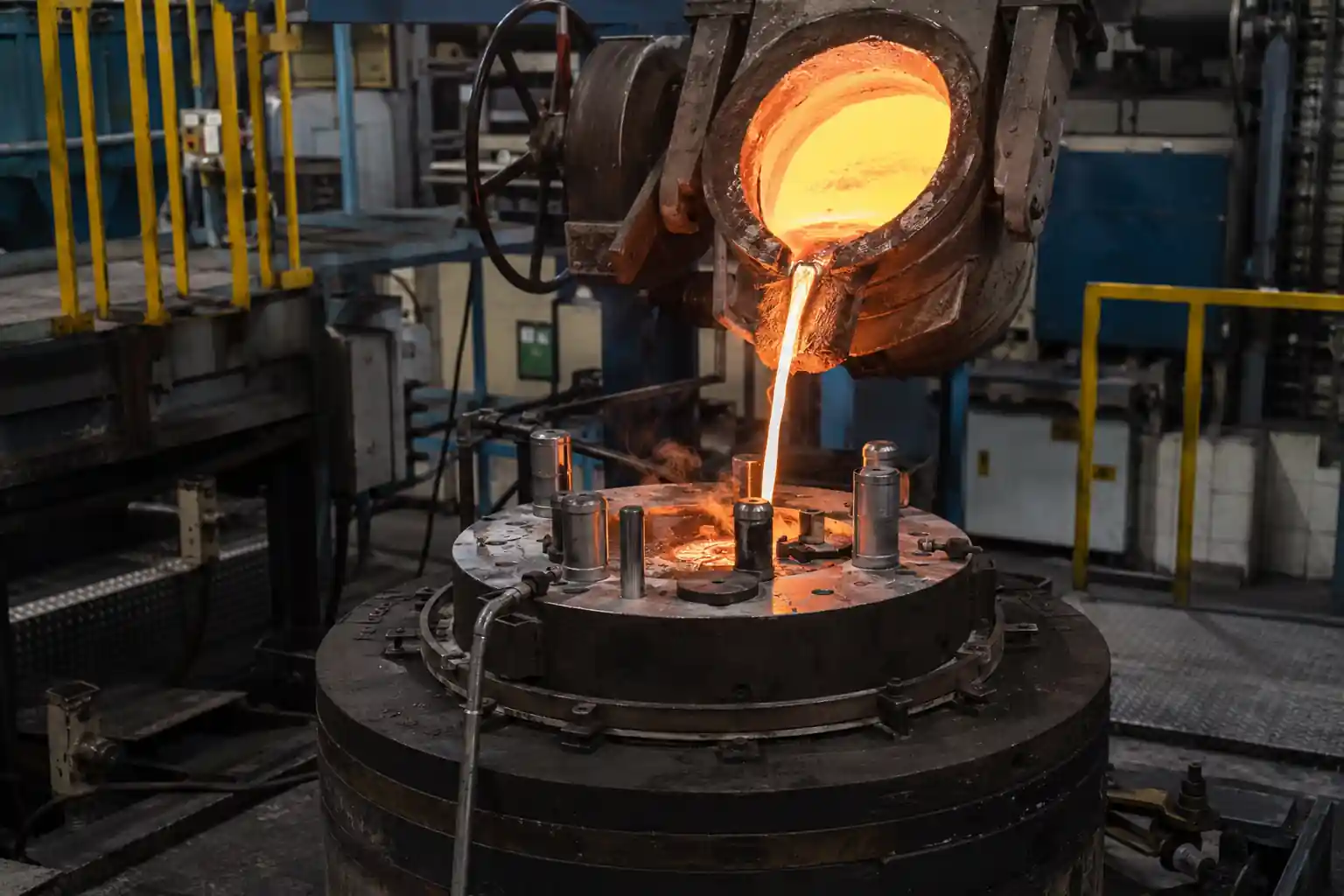



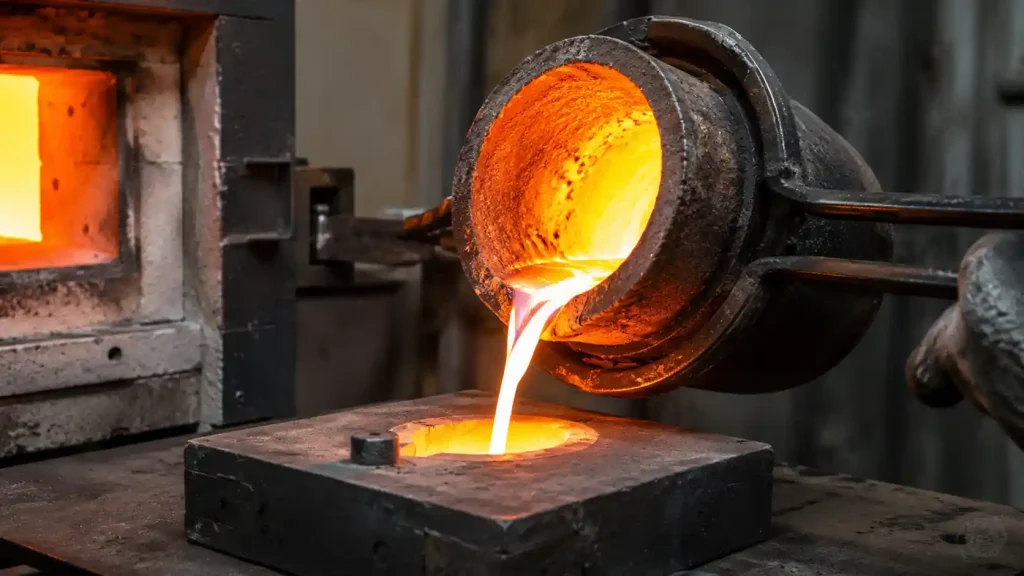
Aluminum has a lower melting point than steel and cast iron, which makes it suitable for processes such as sand casting, gravity die casting, and low-pressure casting. The basic melting process includes preparing the charge, heating the aluminum, controlling the melt temperature, removing dross, treating the molten metal when required, and pouring it into a prepared mold.
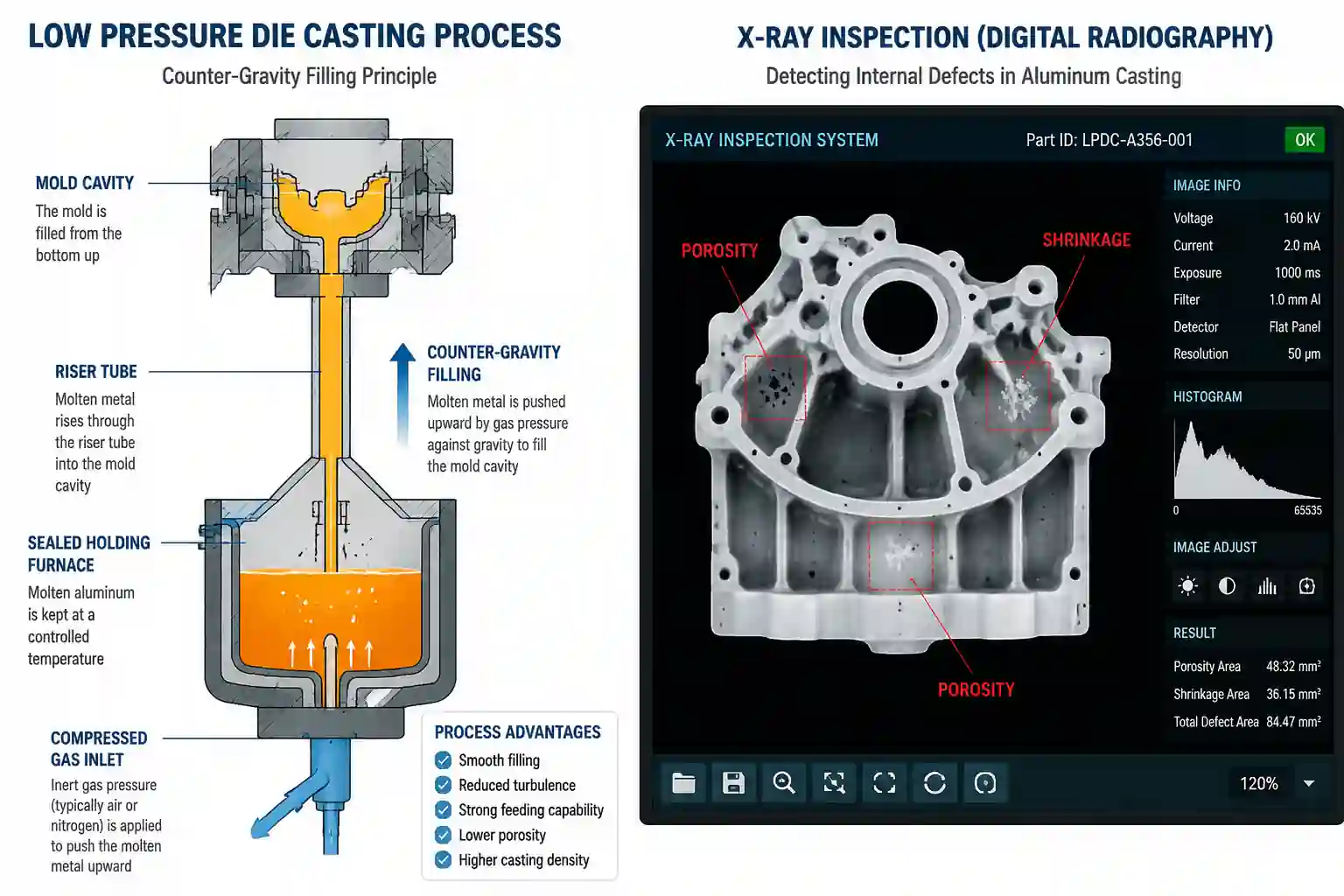
Although the overall process is straightforward, damp charge material, excessive melt temperature, aggressive stirring, or unstable pouring can increase the risk of porosity, oxide inclusions, and incomplete filling.
This article explains the melting temperature of aluminum, the equipment required, the main operating steps, practical melting tips, and the safety precautions that operators should follow.
At What Temperature Does Aluminum Melt?
Pure aluminum melts at approximately 660°C. In actual casting production, however, aluminum alloys are used more often than pure aluminum. These alloys may contain silicon, magnesium, copper, or other elements, so they do not melt at one exact temperature. Instead, they pass through a melting range.
Before an aluminum alloy becomes fully liquid, it normally enters a semi-solid state. Even if the charge has softened or collapsed, some solid metal may still remain inside. The melt condition should therefore be confirmed by temperature measurement rather than appearance alone.
In practice, the melt temperature is normally kept above the liquidus temperature of the selected alloy, with some allowance for heat loss during dross removal, transfer, and pouring.
Temperature Control Tip
If the temperature is too low, the molten aluminum may not have enough fluidity to fill thin walls, ribs, or areas far from the gate. If the temperature is too high, oxidation, hydrogen pickup, energy consumption, and alloy-element loss may increase.
A thermocouple should be used to monitor the melt temperature. The correct melting and pouring temperature depends on the alloy grade, casting geometry, and casting process.
What Equipment Is Needed to Melt Aluminum?
The basic equipment required to melt aluminum includes a furnace, crucible, temperature-measuring tools, dross-removal tools, transfer equipment, and a prepared mold.
| Equipment or Tool | Main Purpose | Operating Requirement |
|---|---|---|
| Furnace | Heats and melts the aluminum charge | Select according to melt volume, heating method, and temperature-control requirements |
| Crucible | Holds the charge and molten aluminum | Inspect for cracks, erosion, and local thinning before use |
| Thermocouple | Measures molten aluminum temperature | Keep the measuring position and immersion depth reasonably consistent |
| Dross-removal tools | Remove oxides and contamination from the melt surface | Keep dry and preheat when necessary |
| Lifting tools or ladles | Transfer and pour molten aluminum | Check for wear, distortion, and secure handling |
| Mold | Receives the molten aluminum and forms the casting | Keep dry and preheat when required by the process |
Furnace and Crucible
Common aluminum melting equipment includes crucible furnaces, resistance furnaces, gas-fired furnaces, and induction furnaces. These systems differ in melting speed, temperature control, energy consumption, and suitable production volume.
Small-batch melting normally uses a crucible to hold the charge and molten aluminum. Common crucible materials include graphite, clay-graphite, and silicon carbide. The correct type should match the furnace design and heating method.
Before each use, the crucible should be checked for cracks, severe erosion, local thinning, or bottom damage. A damaged crucible should not remain in service.
Thin steel cans are not suitable as reliable aluminum-melting crucibles. Prolonged exposure to high temperatures may cause them to oxidize, distort, or fail. Steel containers may also introduce iron into the melt.
Temperature and Handling Tools
A thermocouple is used to measure the molten aluminum temperature. To make furnace-batch data easier to compare, the measuring location and probe immersion depth should remain reasonably consistent.
Dross-removal tools are used to clear oxides and contamination from the melt surface. Crucible lifting tools or ladles are used to move and pour the molten metal.
All tools that may contact molten aluminum must be dry. Cold tools may also need to be preheated to reduce local temperature loss and the risk of splashing caused by moisture.
The mold should be prepared before the aluminum reaches pouring temperature. Sand molds should be checked for cavity condition, gating, and venting. Permanent molds are normally preheated according to the casting process.
How to Melt Aluminum for Casting
Step 1: Prepare and Load the Aluminum Charge
Begin by confirming the aluminum alloy grade. Different alloys contain different levels of silicon, magnesium, copper, iron, and other elements. Materials should not be mixed simply because they look similar.
Industrial furnace charges normally include new aluminum ingots and controlled return material of the same alloy grade. Return material may come from runners, risers, or rejected castings, but its source and proportion should be controlled.
Mixing different alloy grades may move the final composition outside the required range and affect mechanical properties or heat-treatment response.
Before charging, remove oil, plastic, paint, sand, and steel inserts from the material. Large pieces can be cut into sizes that fit the furnace or crucible and heat more evenly.
All charge material must be dry. Aluminum stored outdoors, recently washed parts, sealed hollow components, or material that may contain retained liquid should not be placed directly into the furnace.
Aluminum cans can be melted, but their thin walls create high oxidation loss, and their coatings generate smoke and residue. They are therefore generally unsuitable as controlled raw material for industrial castings.
Load the charge carefully. Heavy pieces should not be dropped onto the crucible or furnace lining. The crucible should also not be filled completely, because space is needed for charge settlement, additional material, and dross removal.
Step 2: Heat the Charge and Control the Melt Temperature
The furnace should be heated according to its operating procedure. Some melting practices begin by forming a small molten pool before the remaining charge is added in batches.
Solid aluminum usually melts faster after it contacts the molten pool. However, adding too much cold material at one time may cause a significant temperature drop and extend the total melting time.
Keep the furnace lid closed as much as practical. Frequent opening causes heat loss and exposes the molten aluminum to more air.
As the charge melts, monitor the temperature with a thermocouple. Once the required process temperature is reached, unnecessary heating should be avoided.
Excessive overheating increases oxidation and hydrogen absorption and may also cause the loss of alloying elements such as magnesium. Insufficient temperature may leave part of the charge unmelted or reduce fluidity during pouring.
Aggressive stirring should also be avoided. Molten aluminum quickly forms an oxide film at the surface, and excessive movement can fold that film into the melt.
Step 3: Remove Dross and Treat the Melt
Gray or dark dross normally forms on the surface of molten aluminum. It may contain oxides, contamination, and a certain amount of trapped metal.
Dross-removal tools should be dry and suitably preheated. The surface material should be removed smoothly rather than repeatedly stirred into the melt.
If oxide films are folded into the liquid metal, they may remain in the casting as inclusions, weak areas, or leakage paths.
Some melting processes use a dedicated drossing flux to help separate oxides from metallic aluminum. The flux type and dosage should match the alloy and process conditions, but flux cannot replace clean charge preparation or careful handling.
References to adding salt usually mean formulated salt-based aluminum fluxes rather than ordinary table salt. Borax is also not a standard general-purpose flux for aluminum melting. For ordinary small-batch casting, clean charge material, stable temperature control, and careful dross removal are usually more reliable than adding unverified materials.
For castings with higher internal-quality requirements, the molten aluminum may also need to be degassed. Industrial production commonly uses rotary degassing with nitrogen or argon to reduce the hydrogen content of the melt.
When alloy composition is critical, a sample may also be checked with a spectrometer to confirm that the main alloying elements remain within the required range.
Step 4: Prepare the Mold and Pour the Aluminum
The mold should be ready and dry before the aluminum reaches pouring condition.
A sand mold should be checked for cavity integrity, gating, and venting. In gravity die casting, the permanent mold should be kept within a suitable temperature range so that the metal does not solidify too quickly after entering the cavity.
Pouring should be smooth and continuous. Pouring too quickly can increase splashing, air entrainment, and turbulence. Pouring too slowly may cause temperature loss and allow the metal to begin solidifying before the cavity is completely filled.
The free-fall distance of the molten aluminum should be kept as small as practical. A large drop increases air entrainment and oxide-film formation. Even a melt that has already been skimmed or degassed can be contaminated again by unstable transfer and pouring.
After pouring, allow the casting to solidify sufficiently before shakeout or removal from the mold. The runner system can then be removed, followed by cleaning, heat treatment, or machining as required.
Tips for Better Aluminum Melting
In addition to following the basic melting steps, several operating practices can help maintain a more stable melt condition.
- Use clean and dry charge material: Oil, coatings, moisture, and other contamination increase smoke, dross, and safety risks.
- Avoid prolonged overheating: Once the required process temperature is reached, avoid unnecessary temperature increase or extended holding to reduce oxidation, hydrogen pickup, and alloy-element loss.
- Limit stirring and air exposure: Avoid aggressive stirring and keep the furnace lid closed whenever practical to reduce oxide-film formation and entrainment.
- Preheat tools and molds: Dross-removal tools, ladles, and other equipment that contact the melt should be dry and suitably preheated. Permanent molds should also be preheated according to the process.
- Pour smoothly and continuously: Stable pouring with a limited free-fall distance helps reduce splashing, air entrainment, and new oxide-film formation.
Safety Precautions for Melting Aluminum
Before starting the operation, operators should confirm that their protective equipment, working environment, and handling tools are suitable for molten-metal work. Aluminum melting involves high temperatures and liquid metal. Inadequate protection or poor operating practice may cause burns, metal splashing, or fire hazards. The following precautions should be followed:
- Wear appropriate protective equipment: Use heat-resistant gloves, a face shield, safety glasses, long-sleeved work clothing or a fire-resistant apron, and safety footwear suitable for molten-metal operations. Avoid leaving skin exposed within the possible splash area.
- Maintain good ventilation: Melt aluminum in a well-ventilated area so that smoke and fumes from oil, coatings, or other contamination can be removed.
- Keep moisture away from molten aluminum: Charge material, crucibles, dross-removal tools, ladles, and molds must remain dry. Moisture can rapidly turn into steam and cause violent metal splashing.
- Use suitable high-temperature tools: Use crucibles, lifting tools, steel tongs, skimming tools, and ladles designed for high-temperature work. Inspect them for cracks, wear, distortion, or insecure handling before use.
- Prepare for metal fires: Keep suitable metal-fire extinguishing equipment near the work area and make sure operators understand the site emergency procedure. Water should not be used directly on spilled or burning molten aluminum.
- Keep the operating area clear: The route used to transfer and pour molten aluminum should be level, clean, and free from obstacles. Unnecessary personnel should remain outside the operating area to reduce the risk of collision or interference.
Conclusion
Melting aluminum for casting involves charge preparation, equipment inspection, heating, temperature control, dross removal, melt treatment, and pouring into a prepared mold.
For ordinary small-batch casting, the main priorities are keeping materials and tools dry, maintaining a stable melt temperature, and avoiding excessive stirring or unstable pouring. Industrial production also requires tighter control over alloy grade, return-material proportion, hydrogen content, and oxide inclusions to reduce internal defects and maintain consistency between production batches.