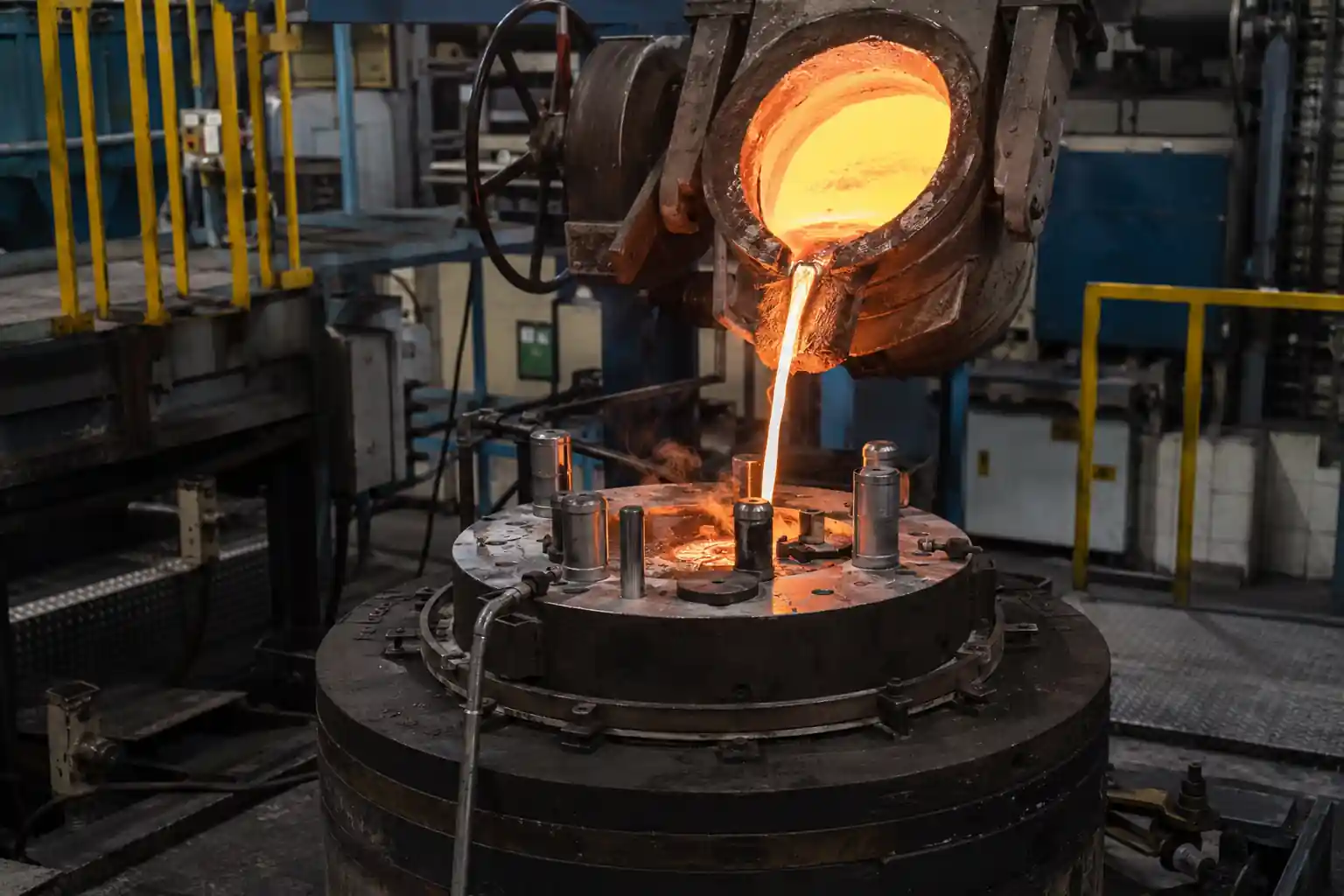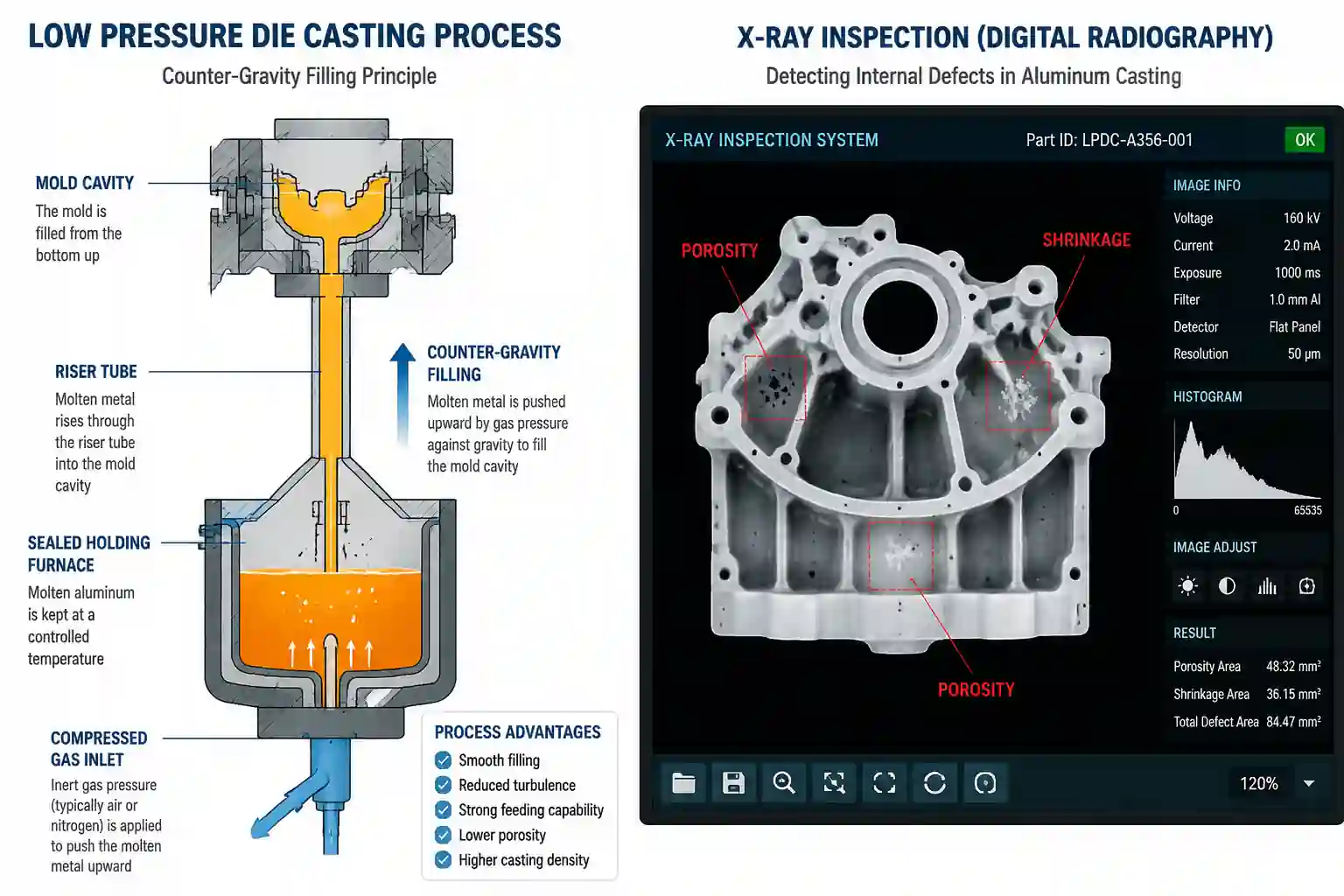



In metal forming production, molds directly impact casting quality and manufacturing costs. The Low-Pressure Die Casting (LPDC) process is widely used for its excellent density and surface finish, but since molds are subjected to high-temperature impact and frequent thermal cycling, effectively managing wear and tear is a significant challenge in production management.
By scientifically assessing mold life, preventing premature failure, and implementing proactive maintenance, you can effectively extend the mold’s service life and achieve cost-efficiency. This article explores the basic definition of LPDC molds, outlines the key factors affecting their lifespan, and shares practical maintenance strategies to help your production line achieve longer, more stable operation.
What is an LPDC Mold?
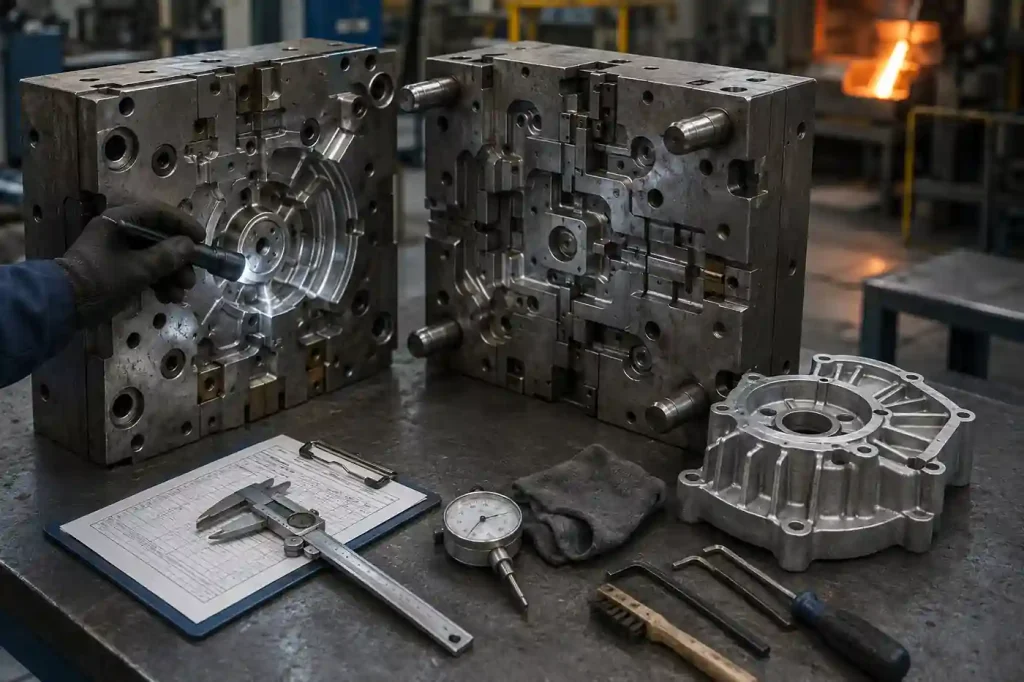
An LPDC mold is a critical piece of equipment used to provide the required shape and precision for molten metal. Typically manufactured from high-strength hot-work tool steel, these molds use precise cavity design and cooling systems to maintain thermal balance while withstanding the erosive forces of high-temperature molten metal, ensuring casting quality. It is the foundation for continuous and stable production line operation.
What is the Service Life of an Aluminum LPDC Mold?
The service life of an aluminum LPDC mold is not a fixed value; rather, it is determined by a combination of product structure, production processes, and maintenance standards.
For industrial-grade aluminum castings, a well-designed mold typically offers an expected lifespan ranging from 50,000 to 150,000 cycles; in cases where the part features simple geometry, uniform wall thickness, and optimized thermal balance, this service life can exceed 200,000 cycles.
Conversely, if a mold design includes complex internal cavities, abrupt changes in wall thickness, or cooling dead zones, localized stress concentration will significantly reduce its durability, with some complex molds failing prematurely before reaching 30,000 cycles.
Factors Affecting the Service Life of LPDC Molds
The service life of a mold is affected by multiple physical and chemical factors. Understanding these root causes helps in taking targeted preventive measures:
Thermal Fatigue
The mold cavity undergoes extreme temperature fluctuations, from ambient to high heat. Frequent thermal expansion and contraction generate alternating stress. When this stress exceeds the material’s yield limit, network cracks (heat checking) form on the cavity surface, gradually extending deep into the interior with each cycle, ultimately damaging the mold structure.
Chemical Corrosion and Soldering
Molten aluminum alloy is highly chemically active. If the mold release coating is uneven or locally compromised, the aluminum will contact the steel substrate and penetrate it, forming brittle intermetallic compounds. This not only causes casting soldering (sticking) and ejection damage but also embrittles the mold surface, reducing its overall lifespan.
Structural Stress Concentration
Sharp internal corners, narrow slots, or areas with abrupt wall thickness changes in the cavity are typical stress concentration zones. In high-temperature and high-pressure environments, these geometrically weak points cannot effectively distribute thermal expansion and mechanical loads, often serving as the starting points for crack initiation.
Material Quality and Machining Precision
The metallurgical purity of the hot-work tool steel determines its fatigue resistance. Impurities in the material can easily trigger cracks at high temperatures. Furthermore, surface machining defects like tool marks can create a “notch effect.” If heat treatment is inconsistent, leading to uneven hardness, the mold is highly susceptible to premature failure.
How to Extend the Service Life of LPDC Molds?
Through scientific preventive maintenance, the service life of a mold can be significantly extended, effectively reducing unit production costs:
- Standardized Coating Management: Ensure a uniform coating application, acting as the primary protective barrier against thermal shock from molten metal.
- Precision Temperature Control: Utilize zone-controlled cooling channels to manage temperatures, eliminate local hot spots, and reduce cracking risks.
- Preventive Maintenance Inspections: Maintain detailed mold records and conduct regular cavity surface inspections. Timely polishing or laser repair of micro-cracks prevents further deterioration.
- Surface Hardening Treatment: Utilize technologies like ion nitriding or PVD to increase surface hardness, enhancing the mold’s resistance to erosion.
Minhe Casting Service Advantages
For aluminum casting projects that require stable mold life and production consistency, Minhe Casting can review mold design, thermal balance, machining allowance, and maintenance planning before tooling or production.. From initial thermal balance simulation to full-lifecycle preventive maintenance, we provide a one-stop management solution and look forward to being your trusted partner in production.