


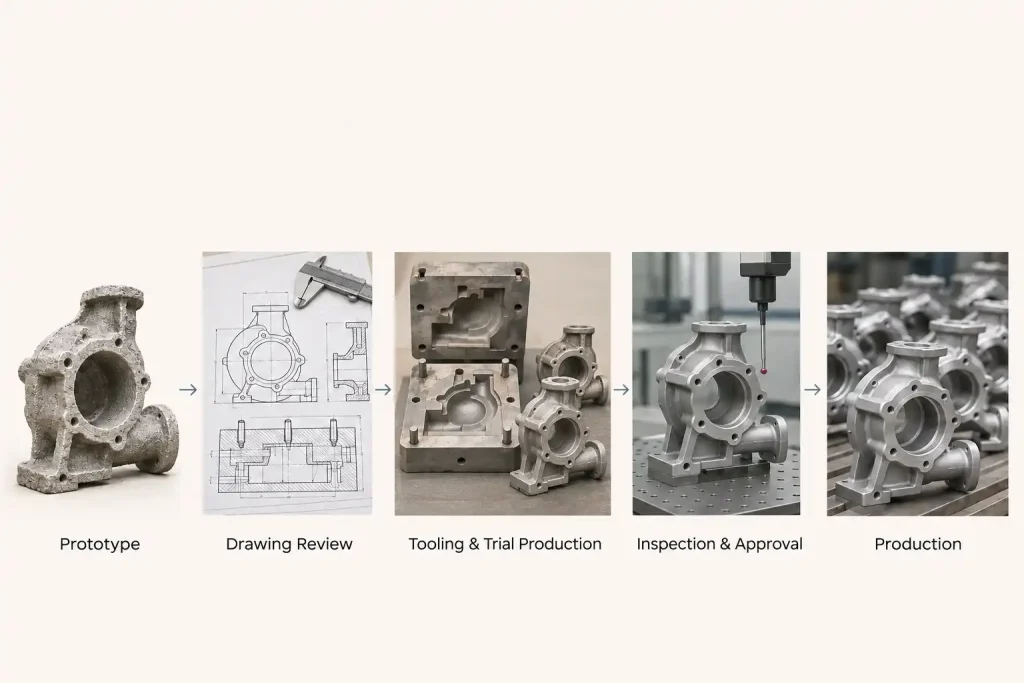
Once a casting prototype has been made, customers have a physical part they can inspect and test. The next step is to turn the design into a manufacturing process suitable for production.
This typically involves finalizing the drawing, developing production tooling, conducting a trial run, and obtaining customer approval. If the prototype and production parts are made using different methods, some dimensions or performance requirements may need to be verified again using trial parts. Understanding these stages helps customers prepare the information needed for a quotation and plan time for tooling, inspection, and review.
Why Make a Prototype Before Production?
A prototype lets customers see the part’s shape and dimensions and check how it fits with other components before production begins. It can also help reveal manufacturing issues early, giving the design team and foundry an opportunity to make changes before committing to larger-scale production.
The Process from Prototype to Production
1. Review the Prototype and Revise the Drawing
After prototype testing, the customer and supplier review any issues found during sampling. If an interface needs to be adjusted or a machined fit needs to change, those revisions should be reflected in the drawing used for production.
In addition to the finished dimensions, the final drawing should define the material, surface, and inspection requirements. For castings that require machining, the drawing or supporting documents should make clear which surfaces will remain as-cast and which will be machined to final dimensions.
Tooling, foundry, machining, and quality personnel may all be involved in production preparation. Working from the same drawing revision helps prevent different teams from interpreting dimensions and technical requirements differently.
2. Select the Production Process and Develop Tooling
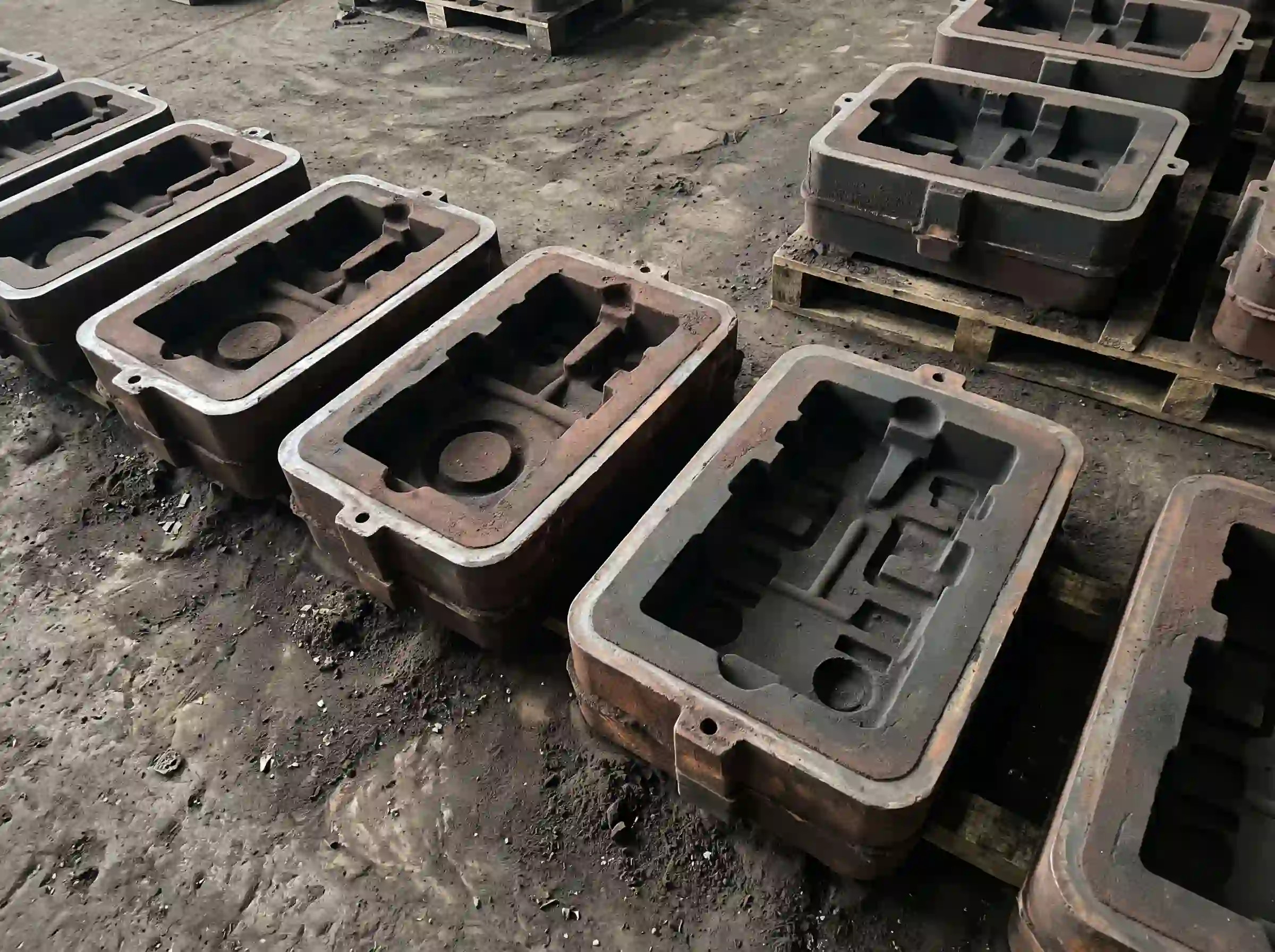
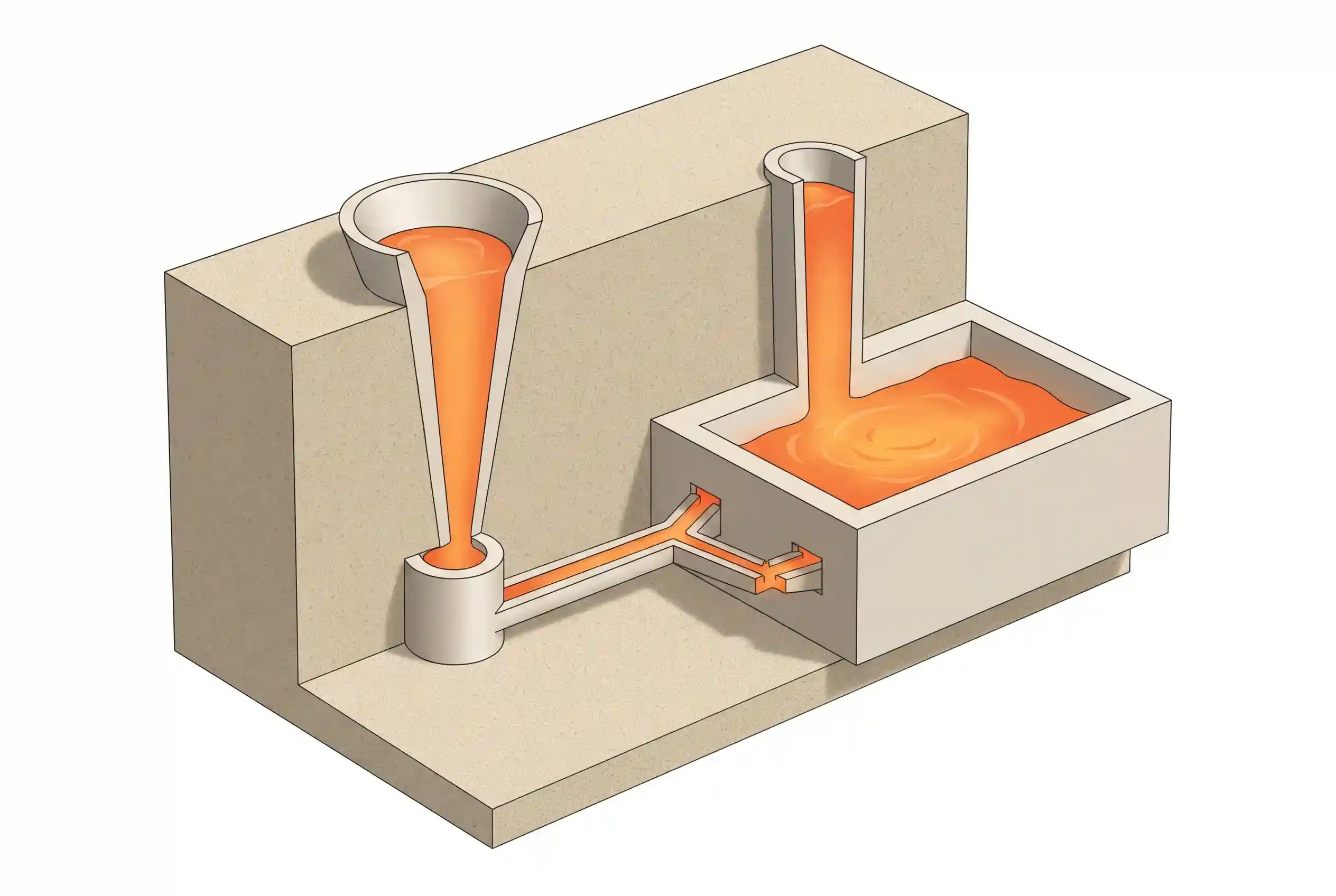
The foundry selects a production process based on the part’s geometry, material, and expected volume, then designs the tooling and related fixtures. The tooling must form the casting’s external and internal features while allowing for pouring, feeding, and part removal.
For example, sand casting can support projects from prototype development through repeat production.
Machining requirements also affect the design of the casting blank. A hole or mounting surface shown on the finished-part drawing may need to be drilled, bored, or milled to reach its final dimensions. The foundry must leave material in the appropriate areas and consider how the part will be positioned during machining.
If the prototype was made with simple tooling and production will use a new tool, the casting blank needs to be checked again during the trial run. Areas that will be machined need enough material in the right places. Insufficient machining allowance can leave part of a surface unmachined, while excessive allowance means more material must be removed and machining may take longer.
3. Conduct a Trial Run and Inspect the Parts
Once the production tooling and process are ready, the supplier makes trial parts under conditions representative of the planned production process. The trial run checks whether the castings meet the drawing requirements and can reveal issues between casting and subsequent machining.
The inspection scope depends on the condition in which the parts will be delivered. An as-cast blank is checked against the specified as-cast dimensions, surface requirements, and other applicable criteria. If the supplier also performs machining, the finished part’s critical dimensions and positional features are checked. Material tests, internal quality inspections, and functional tests are carried out as required by the project.
If a trial part has a problem, the supplier needs to determine whether it comes from the casting blank, machining, or the inspection datum. For example, if part of a machined surface remains uncut, the blank dimensions and clamping position can be reviewed to determine whether the cause is the distribution of machining allowance or the positioning method. The affected features are checked again after the issue is addressed.
4. Submit Documentation and Obtain Approval
After the trial run and inspection, the supplier submits the agreed samples and reports for customer review. The reports should correspond to the inspected parts and drawing revision so the customer can see which requirements the submission covers.
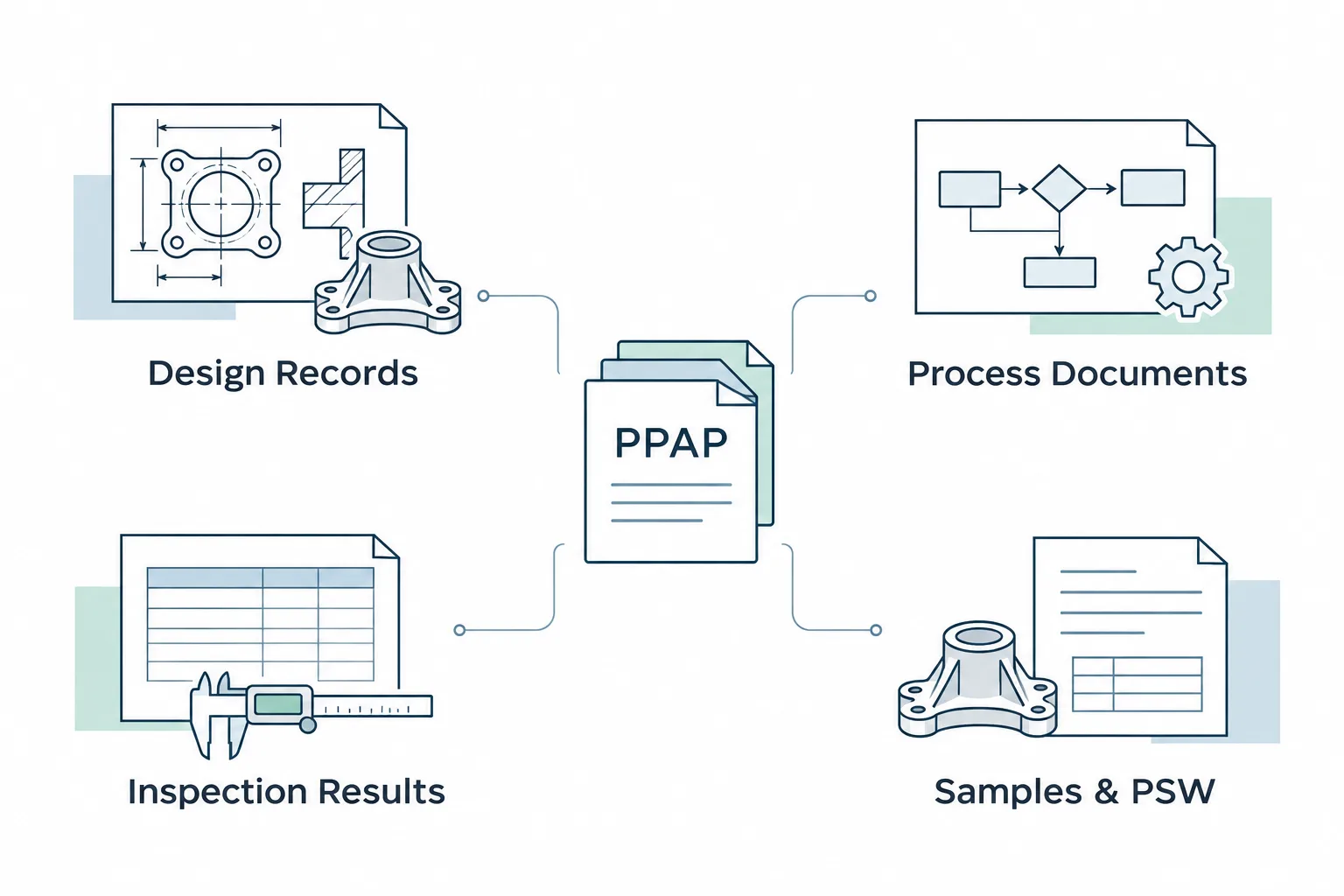
Some projects require a first article inspection report. If the customer requires a Production Part Approval Process (PPAP) submission, the supplier also prepares the documentation required for the specified submission level. The documents to be submitted, the people responsible for review, and the timing of production approval should be included in the project plan.
After approval, the supplier organizes production and delivery as agreed. Subsequent batches continue to follow the specified process controls and inspections. Changes involving tooling, materials, or manufacturing processes are handled according to customer requirements.
What Information Do You Need to Prepare?
At the start of a project, customers can provide the drawings, material information, and quantity requirements they already have. As the design is finalized, they can add testing, acceptance, and approval requirements.
| Information | Main Contents | Purpose |
|---|---|---|
| Drawings and models | Current 2D drawing, available 3D model, and revision | Establish the part geometry, dimensions, and design basis |
| Material requirements | Material grade and applicable material and heat-treatment specifications | Define material purchasing and performance verification requirements |
| Machining and delivery condition | As-cast, rough-machined, or finish-machined condition; machined surfaces and critical dimensions | Define casting blank requirements and supplier scope |
| Quality requirements | Surface and internal quality requirements, functional tests, and acceptance criteria | Determine trial-run and delivery inspections |
| Production plan | Sample quantity, expected production volume, and delivery schedule | Plan tooling, trial runs, and production capacity |
| Approval documents | First article report, material report, PPAP, or other specified documents | Define what is needed for customer review and release |
The delivery condition has a particular effect on the quotation. For the same part, supplying an as-cast blank involves a different scope of work and inspection from supplying a fully machined component. Both parties should therefore use the same requirements when preparing and reviewing the quote.
Factors That Affect Cost and Lead Time
Production tooling is usually a separate investment. The tooling used for the prototype may not be suitable for ongoing production. If new tooling is needed, the project schedule must allow time for its design, manufacture, and trial.
The timing of drawing changes also affects the amount of work. Before tooling is manufactured, a change can be addressed in the design documents. Once the tooling is complete, changes involving the cavity, internal passages, or machined areas may require tooling modifications and further inspection.
Inspection and customer review also affect the first delivery. After the trial run, material tests, external inspections, or approval documents may still be in progress. Asking the supplier to list estimated times for tooling, trial production, and reports separately helps the customer plan its internal review.
Conclusion
After a casting prototype has been validated, the project must translate the design requirements into a production process and tooling, then use a trial run to inspect parts made through the planned production route.
The customer provides the drawing, material, quantity, and acceptance requirements; the foundry uses them to prepare the manufacturing process and inspection documentation. Addressing key issues before tooling development helps the trial run, approval, and subsequent delivery move forward more smoothly.
Frequently Asked Questions
Can a casting go directly into production after the prototype is approved?
After prototype approval, the production drawing, process, and tooling still need to be ready. If the customer requires a trial run, first article inspection, or another approval, those steps must also be completed before the agreed production delivery.
Do the prototype and production casting have to use the same process?
No. The production route may change according to production volume, part requirements, and the tooling plan. If the route changes, both parties need to assess which dimensions, material properties, or functional requirements should be verified again.
Does every casting project require PPAP?
No. Whether PPAP is required depends on the customer and the project. Other projects may use first article inspection or another sample approval method agreed upon by both parties.
How long does it take to move from a casting prototype to production?
The timeline depends on drawing approval, tooling development, trial production, testing, and customer review. When requesting a quote, customers can ask the foundry to provide estimated times for each stage.