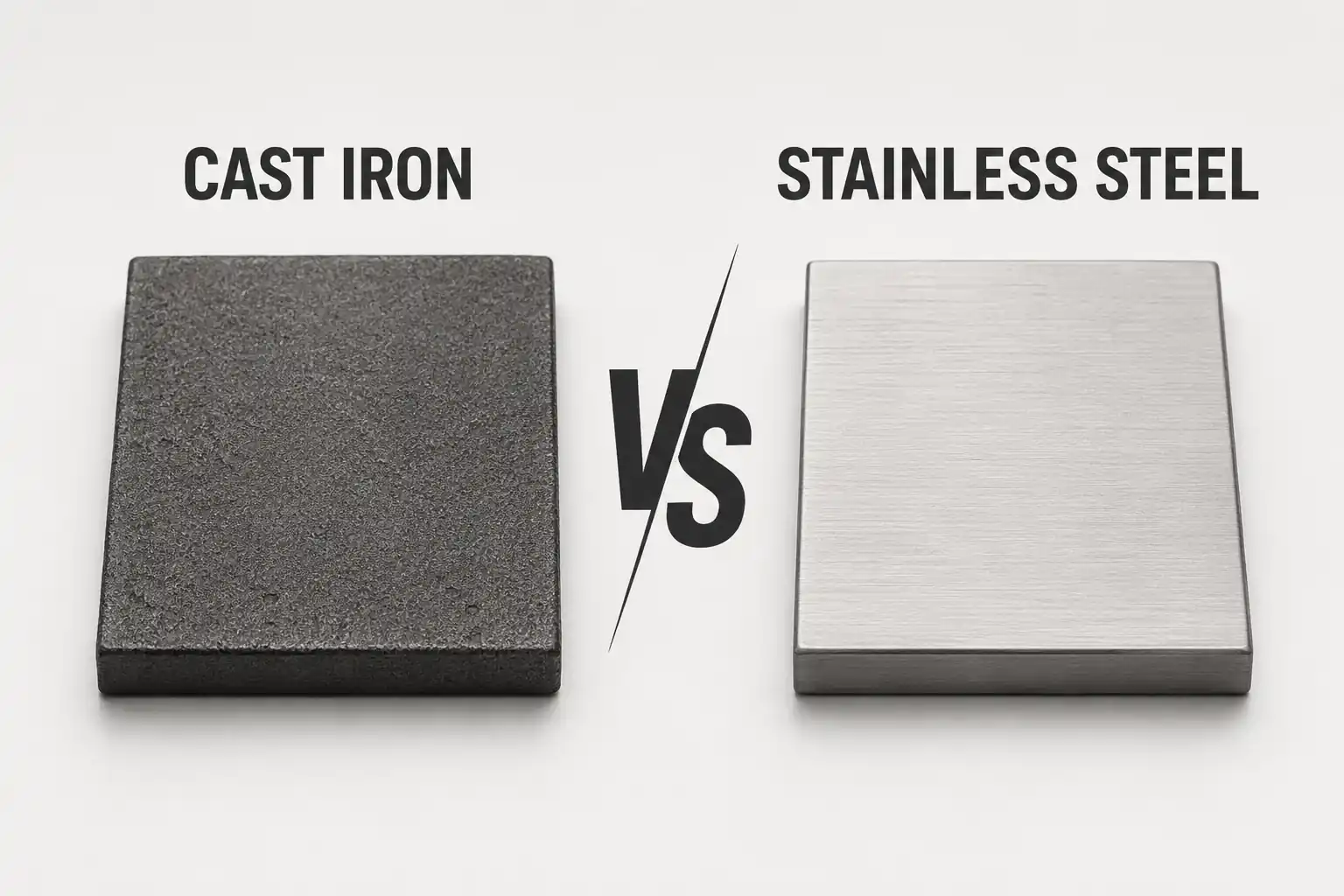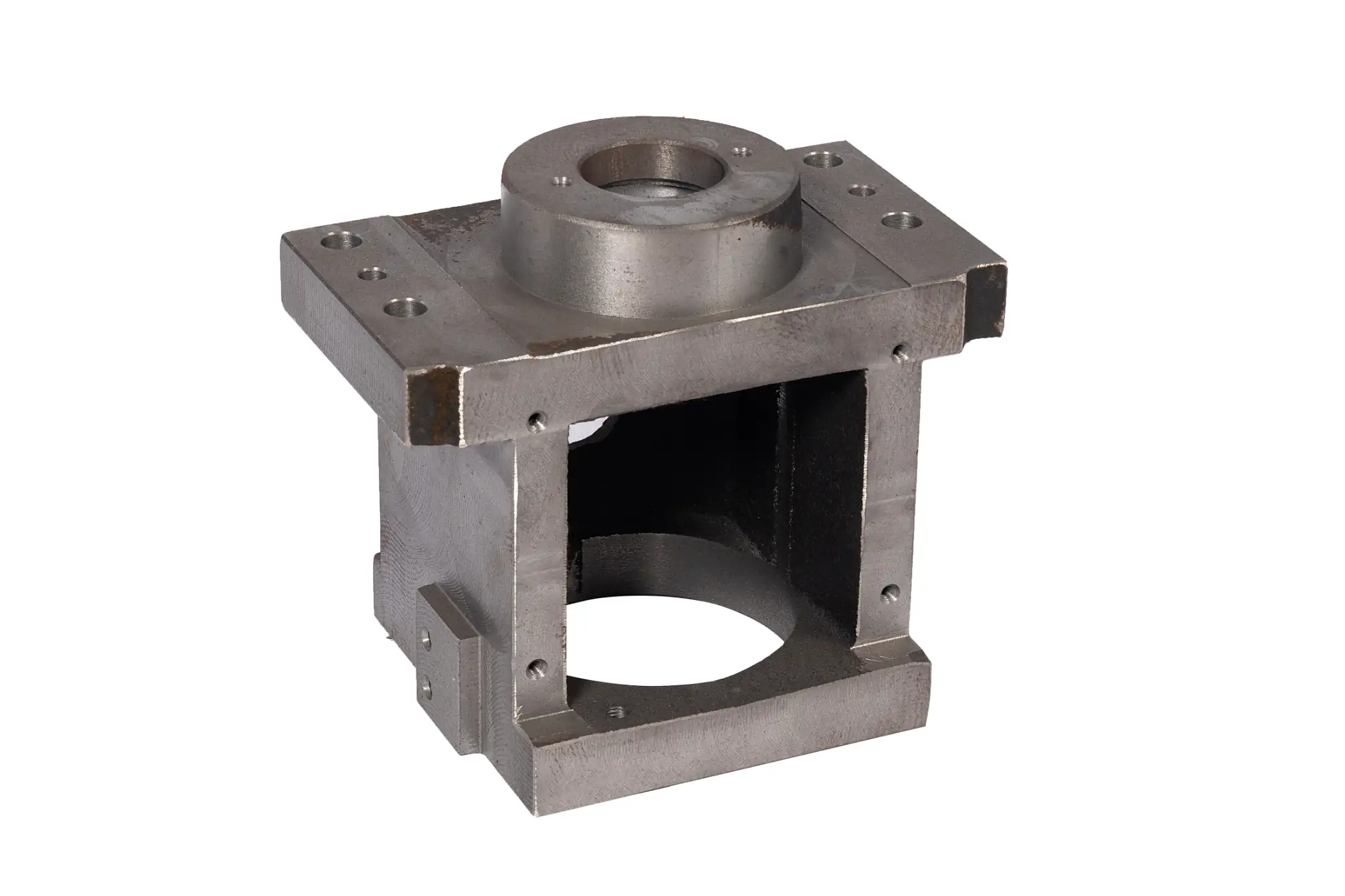



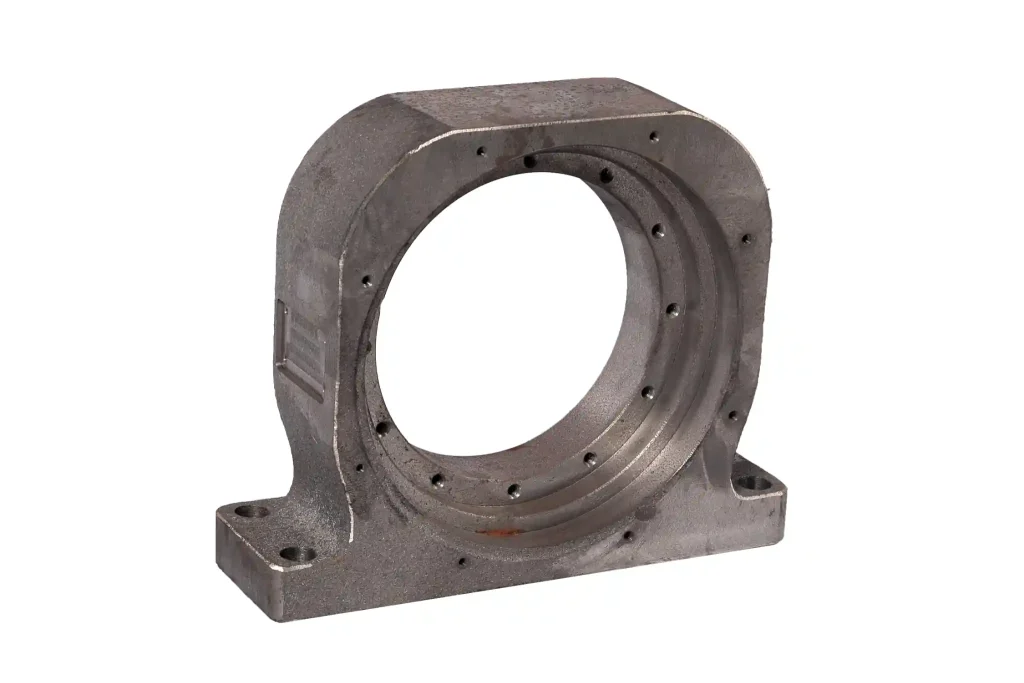
El CF8M es el equivalente en fundición del acero inoxidable 316. Pertenece a la familia de los aceros austeníticos y contiene entre un 2 % y un 3 % de molibdeno, el elemento que le confiere resistencia a los cloruros. El CF8, por su parte, es la versión fundida del 304 y no contiene molibdeno.
Este grado se utiliza en cuerpos de válvulas, carcasas de bombas, bridas y accesorios en plantas marítimas, químicas y de procesamiento de alimentos. Si has inspeccionado alguna pieza de fundición de este tipo, lo más probable es que lo primero que hayas visto en ella sea el sello «CF8M». Saber qué significa ese sello te ayuda a comparar presupuestos y a evitar que se sustituya por un grado incorrecto.
Tanto el CF8M como el CF8 están regulados por la norma ASTM A351 para piezas sometidas a presión y por la norma ASTM A743 para piezas de fundición resistentes a la corrosión en general.
Este artículo analiza la composición, las propiedades mecánicas, el comportamiento frente a la corrosión y las aplicaciones habituales del CF8M, y concluye con una breve comparación con el CF8.
¿Qué es el acero inoxidable CF8M?
El código CF8M procede del sistema de nomenclatura del Alloy Casting Institute. La «C» indica la resistencia a la corrosión, la «F» señala el límite máximo de carbono, el «8» hace referencia al contenido de cromo del 18 % y la «M» indica la adición de molibdeno.
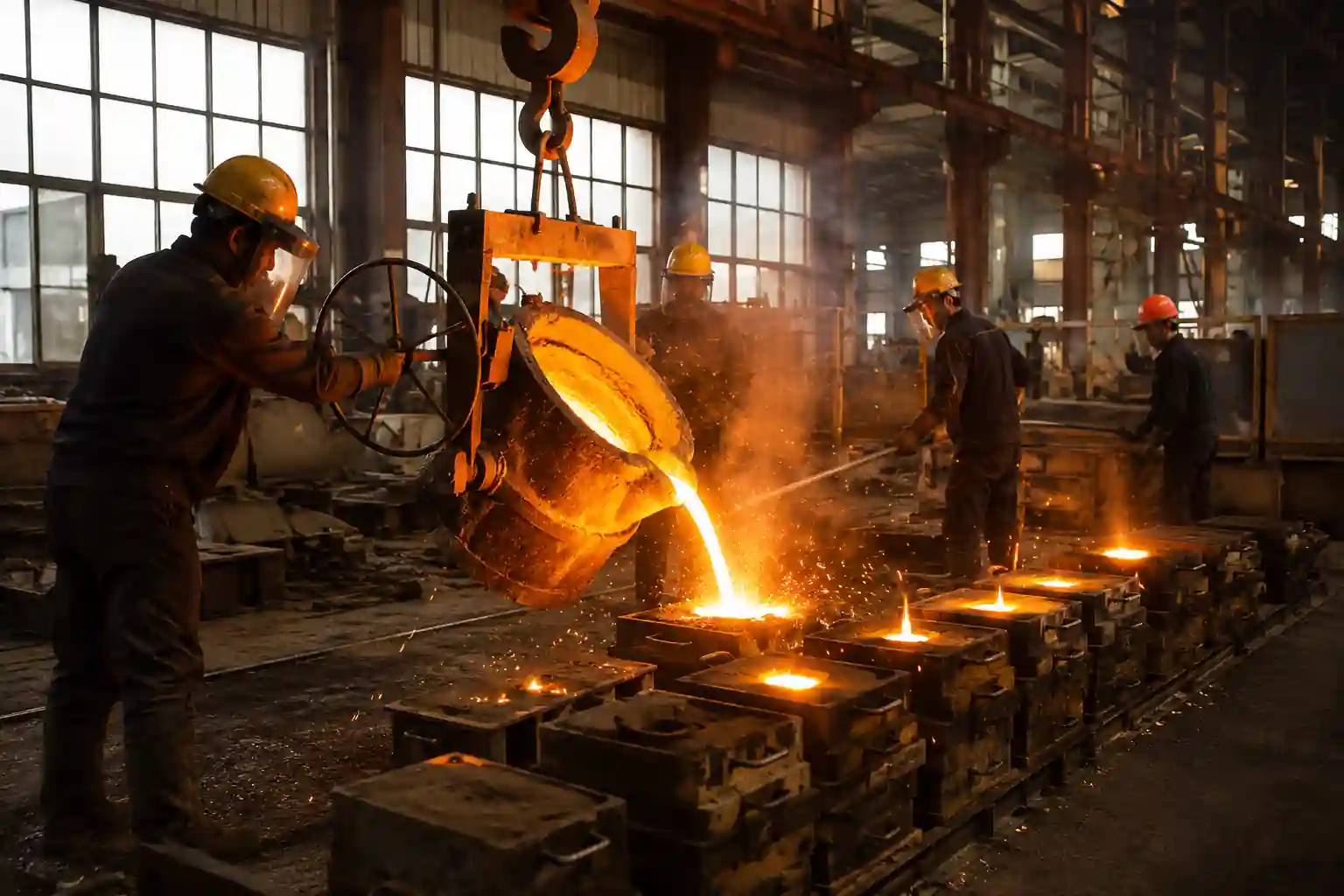
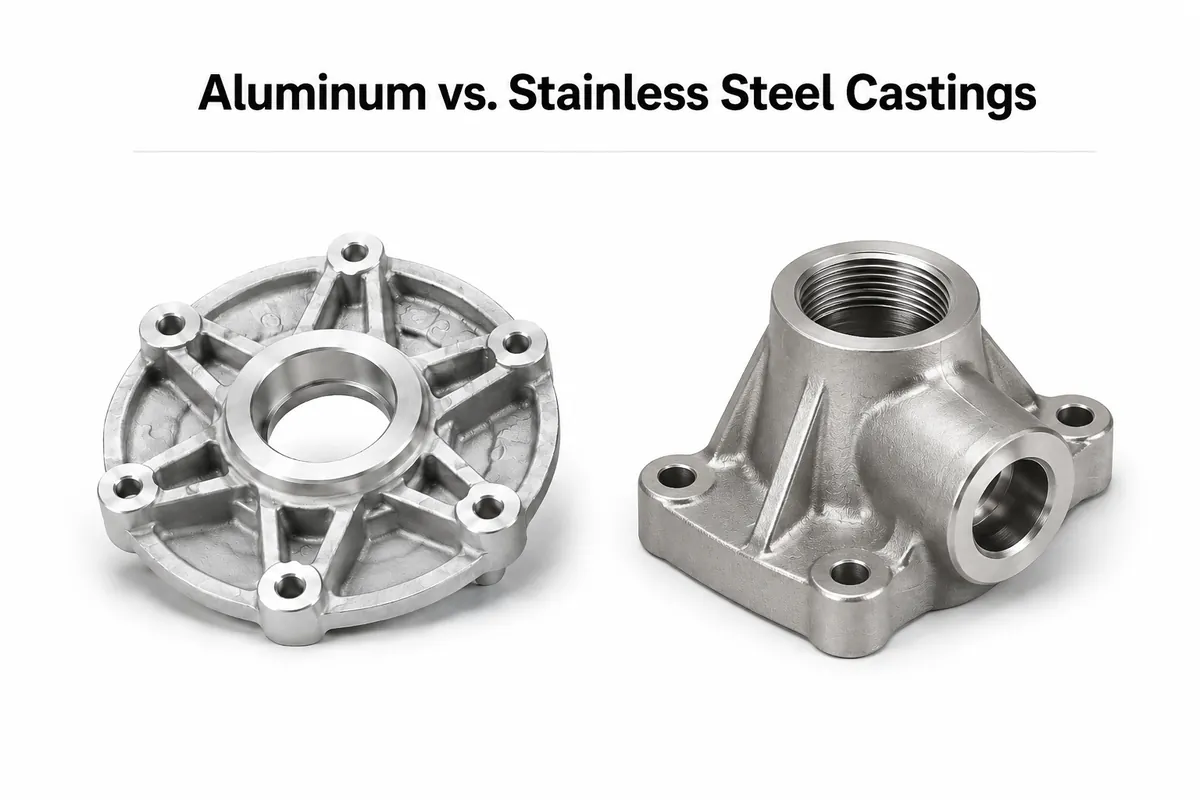
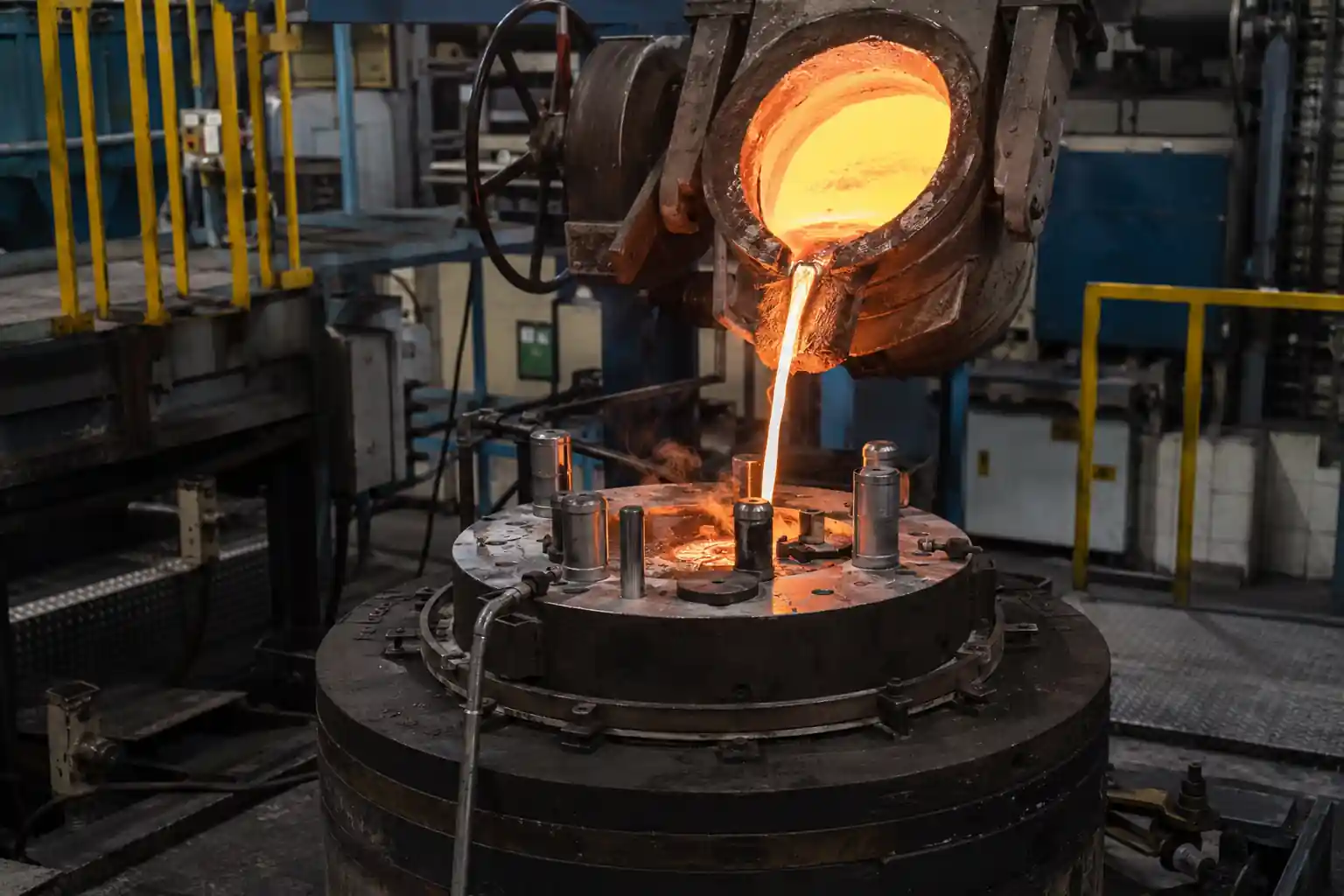
El CF8M es un producto de fundición, lo que significa que el metal fundido se vierte en un molde en lugar de laminarse o forjarse para darle forma. La designación aparece estampada en los cuerpos de válvula y en los accesorios, por lo que los compradores e inspectores la ven con tanta frecuencia.
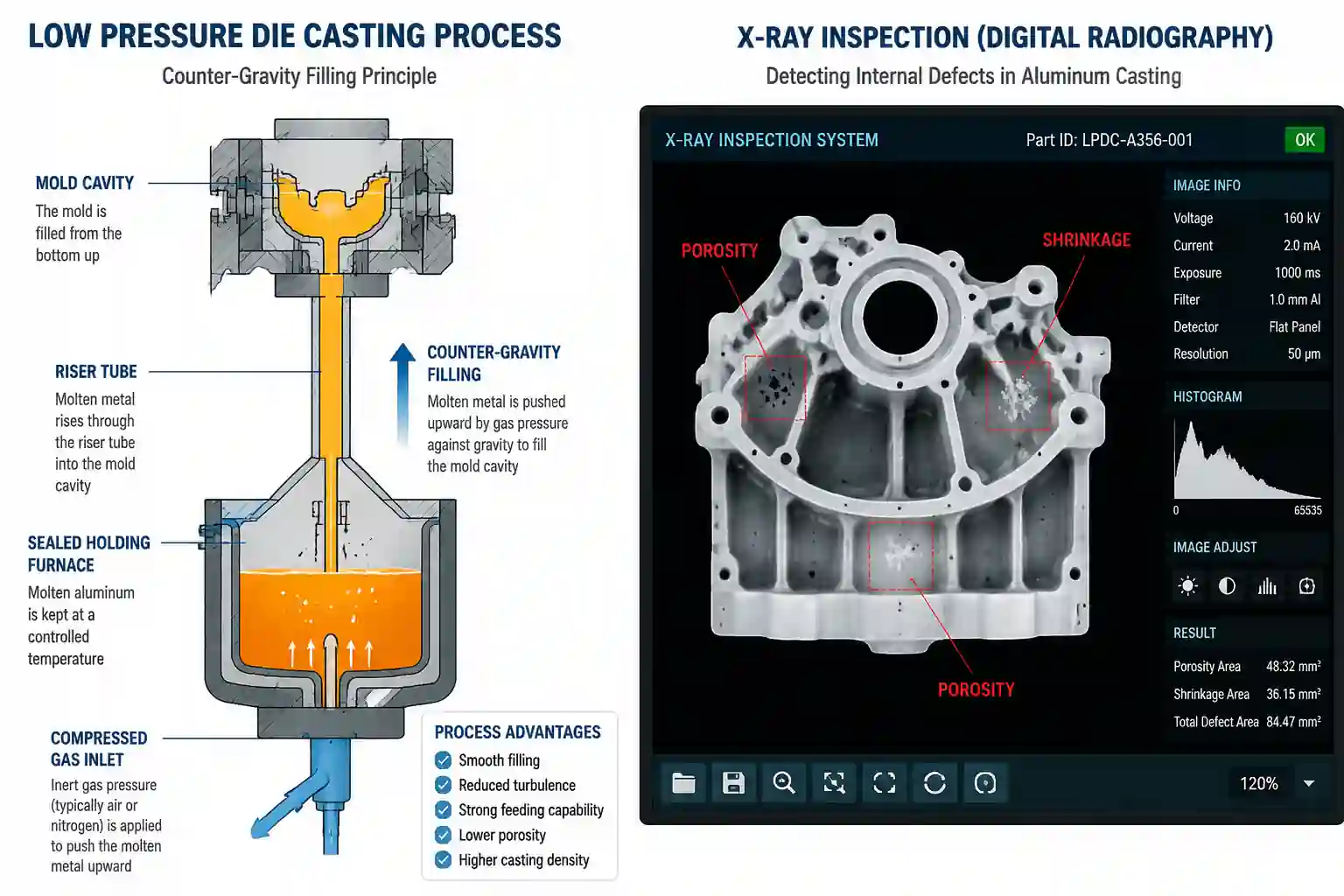
Según la norma ASTM A351, este grado está homologado para piezas de fundición sometidas a presión, como cuerpos de válvulas y carcasas de bombas. Las normas ASTM A743 y A744 amplían su ámbito de aplicación a piezas de fundición resistentes a la corrosión en general y para servicio severo, por lo que esta misma aleación se utiliza en válvulas, bridas y equipos de proceso. La solidez de dichas piezas se verifica a menudo mediante métodos de inspección de la fundición de metales.
La aleación tiene un contenido de entre el 18 y el 21 % de cromo y entre el 9 y el 12 % de níquel, con un 2-3 % de molibdeno y un límite de carbono del 0,08 %. El contenido de molibdeno es precisamente lo que distingue al CF8M del CF8.
| Elemento | CF8M |
|---|---|
| Cromo | 18–21% |
| Níquel | 9–12% |
| Molibdeno | 2–3% |
| Carbono (máx.) | 0.08% |
| Hierro | Saldo |
El molibdeno refuerza la película de óxido pasiva, lo que confiere al CF8M su resistencia a la corrosión por picaduras y en hendiduras en entornos con alta concentración de cloruro. Los intercambiadores de calor, los accesorios marinos y los componentes para instalaciones en alta mar se benefician de esta propiedad cuando están sometidos a una exposición continua.
Propiedades mecánicas
El CF8M comparte la estructura austenítica y el límite máximo de carbono del CF8, por lo que ambos grados presentan unas prestaciones mecánicas muy similares.
| Propiedad | CF8M |
|---|---|
| Resistencia a la tracción (mín.) | 70 ksi |
| Límite elástico (mín.) | 30 ksi |
| Alargamiento (mín.) | 30% |
| Dureza (Brinell) | 146–212 |
Este tipo de acero no se puede endurecer mediante tratamiento térmico. Se puede soldar con metales de aportación con bajo contenido en carbono, y la elección entre CF8M y CF8 viene determinada por la resistencia a la corrosión más que por la resistencia mecánica.
La soldadura exige disciplina: hay que utilizar material de aportación con bajo contenido en carbono, evitar el intervalo de sensibilización de 425–815 °C y realizar un recocido de solución tras la soldadura para restablecer la resistencia a la corrosión. Las variantes con bajo contenido en carbono CF3 y CF3M reducen la precipitación de carburos durante la soldadura.
El CF8M puede presentar un ligero magnetismo en su estado de fundición, debido a que su estructura contiene ferrita. El acero 316 forjado suele ser no magnético; el efecto es débil y no afecta al comportamiento frente a la corrosión.
Resistencia a la corrosión
La exposición al cloruro es donde el CF8M demuestra su valía. La película estabilizada con molibdeno resiste la corrosión en agua de mar, aire costero y entornos con sal de deshielo, donde el CF8 sin tratar se picaría y fallaría.
El CF8 sigue siendo una opción sólida para la corrosión atmosférica, el agua dulce y la mayoría de las aplicaciones alimentarias y lácteas. El CF8M amplía ese mismo rendimiento básico a los accesorios marinos, los equipos offshore, las plantas químicas y el procesamiento farmacéutico.
El CF8 también ofrece una buena resistencia a la cavitación en aplicaciones de bombeo con picos de presión predecibles. El CF8M cumple además con los requisitos de seguridad alimentaria, lo que lo convierte en un material habitual en las líneas de procesamiento alimentario y farmacéutico.
Aplicaciones del acero inoxidable CF8M
El CF8M es la opción predeterminada cuando se combinan la resistencia a la corrosión y la facilidad de fundición. Su principal ámbito de aplicación son las piezas sometidas a presión y los equipos de proceso.
- Cuerpos de válvulas, bridas y accesorios para aplicaciones marítimas y químicas
- Carcasas de bombas, impulsores y otros componentes giratorios
- Tuberías de proceso y recipientes a presión
- Equipos para la elaboración de productos alimenticios y farmacéuticos
- Componentes marinos y costeros expuestos a cloruros
CF8 frente a CF8M: ¿cuál es la diferencia?
El CF8 es la variante fundida del 304; el CF8M es la variante fundida del 316. Ambos se fabrican como piezas fundidas y comparten propiedades básicas similares, pero el molibdeno presente en el CF8M modifica su comportamiento frente a la corrosión en entornos clorados.
| Atributo | CF8 | CF8M |
|---|---|---|
| Equivalente forjado | 304 | 316 |
| Molibdeno | Ninguno | 2–3% |
| Resistencia a la corrosión | Adecuado para agua dulce | Excelente en cloruros/agua de mar |
| Servicio habitual | Alimentación, agua, climatización | Marítimo, químico, offshore |
| Coste relativo | Baja | Más alto |
Ninguna de las dos calidades es la mejor opción en todos los casos. La CF8 es adecuada para agua dulce y el sector de la restauración a un precio más bajo; la CF8M es la solución ideal para cloruro, agua de mar y aplicaciones químicas. La diferencia de coste viene determinada por la aleación, ya que el molibdeno y un mayor contenido de níquel hacen que la CF8M sea más cara que la CF8.
Hierro fundido nodular – Fabricante de piezas de hierro fundido
El grado adecuado viene determinado por el entorno de funcionamiento, no por el nombre que figure en el plano. Envía tu plano y las condiciones de funcionamiento a nuestros ingenieros, y la calidad de la fundición puede confirmarse antes de que comience la fabricación de los moldes.
Comprobar el material en la fase de presupuesto cuesta mucho menos que sustituir una pieza corroída durante su uso. A la hora de elegir un proveedor de fundición, pide lo mismo consideraciones sobre el diseño de la fundición revisión antes de dar el visto bueno al molde.