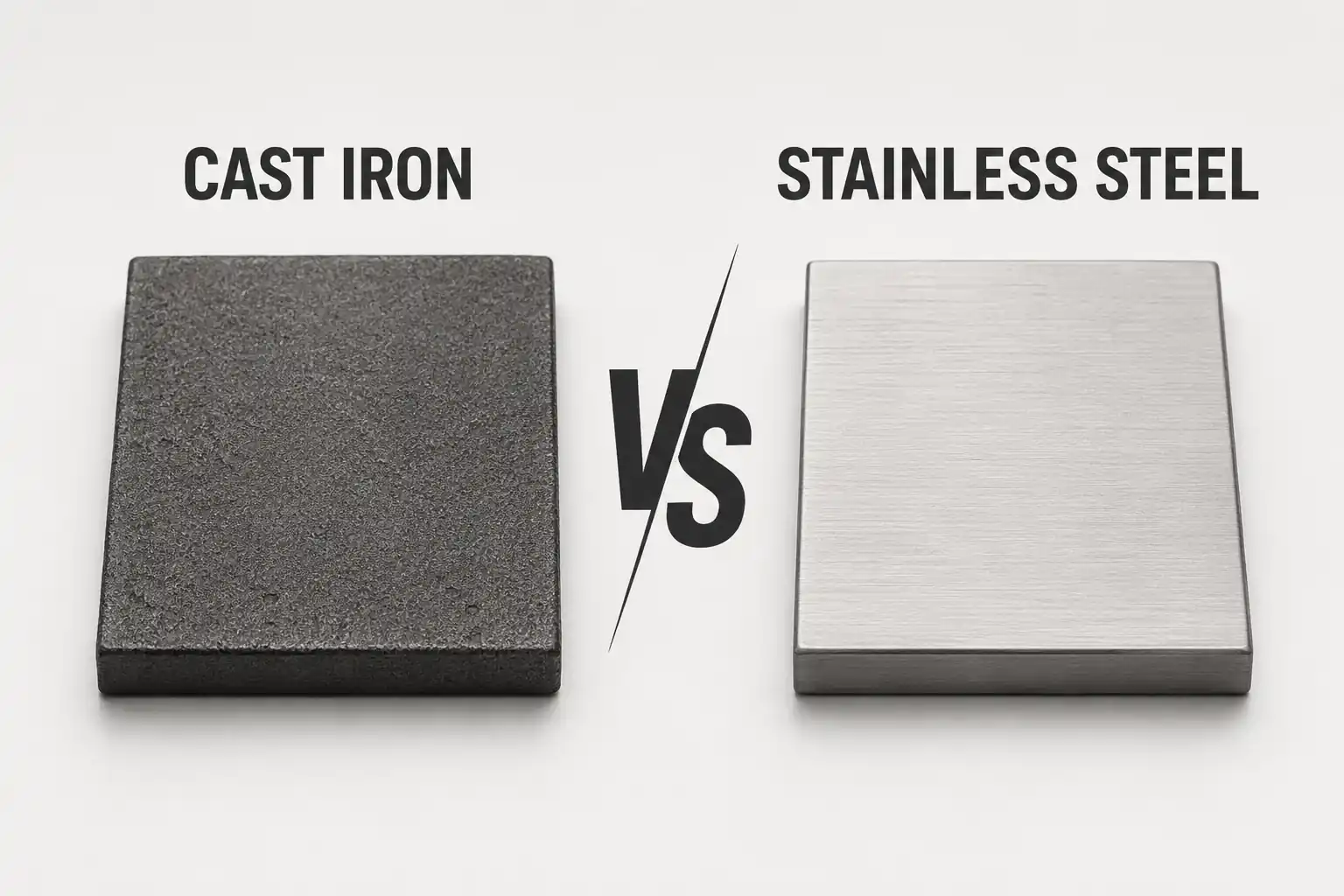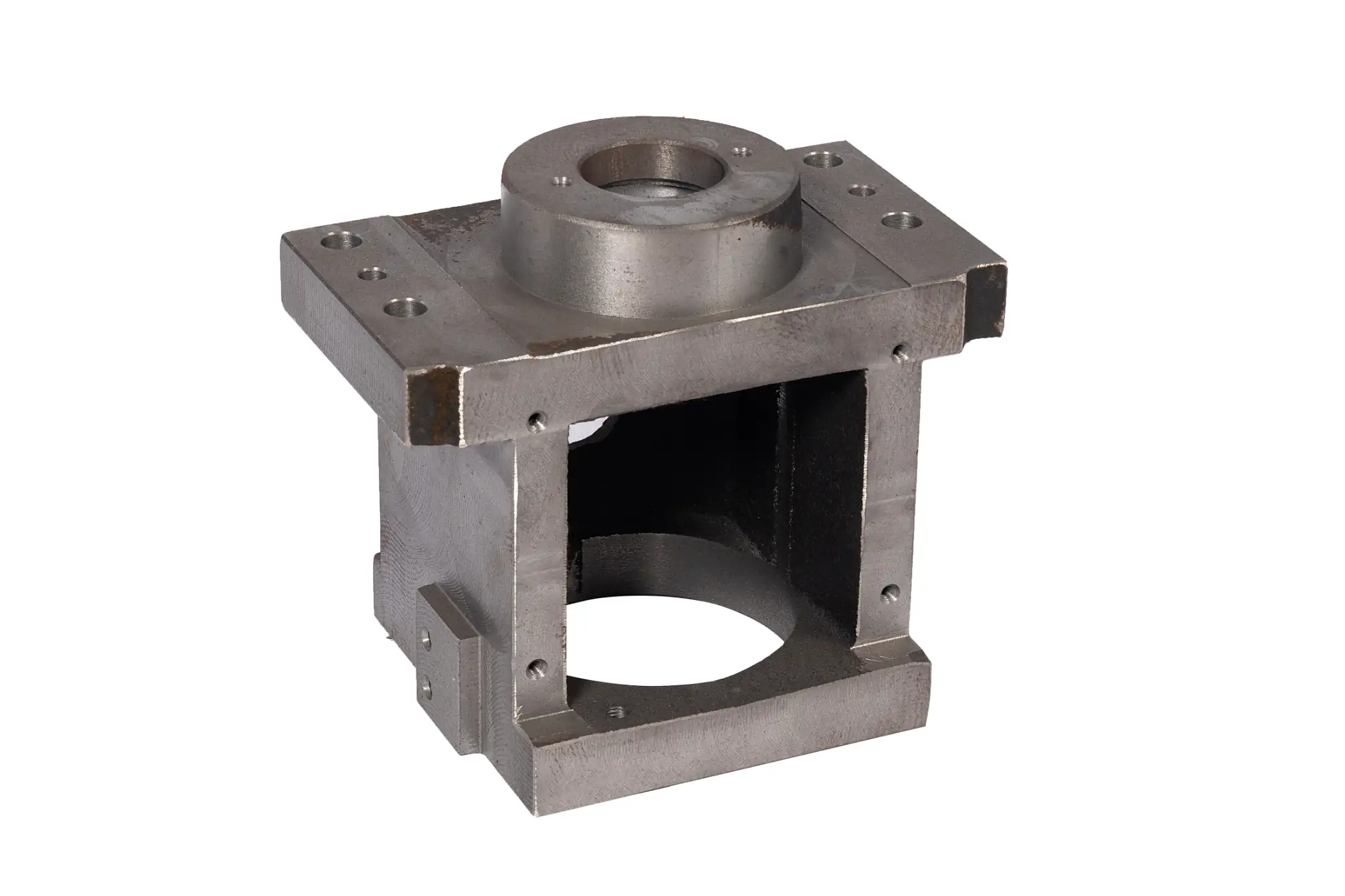



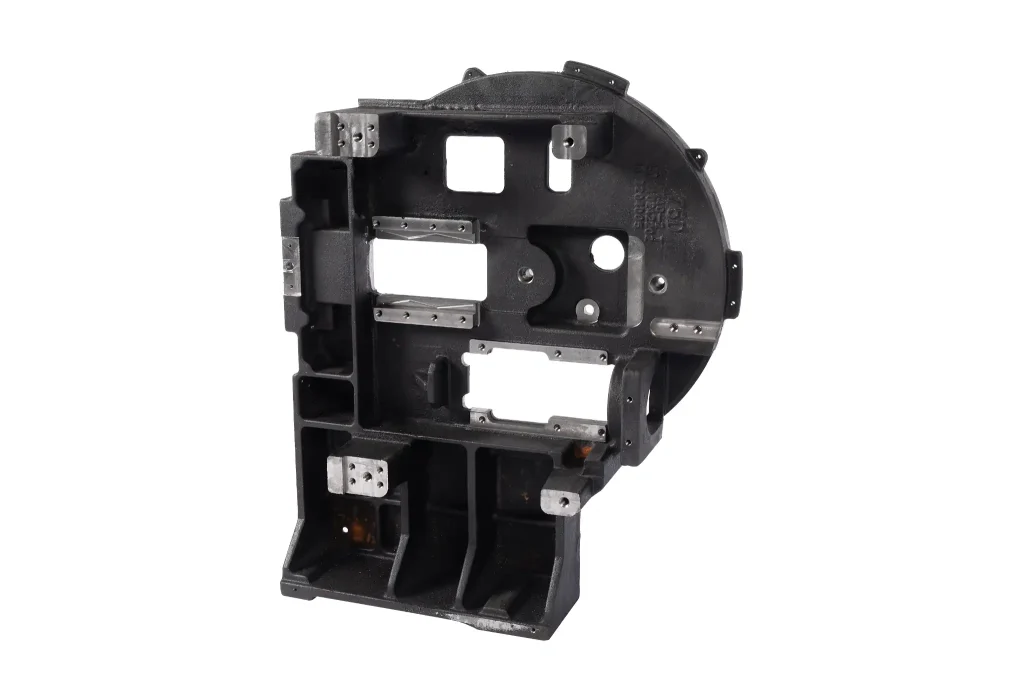
Cast iron is an iron-based alloy that contains approximately 2 to 4 percent carbon, together with silicon, manganese, and small amounts of sulfur and phosphorus. That carbon level is the main distinction between cast iron and steel. An iron alloy must contain more than 2 percent carbon before it can be classified as cast iron; cast steel, for comparison, typically contains 0.1 to 0.5 percent carbon.
The name can mislead. Because iron appears in the name, cast iron is sometimes assumed to be close to pure iron. In reality, carbon steels contain a higher proportion of iron than most cast irons. Cast iron is not one metal but a family of alloys, and the differences among the family members matter more than the shared name suggests. The family has a long record behind it: Chinese foundries produced cast iron as early as the 6th century BCE, and it remains widely used in industrial applications today.
What Is Cast Iron Made Of?
Cast iron is an alloy in which iron is the base metal and carbon is the defining element. Carbon typically runs from 2 to 4 percent, with silicon and manganese added in smaller amounts and sulfur and phosphorus kept low. These elements are added deliberately to change how the metal behaves and to produce specific cast iron grades.
The form carbon takes matters in practice. Graphite makes the metal softer and easier to machine, while iron carbide makes it harder and more brittle. Silicon promotes graphite formation during cooling, which is why it is controlled together with carbon.
| Element | Typical amount | Role |
|---|---|---|
| Iron (Fe) | Balance | Base metal; provides strength and magnetic properties |
| Carbon (C) | 2–4% | Forms graphite (softer, more machinable) or iron carbide (harder, more brittle) |
| Silicon (Si) | 1–3% | Promotes graphite formation during solidification |
| Manganese (Mn) | 0.5–1% | Offsets the weakening effect of sulfur |
| Sulfur (S) | Up to about 0.08% | Kept low; excessive sulfur increases brittleness |
| Phosphorus (P) | Up to about 1% | Increases fluidity and stiffness |
Composition sets the structure, and structure sets the properties of the finished part. Two castings that share the name cast iron can behave very differently if their composition or cooling differs.
How Is Cast Iron Made?
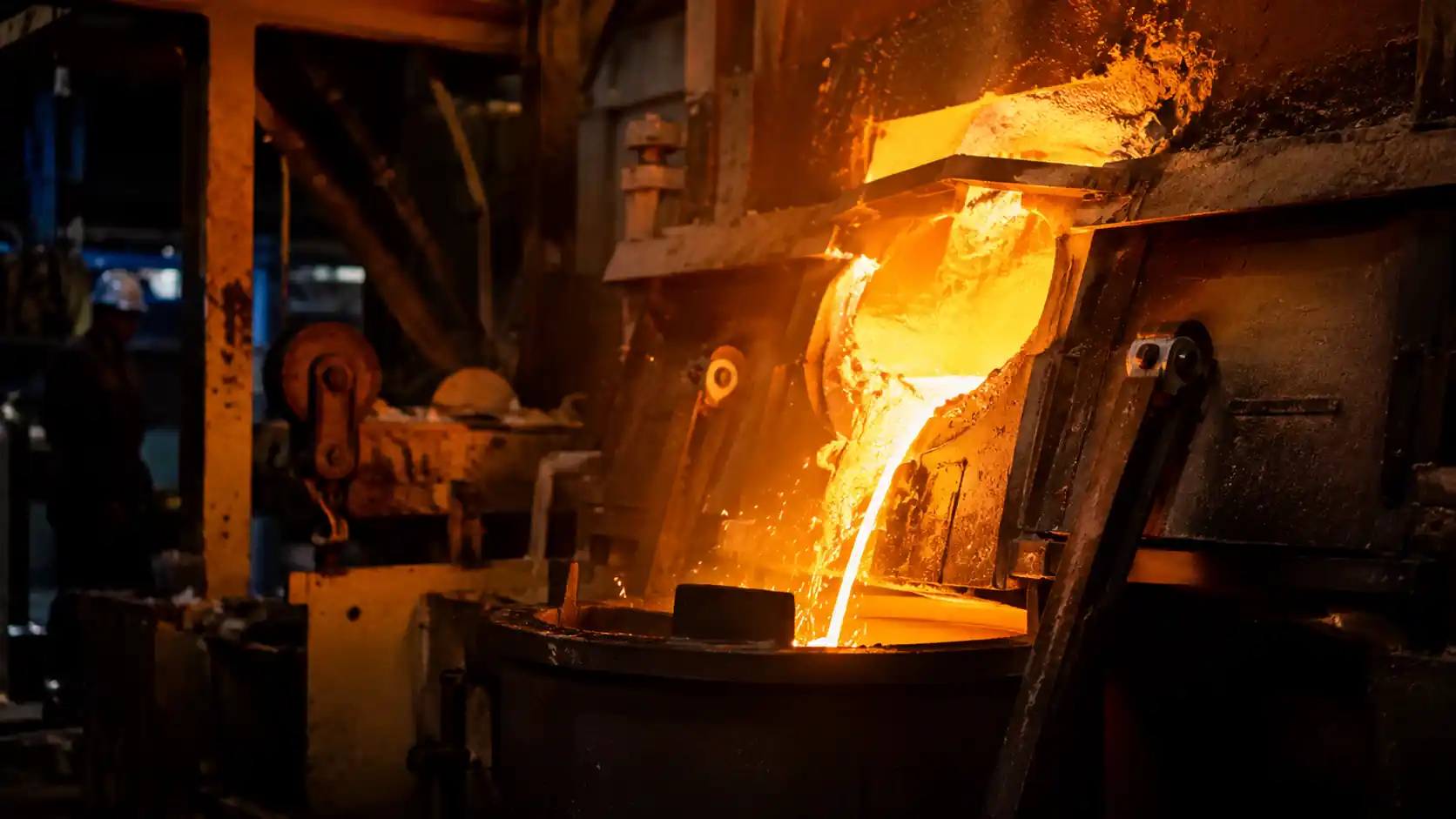
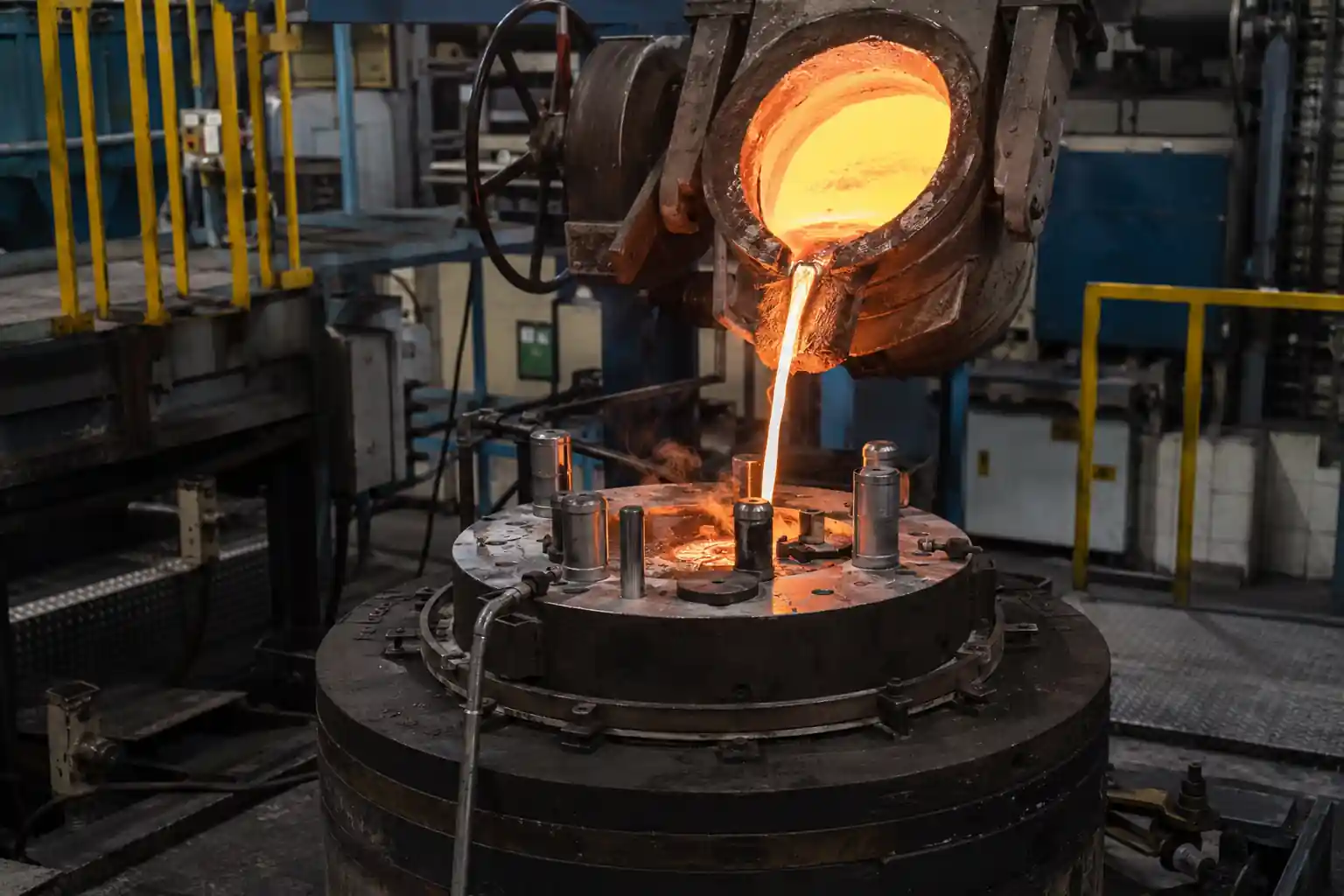
The manufacturing process is where the name comes from. Iron ore is reduced in a blast furnace to molten iron, which is cast into crude ingots, historically called pigs. The ingots are remelted in a cupola furnace together with scrap steel and alloying elements, the composition is adjusted to reach the target grade, and the prepared melt is poured into a mold.
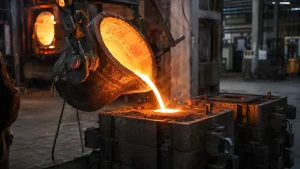
Molten cast iron flows better than steel and melts at a lower temperature. Both characteristics suit it to casting: complex mold cavities fill more readily, and the energy needed for melting stays manageable.
Solidification is not the end. Runners, risers, and flash are removed after the casting cools, and depending on the grade and the drawing, heat treatment, machining, surface finishing, or inspection may follow. The mold gives the part its shape; the later operations determine its final properties.
Types of Cast Iron
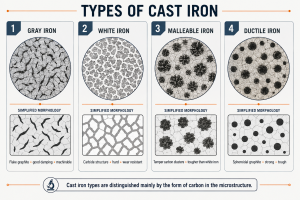
Cast iron is classified by the form of its carbon. This single structural feature drives machinability, toughness, wear resistance, and damping, so the type should be identified before a grade is selected.
Gray Iron
Gray iron contains graphite in flake form. When a gray iron casting fractures, the crack follows the flakes and the fracture face appears gray, which is the origin of the name. The flake structure makes gray iron easy to machine and gives it strong vibration damping.
The flakes come with a trade-off. Gray iron is less ductile than other cast irons and has lower tensile strength. It suits parts with mainly compressive loads or vibration-control requirements, and parts that take repeated shock loads are better considered in other grades.
White Iron
White iron contains almost no graphite. Carbon is present mainly as iron carbide, which gives the fracture face a white appearance and makes the material hard and brittle. White iron offers high compressive strength and excellent wear resistance, so it is used for grinding media, wear plates, and other abrasion-intensive parts.
The brittleness limits its use. White iron does not deform before failure, and applications that use it accept that behavior in exchange for wear life that outlasts softer materials.
Malleable Iron
Malleable iron starts as white iron and is converted by a prolonged heat treatment. The treatment breaks down the iron carbide and releases carbon as compact graphite particles, giving the material different behavior from the brittle white iron it began as.
The treatment was developed in France in the 18th century. Malleable iron remains a choice for thin-walled and complex castings that need a degree of toughness, and its properties sit close to those of ductile iron.
Ductile Iron
Ductile iron, also called nodular iron, is made by adding magnesium to the melt, which makes the graphite solidify as spheroids instead of flakes. The round graphite form improves toughness and strength markedly compared with gray iron and gives the material better impact resistance.
Ductile iron was developed in the United States and Britain in 1948 and has become a major engineering material family used for gears, dies, crankshafts, and many machine parts. A related grade, compacted graphite iron, has worm-like graphite and sits between gray and ductile iron in performance. For parts that need ductile iron strength at production volumes, our ductile iron guide should be reviewed before the grade is fixed.
Properties of Cast Iron
Cast iron is selected for a group of properties that appear across the grades:
- Compressive strength. Cast iron carries heavy loads without deformation, which suits columns, machine bases, and structural supports.
- Hardness and wear resistance. Graphite and carbide both contribute, and surfaces under continuous contact, such as gears, pistons, and wear plates, benefit.
- Damping. Gray iron absorbs vibration roughly 20 to 25 times better than steel, a characteristic machine tool builders have used for more than a century.
- Machinability. Gray iron in particular cuts cleanly because the graphite flakes act as a chip breaker and a dry lubricant.
- Heat retention. Cast iron stores and retains heat well; the same behavior applies to cookware, molds, dies, and furnace components.
- Cost. The alloying elements are common and the production route is economical, so cast iron stays one of the more affordable engineering materials.
Where Is Cast Iron Used?
Cast iron appears where hardness, wear resistance, damping, or economy matters more than tensile toughness. The applications divide naturally by grade:
- Automotive and machinery: brake discs, gears, sprockets, chains, piston rings, and engine blocks.
- Fluid handling: pump housings, valve bodies, and pipe fittings (see our valve body casting case study).
- Tooling and wear parts: dies, molds, machine tool beds, and abrasion-resistant components.
- Architecture and municipal: manhole covers, decorative ironwork, structural bases, and grates.
- Energy and mining: mining equipment, crankshafts, and heavy housings.
Nodular Cast Iron – Cast Iron Casting Manufacturer
That is the type of decision a foundry can help with. Send the drawing, the service conditions, and the quantities to [our engineers](/contact-us/), and let them walk through the grade, the molding route, and the finishing steps before tooling is committed. Resolving these points early costs less than correcting them after production has started.