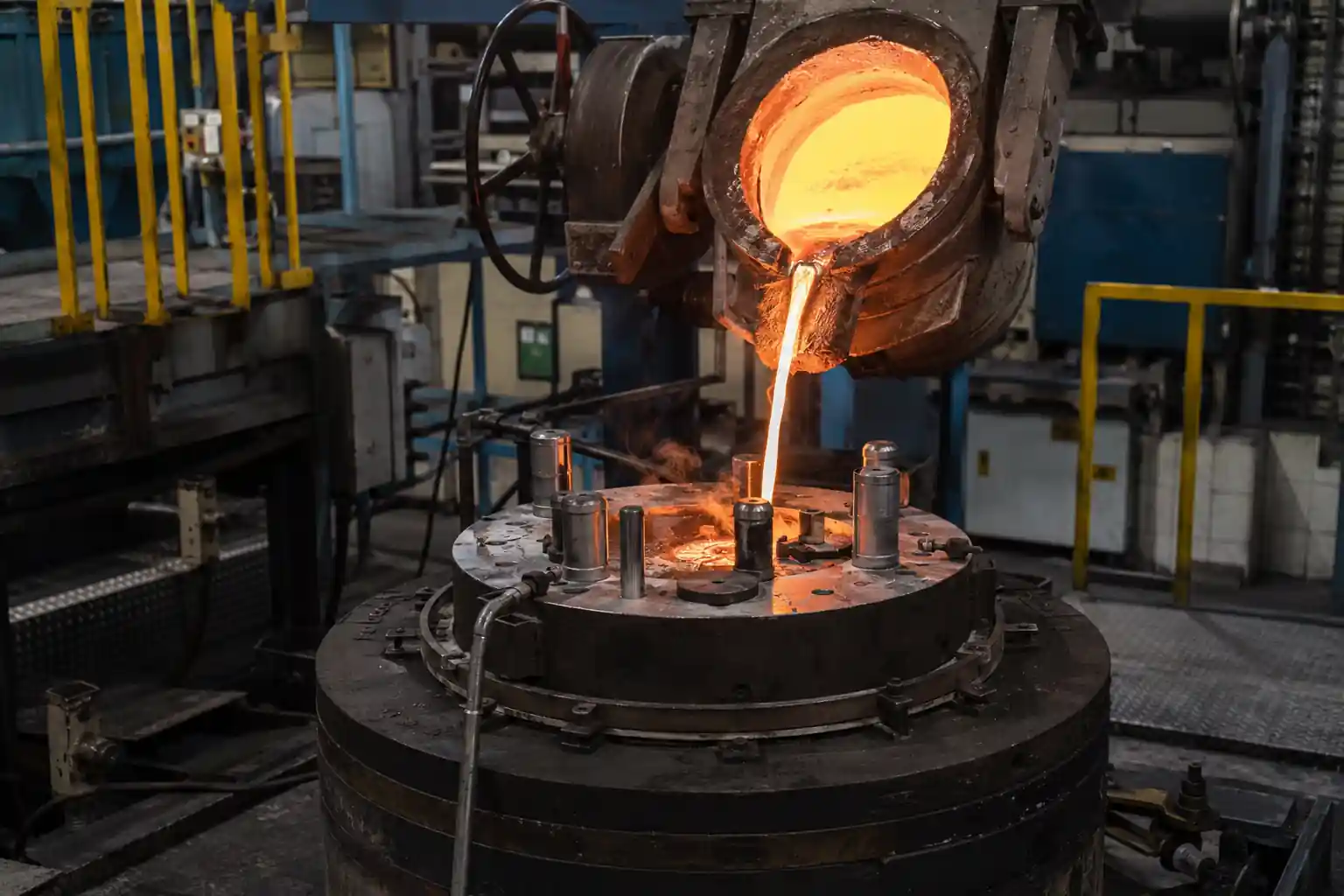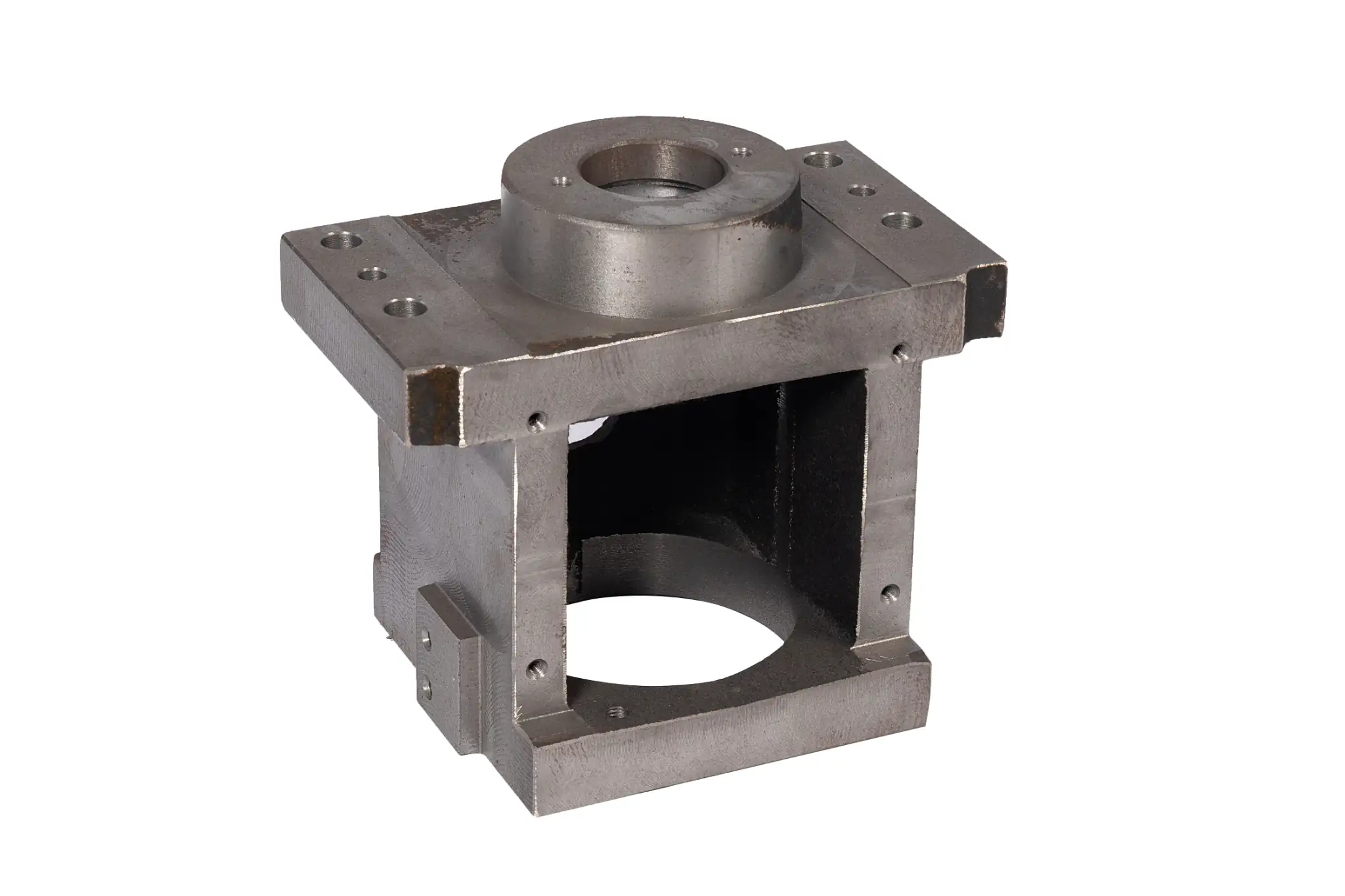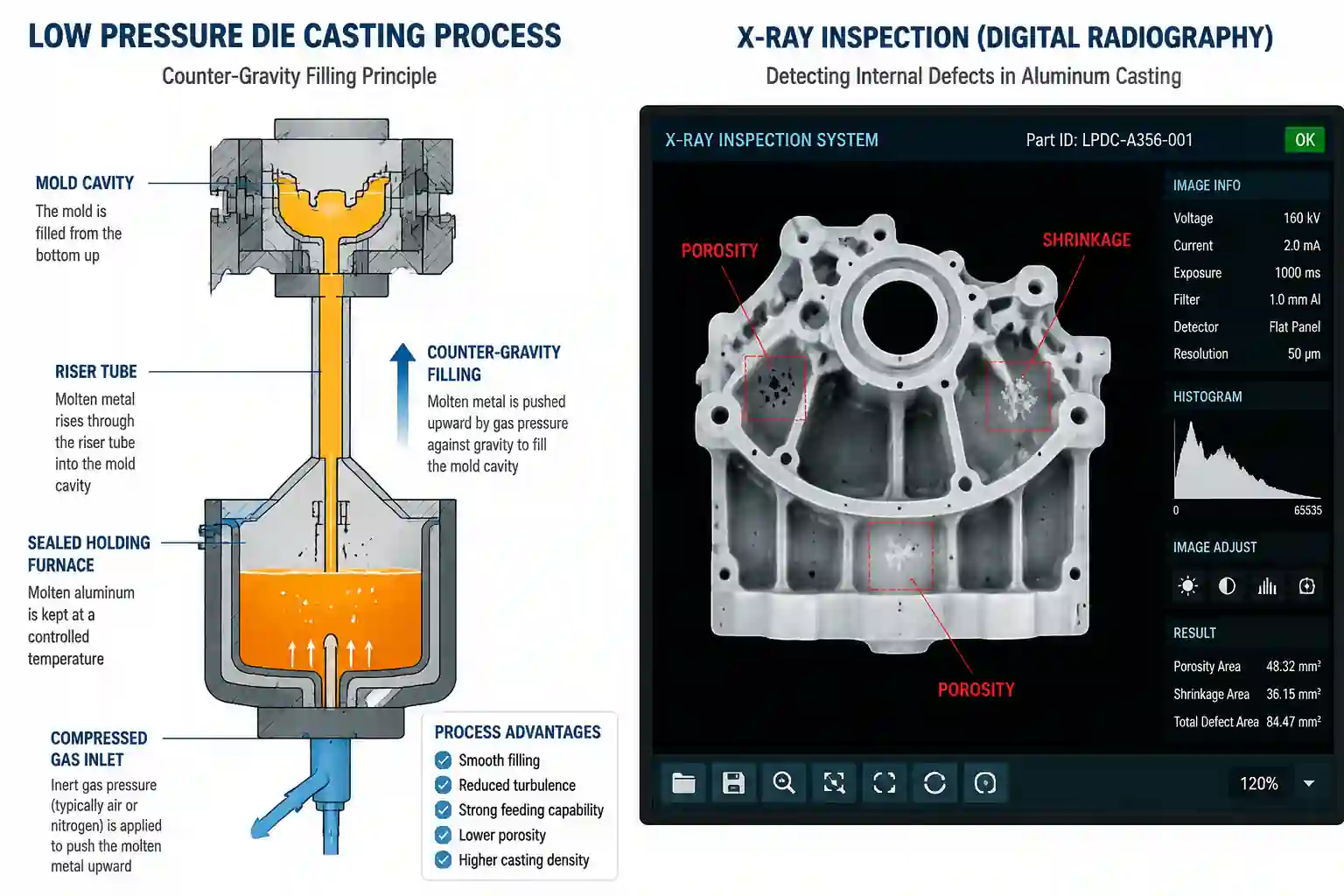



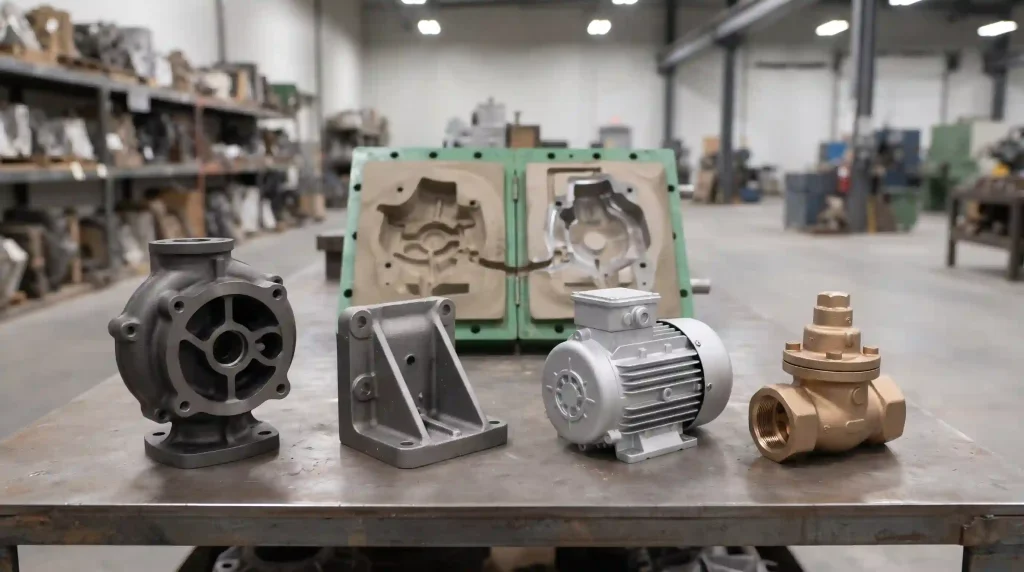
Cast iron, cast steel, aluminum alloys, and copper alloys are among the metals most commonly used in sand casting. Each offers different properties for parts such as machine bases, pump housings, valve bodies, and lightweight brackets. Beyond the metal itself, the process also relies on sand, binders, and other molding materials to form the part and withstand pouring.
Common Metals Used in Sand Casting
Sand casting accommodates a wide range of ferrous and non-ferrous metals, including cast iron, cast steel, aluminum alloys, and copper alloys. Magnesium, zinc, and certain nickel-based and titanium alloys can also be sand cast, although some require specialized mold materials, melting equipment, and process controls.
Cast Iron
Cast iron is widely used in sand casting for its castability, vibration damping, and machinability. Typical applications include machine bases, pump bodies, gearbox housings, and mechanical brackets. Common types include gray iron, ductile iron, malleable iron, and compacted graphite iron. Representative grades include ASTM A48 Class 30 and ASTM A536 65-45-12.
Cast Steel
Cast steel offers strength and toughness for mechanical components exposed to heavy loads and impact. Sand casting is used to produce industrial valve bodies, heavy machinery brackets, load-bearing connectors, and large structural castings. Common categories include carbon steel, low-alloy steel, stainless steel, and heat-resistant steel. Representative grades include ASTM A216 WCB and ASTM A27 Grade 70-36.
Aluminum Alloys
Aluminum alloys combine low density with good corrosion resistance and machinability, making them suitable for lightweight industrial components. Sand casting can produce equipment housings, pump casings, structural brackets, and parts with complex internal passages. Common alloy groups include aluminum-silicon, aluminum-copper, and aluminum-magnesium alloys. Representative grades include A356.0, 319.0, and 356.0.
Copper Alloys
Copper alloys offer good corrosion resistance, while selected grades also provide wear resistance, thermal conductivity, and useful mechanical properties. Typical sand cast products include valve bodies, pump bodies, bushings, bearings, and other industrial components. Common categories include tin bronze, aluminum bronze, and brass. Representative grades include C83600, C95400, and C87500.
Magnesium Alloys
Magnesium alloys have low density and a high strength-to-weight ratio, making them suitable for lightweight housings and structural components. Sand casting is used for aerospace equipment housings, mechanical brackets, and other weight-sensitive parts, but requires dedicated melt protection measures. Common alloy groups include magnesium-aluminum-zinc, magnesium-zinc-rare-earth, and magnesium-rare-earth alloys. Representative grades include AZ91E, ZE41A, and WE43.
Zinc Alloys
Zinc alloys have relatively low melting temperatures, good fluidity, and good machinability. Although they are mainly used in die casting, selected alloys can also be sand cast for mechanical components, decorative parts, and small production runs. Common categories include zinc-aluminum and zinc-aluminum-copper alloys. Certain ZA alloys, including ZA-12 and ZA-27, are suitable for sand casting.
Nickel-Based Alloys
Nickel-based alloys provide heat resistance, corrosion resistance, and oxidation resistance for chemical processing, energy equipment, and other demanding industrial applications. Selected alloys can be sand cast into pump bodies, valve bodies, and heat-resistant structural components, but require careful control of melting conditions and mold materials. Common groups include nickel-chromium, nickel-chromium-molybdenum, and nickel-copper alloys. ASTM A494 CW-12MW is one representative cast grade.
Titanium Alloys
Titanium alloys offer a high strength-to-weight ratio and good corrosion resistance for aerospace, chemical processing, and specialized industrial equipment. Selected alloys can be cast into pump bodies, valve bodies, and complex structural components using specialized sand molding processes. These require dedicated refractory mold materials and vacuum or controlled-atmosphere melting equipment. Common categories include alpha, alpha-beta, and beta titanium alloys, with Ti-6Al-4V being a representative grade.
What Materials Are Needed for Sand Casting?
In addition to the metal being poured, sand casting requires patterns, base sand, binders, additives, and foundry coatings. Patterns establish the external shape of the casting, while sand molds and cores form the cavity that receives the molten metal. Binders, additives, and coatings help control mold performance and casting quality.
Patterns and Cores
Patterns form the external mold cavity in the sand and are typically made from wood, plastic, or metal. Wooden patterns are suitable for one-off castings and small production runs, plastic patterns offer good dimensional stability, and metal patterns are suited to repeated production. Parts with internal passages or complex cavities also require sand cores, which are generally made from sand and a binder using core boxes. Once the patterns and cores are ready, the sand casting mold-making process involves filling and compacting the sand, removing the pattern, positioning the cores, and assembling the mold.
Base Sand
Base sand is the main material used to make molds and cores. It needs suitable refractoriness, permeability, and grain characteristics. Silica sand is the most widely used option because it is readily available and relatively inexpensive. Chromite, zircon, and olivine sands are used where specific requirements for refractoriness, thermal expansion, or resistance to metal penetration justify their use.
Binders
Binders hold sand grains together so that molds and cores retain sufficient strength during molding, handling, and pouring. Common binders include bentonite, furan resin, phenolic resin, and sodium silicate. Bentonite is mainly used in green sand, while resins and sodium silicate are commonly used in chemically bonded molds and cores. These different bonding methods underpin three common sand molding systems: green sand, sodium silicate sand, and furan resin sand.
Additives
Additives modify specific sand properties to help reduce burn-on, improve casting surfaces, or adjust molding performance. Common examples include coal dust, starch, and cellulose-based materials. Coal dust is mainly used to improve the surface quality of iron castings, while starch and cellulose-based additives can improve properties such as toughness, moldability, and collapsibility, depending on the formulation.
Foundry Coatings
Foundry coatings are applied to mold or core surfaces to create a refractory barrier that helps reduce metal penetration, burn-on, and other surface defects. Common refractory fillers include zircon flour, alumina, and graphite. Zircon flour and alumina provide refractory protection, while graphite offers useful release properties and is used in selected mold coatings for iron castings.
Applications of Sand Casting
Sand casting produces components in cast iron, cast steel, aluminum alloys, and other metals. Common products include engine blocks, pump housings, valve bodies, and machine beds. The process is particularly useful for large components, complex internal geometries, and smaller production runs.
- Automotive and Transportation: Typical parts include engine blocks, cylinder heads, transmission housings, and brake drums. Sand cores form cooling passages, oil galleries, and other internal cavities.
- Industrial Machinery: Common products include machine beds, equipment bases, gearbox housings, and bearing housings. Large cast iron beds and bases use the material’s vibration-damping properties to provide stable equipment support.
- Pumps and Valves: Sand casting is used for pump bodies, pump covers, valve bodies, and impellers. It accommodates internal flow passages and complex housings, with sealing faces and connection features machined afterward.
- Energy and Power Equipment: Applications include turbine casings, power generation equipment housings, and large support components. Material selection depends on operating temperature, loads, and the service medium.
- Agricultural and Construction Machinery: Typical parts include transmission housings, wheel hubs, counterweights, and brackets, with materials selected to meet load-bearing, wear, and dimensional requirements.
Conclusion
Sand casting uses sand molds and cores to form the external shape and internal cavities of components such as engine blocks, pump housings, valve bodies, and machine beds. It accommodates different metals, part sizes, and production quantities, while casting quality depends on control throughout molding, core making, pouring, and cooling. Features with tighter dimensional requirements need appropriate machining allowances so they can be finished to drawing specifications.
If you are selecting a casting process for a specific component, our sand casting services provide support from casting through machining, based on your drawings and application requirements. Send us your drawings for process recommendations and a project quotation.