


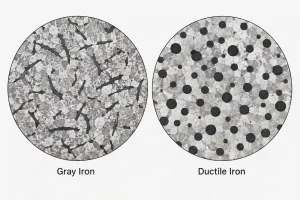
Gray iron and ductile iron are the two most widely used cast irons in industry, and the practical difference between them comes down to one feature: the shape of the graphite. Gray iron solidifies with flake-shaped graphite, while ductile iron forms spheroidal graphite. That single difference drives strength, toughness, damping, machinability, and cost, so the grade choice should start with the graphite form rather than with the name.
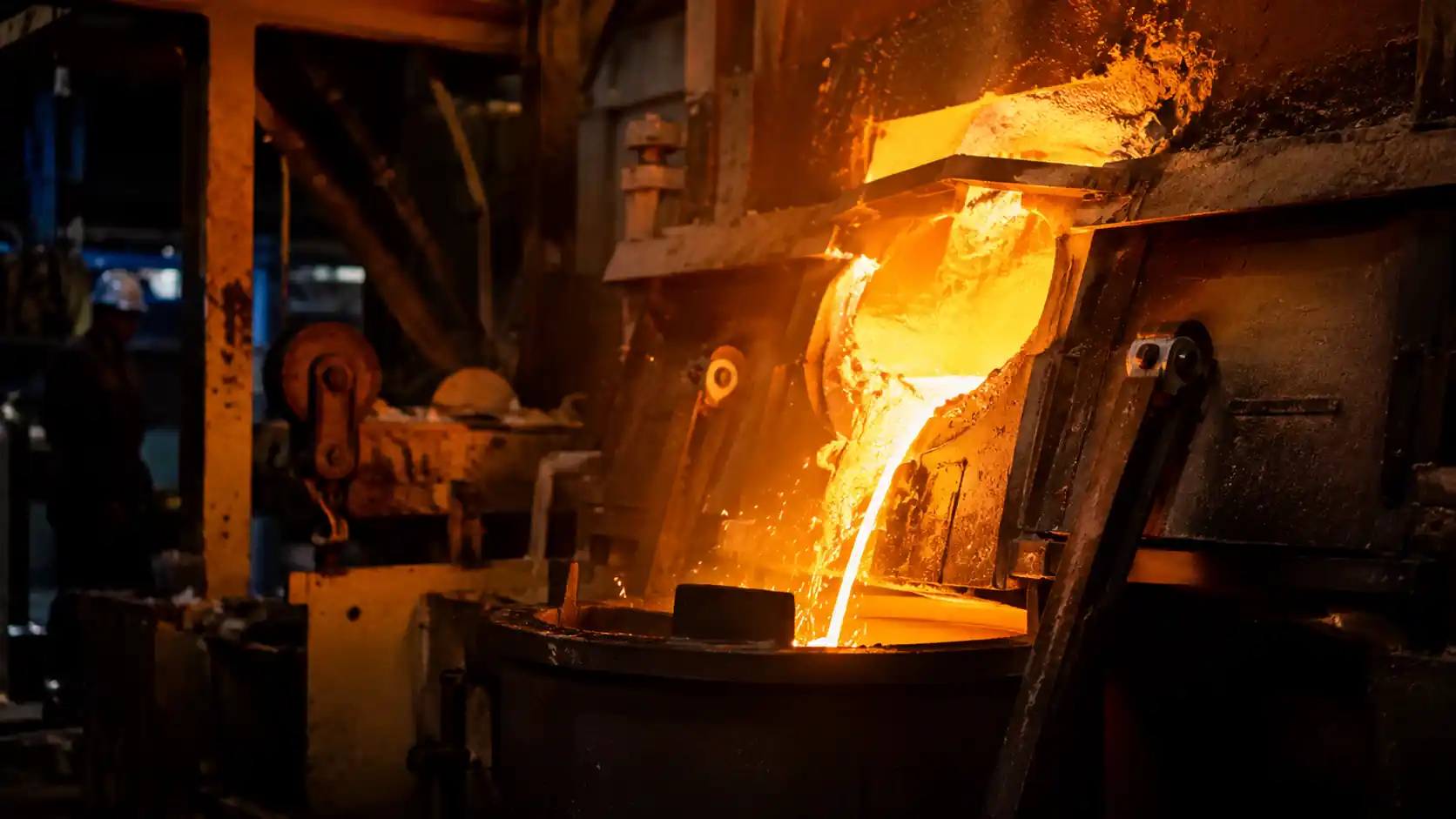
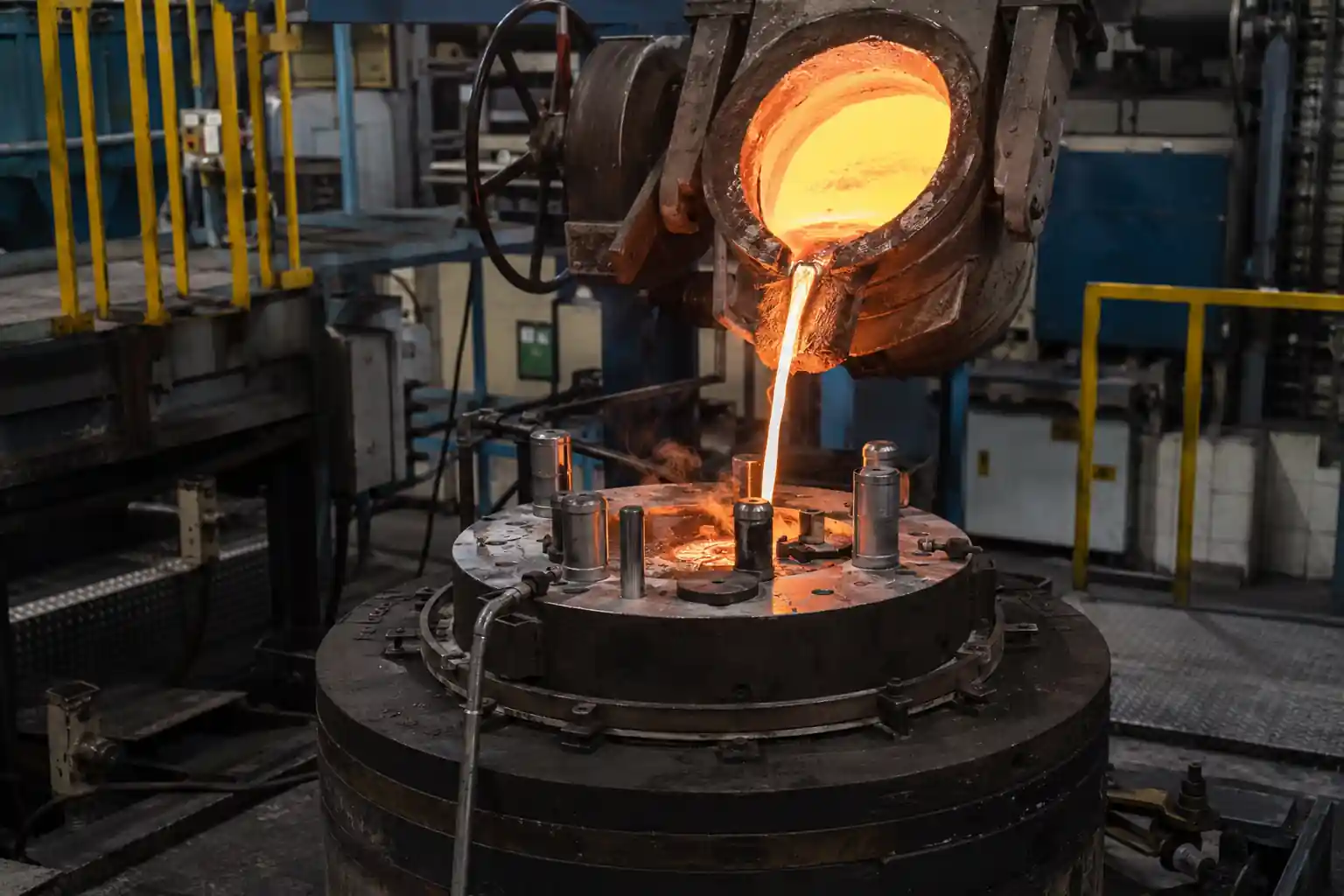
Both metals are iron-carbon alloys with roughly 2 to 4 percent carbon plus small amounts of silicon, manganese, and other elements. They pour well, fill complex molds, and are made by melting, alloying, and casting rather than by forging or machining from bar. What follows compares the two families on microstructure, mechanical properties, applications, and selection.
What Is Gray Iron?
Gray iron contains graphite in flake form. When a casting breaks, the fracture runs along the flakes and the broken surface appears gray, which is where the name comes from. The flakes make gray iron easy to machine: they act as chip breakers and provide a dry lubricant during cutting. Gray iron also damps vibration roughly 20 to 25 times better than steel, a property machine tool builders have relied on for more than a century.
The flake structure has a price. Gray iron has little measurable ductility or yield strength, so it should not be used where impact loads or bending stresses are severe. It suits parts that carry steady compressive loads and need vibration control or good machinability, such as engine blocks, machine bases, brake drums, gear housings, and pipe fittings.
What Is Ductile Iron?
Ductile iron, also called nodular iron, is made by adding magnesium to the melt so the graphite solidifies as spheroids instead of flakes. The round graphite form removes the crack-like stress concentrations of flakes, giving ductile iron measurable yield strength, elongation, and impact toughness that gray iron lacks. Ductile iron was developed in 1948 and has become the default choice for parts that carry bending loads, pressure, or shock.
Typical uses include crankshafts, gears, pump bodies, valve bodies, pipe and fittings, suspension components, and heavy housings. It is not as free-machining or as vibration-absorbing as gray iron, but it is stronger and much tougher for the same section size.
Gray Iron vs Ductile Iron: Key Differences
The differences trace back to graphite shape. Gray iron has flake graphite; ductile iron has spheroidal graphite. The flakes create internal notches that limit strength and ductility but improve damping and machinability; the spheroids spread stress more evenly, which raises strength, ductility, and impact resistance.
The grades also follow different standards. Gray iron is specified under ASTM A48, with class numbers such as 25 and 40 that refer to tensile strength in ksi. Ductile iron is specified under ASTM A536, with designations such as 60-40-18 and 120-90-02 that give tensile strength, yield strength, and elongation in that order. Cost follows the same pattern: gray iron is cheaper to cast and machine, while ductile iron costs more but buys strength, toughness, and fatigue resistance where the application needs them. Naming the grade and the standard matters more than naming the material family, and the full range of cast iron grades is worth reviewing before the drawing is finalized.
Mechanical Properties Comparison
The table summarizes typical values from published comparisons; exact numbers depend on grade, section thickness, and heat treatment.
| Property | Gray Iron | Ductile Iron |
|---|---|---|
| Tensile strength | 20–40 ksi (Class 25–40, ASTM A48) | 60–120 ksi (60-40-18 to 120-90-02, ASTM A536) |
| Yield strength | Not measurable in tension | 40–90 ksi |
| Elongation | Below 1 percent | Up to 18 percent (60-40-18) |
| Impact toughness | Low | High |
| Vibration damping | Excellent, roughly 20–25× steel | Good |
| Machinability | Excellent | Good |
| Thermal conductivity | Higher | Lower |
| Cost per casting | Lower | Higher |
In short, gray iron wins on damping, machinability, and cost; ductile iron wins on strength, toughness, and fatigue resistance. The grade that fits depends on which of these the application rewards.
Typical Applications for Gray Iron and Ductile Iron
Choose the grade by the load, not by the name. Gray iron handles steady compression, vibration, and machining cost; ductile iron handles impact, bending, pressure, and fatigue.
Typical Applications of Gray Iron
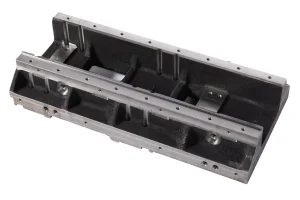
Gray iron is used for engine blocks and cylinder heads, machine tool beds, brake discs and drums, gear housings, pulleys, and municipal castings such as manhole covers and pipe fittings. Its damping and machinability make it the economical choice wherever loads stay compressive and predictable.
Typical Applications of Ductile Iron
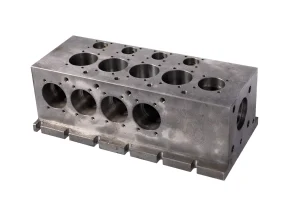
Ductile iron is used for crankshafts, gears, pump and valve bodies, pressure pipe and fittings for water and wastewater systems, suspension and steering components, and heavy industrial housings. For fluid handling in particular, see our valve body casting case study for how ductile iron behaves under pressure and cyclic loading.
How to Choose Gray Cast Iron or Ductile Iron
The decision starts with the load case, not the material name. If the part is rigid, compression-dominated, and benefits from damping, heat transfer, or machining cost, gray iron is usually the economical answer. If it sees tension, bending, impact, pressure, or cyclic fatigue, default to ductile iron.
Choose Gray Iron When
- The load is compressive and steady, as in machine bases, engine blocks, and counterweights
- Vibration damping or thermal conductivity drives the design
- Machining volume and cost matter more than toughness
- Service is low-pressure and impact is not a risk
Choose Ductile Iron When
- The part must yield before fracture or survive impact and shock
- Pressure service, such as valve bodies, pump housings, and water pipe
- Bending, fatigue, or cyclic loading dominates
- Strength-to-weight and reliability justify the higher material cost
FAQ
Which is stronger, gray iron or ductile iron?
Ductile iron is stronger in tension and has a measurable yield strength, so it wins wherever bending, pressure, or impact matters. Gray iron is not chosen for strength; it is chosen for damping, machinability, and cost.
Is gray iron cheaper than ductile iron?
Yes. Gray iron costs less per casting because it needs less alloy treatment and is easier to machine. The cost gap narrows when ductile iron avoids a heavier section or a premature failure.
Which should I choose for pump housings and valve bodies?
Ductile iron is the safer choice for pressure-containing parts because it yields before fracture and resists shock. Gray iron can work for low-pressure, vibration-dominated housings where weight and machining cost matter more.
Which iron is easier to machine?
Gray iron. The graphite flakes act as chip breakers and a dry lubricant, so tool life is better and cycle times are shorter. Ductile iron machines well but needs harder tooling and lower speeds for the same finish.
Nodular Cast Iron – Cast Iron Casting Manufacturer
That is the type of decision a foundry can help with. Send the drawing, the service conditions, and the quantities to our engineers, and let them confirm the grade, the molding route, and the finishing steps before tooling is committed. Resolving these points early costs less than correcting them after production has started.