


Part development typically involves drawing reviews, sample production, and performance testing. Once the samples pass inspection, the project can move toward mass production. However, the equipment, tooling, and inspection methods used for mass production may differ from those used during prototyping. How can customers confirm that these production conditions are ready and capable of consistently producing parts that meet requirements?
PPAP provides a basis for this assessment. Through production trial samples, inspection results, and manufacturing process documentation, suppliers demonstrate their readiness to meet customer requirements. This article explains the role of PPAP, its implementation process, the five submission levels, and when PPAP is required.
What Is PPAP?
PPAP stands for Production Part Approval Process. Originating in the automotive industry, it is widely used to obtain customer approval for supplier-produced parts and their manufacturing processes. It is also applied in other manufacturing sectors.
To complete PPAP, suppliers must produce samples using equipment, tooling, materials, and manufacturing processes that represent actual production conditions. They then provide inspection results and supporting documentation according to customer requirements. The customer reviews the submission and determines whether the part is approved for production supply.
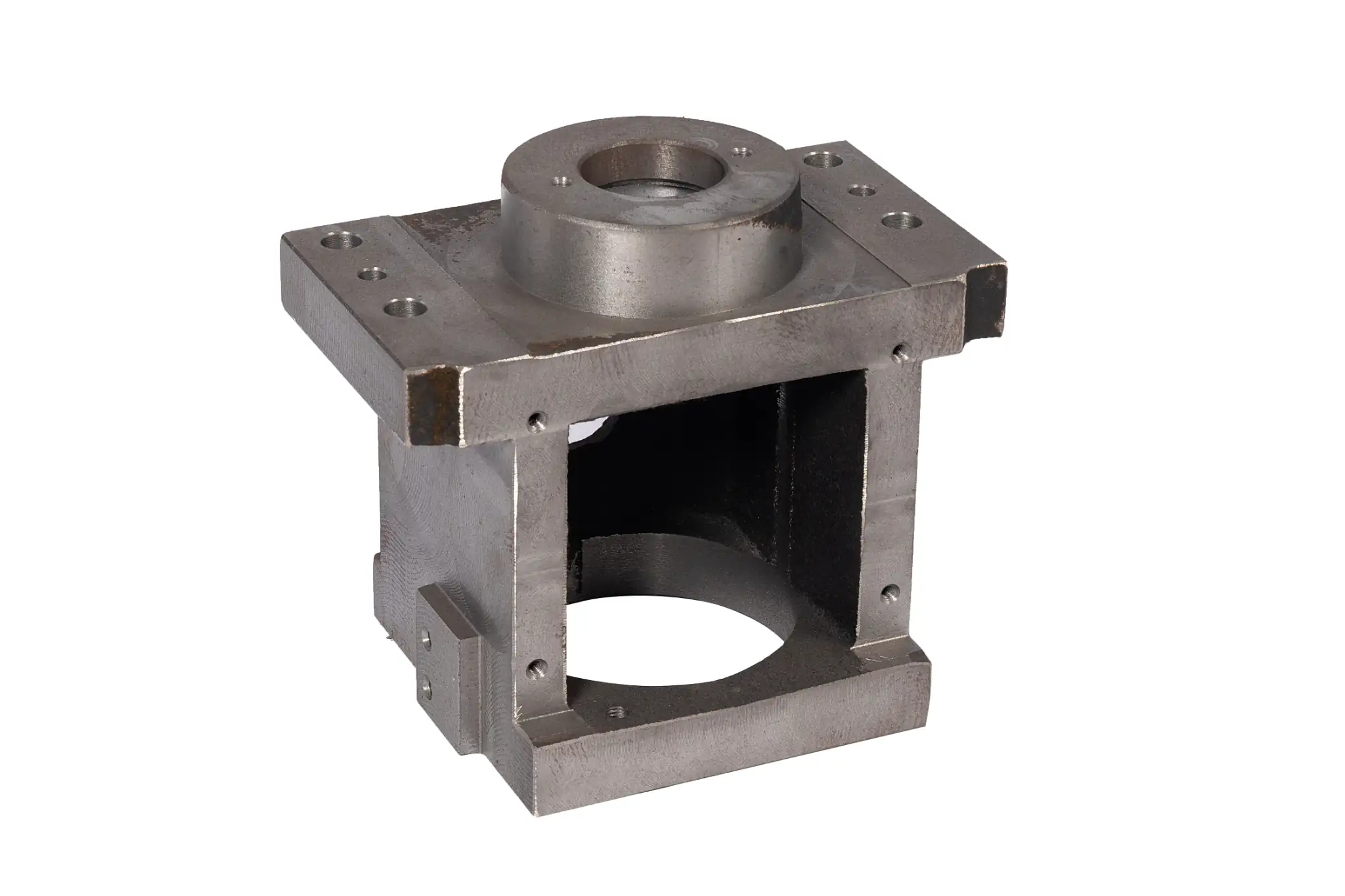
For example, consider a foundry manufacturing aluminum alloy pump housings for a customer. During development, the foundry may use temporary molds and fixtures to produce a small number of samples for dimensional and assembly checks. Before mass production, the foundry switches to production molds and fixtures. Even if the original samples passed inspection, the customer still needs to verify that the pump housings meet requirements under the new production conditions.
This is the central purpose of PPAP: to verify that both the parts and the manufacturing process meet customer requirements.
What Is the Role of PPAP in Manufacturing?
PPAP connects drawing requirements, manufacturing processes, and inspection results, giving customers a basis for evaluating a supplier’s readiness for mass production.
First, it helps both parties confirm that product requirements have been met. A pump housing drawing may specify the material grade, bearing bore dimensions, sealing surface roughness, and leakage testing requirements. Different inspections or tests are needed to verify these characteristics. By reviewing the results together, customers can check compliance with each requirement, while suppliers can identify any outstanding items.
Second, PPAP allows customers to evaluate the conditions under which the samples were produced. Passing inspection on a small number of samples demonstrates that a factory can manufacture conforming parts. Preparing for mass production also requires evaluating equipment, tooling, materials, and inspection arrangements during continuous production. Representative production trials and their records provide additional evidence for this assessment.
Approved PPAP documentation also serves as a reference for future production. When a factory replaces a mold, modifies a process, or relocates production, both parties can compare the changes against the previously approved conditions to determine what requirements may be affected and whether further validation is needed.
The PPAP Process: Step by Step
PPAP is generally carried out alongside part development and production preparation. Although specific arrangements depend on customer requirements, the main activities include confirming requirements, preparing the manufacturing process, conducting production trials, performing inspections, and submitting documentation for approval.
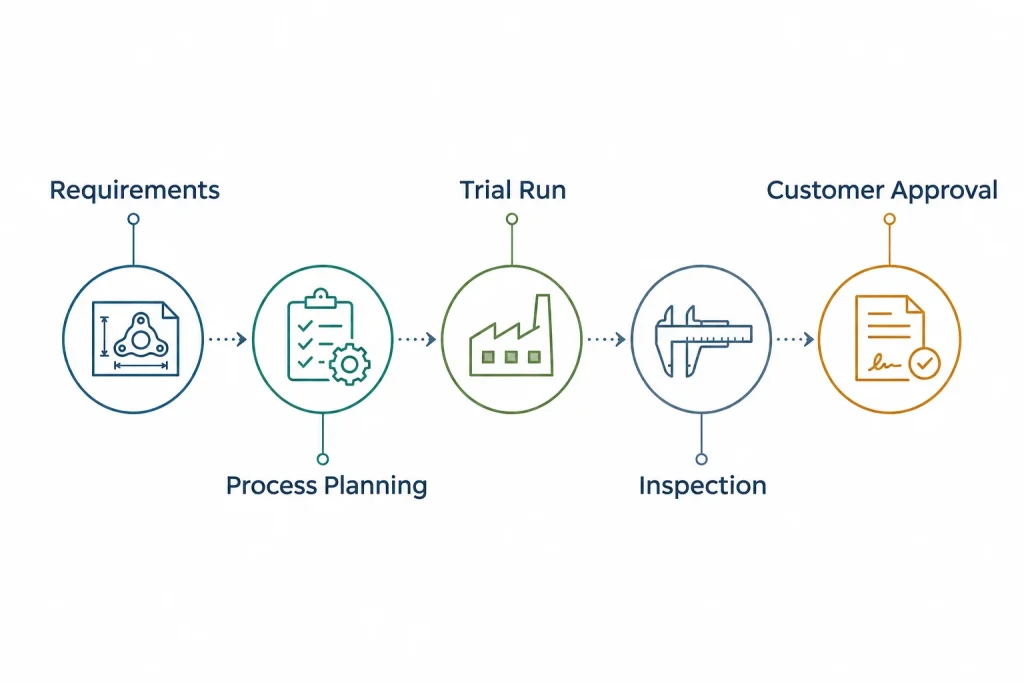
1. Review Drawings and Customer Requirements
The supplier must first confirm the current drawings, technical specifications, and material requirements. The PPAP submission level, sample quantities, inspection scope, and submission schedule should also be agreed upon with the customer.
Drawing revisions are especially important before trial production. If the customer has changed the dimensions of a sealing groove but the factory continues manufacturing to an outdated drawing, the parts will not meet the current requirements, even if their inspection results match the previous revision.
To simplify verification, engineers typically number the dimensions and technical requirements on the drawing and use the corresponding numbers in the inspection report. This allows customers to match each measurement result to its specified requirement.
2. Develop the Manufacturing Process and Control Plan
Once product requirements are confirmed, the supplier must determine the manufacturing operations and how each operation will be controlled.
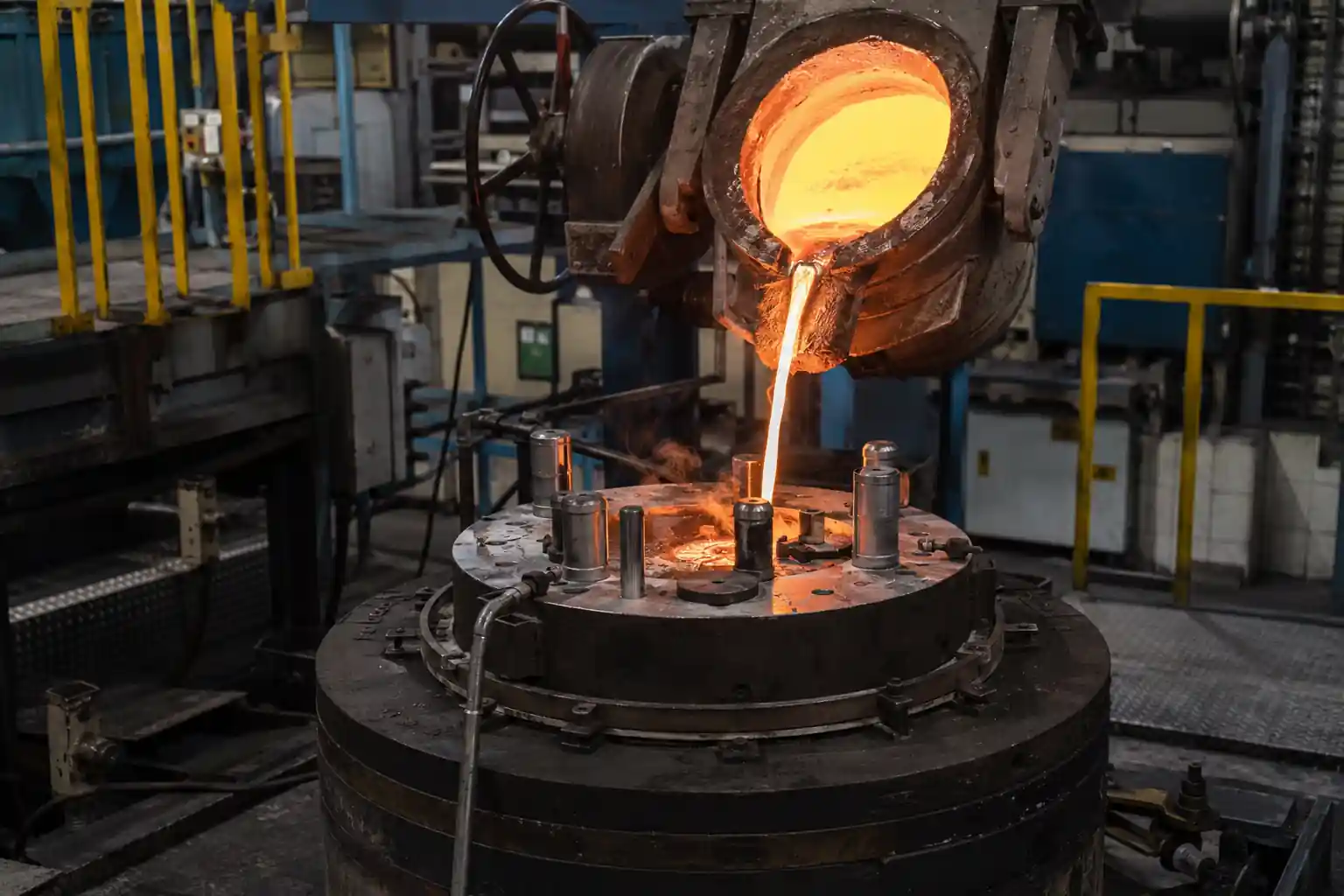
For a cast pump housing, the process may include melting, pouring, cleaning, heat treatment, machining, and leak testing. A process flow diagram defines the sequence of operations. Process Failure Mode and Effects Analysis (PFMEA) identifies potential problems, while the control plan specifies inspection characteristics, methods, and frequencies.
These documents must reflect actual production conditions. For example, if the analysis identifies a risk of deformation in a thin-walled section during clamping, the factory should consider fixture adjustments or appropriate inspection arrangements to control that risk.
3. Conduct a Production Trial Run
After the manufacturing process has been established, the supplier conducts a trial run under conditions representative of mass production. The production location, equipment, tooling, materials, and personnel arrangements should reflect those intended for regular production.
A production trial is not only intended to obtain samples. It also helps determine whether the manufacturing process operates as planned. For example, the factory may check whether castings can be positioned consistently after cleaning, whether critical bore dimensions vary after machining, and whether inspection activities can be integrated into the production process.
The production quantity and run duration should follow applicable requirements and customer agreements. Specific arrangements may vary depending on the part, manufacturing method, and project conditions.
4. Inspect Samples and Compile Results
After the production trial, the supplier performs inspections and tests according to the drawings and customer requirements. Common activities include:
- Dimensional inspection: Measures specified dimensions and geometric features.
- Material testing: Verifies material composition and required mechanical properties.
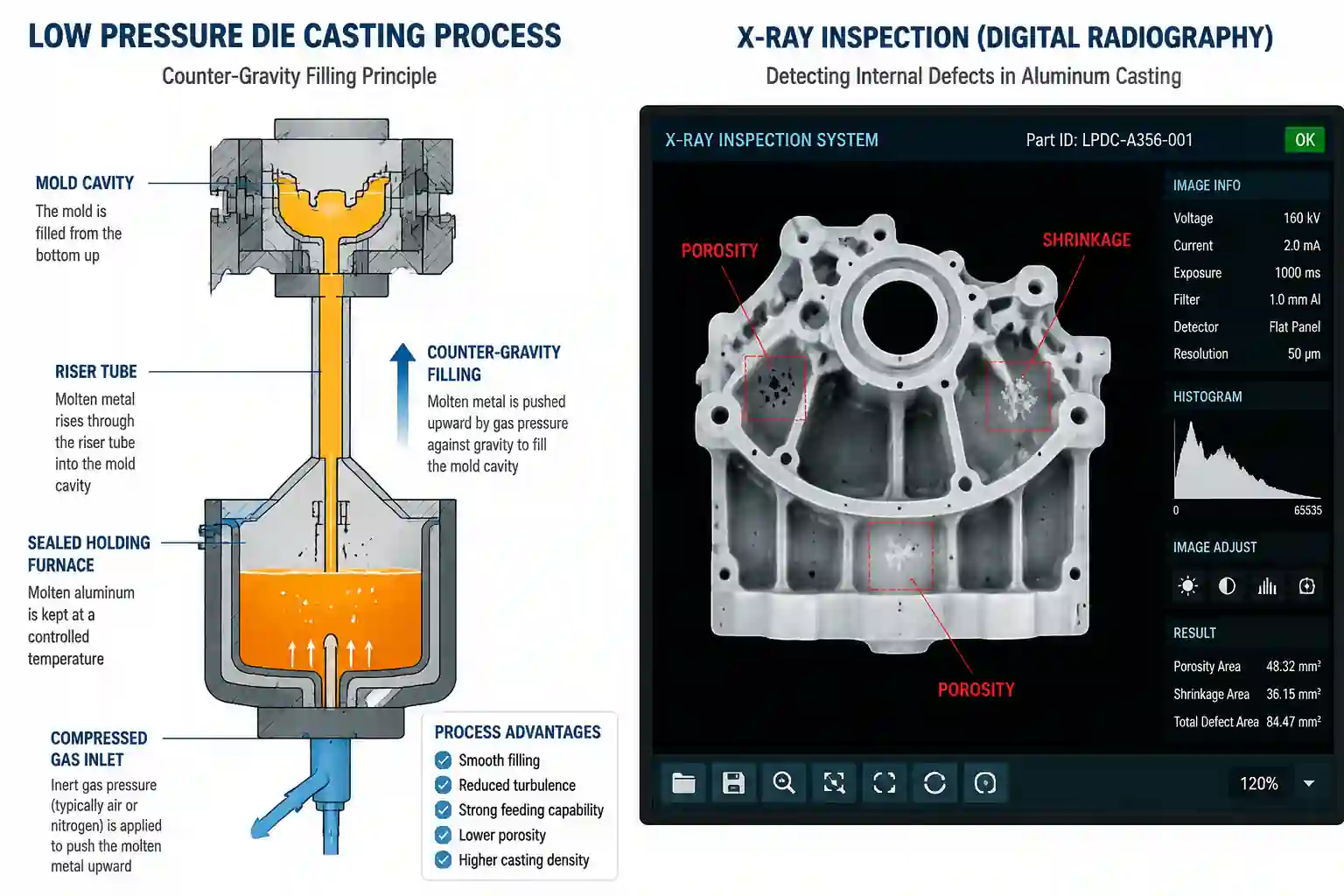
- Functional testing: Evaluates leakage, pressure resistance, or other performance requirements according to the part’s intended application.
- Measurement System Analysis (MSA): Evaluates whether the measurement process can produce reliable results.
- Initial process studies: Use production data to evaluate the performance of specified characteristics.
Not every part requires the same tests. A pump housing may need leakage testing, while other structural components may require load-bearing or fatigue testing. The inspection and testing scope should be determined by the drawings, technical specifications, and customer requirements.
5. Submit Documentation for Customer Approval
After completing the applicable verification activities, the supplier compiles the samples and supporting documents, completes and signs the Part Submission Warrant (PSW), and submits the required materials according to the specified PPAP submission level.
Following the review, the customer may issue one of three decisions:
- Approved: The submission meets requirements, and the supplier may proceed according to the customer’s production and delivery arrangements.
- Interim Approval: The customer permits shipments within a specified time or quantity limit while requiring outstanding corrective actions or validation activities to be completed.
- Rejected: The submission does not meet requirements. The supplier must address the issues and resubmit as required.
The customer determines the specific conditions for interim approval. Suppliers must clearly understand the permitted shipment limits and deadlines for completing any outstanding actions.
What Are the Five PPAP Submission Levels?
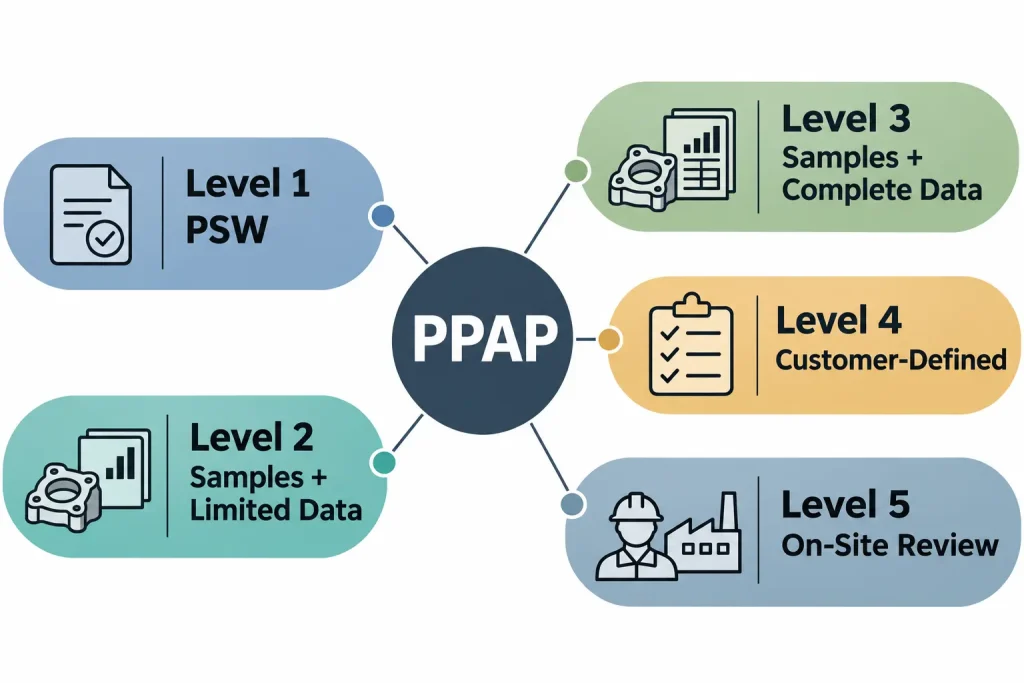
PPAP has five submission levels. These levels primarily determine which samples and supporting documents must be submitted to the customer and how the review is conducted.
| Submission Level | Main Requirements |
|---|---|
| Level 1 | Submit the PSW. An Appearance Approval Report (AAR) is also required for applicable appearance items. |
| Level 2 | Submit the PSW, production samples, and limited supporting data. |
| Level 3 | Submit the PSW, production samples, and complete supporting data. |
| Level 4 | Submit the PSW and any additional requirements specified by the customer. |
| Level 5 | The PSW, production samples, and complete supporting data are available for customer review at the supplier’s manufacturing location. |
Level 3 is commonly used in the automotive supply chain. However, customers may specify other submission levels depending on the product and project requirements.
Submission levels determine how documentation is provided; they do not directly indicate the quality of the parts. Even when certain records do not need to be submitted, suppliers may still be required to complete and retain them for customer review.
What Are the Benefits of PPAP?
Identify Problems Before Production Supply Begins
Some problems may not become apparent during small-scale prototyping. For example, tool wear during continuous machining may gradually affect critical dimensions. Production trials and data analysis can help identify these trends before regular shipments begin, allowing the factory to adjust machining or inspection arrangements.
Reduce Misunderstandings About Requirements
Drawings, material specifications, and customer-specific requirements may be contained in separate documents. During PPAP preparation, suppliers must link these requirements to the corresponding inspection results. This helps identify omissions and makes it easier for both parties to address requirements that have not yet been met.
Provide Traceability for Quality Investigations
When a quality issue occurs during production, the factory can review the previously approved materials, tooling, and process records to determine whether any relevant conditions have changed. These records help narrow the investigation and identify appropriate corrective actions.
Establish a Basis for Evaluating Process Changes
Equipment maintenance, mold replacements, and supplier changes may occur after mass production begins. Existing PPAP documentation provides a reference for evaluating whether these changes could affect the product and what additional verification may be necessary.
When Is PPAP Required?
Customers may require PPAP when a new part is being prepared for its first regular production shipment. Changes to an already approved part or manufacturing process may also require customer notification or a new PPAP submission.
Common situations include:
- Changes to product design, materials, or technical specifications.
- Corrections to nonconformities identified in a previous submission that require further verification.
- Introduction or replacement of molds, or significant modifications to existing tooling.
- Changes to manufacturing processes or production locations.
- Changes involving relevant suppliers, or the resumption of production after an extended shutdown.
Whether resubmission is necessary, and which documents must be provided, depends on customer requirements and the impact of the change.
For example, after a mold replacement, the customer may request additional dimensional inspection or other verification activities based on the part’s requirements.
Conclusión
PPAP helps customers and suppliers confirm product compliance and production readiness before mass production begins. It brings together production trial samples, inspection data, and process control documentation to support customer approval while establishing records for future quality investigations and change evaluations.
For projects involving casting and machining, clarifying the PPAP submission level, production trial arrangements, and special inspection requirements early in development helps suppliers plan manufacturing and delivery more accurately.
Preguntas frecuentes
Is PPAP Just an Inspection Report?
No. PPAP is a production part approval process. Inspection reports are only one part of the submission. Other supporting documents may include process flow diagrams, PFMEA, control plans, measurement system analyses, and the PSW.
What Is the Difference Between PPAP and First Article Inspection?
First Article Inspection (FAI) primarily verifies whether a part meets specified requirements. PPAP also evaluates the manufacturing process and its control arrangements, making its scope broader than product inspection alone.
Is PPAP Still Required If a Supplier Is ISO 9001 Certified?
Yes, if the customer requires it. ISO 9001 certification addresses an organization’s quality management system, while PPAP applies to a specific part and its manufacturing process. They serve different purposes.
How Long Does PPAP Preparation Take?
The preparation time depends on tooling readiness, production trial arrangements, inspection requirements, and the customer’s review schedule. Projects involving external laboratories or tests with longer lead times should allow sufficient time for these activities.