


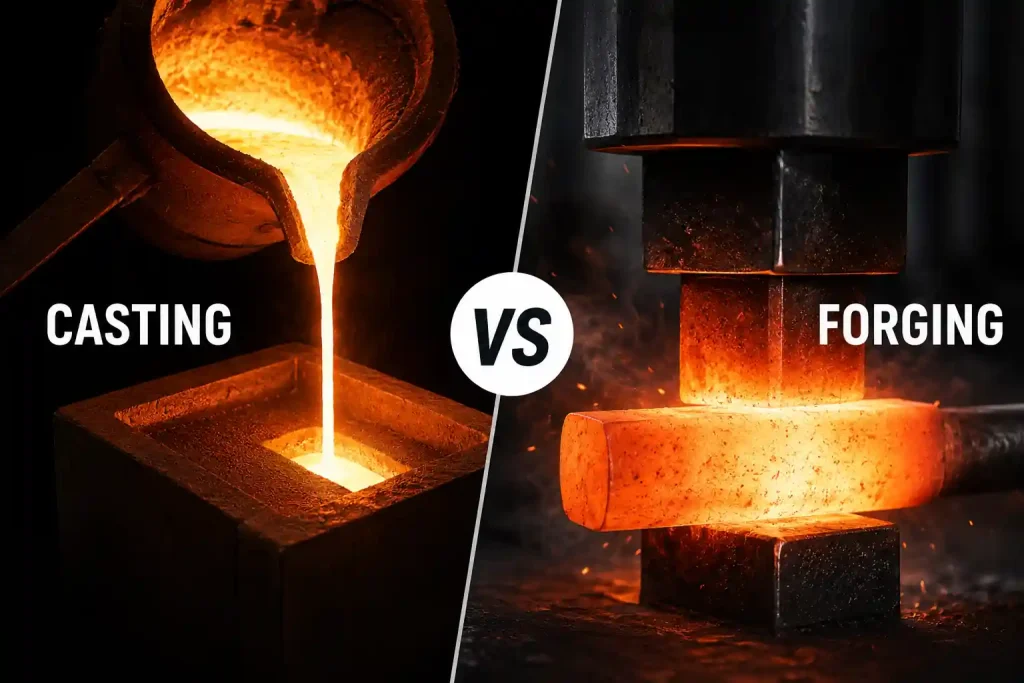
Gießen und Schmieden sind zwei grundlegend unterschiedliche Verfahren zur Formgebung von Metall. Beim Gießen wird das Metall geschmolzen und in einen Formhohlraum gegossen; beim Schmieden wird das Metall erhitzt und unter Druck in Form gebracht. Es gibt keine allgemeingültige richtige Antwort zwischen den beiden Verfahren – die Wahl hängt von den Einsatzbedingungen, der Geometrie, der Losgröße und dem Budget des Bauteils ab. Als Faustregel gilt: Entscheiden Sie sich für Guss bei komplexen Formen und kleinen Stückzahlen; entscheiden Sie sich für Schmieden, wenn Festigkeit und Ermüdungslebensdauer am wichtigsten sind.
Was ist Casting?
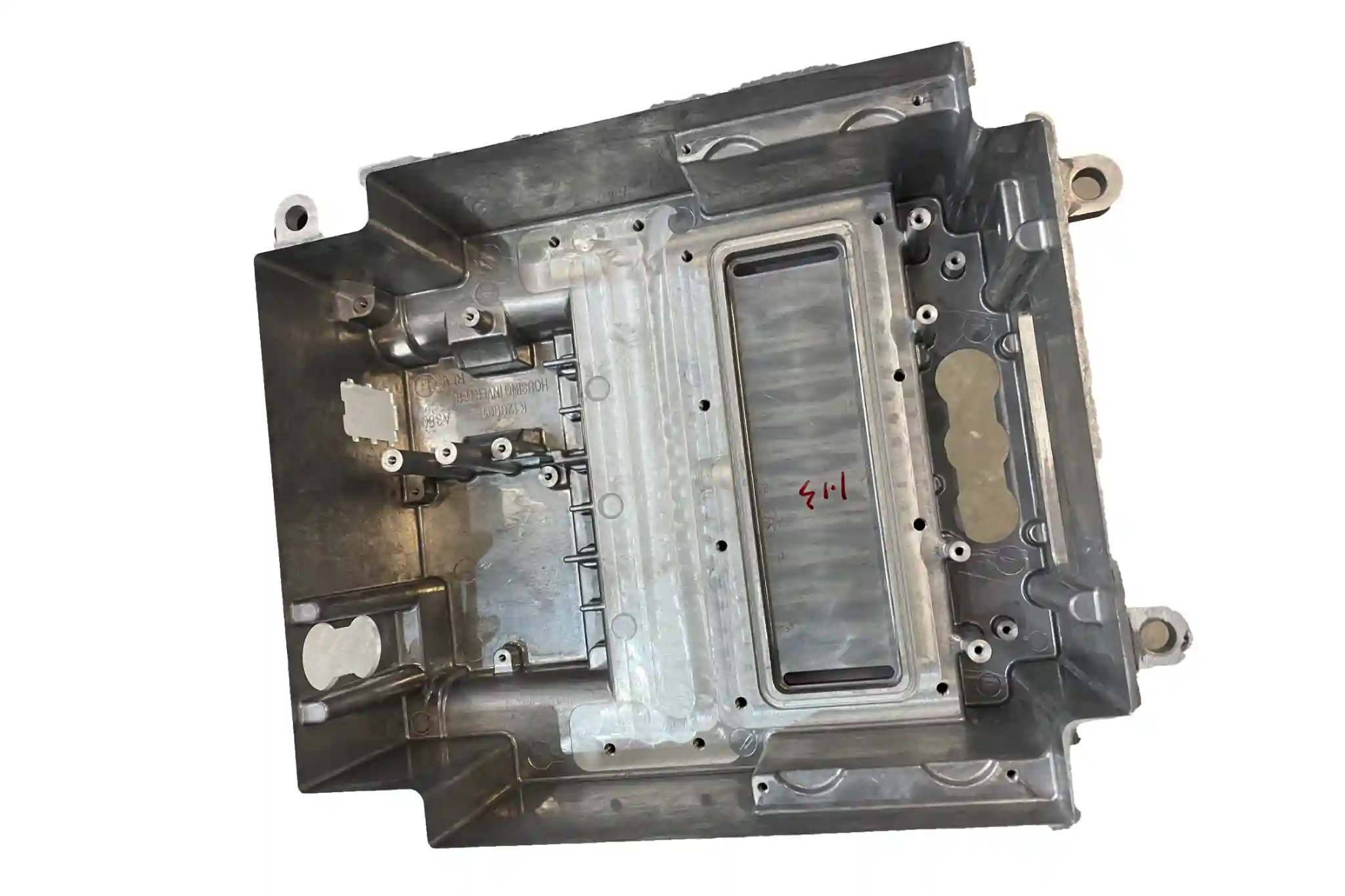
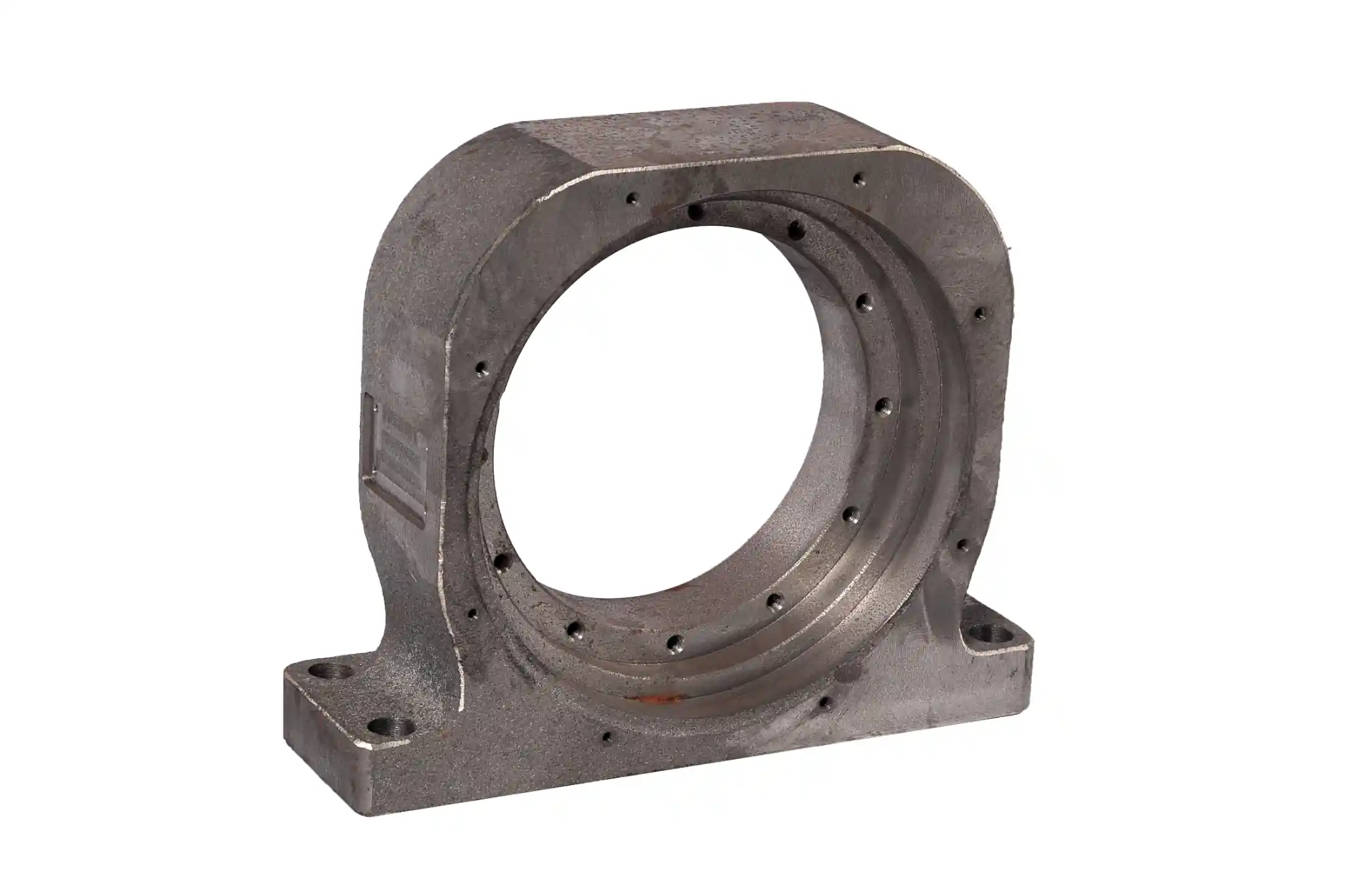
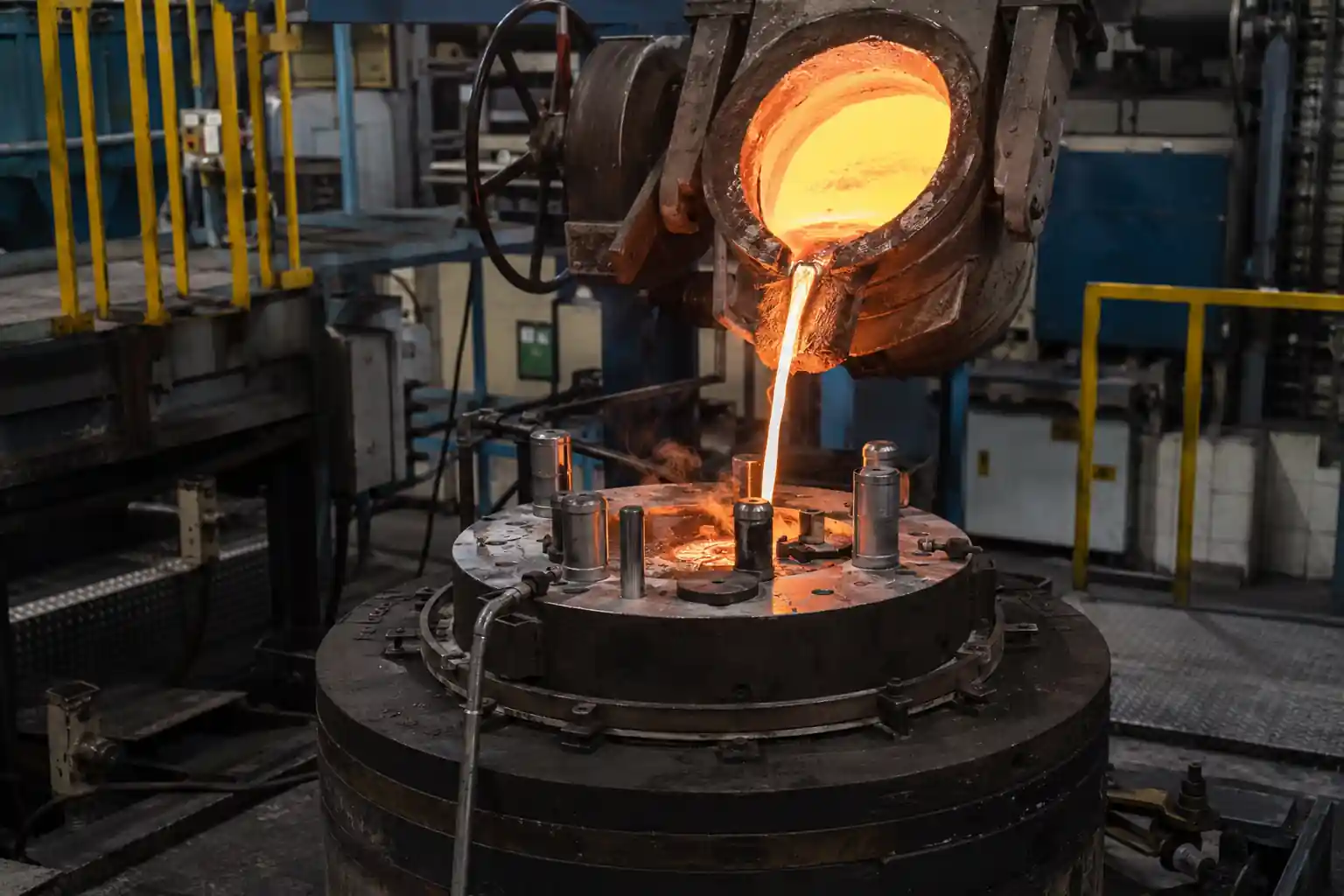
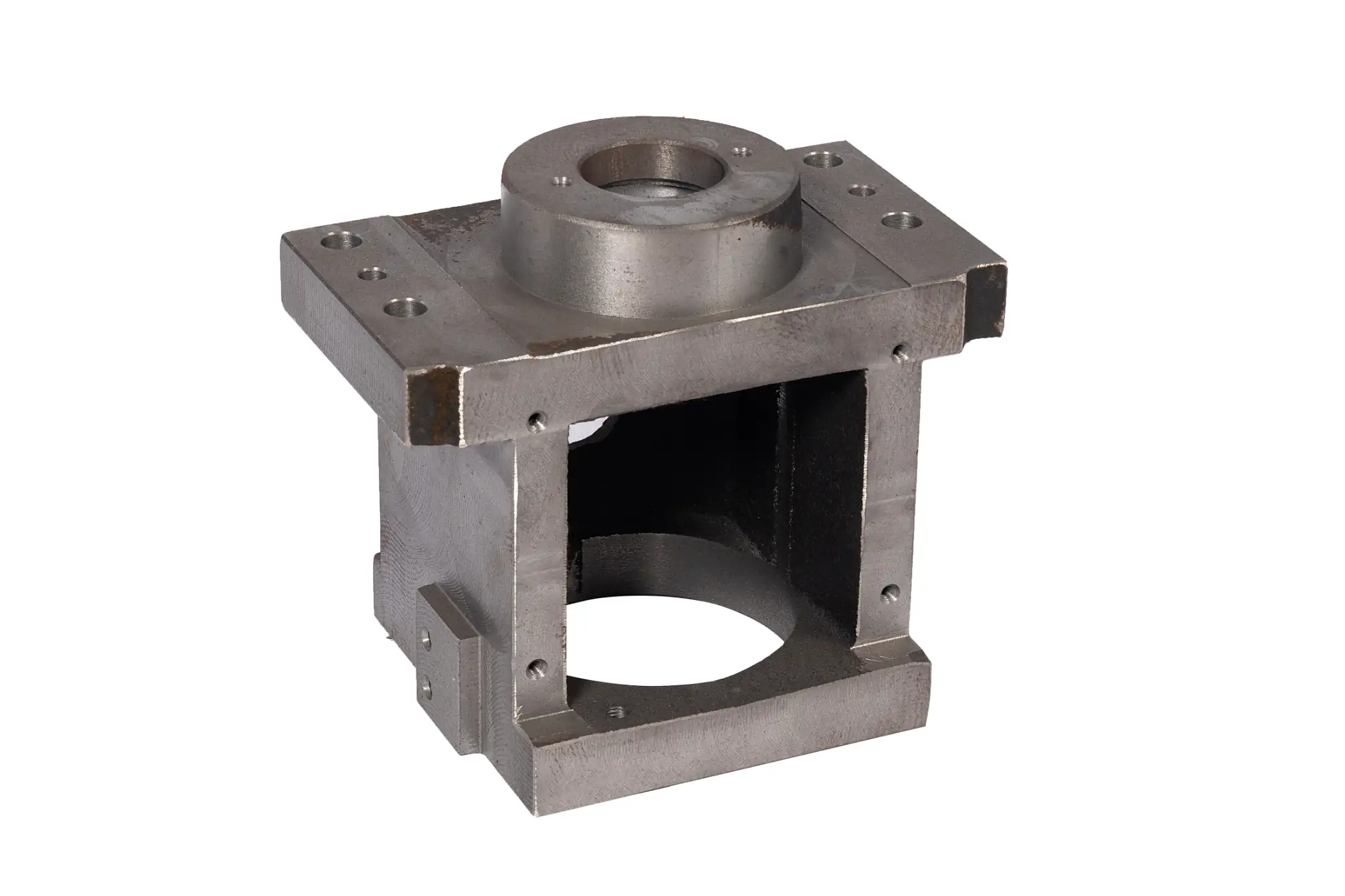
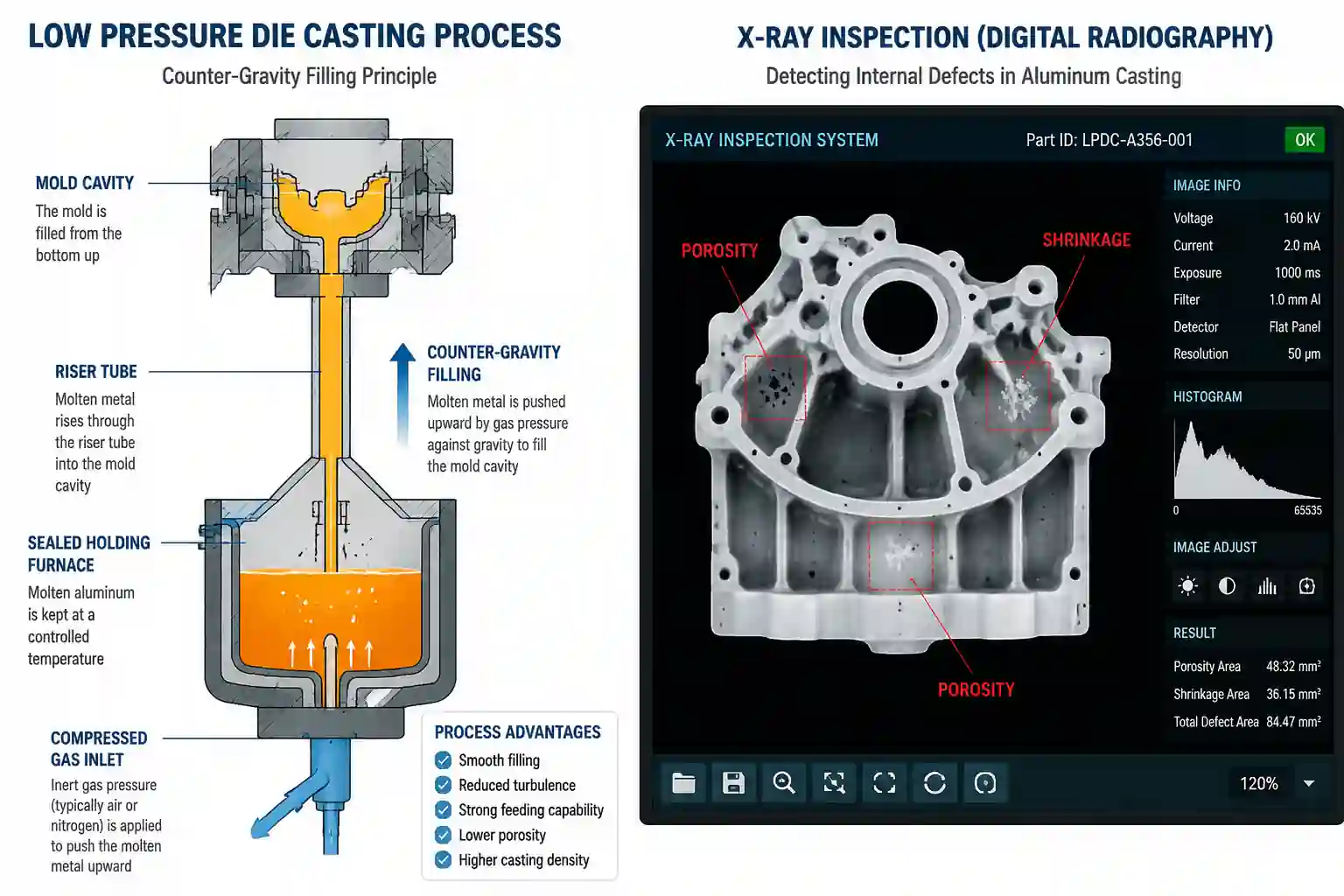
Beim Gießen wird Metall geschmolzen, in einen Formhohlraum gegossen und anschließend erstarren gelassen. Bei dem Formhohlraum kann es sich um eine Einweg-Sandform, eine wiederverwendbare Metallform (Dauerform, Druckguss) oder – bei Präzisionsteilen – um eine Feingussform handeln. Da geschmolzenes Metall jede Form ausfüllt, ist das Gießen bei komplexen Innenhohlräumen, dünnen Wänden und unregelmäßigen Geometrien nahezu unübertroffen – weshalb Getriebegehäuse, Pumpenkörper, Ventilkörper und Maschinenfundamente in der Regel gegossen werden.
Auch beim Guss sind die Werkzeugkosten gering, insbesondere beim Sandguss, bei dem kleine Chargen mit sehr geringen Vorlaufkosten hergestellt werden können. Die Materialauswahl ist breit gefächert: Gusseisen, Stahlguss, Aluminium und Kupferlegierungen können alle gegossen werden. Der Nachteil ist, dass es beim Erstarren zu Schrumpfung und Porosität kommen kann und die Kornstruktur weniger dicht ist als bei einem Schmiedeteil – daher weisen Gussteile bei gleichem Material und Querschnitt im Allgemeinen eine geringere Festigkeit, Zähigkeit und Ermüdungslebensdauer auf. Wie viel geringer diese Werte sind, hängt vom Material und vom Verfahren ab.
Was ist Schmieden?
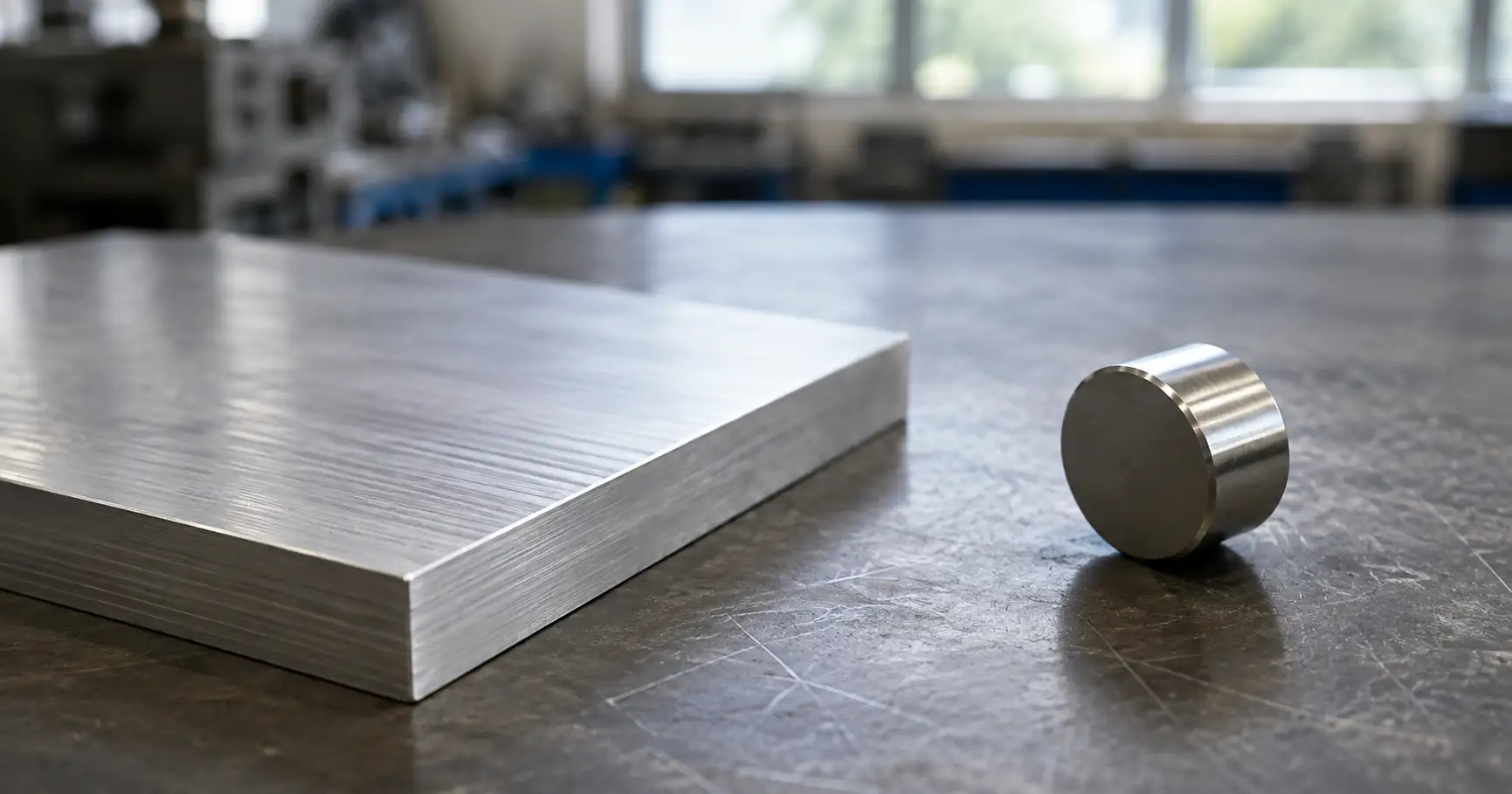
Beim Schmieden wird Metall auf eine verarbeitbare Temperatur erhitzt und mit Hämmern oder einer Presse geformt. Der entscheidende Unterschied liegt in der Kornorientierung: Die Körner folgen der Verformungsrichtung in einer durchgehenden Linie, ohne die für Gussteile typischen Schrumpfungen oder Porositäten. Daher sind Schmiedeteile hinsichtlich Festigkeit und Zähigkeit zuverlässiger und halten Stoßbelastungen sowie zyklischen Belastungen besser stand. Wellen, Zahnräder, Pleuelstangen, Haken und Befestigungselemente – Teile, bei denen ein Versagen nicht in Frage kommt – werden routinemäßig als Schmiedeteile spezifiziert.
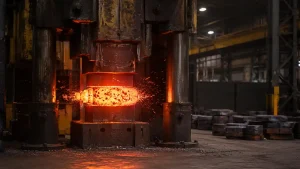
Die Kosten entstehen durch Werkzeuge und Geometrie. Werkzeuge sind teuer, und bei kleinen Losgrößen lassen sich diese Kosten nicht verteilen. Trennlinien und Entformungsschrägen schränken die Formgebung von Schmiedeteilen ein, und komplexe Innenhohlräume sind praktisch nicht realisierbar. Das Schmieden eignet sich daher für große Losgrößen relativ einfacher Teile, weshalb das Produktionsvolumen oft der entscheidende Faktor ist.
Gießen vs. Schmieden: Die wichtigsten Unterschiede
Die folgende Tabelle fasst die Unterschiede zusammen; in den nachfolgenden Abschnitten wird jede Dimension näher erläutert.
| Dimension | Gießen | Schmieden |
|---|---|---|
| Genauigkeit | Verfahrensabhängig; Sandformen sind lockerer | Engere Toleranzen, glattere Oberfläche |
| Maserung / innere Struktur | Risiko von Schrumpfung und Porosität | Kontinuierlicher Kornfluss, kein Schrumpfen |
| Kosten | Geringe Anfangskosten für die Werkzeugherstellung, kleine Losgrößen möglich | Teure Werkzeuge, deren Kosten über die Stückzahl abgeschrieben werden |
| Produktionsvolumen | Kleine bis große Chargen | Große Chargen sind wirtschaftlich |
| Materialpassform | Gusseisen/Stahl/Aluminium/Kupferlegierungen | Erfordert Plastizität; spröde/hochlegiert, schwer zu schmieden |
Maßgenauigkeit
Der Guss überzeugt durch seine Formgebung: Innere Hohlräume, unregelmäßige Formen und komplexe Rundungen lassen sich in einem Schritt herstellen, und viele Konstruktionen erfordern nach dem Guss keine weitere Bearbeitung. Das Schmieden unterliegt den Einschränkungen der Form, daher müssen die Formen einfach gehalten werden und ein Entformungsschrägen aufweisen. Was die Maßgenauigkeit angeht, ist das Schmieden jedoch in der Regel konstanter, mit engeren Toleranzen und einer glatteren Oberfläche. Beim Guss hängt es vom Verfahren ab – Feinguss und Druckguss halten enge Toleranzen ein, während Sandguss lockerer ist und oft Bearbeitungszugaben an kritischen Flächen hinterlässt. Kurz gesagt: Wählen Sie Guss für komplexe Formen, Schmieden für enge Toleranzen.
Struktur der Körner
Bei einem Schmiedeteil verlaufen die Körner kontinuierlich entlang der Verformungsrichtung, und es tritt keine Erstarrungsschrumpfung auf, wie sie beim Guss auftreten kann. Bei gleichem Werkstoff und gleichem Querschnitt ist ein Schmiedeteil daher fester, zäher und ermüdungsbeständiger – der wesentliche Grund, warum Schmiedeteile für tragende Bauteile bevorzugt werden. Gussteile können diesen Rückstand durch die Wahl der Legierung und die Wärmebehandlung weitgehend ausgleichen, doch das Risiko innerer Fehler bleibt bestehen. Aus diesem Grund werden kritische Sicherheitsbauteile entweder geschmiedet oder gegossen, wobei zerstörungsfreie Prüfungen als Absicherung dienen. Kurz gesagt: Bei gleichem Werkstoff und gleichem Querschnitt sind Schmiedeteile in der Regel fester und ermüdungsbeständiger.
Kosten
Der Guss ist anfangs kostengünstig: Sandformen und einfache Hohlräume sind preiswert, und kleine Losgrößen sind rentabel. Schmiedegesenke sind kostspielig, und die Stückkosten sinken erst, wenn das Volumen hoch genug ist, um sie zu amortisieren. In eine Entscheidung übersetzt: Wenige Teile und komplexe Formen sprechen für den Guss; viele Teile und einfache Formen machen das Schmieden möglicherweise zur kostengünstigeren Lösung. Kurz gesagt: Kleine Losgrößen komplexer Teile sprechen für den Guss; große Stückzahlen einfacher Teile sprechen für das Schmieden.
Produktionsvolumen
Gussformen lassen sich schnell herstellen – insbesondere beim Sandguss lassen sich Muster und Kleinserien zügig umsetzen. Beim Schmieden muss zunächst eine Form entwickelt werden, sodass die Vorlaufzeit anfangs länger ist; sobald die Produktion jedoch läuft, ist der Zyklus schnell und stabil. Wenn bei einem Projekt die Zeit knapp ist und sich die Anforderungen noch ändern, ist es üblich, zunächst einen Prototyp im Gussverfahren herzustellen. Kurz gesagt: Bei Zeitdruck und ungewisser Stückzahl sollte zunächst gegossen werden; sobald sich die Stückzahl stabilisiert hat, kann das Schmieden erneut in Betracht gezogen werden.
Auswahl des Materials
Das Gießen eignet sich für eine Vielzahl von Werkstoffen – Gusseisen, Stahl, Aluminium und Kupferlegierungen lassen sich alle gießen. Das Schmieden erfordert Formbarkeit: Spröde Werkstoffe und hochlegierte Sorten lassen sich nur schwer schmieden. Ist der Werkstoff festgelegt und schwer zu schmieden, steht die Wahl des Verfahrens praktisch fest; ist der Werkstoff offen, erweitern sich sowohl der Gestaltungsspielraum als auch das Kostenbild. Kurz gesagt: Wenn der Werkstoff feststeht, steht oft auch die Wahl des Verfahrens fest.
Vorteile und Einschränkungen des Gießverfahrens
Das Gussverfahren eignet sich für komplexe Formen und zeichnet sich durch geringe Anlaufkosten aus, hat jedoch klare Grenzen:
Vorteile:
- Komplexe Innenhohlräume und unregelmäßige Formen, die in einem Schritt geformt werden
- Geringe Einstiegshürde bei der Werkzeugfertigung
- Große Materialauswahl
- Wirtschaftlich produzierbare Kleinserien
Einschränkungen:
- Risiko von Schrumpfung und Porosität; weniger dichte Kornstruktur als bei einem Schmiedeteil
- Geringere Festigkeit, Zähigkeit und Ermüdungslebensdauer bei gleichem Werkstoff und gleichem Querschnitt
- Größere Toleranzen beim Sandguss; kritische Flächen erfordern oft ein Bearbeitungsspiel
Vorteile und Grenzen des Schmiedens
Das Schmieden sorgt für zuverlässigere Eigenschaften, allerdings auf Kosten des Werkzeugaufwands und der Geometrie:
Vorteile:
- Kontinuierlicher Kornfluss ohne Schrumpfungsporosität
- Zuverlässigere Festigkeit und Zähigkeit; bessere Schlagfestigkeit und Beständigkeit gegen zyklische Beanspruchung
- Gleichmäßigere Toleranzen und Oberflächen
Einschränkungen:
- Teure Werkzeuge; bei kleinen Stückzahlen lassen sich die Kosten nicht amortisieren
- Trennfugen und Entformungsschrägen schränken die Geometrie ein; komplexe Innenhohlräume sind nicht realisierbar
- Spröde und hochlegierte Werkstoffe lassen sich nur schwer schmieden
Wann sollte man sich für einen Guss entscheiden?
In solchen Situationen ist das Casting in der Regel die sicherere Wahl:
- Das Bauteil weist komplexe Innenhohlräume, dünne Wände oder unregelmäßige Formen auf
- Die Losgröße ist gering, sodass sich die Schmiedegesenke nicht amortisieren lassen.
- Die Kostensensibilität ist hoch, und die Investitionen in Werkzeuge müssen gering gehalten werden
- Die Materialauswahl steht noch nicht endgültig fest, und es stehen mehrere Optionen zur Debatte.
- Der Einsatz erfolgt überwiegend unter statischer Belastung, ohne extreme Anforderungen an die Ermüdungsfestigkeit.
Zu den typischen Gussteilen zählen Pumpengehäuse, Ventilgehäuse, Getriebegehäuse, Maschinenfundamente, Strukturteile für die Landwirtschaft und die Automobilindustrie sowie Gusseisenkomponenten, bei denen die Schwingungsdämpfung von Vorteil ist.
Wann sollte man sich für Schmieden entscheiden?
Erfolge erzielen, wenn die Leistung deutlich über Geometrie und Kosten hinausgeht:
- Das Bauteil ist Stoß-, zyklischen oder hohen Belastungen ausgesetzt, und die Ermüdungslebensdauer ist von entscheidender Bedeutung
- Die Toleranzen und Oberflächenanforderungen sind streng, und Nachbearbeitungen sollten auf ein Minimum beschränkt werden.
- Das Volumen ist groß genug, um die Kosten für die Halbleiterchips zu amortisieren
- Anschließend erfolgen Schweiß- oder Zerspanungsarbeiten, wobei ein stabiler Schmiederohrling bevorzugt wird.
- Das Material ist duktil genug für die Druckumformung.
Typische Schmiedeteile sind Wellen, Zahnräder, Pleuelstangen, Haken, Flansche und Befestigungselemente sowie kritische tragende Bauteile in der Öl- und Gasindustrie und im Schwermaschinenbau.
FAQ
Was ist fester: ein Gussteil oder ein Schmiedeteil desselben Bauteils?
Im Allgemeinen gilt für Schmiedeteile: Ein durchgehender Kornverlauf und das Fehlen von Schrumpfporen sorgen bei gleichem Werkstoff und gleichem Querschnitt für eine höhere Festigkeit und Ermüdungslebensdauer. Der Unterschied hängt vom Werkstoff und vom Verfahren ab, und ein legiertes, wärmebehandeltes Gussteil ist für viele Anwendungen ausreichend.
Gibt es Größen- oder Gewichtsbeschränkungen beim Gießen oder Schmieden?
Beide Verfahren haben ihre Grenzen. Das Schmieden unterliegt Einschränkungen hinsichtlich der Presskapazität und der Werkzeuggröße, sodass sehr große Teile nicht realisierbar sind. Beim Gießen lassen sich zwar große Teile herstellen, doch bei dünnen Wänden besteht die Gefahr von Gussfehlern, und bei großen Sandgussteilen muss besonders auf die Schrumpfung und die Verformungskontrolle geachtet werden.
Was ist günstiger: Gießen oder Schmieden?
Das hängt vom Volumen ab. Kleine Chargen komplexer Teile lassen sich kostengünstiger gießen, da die Investitionen in Werkzeuge gering sind; große Chargen einfacher Teile lassen sich möglicherweise kostengünstiger schmieden, sobald sich die Kosten für die Gesenke verteilen. Der Wendepunkt liegt dort, wo die Amortisation der Werkzeuge zum entscheidenden Faktor wird.