


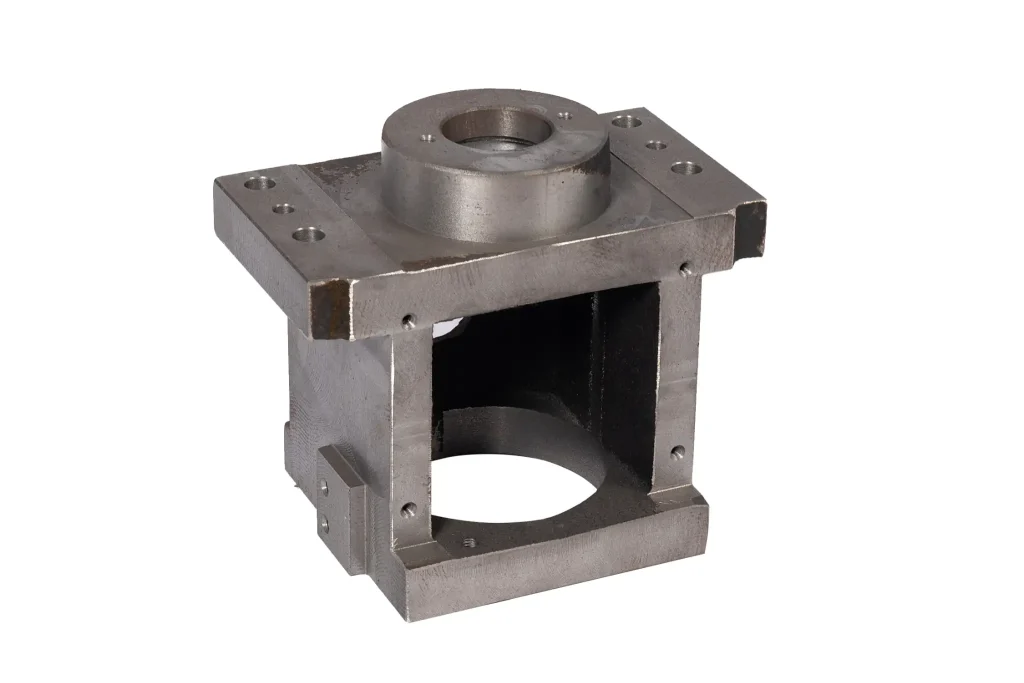
Dans le contexte industriel actuel en constante évolution, il est primordial de parvenir à un équilibre optimal entre intégrité structurelle, allègement et efficacité à grande échelle. Alors que les fabricants repoussent sans cesse les limites en matière de performances et de fiabilité, le choix des technologies de formage des métaux les plus adaptées n’a jamais été aussi crucial. Cet article se penche sur l’un des procédés de fabrication les plus éprouvés du secteur, en abordant ses principes fondamentaux, ses principaux avantages, ses domaines d’application et les critères de sélection des fournisseurs.
Qu'est-ce que le moulage à basse pression ?
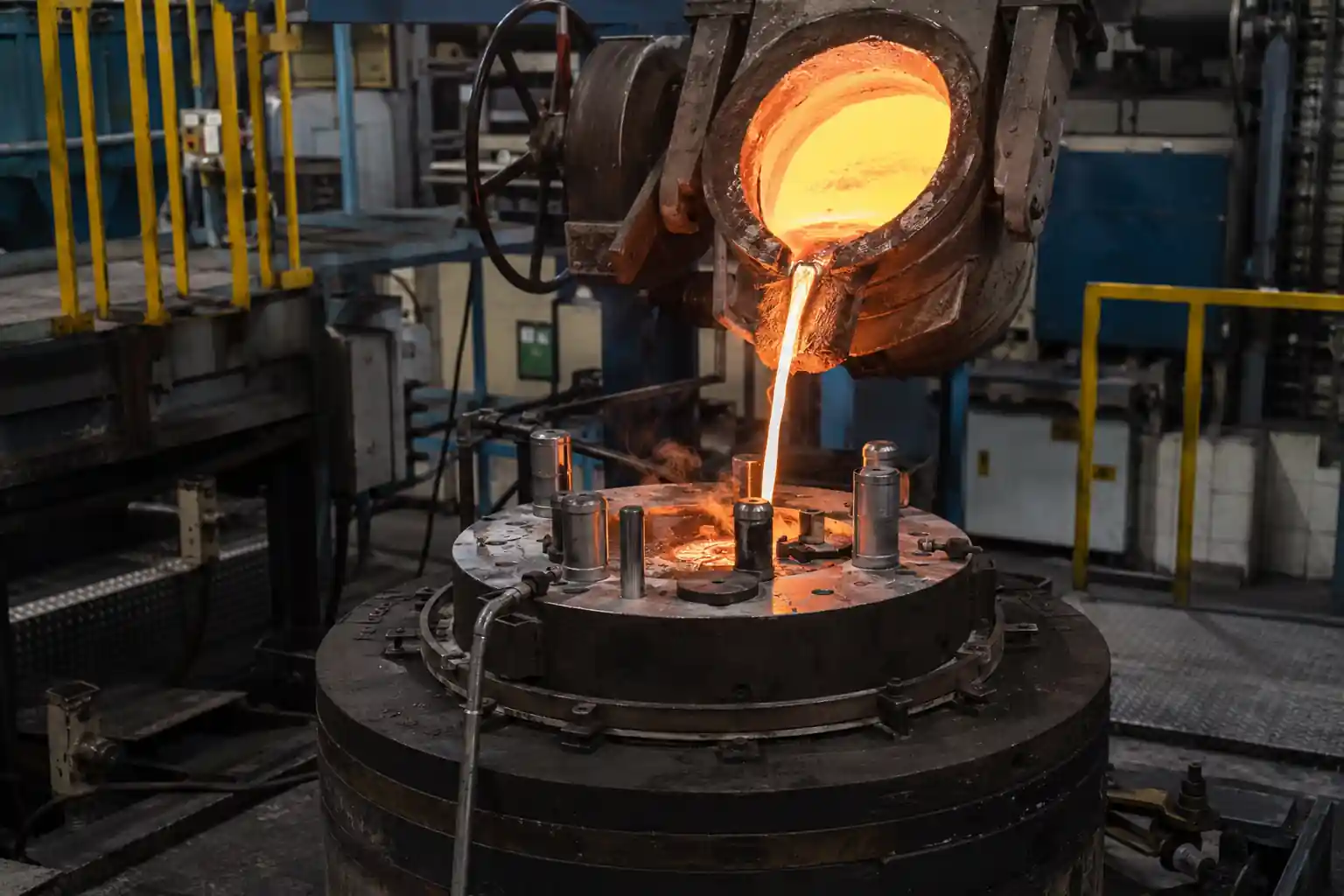
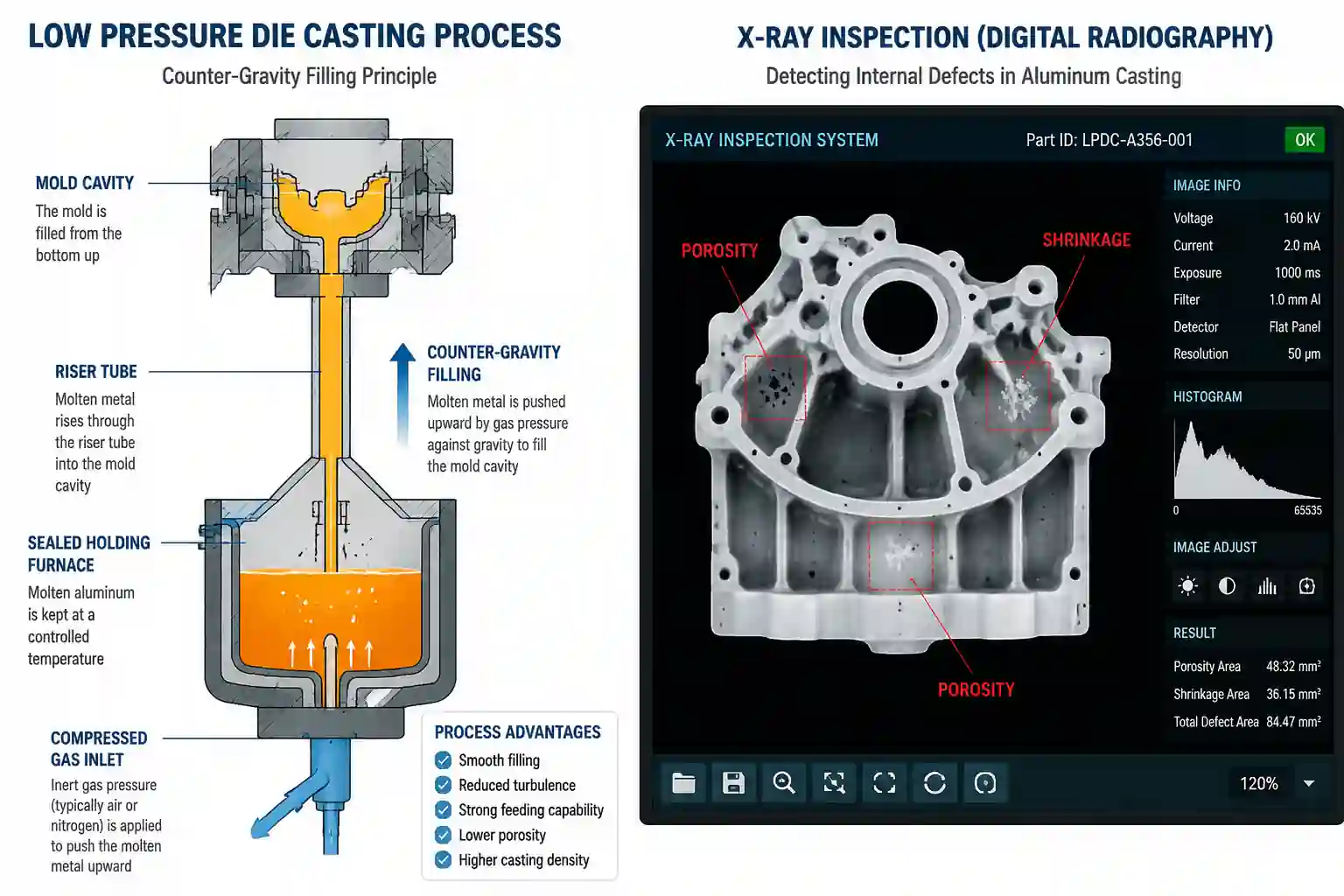
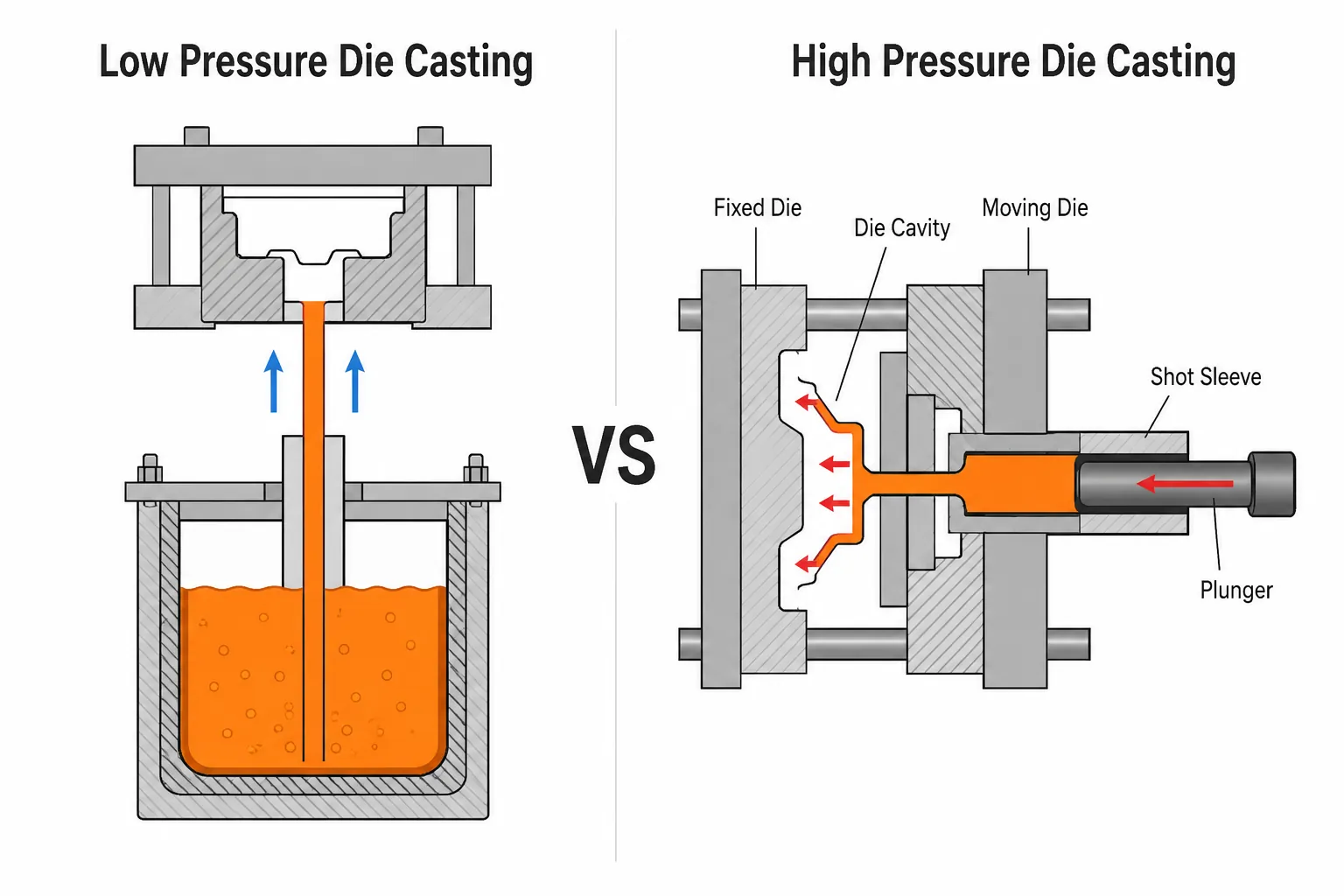
Moulage à basse pression (LPC) Il s'agit d'un procédé avancé de formage des métaux largement utilisé dans la fabrication industrielle, principalement pour la production en série de composants métalliques hautement performants et très étanches (le plus souvent en alliages d'aluminium). Ce procédé utilise de l'air comprimé à pression contrôlable (généralement comprise entre 20 et 100 kPa ou 0,2 et 1 bar) afin de pousser en douceur le métal en fusion vers le haut, dans la cavité du moule.
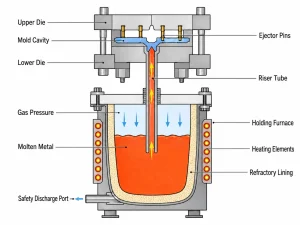
Dans un système de coulée à basse pression classique, un four de maintien étanche contenant le métal en fusion est situé directement sous le moule. Lorsque de la pression atmosphérique est appliquée à la surface du métal en fusion, celui-ci remonte en douceur par un tube de coulée et remplit la cavité du moule. La pression est maintenue jusqu'à ce que la pièce moulée se solidifie complètement, après quoi le métal en fusion restant dans le tube de coulée reflue automatiquement dans le four.
Pourquoi le moulage à basse pression est-il si largement utilisé dans la fabrication industrielle ?
Face aux exigences strictes de l'industrie manufacturière moderne en matière de performances des produits, de stabilité de la qualité et de production de masse, les méthodes de moulage traditionnelles s'avèrent souvent insuffisantes, tandis que le moulage à basse pression présente des avantages techniques uniques :
- Propriétés mécaniques supérieures : L'industrie moderne exige des composants qu'ils présentent une résistance et une fiabilité extrêmement élevées. La coulée traditionnelle est sujette à l'emprisonnement de gaz et à la formation d'inclusions dues à la turbulence, tandis que la coulée à basse pression utilise un remplissage par écoulement laminaire ascendant, ce qui réduit efficacement les défauts de porosité interne et améliore considérablement la résistance à la traction et la qualité globale des pièces moulées.
- Une étanchéité exceptionnelle : Les composants d'étanchéité résistants à la pression utilisés dans les applications industrielles ne doivent en aucun cas présenter de fuites. Le moulage à basse pression permet de maintenir une pression constante dans le four pour assurer une alimentation forcée tout au long du processus de solidification du métal, ce qui réduit efficacement le retrait macroscopique et garantit le respect des normes strictes en matière d'étanchéité à l'air.
- Utilisation élevée des matériaux : Les procédés traditionnels nécessitent de grandes colonnes d'alimentation pour compenser le retrait de solidification, ce qui entraîne un gaspillage important de matière première. Le moulage à basse pression repose sur une alimentation dynamique pneumatique continue, ce qui améliore considérablement l'utilisation du matériau et réduit efficacement les coûts de matière première dans la production industrielle de masse.
- Avantages d'une production de masse évolutive : Malgré des investissements initiaux plus élevés en outillage, ce procédé se prête naturellement aux lignes de production automatisées. Grâce à des taux de défauts extrêmement faibles, à une stabilité dimensionnelle constante et à des besoins minimaux en usinage ultérieur, il est devenu le choix le plus rentable pour la production à moyenne et grande échelle.
Principaux domaines d'application du moulage à basse pression
Le moulage à basse pression est indispensable dans les secteurs de la fabrication industrielle qui exigent une fiabilité extrêmement élevée des composants et allient étroitement allègement et résistance structurelle :
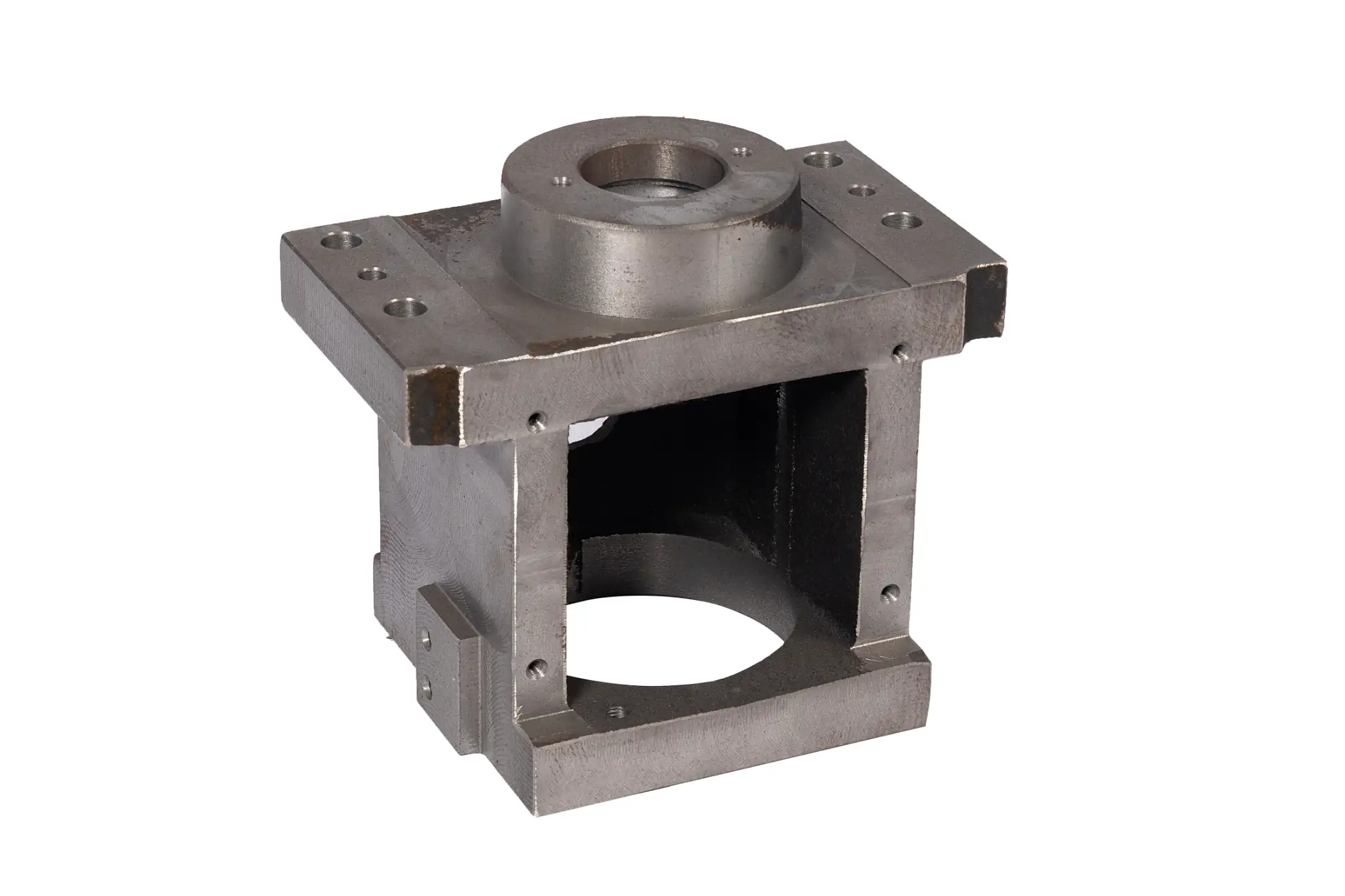
Dans le secteur automobile, c'est la solution de choix pour la fabrication industrielle à grande échelle de jantes en alliage d'aluminium ; elle est largement utilisée pour les composants du groupe motopropulseur, tels que les culasses, les blocs-moteurs et les collecteurs d'admission, ainsi que pour les bacs de batterie des véhicules électriques (VE), les éléments structurels du châssis et les pièces du système de suspension.
Dans le secteur aérospatial, ce procédé est utilisé pour fabriquer des supports structurels légers, des carters de boîte de vitesses et divers boîtiers d'équipements auxiliaires soumis à des exigences rigoureuses en matière de résistance à la fatigue.
Dans le secteur de la construction mécanique générale, il répond parfaitement aux exigences strictes de l'industrie en matière d'étanchéité pour des produits tels que les pompes industrielles, les vannes haute pression et les corps de vannes hydrauliques, garantissant une étanchéité totale.
Quels équipements et quelles capacités de production le moulage à basse pression nécessite-t-il ?
La réussite d'un moulage à basse pression de qualité industrielle repose sur des configurations matérielles de pointe associées à un contrôle rigoureux des processus. Les éléments essentiels requis pour ce processus sont les suivants :
Configuration de base du matériel
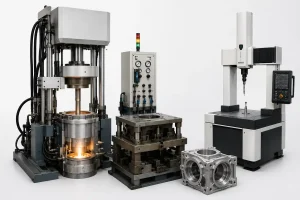
Les systèmes de moulage à basse pression s'appuient principalement sur des machines de moulage équipées de systèmes de contrôle précis de la pression afin d'assurer un remplissage homogène du moule et une pression de maintien en plusieurs étapes, ainsi que sur des fours de maintien hermétiques pour garantir une température constante de la masse fondue et minimiser les inclusions. Des moules en acier de haute qualité résistant à la chaleur, associés à des unités de régulation de température indépendantes à plusieurs points, sont indispensables pour assurer une régulation précise dans les différentes zones du moule. De plus, des unités de production automatisées intégrant des mécanismes robotisés d’extraction des pièces, d’enduction automatique et de mise en place des noyaux garantissent une production sûre et efficace ainsi qu’un transfert stable des composants.
Principales capacités de production
Les entreprises de fabrication doivent disposer de solides capacités de simulation des processus et de contrôle de la solidification, en recourant à une analyse professionnelle des flux dans le moule et à une conception du refroidissement permettant de guider scientifiquement le métal en fusion afin d’obtenir une solidification directionnelle, prévenant ainsi efficacement la porosité de retrait interne. En outre, elles doivent être équipées d’outils de contrôle qualité tels que l’analyse spectrale, les essais non destructifs et les essais d’étanchéité à l’air afin de contrôler rigoureusement la composition des matières premières et la qualité interne des pièces moulées tout au long du processus de production.
Comment choisir un fournisseur de moulage à basse pression ?
Pour trouver un partenaire de fabrication idéal, il est nécessaire de procéder à une évaluation approfondie portant à la fois sur l'expertise technique et sur les capacités globales de livraison :
Technologie et expertise en matière d'alliages
Privilégiez les fournisseurs disposant d'une solide expérience pratique dans le domaine de la métallurgie des alliages d'aluminium industriels (tels que l'A356 et l'A380) et ayant démontré leur maîtrise de l'utilisation de logiciels d'aide à l'ingénierie, tels que MAGMAsoft, pour l'analyse des flux dans les moules.
Systèmes de gestion de la qualité
Les fournisseurs doivent être titulaires de certifications reconnues dans le secteur en matière de systèmes qualité, telles que la norme IATF 16949, et disposer d'outils internes complets de détection des défauts (tels que l'inspection par rayons X, les essais d'étanchéité à l'air et les essais de traction) afin de contrôler rigoureusement la qualité intrinsèque de la production industrielle en série.
Livraison et assistance complète
Vérifiez si la capacité de production des machines du fournisseur et la capacité de ses fours de maintien correspondent aux dimensions spécifiques de vos composants et à vos besoins en termes de volume de production, tout en évaluant ses antécédents en matière de livraisons de composants similaires et sa réactivité dans les cycles de développement d'outillage.
Services d'ingénierie et capacités d'assistance technique
Un partenariat avec MinHe Foundry va bien au-delà des équipements et de la fabrication ; il permet de bénéficier d'un accompagnement technique complet tout au long du cycle de vie du produit, afin de réduire les risques liés aux projets et d'accélérer la mise sur le marché :
-
Conception collaborative et conception en vue de la fabrication (DFM) : MinHe propose une implication précoce du fournisseur (EVI) afin de collaborer étroitement avec ses clients sur la conception des produits. En optimisant dès le début l'épaisseur des parois, la structure des nervures et les angles de dépouille, nous aidons les ingénieurs à améliorer les performances des composants tout en garantissant que la conception est parfaitement adaptée au moulage à basse pression.
-
Prototypage rapide et itérations d'outillage : Afin de raccourcir les cycles de développement, MinHe propose des services de prototypage rapide utilisant des moules en sable imprimés en 3D ou des outillages temporaires. Cela permet une validation fonctionnelle et des essais physiques rapides avant de s'engager dans la fabrication de moules permanents en acier, plus coûteux.
-
Accompagnement tout au long du cycle de vie et en matière d'ingénierie de la valeur : Ce soutien exceptionnel comprend des solutions de post-traitement clés en main (telles que le traitement thermique T6, l'usinage de précision CNC et le traitement de surface), l'optimisation continue des processus pendant la production en série, ainsi qu'une assistance technique dédiée pour un dépannage rapide tout au long du cycle de vie du projet.
Conclusion
Le moulage à basse pression allie parfaitement des performances mécaniques élevées à l’efficacité de la production à l’échelle industrielle. Grâce à la dynamique des fluides issue de l’injection par le bas et à une régulation précise de la pression, ce procédé élimine les défauts de moulage courants tout en optimisant l’utilisation des matériaux. Alors que les industries modernes, telles que l’automobile et l’aérospatiale, continuent de privilégier l’allègement et la fiabilité structurelle, la maîtrise et la mise en œuvre du procédé de moulage à basse pression restent un avantage concurrentiel essentiel dans la fabrication moderne.