


Aluminum is widely used in modern manufacturing because it is lightweight, easy to form, and suitable for many cast and machined parts. For engineers and buyers, aluminum density is a basic but useful value when estimating part weight, material usage, and casting cost.
In custom aluminum casting projects, density affects material selection, part weight estimation, and casting cost evaluation. This article introduces the density of aluminum and common aluminum alloys, and explains how these values are used in aluminum part weight calculation and casting project assessment.
What Is the Density of Aluminum?
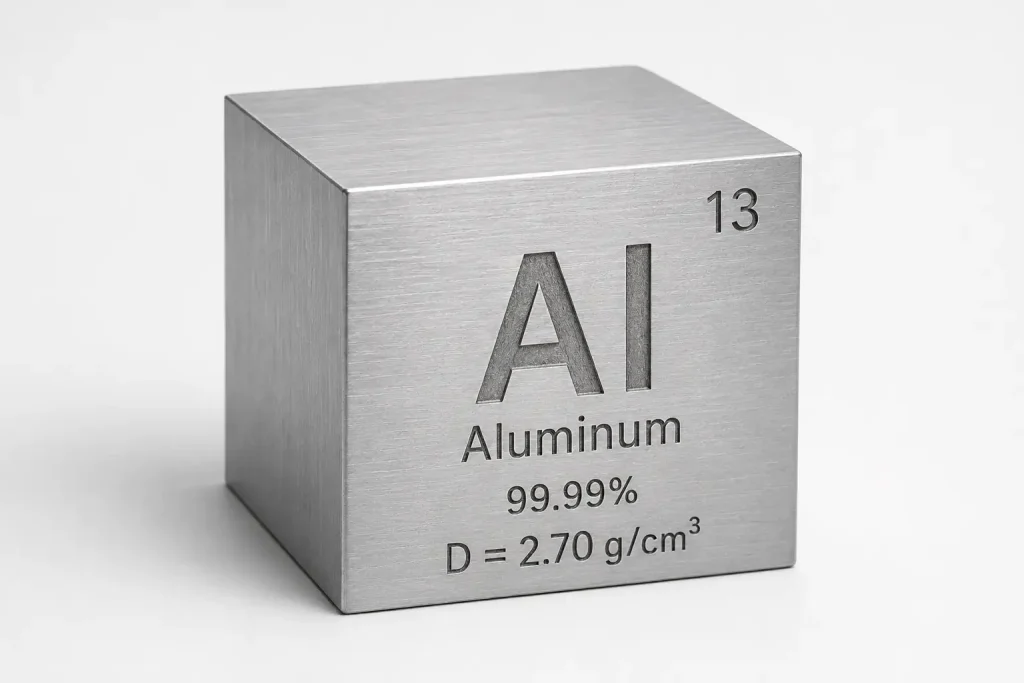
Aluminum density refers to the mass of aluminum material per unit volume. The density of pure aluminum is approximately 2.70 g/cm³, or about 2700 kg/m³. In imperial units, it is approximately 0.0975 lb/in³.
What Is the Density of Common Aluminum Alloys?
The density of aluminum alloys is usually close to that of pure aluminum, but it can vary slightly depending on alloy composition. Most common aluminum alloys have densities of about 2.66–2.81 g/cm³, while many cast aluminum alloys are typically in the range of 2.67–2.75 g/cm³.
The main factor affecting aluminum alloy density is chemical composition. Aluminum alloys with higher silicon or magnesium content are usually close to, or slightly lower than, pure aluminum in density. Alloys with higher copper or zinc content are usually slightly denser.
Below are typical density values for common aluminum and aluminum alloy grades.
| Aluminum Alloy Grade | kg/m³ | lb/in³ | g/cm³ |
|---|---|---|---|
| 1050 | 2705 | 0.0977 | 2.71 |
| 1060 | 2705 | 0.0977 | 2.71 |
| 1100 | 2710 | 0.0979 | 2.71 |
| 2024 | 2780 | 0.1004 | 2.78 |
| 3003 | 2730 | 0.0986 | 2.73 |
| 5052 | 2680 | 0.0968 | 2.68 |
| 5083 | 2660 | 0.0961 | 2.66 |
| 6061 | 2700 | 0.0975 | 2.70 |
| 6063 | 2700 | 0.0975 | 2.70 |
| 7075 | 2810 | 0.1015 | 2.81 |
| A356 | 2670 | 0.0965 | 2.67 |
| A380 | 2710 | 0.0979 | 2.71 |
| AlSi7Mg | 2670–2680 | 0.0965–0.0968 | 2.67–2.68 |
| AlSi9Cu3 | 2700–2750 | 0.0975–0.0994 | 2.70–2.75 |
These density values can be used for general weight estimation and material reference. Actual data may vary slightly depending on material standards, alloy composition, or supplier information. For formal design, quotation, or quality documentation, the datasheet or material certificate for the specific alloy grade should be used.
Factors That Affect Aluminum Density
The final density of aluminum is mainly related to material composition, temperature condition, and the internal quality of the casting.
Material Composition
Different alloying elements have different densities, so they can affect the final density of aluminum alloys. For example, copper and zinc are denser than aluminum, so higher contents of these elements usually make the alloy slightly denser. Magnesium and silicon have relatively lower densities, so aluminum-silicon and aluminum-magnesium alloys are usually close to or slightly lower than the density of pure aluminum.
Temperature Condition
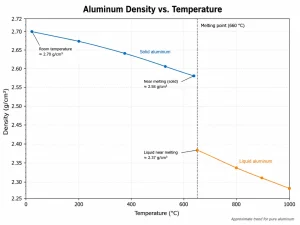
As temperature increases, the material expands and its density decreases slightly. Therefore, density data is usually given as a material property under room-temperature conditions.
Internal Quality of Castings
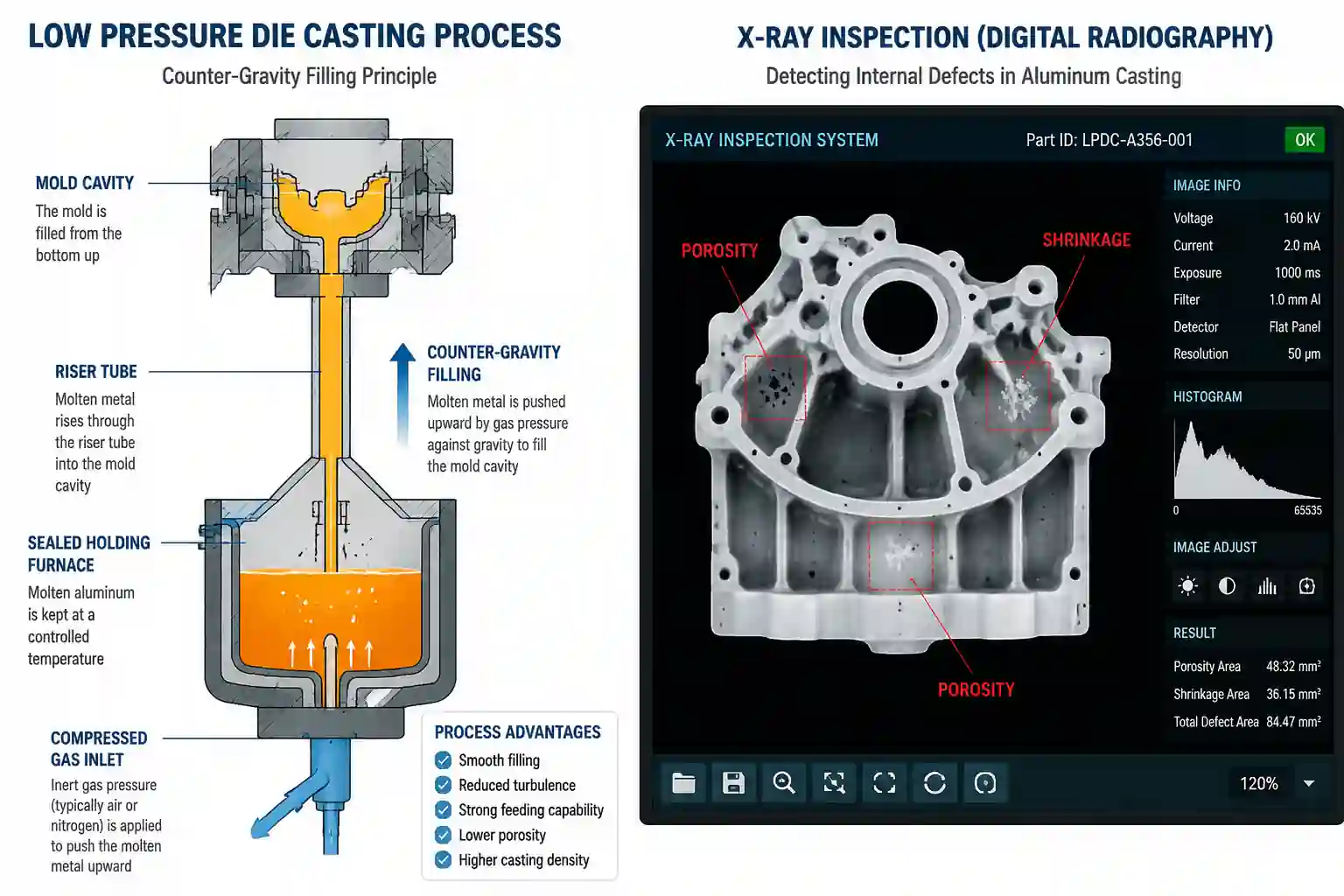
For aluminum castings and die castings, porosity, shrinkage cavities, or internal looseness can affect the actual weight and apparent density. The denser the casting, the closer its actual weight is usually to the theoretical calculated value.
How Aluminum Density Affects Die Casting
In die casting, aluminum density is not a direct process-control parameter like injection speed, mold temperature, or venting design. It is more like a basic material value used to evaluate part weight, material usage, and lightweight potential. For aluminum die casting projects, density is mainly useful in the following ways:
- Part weight
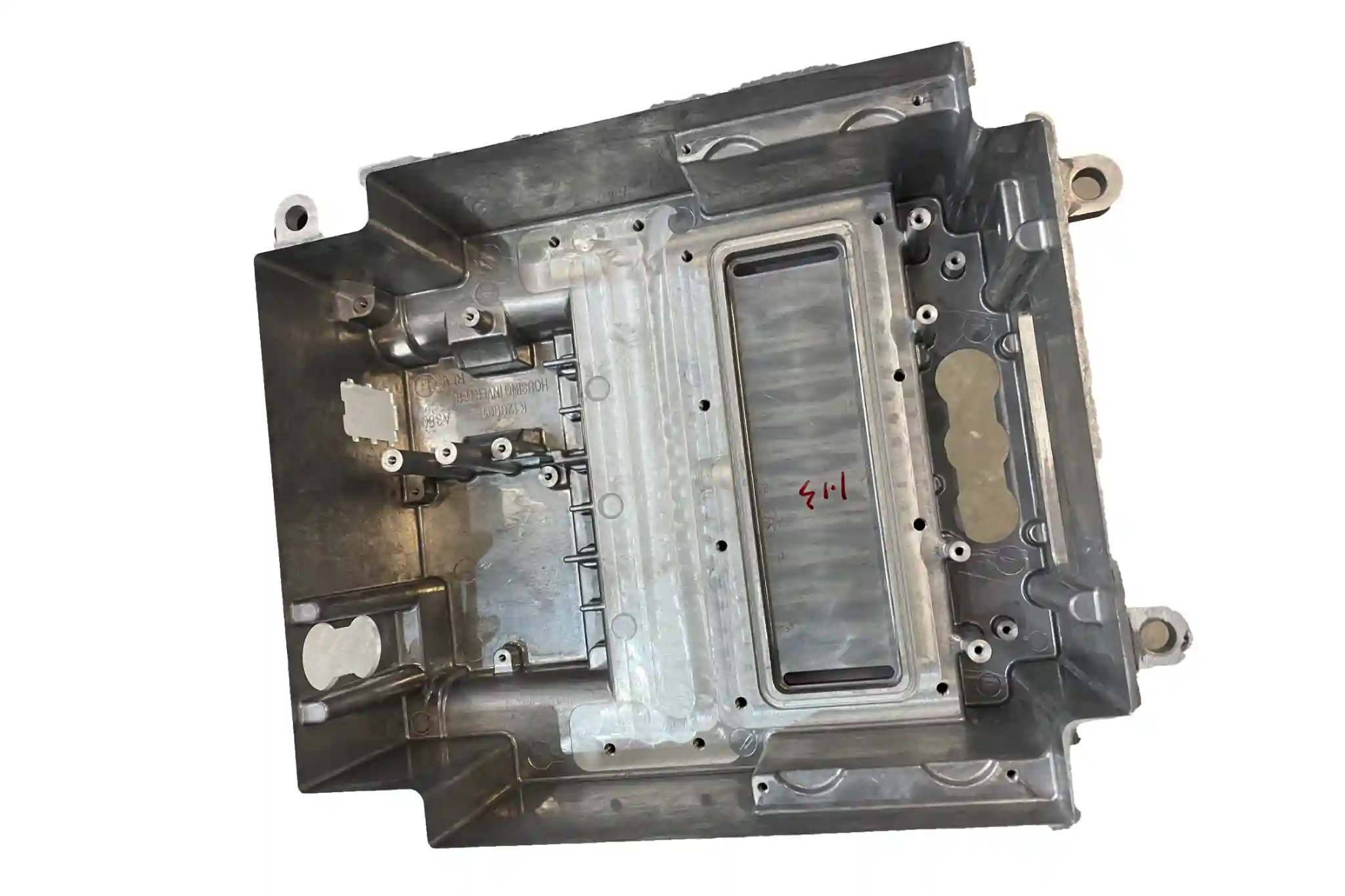
Density determines the weight of an aluminum alloy part at the same volume. Because aluminum alloys have low density, they are suitable for die cast parts that require weight reduction, such as motor housings, heat sinks, brackets, automotive components, and industrial housings. - Material usage
The actual material used in a die casting project includes not only the finished part, but also gates, runners, overflows, and material removed after casting. With a clear density value, it is easier to estimate the approximate metal usage of the complete die casting system based on part volume. - Cost estimation
In high-volume die casting projects, part weight affects material cost, melting cost, and return-material evaluation. Although density differences between aluminum alloys are usually small, weight estimation is still a basic part of quotation and cost calculation. - Quality check reference
Density itself cannot directly determine die casting quality. However, if the actual weight is significantly different from the theoretical weight, it may indicate incomplete filling, internal porosity, shrinkage, or excessive residual material. Therefore, weight and density data can be used as supporting references in quality inspection.
Conclusion
The density data of aluminum and its alloys provides an important reference for engineering design, weight estimation, and cost calculation. In practical applications, density should be evaluated together with part geometry, alloy grade, and the die casting process.
With years of die casting production experience, the Minhe engineering team can help customers integrate these basic material parameters into specific die casting project evaluations. From material selection and theoretical weight estimation to DFM optimization, we support a more balanced approach to yield stability, weight control, and cost management.