
In die casting production, a cold shut is a common surface defect that severely compromises the structural integrity of a component. Properly planning filling parameters and mold structures remains critical to preventing such flaws. This article analyzes the definition and causes of cold shuts and provides practical shop-floor corrective measures.
What is a Die Casting Cold Shut?
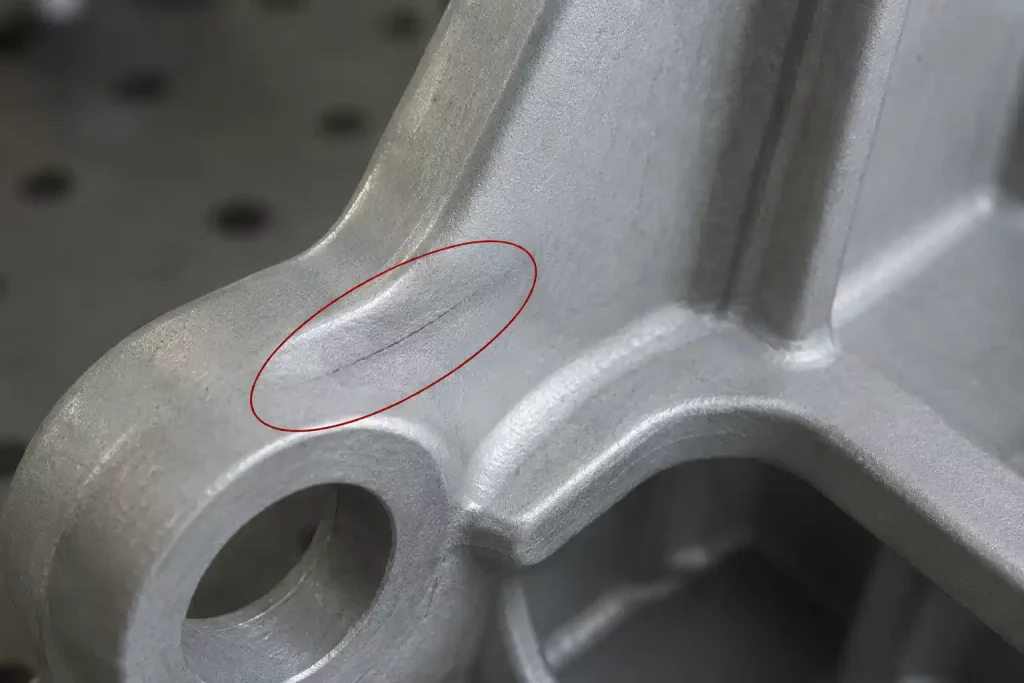
A cold shut is a common surface or progressive defect encountered in the die casting process. It occurs when two or more streams of molten metal meet from different directions within the mold cavity but fail to fuse completely because their leading edges have cooled below the solidus temperature. This results in a distinct seam or interface, characteristically blunt and rounded at the edges, which distinguishes it from sharp stress-induced cracks.
Causes of Die Casting Cold Shunts
The formation of a cold shut is inherently driven by insufficient thermal energy and a subsequent loss of fluidity in the molten metal. Specific workshop factors include:
Low Pouring Temperature
If the melting or pouring temperature falls below specifications, the molten metal undergoes premature localized solidification before completing the mold fill.
Slow Filling Speed
Discontinuous injection or insufficient flow velocity extends the exposure and heat dissipation time of the liquid metal within the cavity.
Improper Gating System Design
Inappropriate placement of in-gates, excessively long flow paths, or restricted cross-sectional areas cause the metal streams to lose energy before meeting.
Poor Cavity Venting
Insufficient or blocked vents/overflows cause backpressure from trapped air, slowing the metal advancement and accelerating cooling at the confluence point.
Inadequate Mold Preheating
Excessively low die temperatures, particularly along large surface areas or thin-walled sections, exert a severe chilling effect on the advancing metal.
Effects of Cold Shuts on Die Castings
Cold shuts do not merely ruin the cosmetic uniformity of a part; they also impose severe negative impacts on the component’s functional performance and subsequent processing:
Degraded Mechanical Properties
Because the metal streams fail to fuse at the atomic level, the cold shut acts as a discontinuity within the matrix. Under cyclic loads or impact, this stress concentration point easily propagates into a crack, drastically reducing tensile strength and fatigue life.
Compromised Pressure Tightness
For die castings requiring reliable sealing (such as engine blocks or valve bodies), progressive cold shut seams establish direct leak paths during pressure testing, leading to batch rejections.
Adverse Impacts on Surface Finishing
During subsequent plating, painting, or anodizing processes, the microscopic gaps of a cold shut can trap acid residues or moisture, resulting in localized blistering, peeling, or accelerated internal corrosion.
How to Prevent Die Casting Cold Shunts
Preventing cold shuts relies on maximizing thermal retention prior to confluence and optimizing the filling path. Practical solutions involve:
Strictly Controlling Pouring Temperatures
Maintain molten metal at optimal temperatures within process limits to ensure adequate superheat.
Optimizing Gating and Venting Systems
Position in-gates strategically to shorten flow distances and expand venting channels alongside overflow wells to guarantee instantaneous air evacuation.
Elevating Mold Preheating Temperatures
Thoroughly and uniformly preheat die casting molds before production, and stabilize them via thermal management systems to minimize temperature drops along thin-walled sections.
Adjusting Injection Speed and Pressure
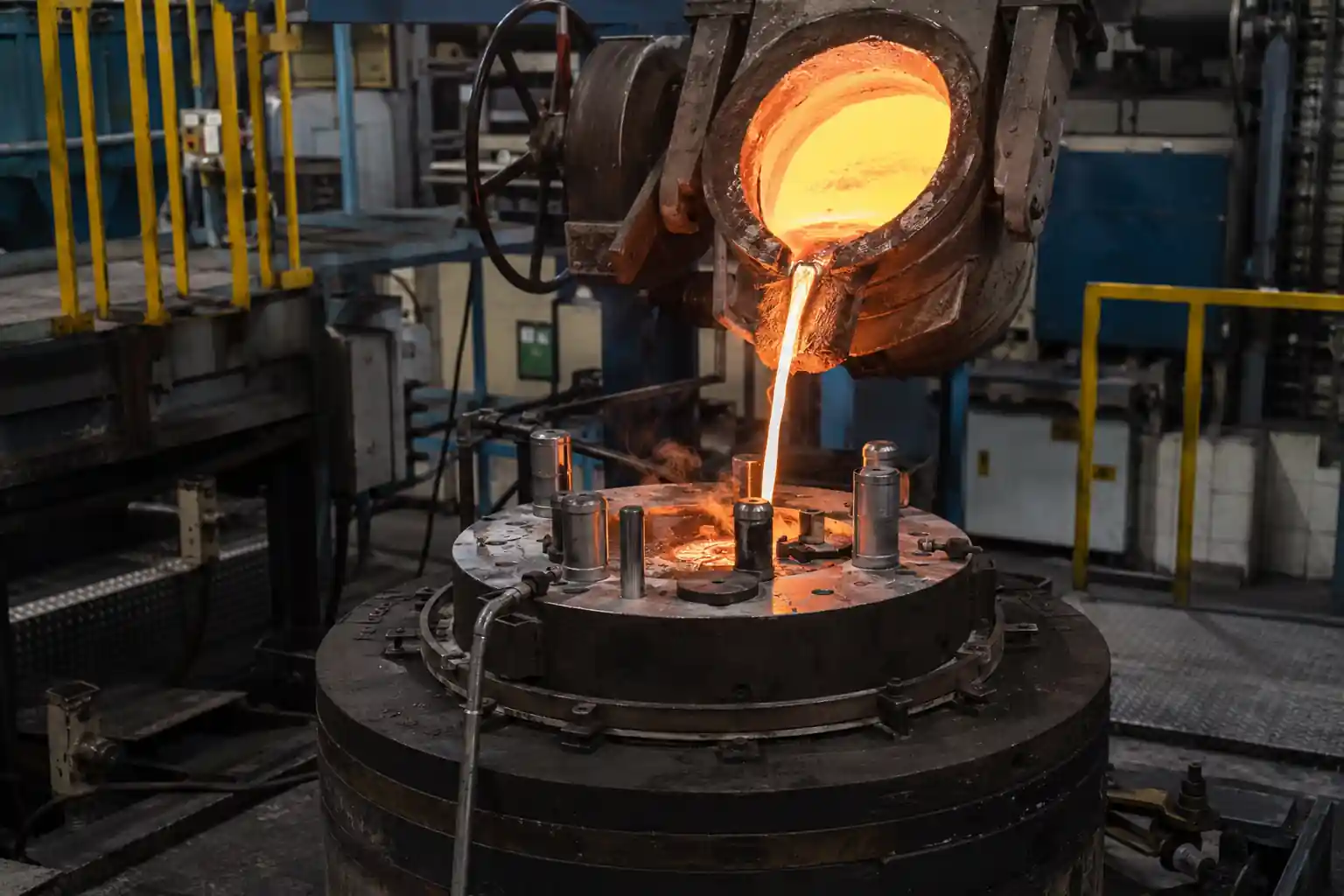
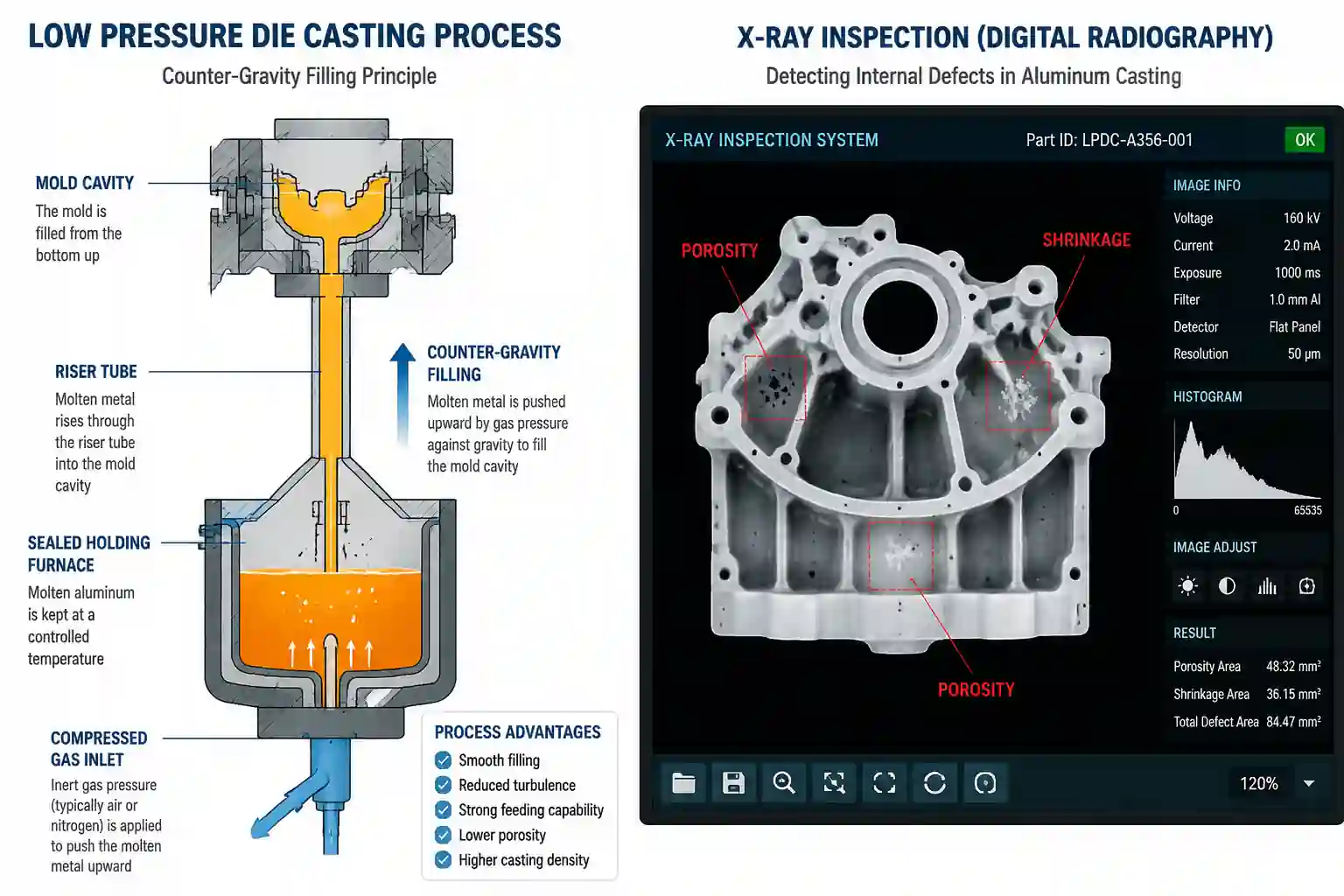
Similar filling-speed and pressure-control principles also apply to low pressure die casting, especially for aluminum housings, pump bodies, and thin-wall structural parts where stable mold filling is required.
Ensure steady, continuous injection while appropriately increasing filling pressure, accelerating fast-shot velocity, or optimizing pressure build-up time.
결론
The occurrence of cold shuts represents a combined outcome of metal temperature, velocity, and mold environmental factors. Overcoming this shop-floor challenge relies less on isolated temperature adjustments and more on optimized gating system design and consistent process routing execution. Systematically managing melt temperatures, optimizing filling paths, and ensuring proper cavity venting remain essential for minimizing defects while achieving efficient, high-yield mass production.
If your casting project needs to reduce the risk of cold shuts, porosity, shrinkage, or other 주조 결함, MinHe can provide manufacturing assessment support based on material, part structure, casting process, and inspection requirements.