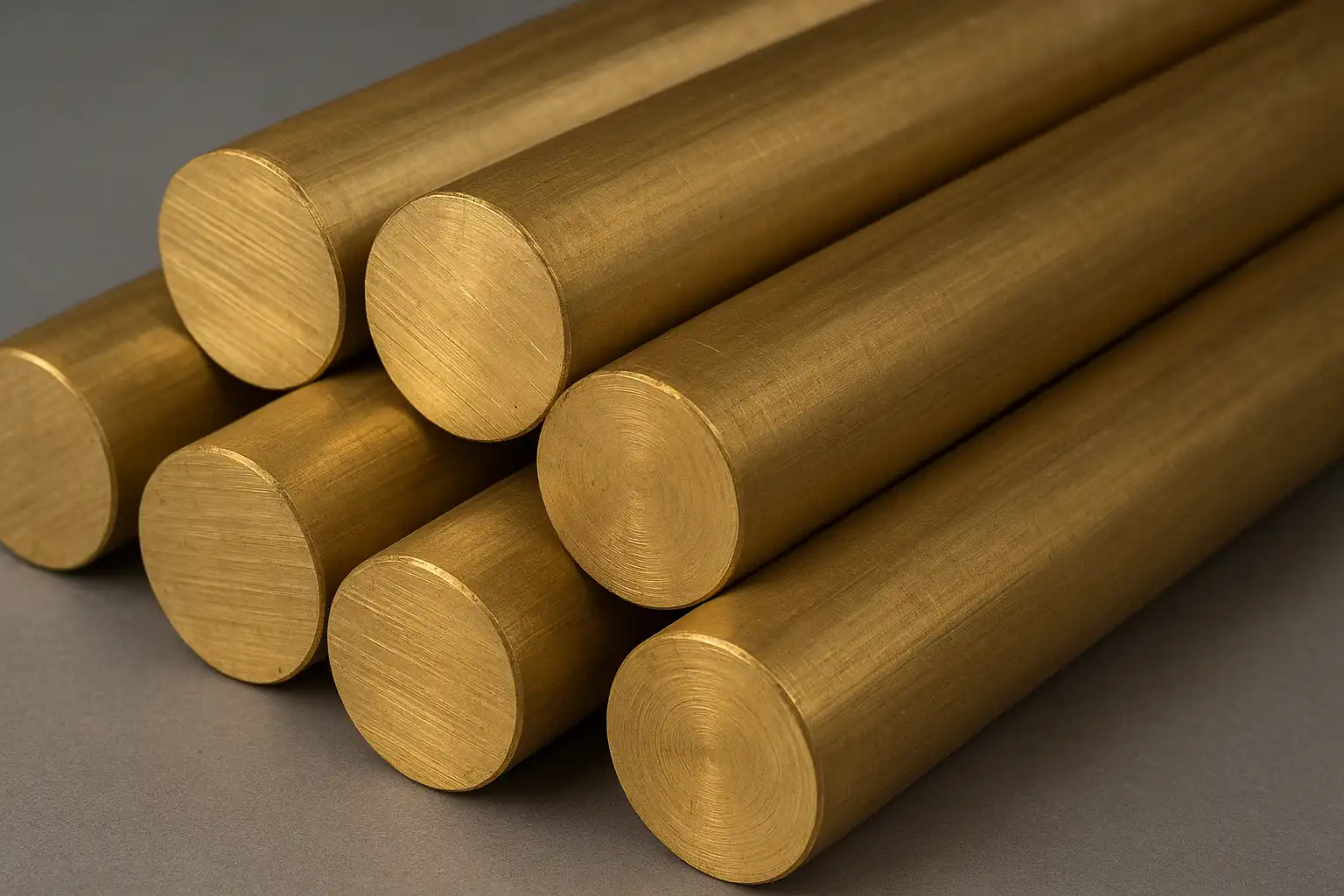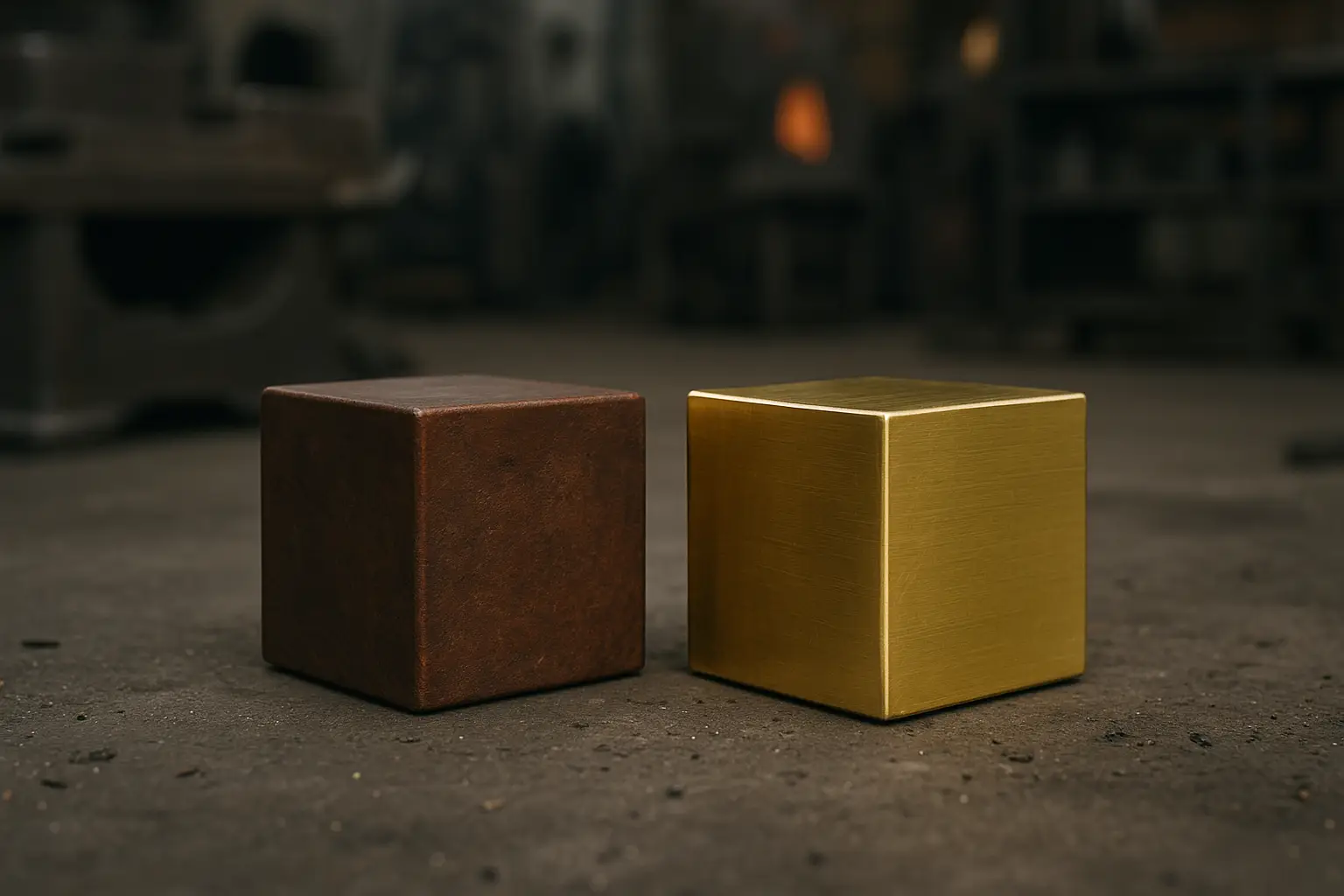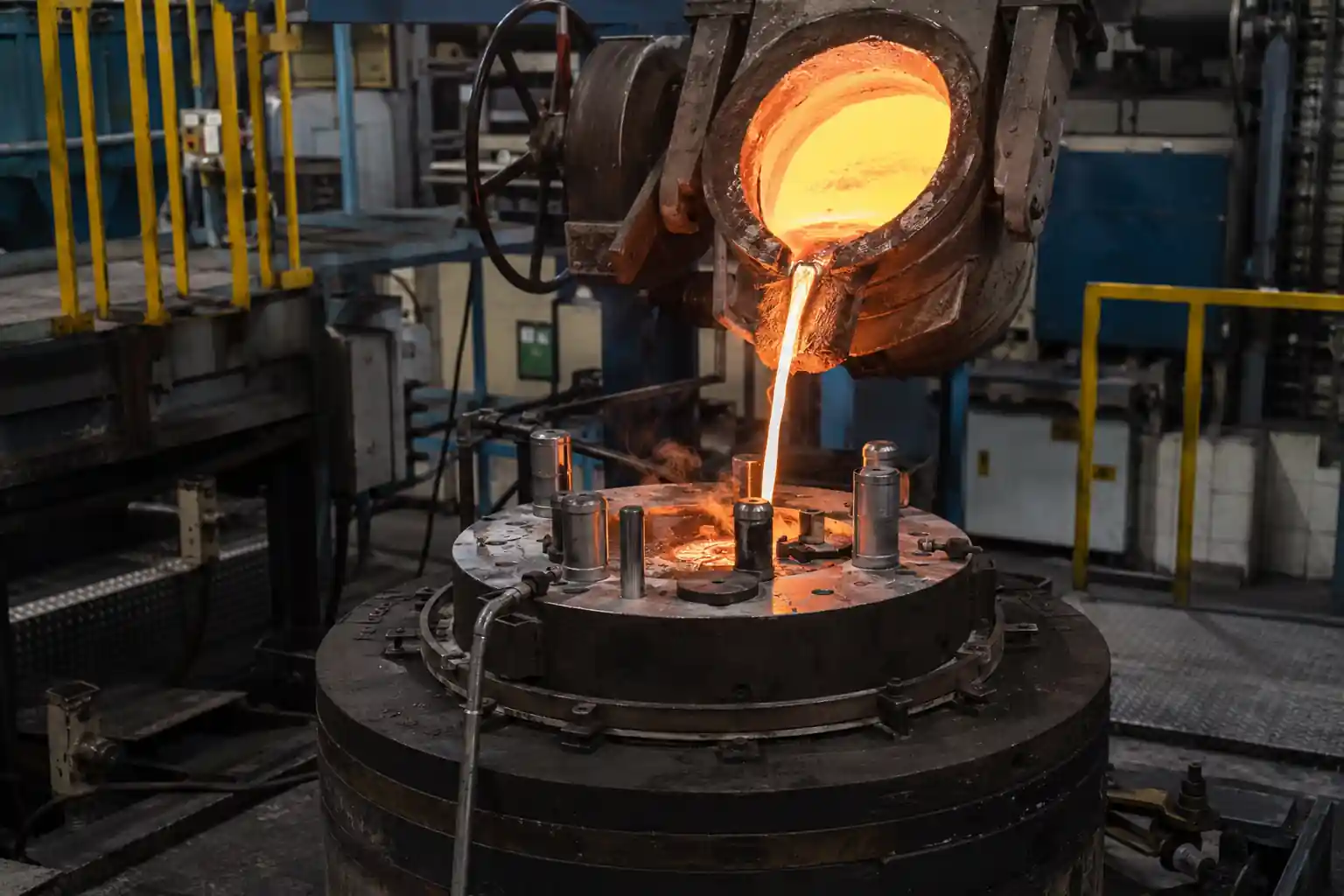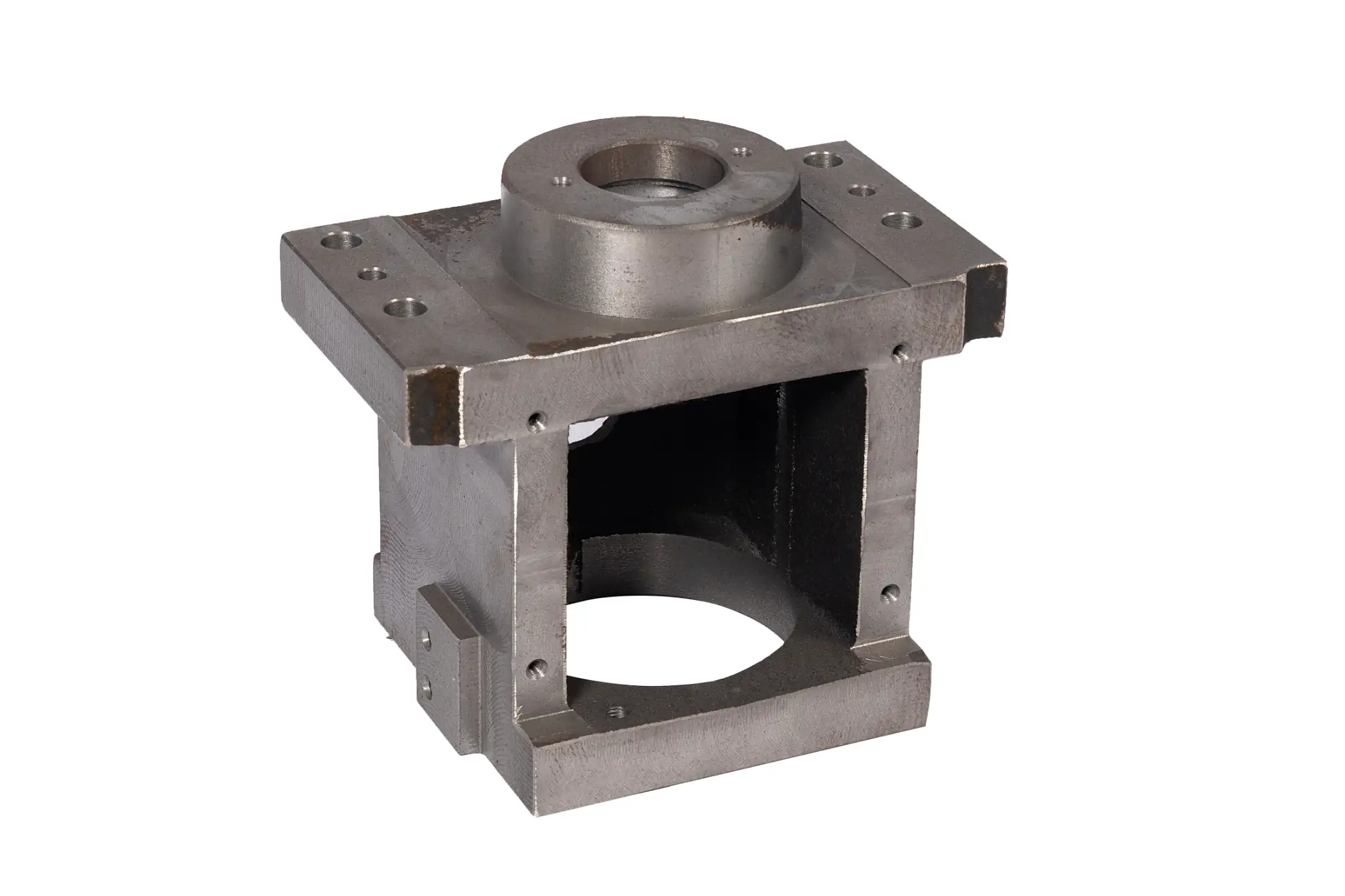



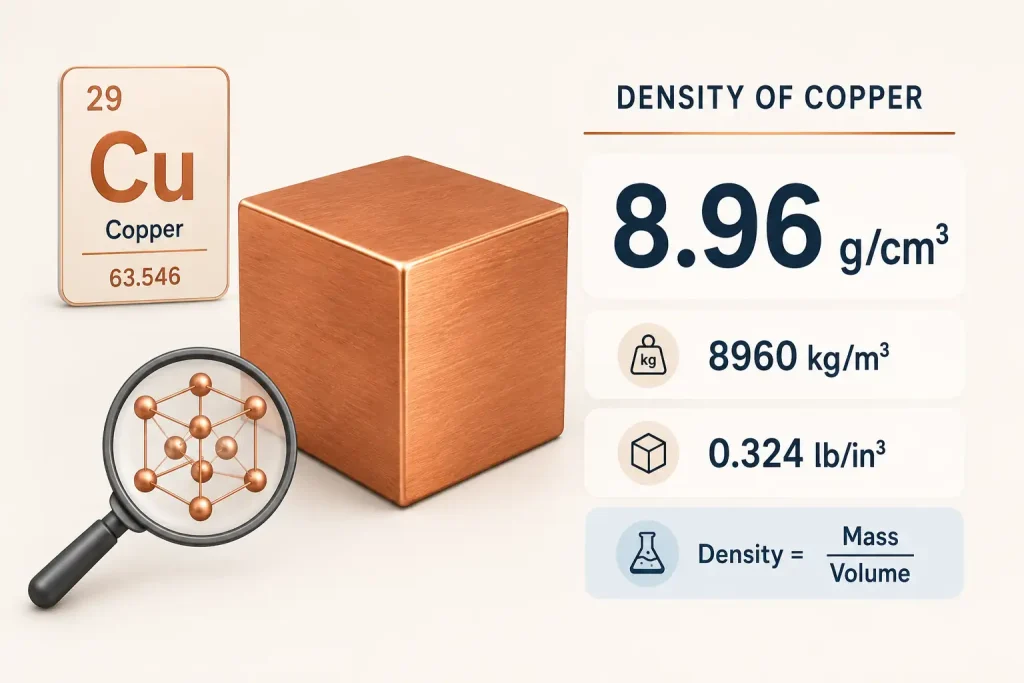
El cobre, muy apreciado por su conductividad y su resistencia a la corrosión, es un material fundamental en aplicaciones eléctricas y de fundición de alta precisión. En la práctica industrial, los datos sobre la densidad sirven como referencia práctica para contabilidad de costes, estimación de materiales y planificación logística.
Esta guía ofrece una estructura Referencia sobre las densidades del cobre y sus aleaciones, que abarca desde propiedades básicas hasta tablas detalladas de calidades. Al incluir análisis de aleaciones y comparativas entre metales, constituye una fuente de datos fiable para la selección de materiales y el diseño técnico.
¿Cuál es la densidad del cobre?
El cobre puro tiene una densidad de aproximadamente 8,96 g/cm³. Se trata de una propiedad física fundamental que representa la masa del metal por unidad de volumen. En unidades del Sistema Internacional (SI), esto equivale también a unos 8960 kg/m³.
En unidades imperiales, la densidad del cobre es de aproximadamente 0,324 lb/in³ o 559 lb/ft³. Este valor se utiliza habitualmente como referencia técnica durante las fases iniciales de diseño y presupuestación. Es importante tener en cuenta que la densidad real puede variar ligeramente en función de la pureza del metal, la temperatura ambiente y la composición específica de la aleación.
Densidad de diferentes aleaciones de cobre
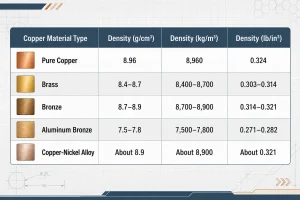
La densidad de las aleaciones de cobre no es un valor fijo, ya que los elementos de aleación, como el zinc, el estaño, el aluminio y el níquel, se añaden en proporciones variables. Aunque estos elementos se utilizan principalmente para mejorar la resistencia mecánica, la resistencia a la corrosión o la maquinabilidad, también modifican la masa final del material.
Cobre puro
El cobre puro tiene una densidad típica de aproximadamente 8,96 g/cm³. Sirve de referencia para comparar todas las demás aleaciones de cobre. Su elevada densidad es consecuencia directa de su estructura atómica muy compacta, lo que además le confiere una conductividad eléctrica y térmica de primer orden, lo que lo convierte en el alma de la ingeniería eléctrica.
Latón
Latón es una aleación de cobre y zinc cuya densidad típica oscila entre De 8,4 a 8,7 g/cm³. Dado que el zinc es menos denso que el cobre, la mayoría de los latones son ligeramente más ligeros que el cobre puro. Esta ligera ventaja en cuanto al peso, unida a su excelente maquinabilidad, lo convierte en la opción preferida para válvulas ligeras y componentes decorativos.
Bronce
La densidad de bronce suele situarse entre 8,7 y 8,9 g/cm³. Aunque su densidad se mantiene cercana a la del cobre puro, la adición de estaño o fósforo aumenta significativamente la dureza y la resistencia al desgaste sin añadir un peso excesivo. Esto lo convierte en una opción ideal para rodamientos de alta resistencia, casquillos y piezas de fundición industrial.
Aluminio Bronce
El bronce de aluminio destaca como el campeón de la ligereza dentro de la familia del cobre, con una densidad de tan solo De 7,5 a 7,8 g/cm³. Esta importante reducción de peso se debe a la incorporación de aluminio. A pesar de ser más ligero, conserva una resistencia mecánica excepcional y una resistencia superior a la corrosión por el agua de mar, por lo que se utiliza a menudo en el sector aeroespacial y en equipos submarinos.
Cobre-níquel
Las aleaciones de cobre y níquel tienen una densidad de aproximadamente 8,9 g/cm³, que es prácticamente idéntico al cobre puro. Dado que el níquel y el cobre tienen densidades muy similares, el proceso de aleación tiene un impacto insignificante en el peso. Su principal ventaja radica en su extrema estabilidad química, lo que la convierte en un material indispensable para entornos marinos y sistemas de intercambiadores de calor.
Densidad de las calidades de cobre más comunes
Cuando se trabaja con materiales normalizados específicos, es necesario utilizar valores de densidad precisos para realizar cálculos de ingeniería exactos. Los valores de densidad habituales son referencias de ingeniería, y los valores exactos pueden variar en función de la norma, la composición y los datos del proveedor.
| Grado de cobre | Tipo de material | Densidad (g/cm³) | Densidad (kg/m³) | Densidad (lb/in³) |
| C11000 | Cobre electrolítico de paso duro | 8,89 – 8,96 | 8.890 – 8.960 | 0,321 – 0,324 |
| C10100 | Cobre sin oxígeno | 8.94 | 8,940 | 0.323 |
| C26000 | Cartucho de latón | 8.53 | 8,530 | 0.308 |
| C36000 | Latón de corte libre | 8.50 | 8,500 | 0.307 |
| C93200 | Rodamiento Bronce | 8.83 | 8,830 | 0.319 |
| C95400 | Aluminio Bronce | 7.64 | 7,640 | 0.276 |
| C70600 | 90-10 Cobre Níquel | 8.94 | 8,940 | 0.323 |
Estos grados corresponden a materiales habituales en entornos de mecanizado y fundición. El bronce de aluminio, como el C95400, destaca por ser considerablemente más ligero debido a su alto contenido en aluminio.
Densidad del cobre comparada con otros materiales
Comparar el cobre con otros metales industriales ayuda a los diseñadores a comprender las implicaciones en cuanto al peso de sus elecciones de materiales.
| Material | Densidad (g/cm³) | Densidad (kg/m³) | Densidad (lb/in³) | En comparación con el cobre |
| Aluminio | 2.70 | 2,700 | 0.098 | ~3,3 veces más ligero |
| Hierro | 7.87 | 7,870 | 0.284 | Un poco más ligero |
| Acero al carbono | 7.85 | 7,850 | 0.284 | Un poco más ligero |
| Acero inoxidable | 7,9 – 8,0 | 7.900 – 8.000 | 0,285 – 0,289 | Un poco más ligero |
| Latón | 8,4 – 8,7 | 8.400 – 8.700 | 0,303 – 0,314 | Un poco más ligero |
| Bronce | 8,7 – 8,9 | 8.700 – 8.900 | 0,314 – 0,321 | Cerca de Copper |
| Cobre | 8.96 | 8,960 | 0.324 | - |
El cobre es mucho más pesado que el aluminio, por lo que este último resulta más adecuado cuando se da prioridad a un diseño ligero. Sin embargo, el cobre solo es ligeramente más pesado que el hierro y los aceros comunes. El cobre y sus aleaciones siguen siendo esenciales cuando la conductividad eléctrica, la conductividad térmica, la resistencia a la corrosión o la resistencia al desgaste son factores importantes.
Cómo calcular el peso de una pieza de cobre
En la fabricación industrial, el cálculo del peso de un componente de cobre es un proceso fundamental que marca la transición del diseño digital a la producción física. Utilizamos cinco métodos distintos en función de la fase del proyecto.
Cálculo básico de la relación entre volumen y peso
Este método fundamental se utiliza durante la fase inicial de diseño, cuando se establecen por primera vez las dimensiones geométricas.
Fórmula:
Peso = Volumen × Densidad
Ejemplo:
Para una pieza con un volumen de 100 cm³, tomando como referencia una densidad del cobre puro de 8,96 g/cm³:
100 cm³ × 8,96 g/cm³ = 896 g (0,896 kg)
Estimación rápida de las existencias de materia prima
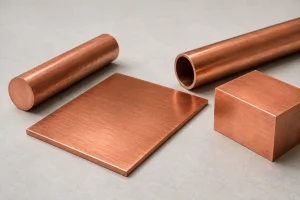
En la gestión de compras y de almacenes, el peso suele estimarse a partir de las dimensiones externas de las materias primas estándar. Las siguientes fórmulas simplificadas utilizan los milímetros como unidad de medida y se basan en una densidad del cobre de 8,96 g/cm³.
Barra redonda de cobre:
Peso (kg) = 0,00000703 × Diámetro² × Longitud
Lámina/placa de cobre:
Peso (kg) = 0,00000896 × Espesor × Anchura × Longitud
Tubo de cobre:
Peso (kg) = 0,0000281 × Espesor de pared × (Diámetro exterior - Espesor de pared) × Longitud
En el caso del latón, el bronce, el bronce de aluminio o las aleaciones de cobre y níquel, el coeficiente debe ajustarse en función de la densidad real de la aleación.
Modelado CAD y simulación digital
En el caso de componentes complejos con canales de refrigeración internos o nervaduras intrincadas, el cálculo manual resulta insuficiente.
El proceso: Los ingenieros asignan grados específicos, como C11000 o C95400, al modelo 3D en programas como SolidWorks o UG/NX.
Ventaja: Además de la masa, el CAD proporciona el centro de gravedad (CoG), que resulta fundamental para el equilibrado dinámico de piezas giratorias como los impulsores.
El método del desplazamiento (principio de Arquímedes)
Este método se utiliza para piezas físicas o modelos de cera cuya geometría es demasiado irregular para poder modelarla matemáticamente.
Control de calidad: Si el peso medido de una pieza fundida es significativamente inferior al peso calculado a partir del desplazamiento, esto podría indicar la presencia de porosidad interna, contracción o variaciones en la densidad del material.
Margen de mecanizado y requisitos de materia prima
En la producción, el peso neto —es decir, la pieza acabada— y el peso bruto —es decir, la materia prima— nunca coinciden.
Cálculo: Para garantizar la precisión, se añade un margen de material adicional de entre 1,5 mm y 3,0 mm a todas las superficies que requieran mecanizado CNC.
Fórmula:
Peso de la materia prima = (Volumen neto + Volumen de tolerancia) × Densidad + Pérdida por proceso
Resumen de los métodos de cálculo
| Escenario | Método recomendado | Ventaja principal |
| Presupuesto inicial | Fórmulas básicas / Atajos de existencias | Estimación rápida de los costes de material. |
| Diseño de ingeniería | Simulación CAD | Alta precisión; optimiza el rendimiento. |
| Planificación de la producción | Método de holgura de mecanizado | Garantiza el abastecimiento suficiente de material. |
| Inspección de calidad | Método de desplazamiento | Detecta defectos internos y huecos. |
¿Cuál es la masa atómica del cobre?
En metalurgia y ciencia de materiales, la masa atómica es la propiedad fundamental que dicta el comportamiento de un metal. El peso atómico estándar del cobre es 63.546 u (comúnmente redondeado a 63.55 para cálculos de ingeniería).
En la naturaleza, el cobre consta de dos isótopos estables, y su masa atómica es la media ponderada de su abundancia:
- Cobre-63 (~69.17%)
- Cobre-65 (~30.83%)
Esta masa atómica, combinada con la del cobre Cúbico centrado en la cara (FCC) estructura cristalina, da lugar a su alta densidad de aproximadamente 8,96 g/cm³ y una conductividad excepcional. Durante la aleación, la diferencia de masa atómica afecta directamente al peso final. Por ejemplo, la sustitución de átomos de cobre por átomos de aluminio más ligeros (masa atómica ~26,98) reduce significativamente la densidad, creando un bronce de aluminio de alta resistencia pero ligero.
Factores que afectan a la densidad del cobre
Aunque la densidad suele tratarse como una constante, hay varios factores que pueden provocar pequeñas variaciones en los entornos industriales:
- Elementos de aleación: La adición de zinc, estaño, aluminio, níquel y otros elementos modifica la densidad de la aleación de cobre.
- Pureza del material: El cobre puro, el cobre libre de oxígeno y el cobre con impurezas pueden presentar ligeras diferencias de densidad.
- Temperatura: Al aumentar la temperatura, el cobre se dilata y su densidad disminuye ligeramente.
- Porosidad y defectos de fundición: Los poros, la contracción o la holgura pueden hacer que la densidad medida sea inferior a la densidad teórica.
- Estado del material: La transformación y el tratamiento térmico suelen afectar menos a la densidad que la composición, pero pueden ser importantes en cálculos precisos.
Para las piezas fundidas de aleación de cobre, la densidad teórica debe tenerse en cuenta junto con la calidad de la fundición y la solidez interna.
Aplicaciones industriales de la densidad del cobre
En ingeniería industrial, la alta densidad del cobre suele ser un compromiso calculado. Su masa es sinónimo de alto empaquetamiento atómico, que proporciona la conductividad y durabilidad superiores que requieren los sectores críticos:
- Energía e infraestructura eléctrica: La densidad del cobre permite la mayor conductividad eléctrica por volumen. Esto permite diseñar transformadores y motores compactos que soportan elevadas cargas de corriente sin el volumen excesivo que exigen materiales más ligeros pero menos conductores.
- Gestión térmica y electrónica: Como el cobre es más denso que el aluminio, posee una mayor masa térmica. En los disipadores de calor y las placas frías EV, esta densidad permite una mayor absorción y disipación del calor en un espacio físico más reducido.
- Marina y control de fluidos: La densidad de las aleaciones de cobre (como el bronce al aluminio) es un indicador clave de su integridad estructural. Es el material elegido para válvulas de alta presión e impulsores de bombas que deben resistir la corrosión del agua salada y el desgaste mecánico durante décadas.
- Maquinaria pesada: La masa sustancial de los casquillos y cojinetes de cobre proporciona la amortiguación de vibraciones y la estabilidad de carga necesarias en los equipos industriales pesados.
Aunque materiales como el aluminio ofrecen una ventaja en cuanto al peso, el cobre se elige cuando densidad de rendimiento es la prioridad. En aplicaciones que van desde cables eléctricos submarinos hasta microprocesadores de alto rendimiento, la densidad del cobre es la base física de su inigualable fiabilidad eléctrica, térmica y anticorrosiva.
PREGUNTAS FRECUENTES
1. ¿Cuál es la densidad del cobre en unidades imperiales (lb/in³)?
En el ámbito de la ingeniería y el comercio internacional, la densidad del cobre es de aproximadamente 0,324 lb/pulg³. Se trata de una referencia fundamental para calcular los pesos de envío y los costes de los materiales en las regiones que utilizan el sistema imperial.
- Conversión: 8,96 g/cm³ × 0,036127 ≈ 0,324 lb/in³.
2. ¿Es el cobre más pesado que el acero y el aluminio?
Sí. El cobre es considerablemente más pesado que el aluminio (aproximadamente 3,3 veces más denso) y ligeramente más pesado que el acero al carbono común (aprox. 8,96 g/cm³ vs. 7,85 g/cm³). Aunque es más pesado, se opta por el cobre por su conductividad y resistencia a la corrosión superiores, que el acero y el aluminio no pueden igualar.
3. ¿Por qué la densidad real de una pieza a veces difiere del valor que figura en el manual?
La norma 8,96 g/cm³ Este valor se refiere al cobre puro en un entorno de laboratorio. En la práctica industrial, la densidad real puede ser ligeramente inferior debido a:
- Elementos de aleación: La incorporación de metales más ligeros, como el zinc o el aluminio.
- Proceso de fabricación: Las piezas fundidas pueden presentar microporosidad, mientras que las piezas forjadas o laminadas son más compactas.
- Niveles de impurezas: Incluso los oligoelementos pueden provocar pequeñas variaciones en la masa.
4. ¿Cómo influye la densidad de las aleaciones de cobre en los costes de fundición?
La densidad influye directamente en el índice de consumo de material. Una mayor densidad implica que se necesita más materia prima para llenar el mismo volumen del molde. Para los jefes de proyecto, es fundamental disponer de valores de densidad precisos a la hora de calcular el «peso bruto» (incluidos los canales de inyección y los conductos de alimentación) frente al «peso neto», con el fin de garantizar una estimación precisa de los costes.
Conclusión
La densidad media del cobre, aproximadamente 8,96 g/cm³sirve de referencia básica en los cálculos de ingeniería. Aunque es bastante más pesada que el aluminio y ligeramente más densa que el acero, la densidad de las aleaciones de cobre fluctúa en función de las composiciones y calidades específicas.
En la práctica, los datos precisos de densidad son la base del control de costes, el diseño de piezas en bruto y la planificación logística. A pesar de su peso, el cobre y sus aleaciones siguen siendo indispensables en la industria moderna debido a sus superiores propiedades eléctricas, térmicas y de resistencia a la corrosión. El conocimiento de las variaciones de densidad entre las distintas calidades permite a los ingenieros alcanzar el equilibrio óptimo entre el rendimiento del material y la optimización del peso estructural.