


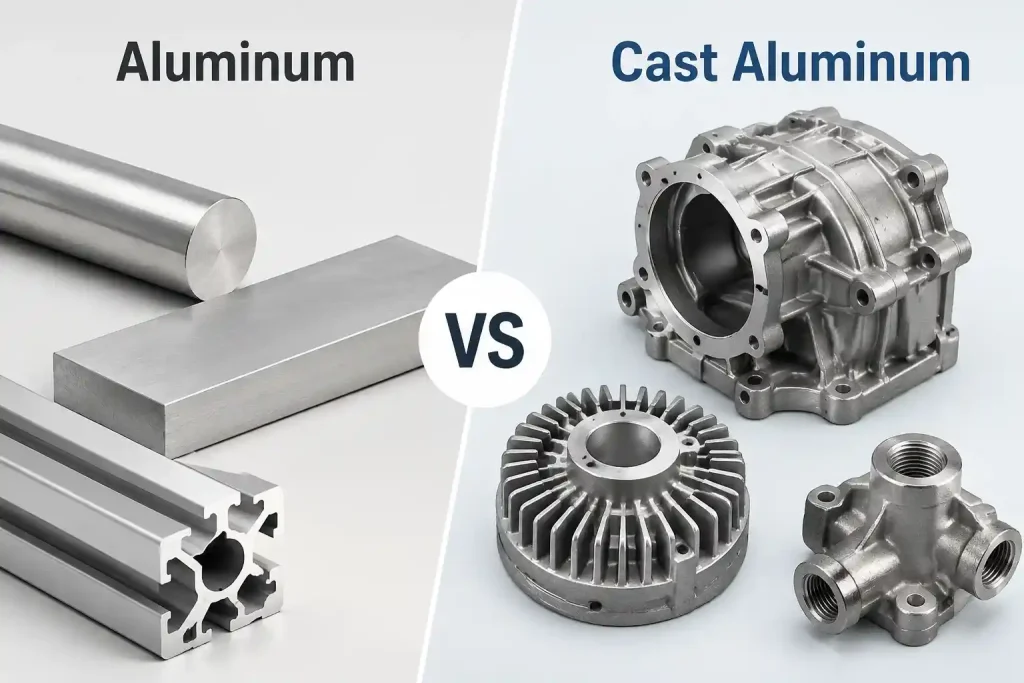
In technischen Zeichnungen oder Ausschreibungen (RFQ) wird der Begriff Aluminium führt oft zu Verwirrung, da sich der Begriff sowohl auf Standard-Rohmaterialien als auch auf bereits geformte Gussteile beziehen kann. Aluminiumguss ist kein anderes Metall, sondern eine Aluminiumlegierung, die durch den Gussprozess geformt wird. Dieser Artikel erläutert kurz die Unterschiede, Vor- und Nachteile sowie typische industrielle Anwendungsbereiche von normalem Aluminium im Vergleich zu Aluminiumguss.
Was ist Aluminium?
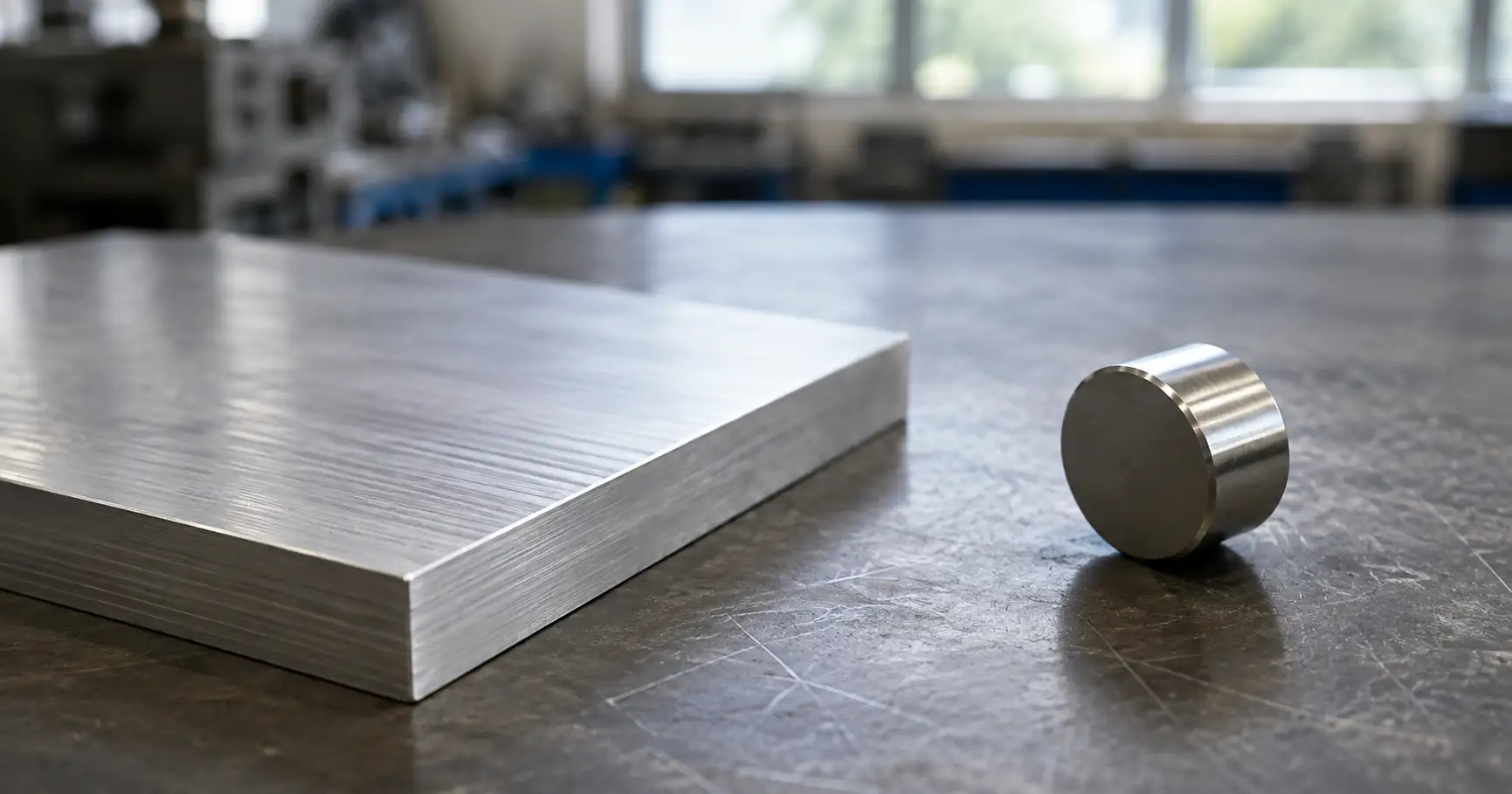
In der Fertigung bezieht sich der Begriff „normales Aluminium“ in der Regel auf geschmiedetes Aluminium. Hierbei handelt es sich um eine breite Materialkategorie, die verschiedene industrielle Formen umfasst, darunter Bleche, Stangen, Rohre, Strangpressprofile, Schmiedeteile und Knüppel.
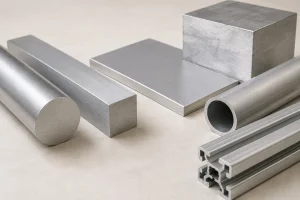
Diese Werkstoffe werden durch mechanische plastische Verformungsverfahren wie Walzen, Strangpressen oder Schmieden hergestellt, wodurch sich die innere Kornstruktur physikalisch verändert. Herkömmliches Aluminium wird in der Regel in standardisierten geometrischen Formen geliefert und anschließend durch CNC-Bearbeitung zu Fertigteilen verarbeitet, wobei die physikalischen Eigenschaften vom vorgeformten Rohmaterial abhängen.
Vorteile von Aluminium
Standardaluminium weist verschiedene technische Eigenschaften auf:
- Leicht: Geringe Dichte, geeignet für gewichtssensible Konstruktionen.
- Korrosionsbeständigkeit: Die natürlich entstehende Oxidschicht bietet einen grundlegenden Schutz.
- Bearbeitbarkeit: Hervorragende Schneideigenschaften, die eine hochpräzise Toleranzkontrolle ermöglichen.
- Stabilität: Die mechanische Bearbeitung gewährleistet einheitliche mechanische Eigenschaften in allen Richtungen.
- Oberflächenveredelung: Lässt sich problemlos schützenden und optischen Behandlungen wie dem Eloxieren unterziehen.
Nachteile von Aluminium
Bei der Herstellung komplexer Industrieteile stößt herkömmliches Aluminium an gewisse Grenzen:
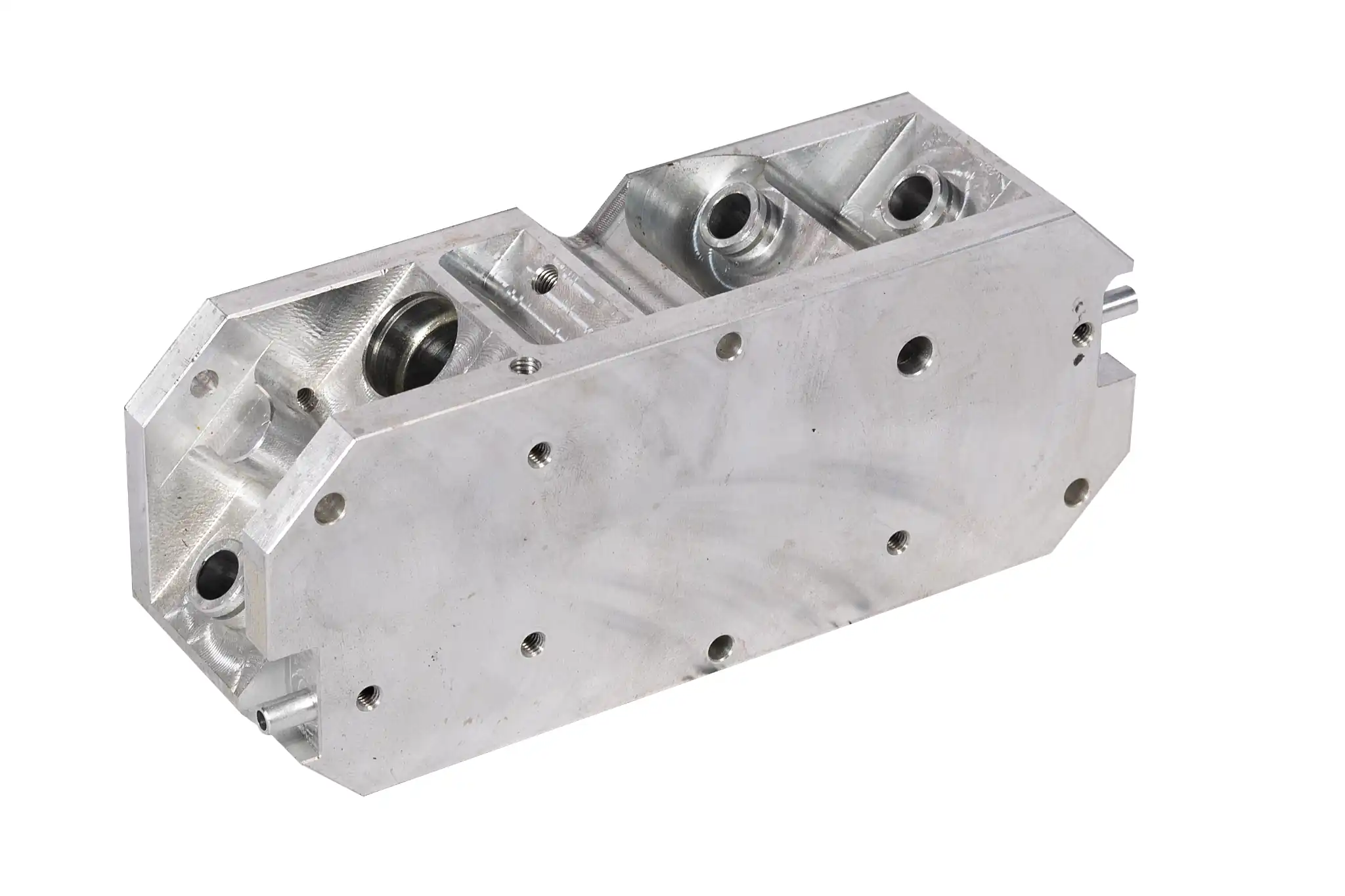
- Bearbeitungszeit: Komplexe 3D-Formen erfordern lange Fräszeiten, was zu höheren Arbeitskosten führt.
- Materialabfall: Das Zuschneiden von Teilen aus Vollmaterial verursacht erhebliche Verschnittmengen, was die Materialkosten erhöht.
- Geometrische Grenzen: Tiefe Innenhohlräume, komplexe Rippen oder integrierte Befestigungspunkte lassen sich nur schwer direkt aus dem Vollen fertigen.
- Komplexität der Montage: Ist die Geometrie sehr komplex, müssen Teile unter Umständen zerlegt und wieder zusammengesetzt werden, was die Verwaltung der Stückliste erschwert.
Was ist Gussaluminium?
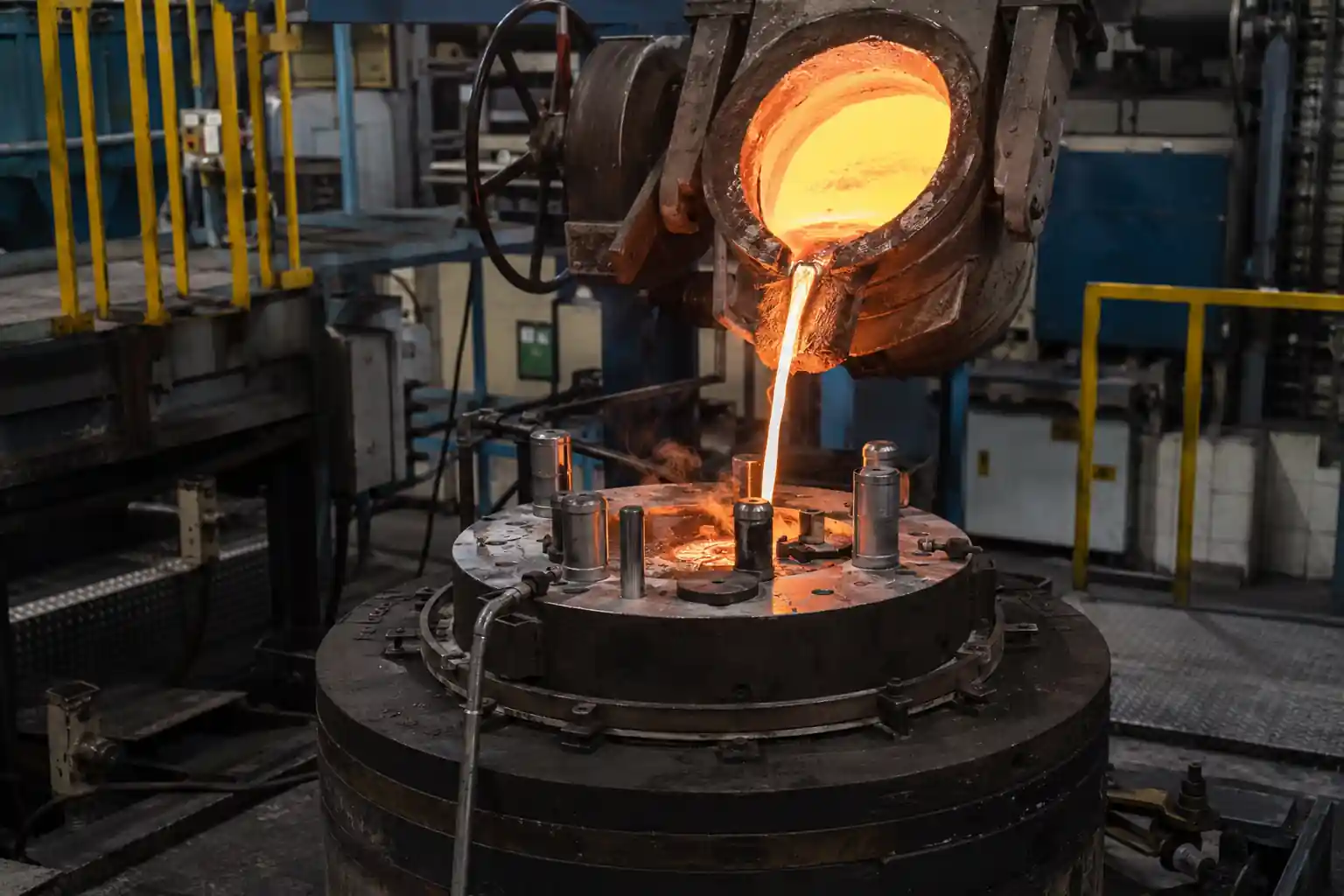
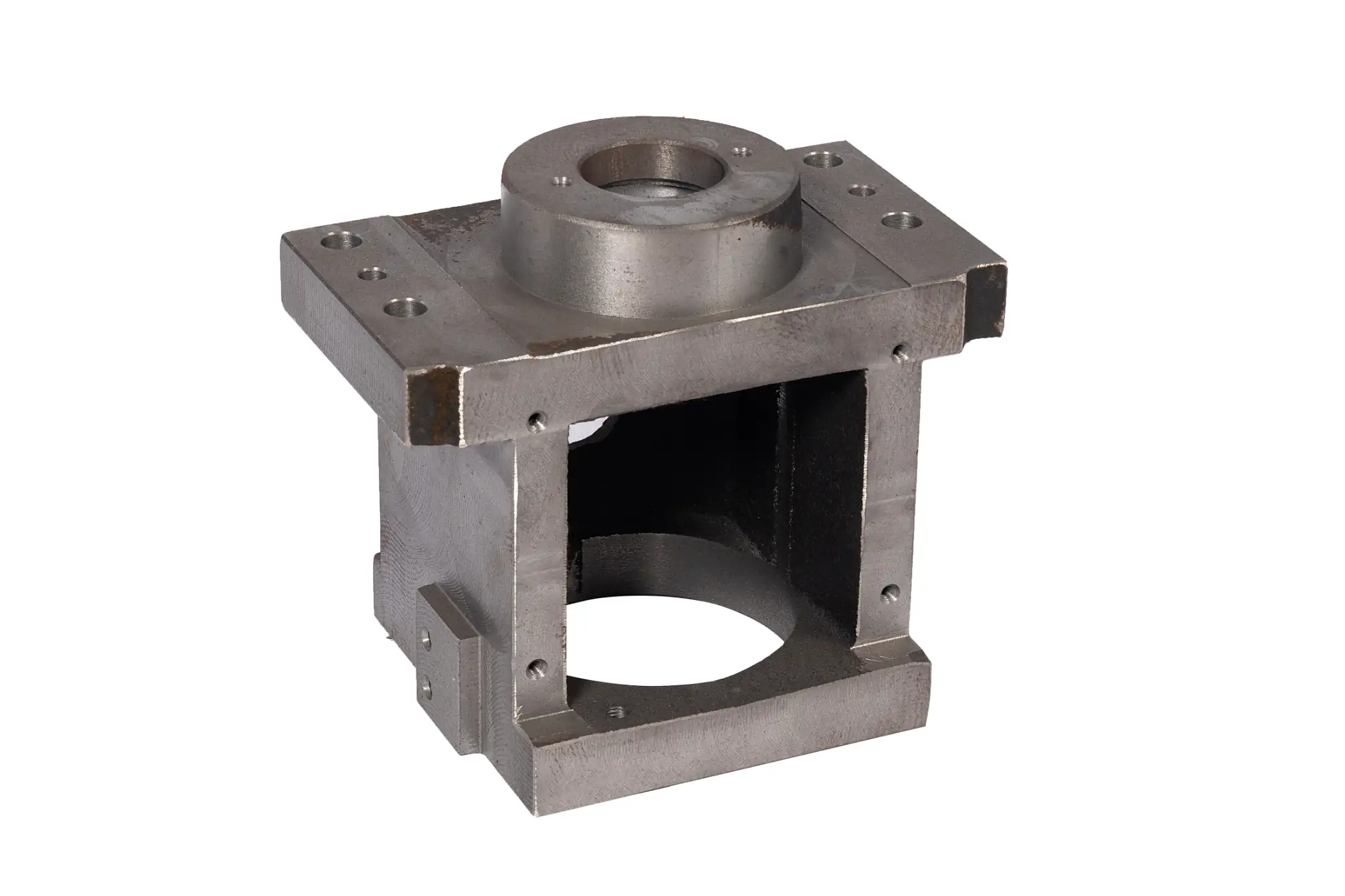
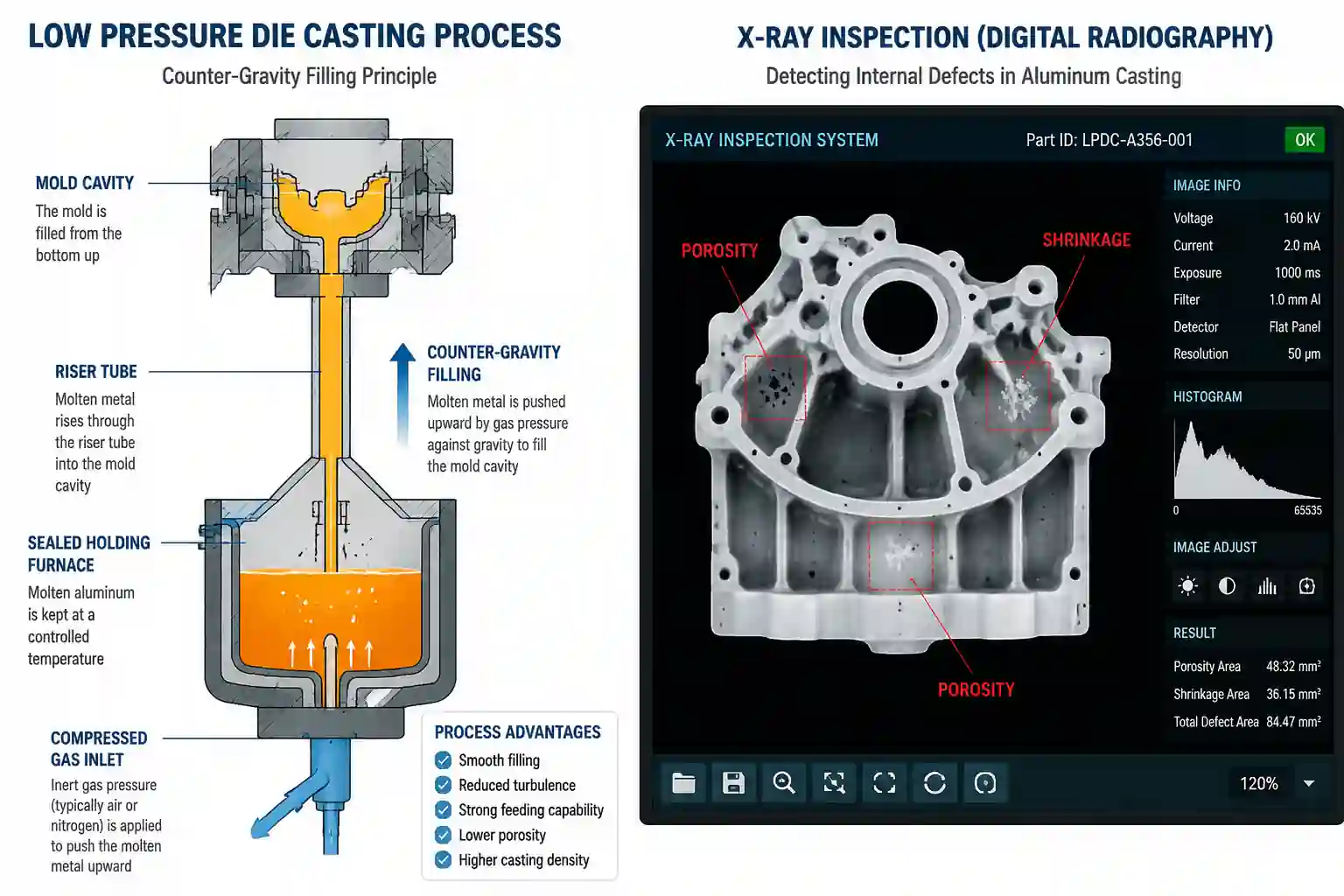
Aluminiumguss bezieht sich auf Teile, die hergestellt werden, indem geschmolzene Aluminiumlegierung in einen Formhohlraum eingespritzt wird und dort vom flüssigen in den festen Zustand übergeht. Im Gegensatz zum Abtragen von Material von einem festen Rohling wird das Metall beim Gießen direkt in die Endform gebracht.
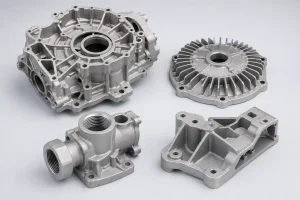
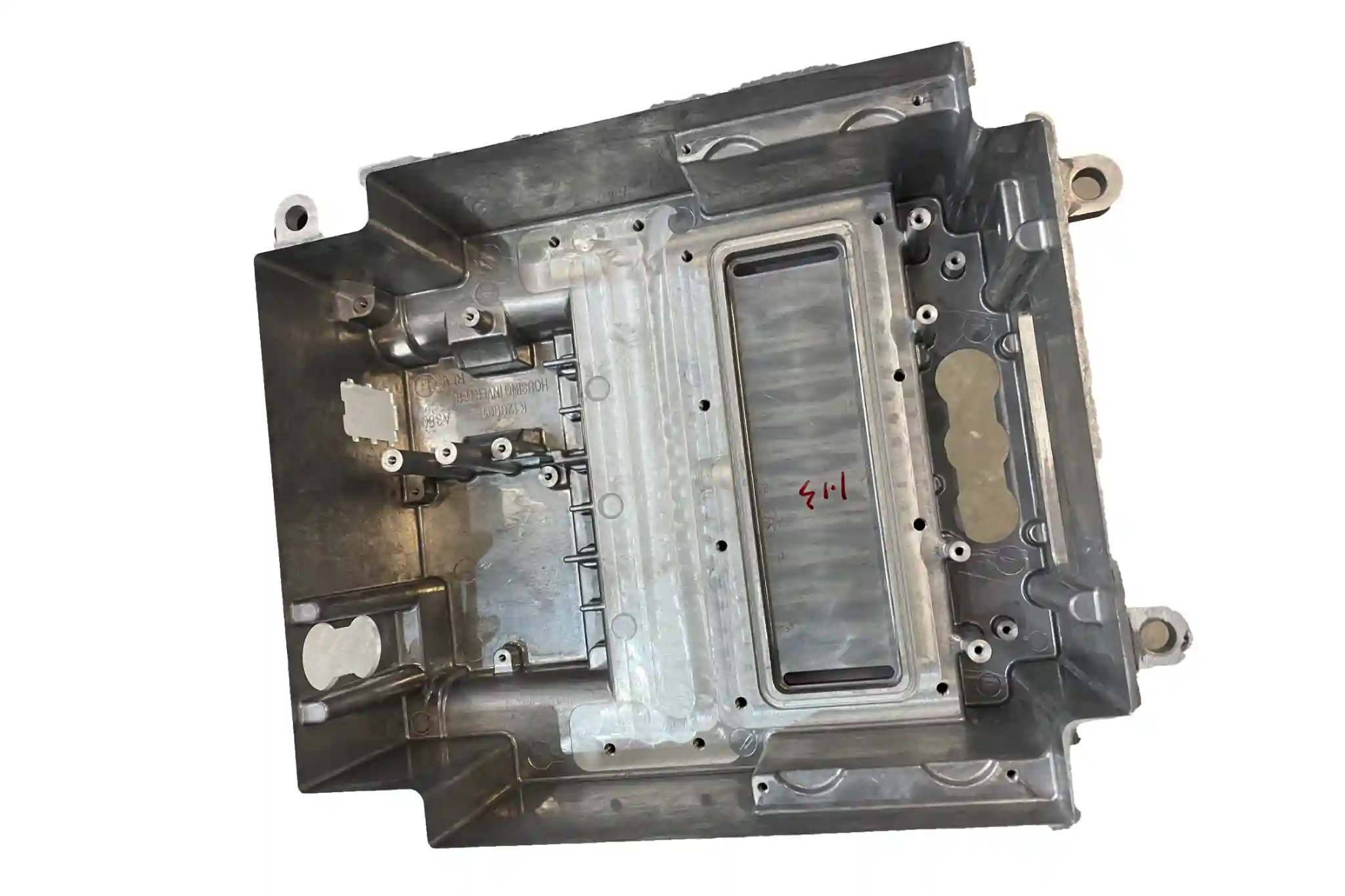
Dieses Verfahren ermöglicht die Herstellung komplexer Geometrien, wodurch Innenkanäle, Versteifungsrippen und Befestigungsstrukturen in ein einziges Bauteil integriert werden können, was den Bedarf an Nachbearbeitung verringert.
Gängige Aluminiumgusslegierungen
ADC12
Diese Legierung wird häufig im Druckgussverfahren eingesetzt, bietet eine hervorragende Fließfähigkeit und eignet sich für dünnwandige Gehäuse, Elektronikgehäuse und komplexe kleine Automobilteile.
A356
Häufig verwendet in Schwerkraft- oder Sandguss… bietet es ein ausgewogenes Verhältnis zwischen Festigkeit und Duktilität und eignet sich für Bauteile, Halterungen, Räder oder Gehäusekomponenten.
A380
Es wird häufig für großvolumige Druckgussteile verwendet und bietet ein ausgewogenes Verhältnis zwischen Festigkeit, Formstabilität und Produktionskosten, wodurch es sich für Gehäuse, Halterungen, Ventile und mechanische Baugruppen eignet.
Vorteile von Aluminiumguss
- Geometrische Komplexität: Geeignet für Teile mit komplexen Innenhohlräumen, unregelmäßigen Formen oder variablen Wandstärken.
- Near-Net-Shape: Die Abmessungen der Gussteile entsprechen weitgehend denen des Endprodukts, wodurch das Volumen von sekundäre CNC-Bearbeitung.
- Funktionsintegration: Konstruktionen können verschiedene strukturelle Merkmale in einem einzigen Bauteil vereinen und so die Montage vereinfachen.
- Chargeneffizienz: Nach der Formenentwicklung eignet sich das Verfahren für die Produktion mittlerer bis großer Stückzahlen bei geringeren Stückkosten.
- Typische Anwendungsbereiche: Pumpengehäuse, Gehäuse, Ventilkörper, Verteiler und Befestigungswinkel.
Nachteile von Aluminiumguss
- Anfangsinvestition: Erfordert die Entwicklung kundenspezifischer Formen, was mit hohen Fixkosten verbunden ist.
- Low-Volume Economics: Aufgrund der hohen Fixkosten für die Form ist das Verfahren für Prototypen oder sehr kleine Serien weniger wirtschaftlich.
- Leistungsvariabilität: Die strukturelle Konsistenz hängt von Prozessparametern wie Legierungszusammensetzung, Formtemperatur und Abkühlungsgeschwindigkeit ab.
- Sekundär-Bearbeitung: Kritische Passflächen erfordern in der Regel immer noch eine CNC-Bearbeitung, um die Präzisionsanforderungen zu erfüllen.
- Oberfläche und Belastungsgrenzen: Einige Gusslegierungen können im Vergleich zu Knetaluminium weniger gleichmäßige Eloxierergebnisse oder eine geringere Ermüdungsfestigkeit aufweisen.
Was ist der Unterschied zwischen Aluminium und Gussaluminium?
Die Hauptunterschiede ergeben sich aus dem Umformverfahren, der Komplexität der Form, der strukturellen Konsistenz, den Bearbeitungsanforderungen und den Produktionskosten.
| Merkmal | Normale Aluminium-Formen | Aluminium-Gussteile |
| Grundlegende Definition | Breite Materialkategorie | Ergebnis der Herstellung |
| Herstellungsverfahren | Walzen, Strangpressen, Schmieden, Bearbeitung | Sand-, Kokillen- oder Druckguss |
| Typische Form | Platten, Stangen, Rohre, Knüppel | Near-Net-Shape-Gießen |
| Komplexität der Form | Geeignet für einfache Profile | Geeignet für komplexe 3D-Formen/Rippen |
| Strukturelle Konsistenz | Einheitlich und vorhersehbar | Abhängig von der Erstarrungsqualität |
| Bearbeitung/Toleranz | Hohe Präzision auf mehreren Oberflächen | Nur kritische Passflächen |
| Oberfläche | Ausgezeichnete Eloxierleistung | Abhängig von der Gussqualität |
| Werkzeugkosten | Keine Form für Standardmaterial erforderlich | Kundenspezifische Formen erforderlich |
| Produktionsmaßstab | Geeignet für Prototypen/Kleinserien | Geeignet für komplexe Teile in hohen Stückzahlen |
| Typische Verwendungszwecke | Rahmen, Platten, Vorrichtungen, Muster | Gehäuse, Ventilblöcke, Ventilkörper |
Prozess Pfad
Normales Aluminium beginnt mit festem Material, wobei überschüssiges Material mechanisch entfernt wird; bei gegossenem Aluminium wird zunächst eine flüssige Legierung in eine Form gespritzt, die dann durch Hitze in Form erstarrt, was ein Flüssigmetall-Umformverfahren kennzeichnet.
Leistung
Knetaluminium wird plastisch verformt, was zu gleichmäßigen, feinen Kornstrukturen mit stabilen Ermüdungseigenschaften führt; die Leistung von Gussaluminium wird von den Prozessparametern beeinflusst und erfordert konstruktive Erwägungen für örtliche Dichteschwankungen.
Geometrische Merkmale
Gegossenes Aluminium eignet sich für komplexe 3D-Strukturen mit integrierten inneren Merkmalen, während normales Aluminium besser für flache Platten oder einfache Profile geeignet ist, da die erzwungene Bearbeitung komplexer Formen zu übermäßigen Zykluszeiten und Materialverlusten führt.
Kostenstruktur
Gegossenes Aluminium erfordert erhebliche Anfangsinvestitionen in die Form, die sich über die Produktion mittlerer bis hoher Stückzahlen amortisieren; bei normalem Aluminium entfallen die Kosten für die Form, so dass es für Prototypen oder die Produktion einfacher Geometrien wirtschaftlicher ist.
Anwendungen von Aluminium
Normales Aluminium wird häufig für strukturelle und hochpräzise Anwendungen verwendet:
- Industrielle Rahmen, Gestelle und Platten.
- Kühlkörper und Führungsschienen.
- Vorrichtungen, Prototypen und präzisionsgefertigte Bauteile.
Anwendungen von Aluminiumguss
Aluminiumguss wird häufig für Bauteile mit komplexen Innenhohlräumen oder solche verwendet, die als mechanische Gehäuse dienen:
- Pumpengehäuse und Motorgehäuse.
- Getriebegehäuse, Ventilkörper und Verteiler.
- Konstruktionshalterungen mit integrierten Befestigungspunkten und komplexer innerer Geometrie.
Wie man sich zwischen Aluminium und Aluminiumguss entscheidet
Die Wahl zwischen normalem Aluminium und Aluminiumguss hängt von der Bauteilgeometrie, dem Produktionsvolumen, den Toleranzanforderungen, der Ermüdungsbelastung, der Oberflächenbeschaffenheit und dem Budget für die Werkzeuge ab. Formteile aus normalem Aluminium eignen sich in der Regel besser für Prototypen, Kleinserien, einfache Formen, Präzisionsblöcke, Rahmen, Platten und Bauteile, die eine strenge Toleranzkontrolle über viele Oberflächen hinweg erfordern. Sie sind auch eine praktische Option, wenn eine gleichbleibende Ermüdungsfestigkeit oder ein sauberes, eloxiertes Erscheinungsbild wichtig ist.
Aluminiumguss eignet sich besser, wenn das Bauteil eine komplexe Geometrie aufweist, deren Bearbeitung aus Vollmaterial ineffizient wäre. Dazu gehören Gehäuse, Verteiler, Ventilkörper, Abdeckungen und Halterungen mit inneren Hohlräumen, Rippen, Vorsprüngen oder integrierten Befestigungselementen. Bei mittleren bis hohen Produktionsmengen kann das Gießen die Bearbeitungszeit verkürzen und Materialverschwendung reduzieren. In vielen Projekten kann ein Gussrohling zudem nur an kritischen Passflächen CNC-bearbeitet werden, wodurch Geometriefreiheit und Maßgenauigkeit in Einklang gebracht werden.
Schlussfolgerung
Gewöhnliches Aluminium wird üblicherweise in Form von Blechen, Stangen, Strangpressprofilen, Knüppeln oder bearbeiteten Werkstücken angeboten und eignet sich daher für Prototypen, einfache Konstruktionen, Anwendungen mit hohen Präzisionsanforderungen, Anwendungen mit hoher Beanspruchung sowie für optische Oberflächenveredelungen. Aluminiumguss ist eine durch Gießen geformte Aluminiumlegierung, die sich besser für komplexe Geometrien, integrierte Merkmale und die Serienfertigung eignet.
Wenn Sie ein Aluminiumteil für den Guss oder die Bearbeitung prüfen möchten, kann unser Ingenieurteam Ihre Zeichnungen begutachten, realisierbare Fertigungsverfahren vergleichen und Ihnen eine praktikable Lösung unter Berücksichtigung von Kosten, Leistung und Produktionsvolumen vorschlagen.