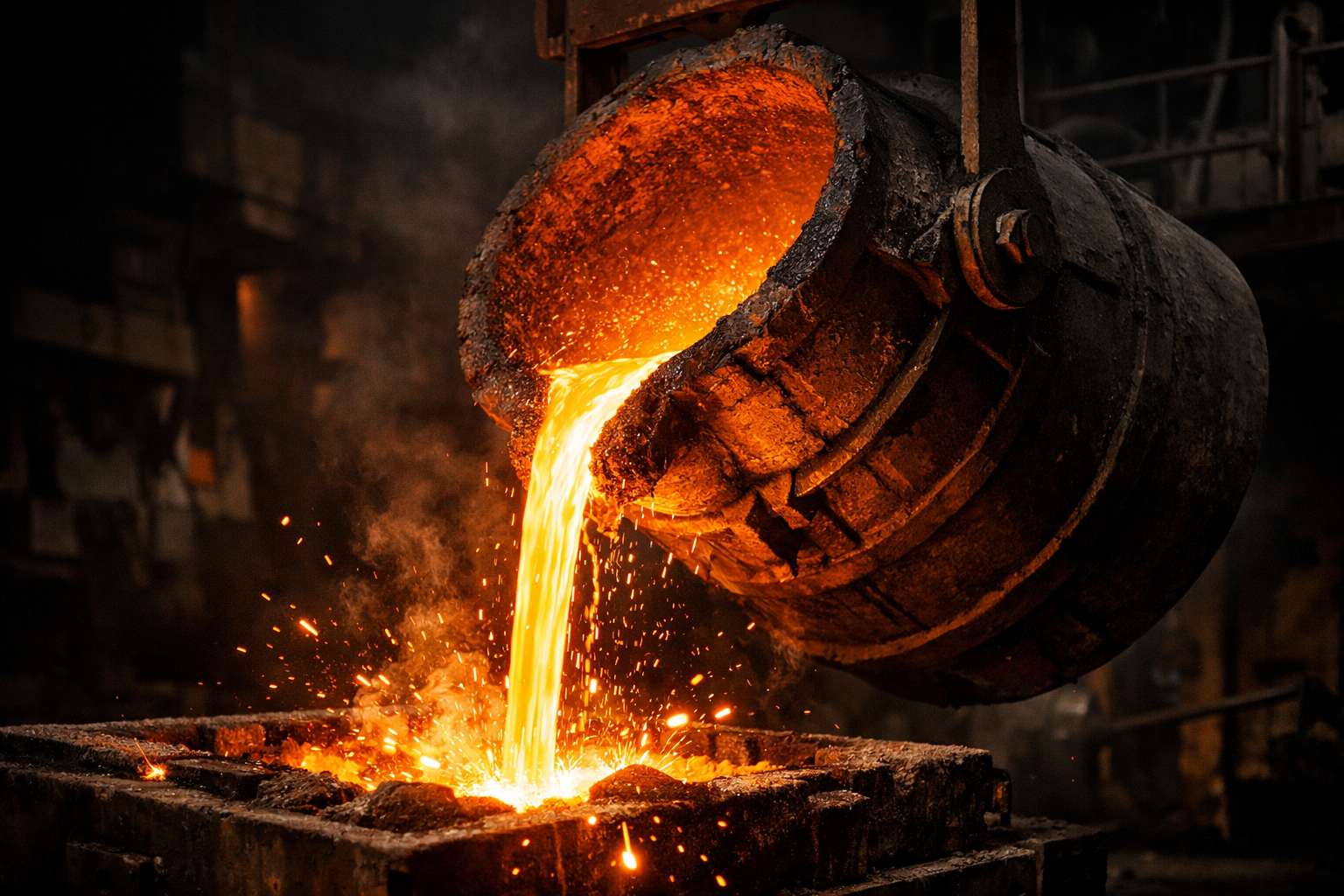



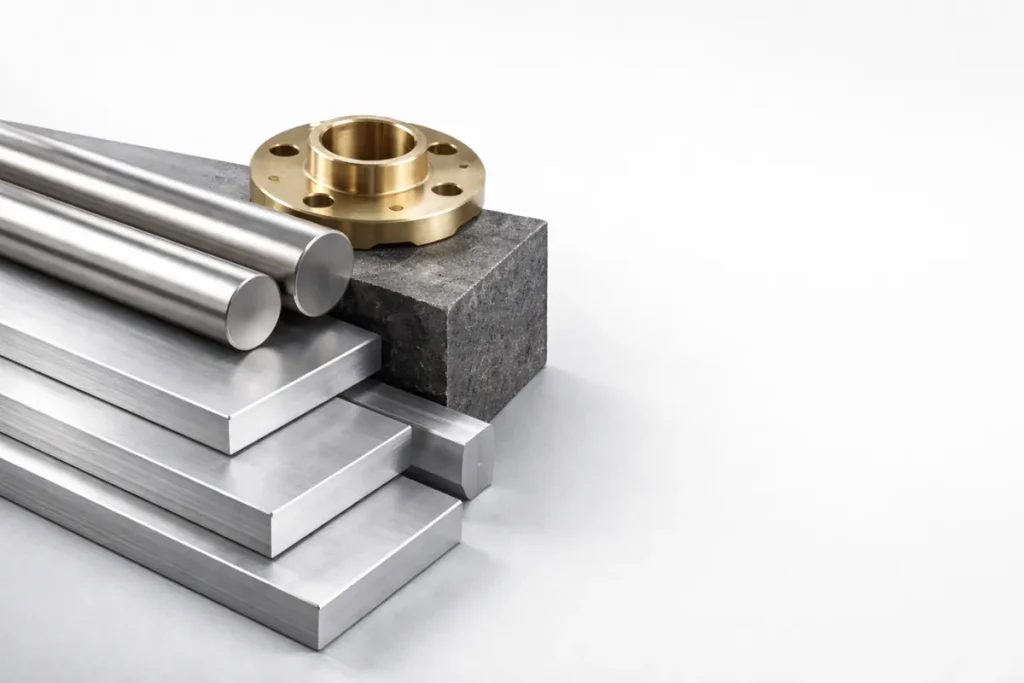
在工业制造中,选择合适的金属是铸造项目成功的关键。这一决定不仅决定了零件的最终机械性能,还直接影响可用的铸造工艺、后处理难度以及整体生产成本。本指南深入分析了常用的工业铸造金属,评估了它们的物理特性和战略应用,旨在帮助您在复杂的材料选择领域做出专业的决策。
如何定义您的工程需求
材料选择过程必须从严格定义零件的使用环境开始。工程师必须优先考虑机械载荷(例如抗拉强度和屈服强度),同时还要考虑环境因素,例如温度波动和化学腐蚀。此外,预期产量也起着决定性作用:一种适用于小批量砂型铸造原型制作的金属,由于熔点或对钢模的腐蚀性,可能不适用于大批量高压铸造,从而导致经济效益低下。
工业铸造中的主要金属材料体系
在现代制造业的飞速发展中,铸造金属的选择已从单纯追求强度转变为在轻量化、功能性和成本效益之间寻求多维度的平衡。从航空航天领域严苛的减重要求到重型机械所需的结构稳定性,不同的合金体系构成了工业生产的物理基础。
铝合金
铝是现代铸造中最常用的有色金属,因其卓越的强度重量比而备受青睐。除了轻质之外,铝合金还能自然形成一层保护性氧化层,从而提供优异的耐大气腐蚀性能。其较低的熔点(约580℃至660℃)可降低能耗,并显著延长永久模铸造工艺中的模具寿命。
-
常用牌号:A380、A356、ADC12、AlSi10Mg
-
技术优势:轻质、导热性好、流动性高
-
典型应用:汽车动力总成、航空航天结构外壳、散热器
黑色金属
当项目对结构完整性或减振性能有极高要求时,铁基金属仍然是行业标准。灰铸铁具有独特的内部石墨片层结构,能够出色地吸收机械振动。相比之下,不锈钢是高温和强腐蚀性环境的首选材料。
-
常用牌号:灰铸铁(HT250)、球墨铸铁(QT450/600)、不锈钢(304、316L)
-
技术优势:极高的结构完整性、优异的耐磨性和耐热性
-
Typical Applications: Engine blocks, machine tool bases, chemical valves, marine propulsion
Copper, Magnesium, and Zinc Alloys
These materials are typically used for specialized applications with niche requirements. Copper alloys provide superior electrical conductivity and natural lubricity; Magnesium is currently the lightest structural metal available; and Zinc alloys are the top choice for precision thin-walled components due to their superior fluidity.
-
Common Grades: Aluminum Bronze (C95800), Magnesium (AZ91D), Zinc (Zamak 3/5)
-
Technical Advantages: Electrical/thermal conductivity, ultra-lightweight, thin-wall precision
-
Typical Applications: Bearings and bushings, handheld device housings, precision electronic connectors
How Material Choice Dictates the Casting Process
A common pitfall in project planning is selecting a metal without considering its compatibility with specific casting technologies. Fluidity, melting temperature, and cooling rates directly influence which process will yield the best dimensional accuracy and surface quality.
High-Pressure Die Casting Compatibility
Die casting requires metals with high fluidity and lower melting points to ensure the molten metal can be injected into complex steel dies at high speeds without causing premature mold wear. Aluminum, Zinc, and Magnesium are the primary candidates. Zinc, in particular, allows for extremely thin walls and intricate details.
The Versatility of Investment Casting
For parts requiring extreme precision and near-net-shape surface finishes, Investment Casting (Lost Wax) is the superior choice. Since this process utilizes ceramic molds rather than steel dies, it can accommodate metals with very high melting temperatures, including various grades of stainless steel.
Casting Metals Advantages and Applications Comparison
To facilitate a clearer comparison between different material systems, the following table summarizes their core strengths and typical industrial use cases:
| Metal Category | Key Advantages | Typical Applications | Common Grades |
| Aluminum | Lightweight, Thermal, Fluidity | Auto parts, Heat sinks | A380, A356 |
| Ductile Iron | Strength/Toughness, Cost | Hydraulic valves, Suspension | QT450, QT600 |
| Stainless Steel | Corrosion, Heat, Wear resistance | Chemical valves, Marine | 304, 316L |
| Magnesium | Ultra-lightweight, Damping | Handhelds, Motorsports | AZ91D, AM60B |
| Zinc | Low melting point, Thin walls | Connectors, Hardware | Zamak 3, Zamak 5 |
| Copper Alloys | Conductivity, Anti-friction | Bearings, Marine hardware | C84400, C95800 |
How to Choose the Most Suitable Metal
To finalize your selection, you must evaluate which performance metric is the “non-negotiable” driver of your project. Below are the three most common decision-making pathways:
Mobility and Thermal Management
如果您的主要目标是提高燃油效率或控制散热,铝合金或镁合金是最佳选择。它们的高导热性使其成为散热器的理想材料,而其低密度则可显著减轻运动部件的质量,从而降低能耗。
结构可靠性和耐久性
在承受循环载荷或高压的应用场合(例如液压阀体或悬架部件),球墨铸铁在性能和成本之间实现了极佳的平衡。它兼具铸铁的可铸造性,并通过其球状石墨结构实现了与钢相媲美的强度。
在腐蚀性环境中的使用寿命
对于暴露于海洋环境或酸性化学品中的部件,不锈钢的长期耐腐蚀性是其核心考量因素。虽然初始成本较高,但由于其维护和更换频率极低,从长远来看,不锈钢通常更经济。
核心材料物理性能比较
| 物质系统 | 普通等级 | 熔点/熔程(摄氏度) | 典型线性收缩率(%) | 核心优势 |
|---|---|---|---|---|
| 铝合金 | A380、A356 | A356:555–615; A380:~538–593 | 1.0–1.3 | 轻质、高导热性、易加工性好、流动性好 |
| 镁合金 | AZ91D | 约596 | 1.1–1.5 | 超轻、减震,适用于轻型结构 |
| 球墨铸铁 | QT450、QT600 | 1150–1200 | 0.8–1.2 | 坚固耐用,性价比高,承载能力强 |
| 不锈钢 | 304、316L | 304/304L:1400–1450;316/316L:1375–1400 | 2.0–2.5 | 优异的耐腐蚀性和耐热性、耐磨性、使用寿命长 |
注: “线性收缩”是指典型的铸造设计收缩补偿(模型/蜡模补偿)。实际值会因工艺(砂型/永久模/熔模/压铸)、截面厚度、浇注/补料方式和铸造参数而异。所示数值为典型值;具体数值取决于合金规格、熔炼工艺和铸造条件。
结论
选择合适的金属需要在性能、工艺可行性和预算之间取得平衡。明确核心限制因素——无论是重量、成本还是耐腐蚀性——是确保铸造项目长期成功的关键。
如果您面临复杂的材料参数,并且不确定哪种解决方案最适合您的设计,我们的工程团队可提供深入的选型评估。无论您需要A356的热处理建议,还是316L的耐腐蚀性分析,我们都能为您量身定制最佳的制造方案。
立即联系我们的技术专家,开始针对您项目的选型评估。