


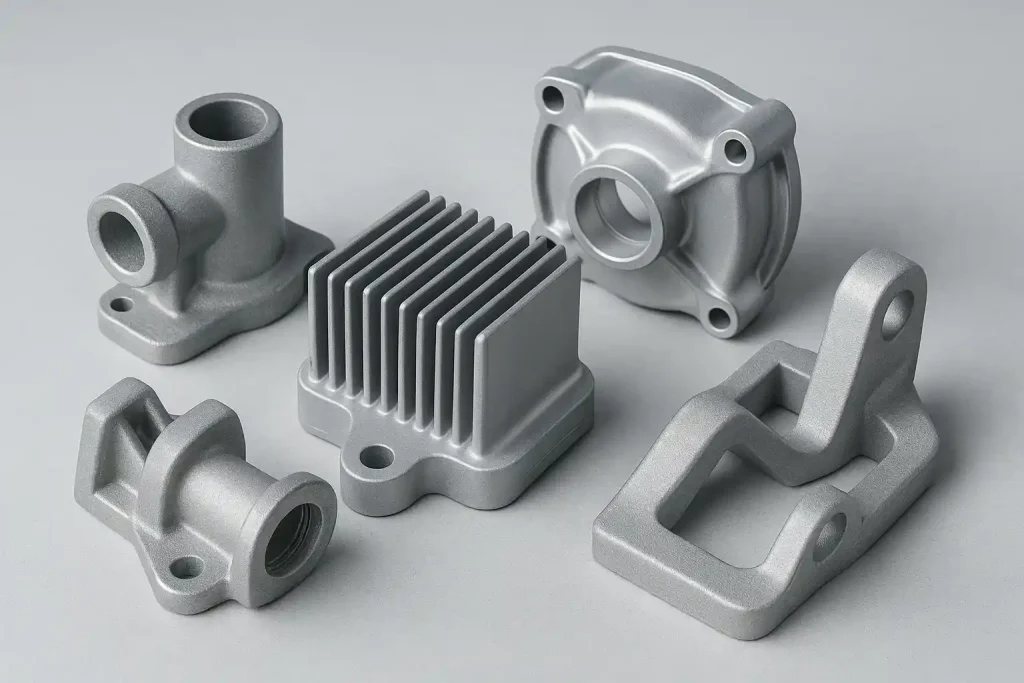
In many engineering drawings, the material section simply states “Aluminum” or even specifies wrought grades such as 6061. However, when entering the casting stage, it becomes clear that not all aluminum can be used for castings. Whether an alloy can be successfully cast depends on specific aluminum casting grades designed for mold filling, shrinkage control, and solidification behavior. Understanding these grades is fundamental for evaluating defect risks, producibility, and possible heat treatment options.
This article provides an informational overview of aluminum casting grades: how they differ from common wrought alloys like 6061/7075, how casting grades are classified into alloy systems, which grades are widely used in industry, and how naming systems vary across different standards around the world.
What Are Aluminum Casting Grades?
Aluminum casting grades are alloys formulated specifically for casting processes rather than machining or extrusion. Their compositions are designed not primarily for ultimate strength but for fluidity, shrinkage characteristics, resistance to hot cracking, and the stability of the solidified structure. These alloys typically contain silicon, copper, magnesium, or other elements that improve castability and enable heat treatment when required.
Unlike wrought aluminum, which uses familiar 5xxx/6xxx series nomenclature, casting alloys are categorized using a 1xx–9xx system. Each category denotes a distinct alloy family, such as aluminum–silicon, aluminum–copper, or aluminum–magnesium. Understanding alloy systems is more important than memorizing individual grade numbers.
How Casting Alloys Differ from Wrought Aluminum Grades
The aluminum grades most engineers frequently encounter—6061, 5052, 7075—belong to wrought aluminum alloys, meaning they are optimized for extrusion, rolling, or forging. Their alloy design focuses on plastic deformation, weldability, formability, and extrusion speed.
Casting alloys follow a different logic. Their formulations prioritize filling complex molds, controlling solidification shrinkage, managing porosity, limiting hot cracking, and interacting with mold materials. A wrought alloy that looks strong on paper may crack, shrink excessively, or trap gas when cast. Similarly, many cast alloys cannot be formed into wrought products because their compositions are unsuitable for deformation processing.
In short:
- Wrought alloys are designed to “be formed.”
- Casting alloys are designed to “be poured and solidify efficiently.”
Understanding this distinction prevents common mistakes such as attempting to cast 6061 simply because of its mechanical properties.
Advantages of Cast Aluminum Components
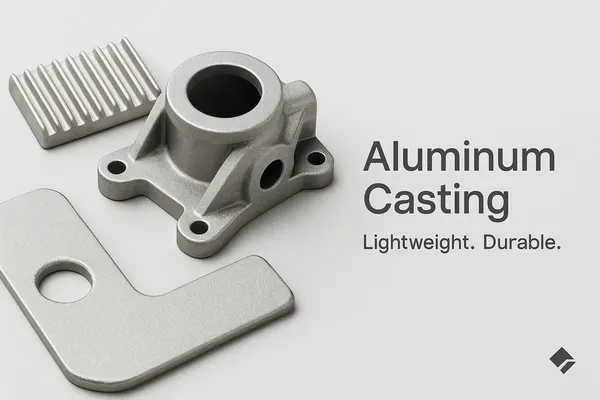
Using aluminum in casting offers distinct benefits that come from both the alloy systems and the casting process itself. Cast aluminum can form complex, lightweight geometries directly from the mold, eliminating many machining operations required for steel or forged aluminum. Features such as internal channels, thin walls, ribs, and integrated mounting points can be solidified as part of the near-net shape rather than added as separate parts.
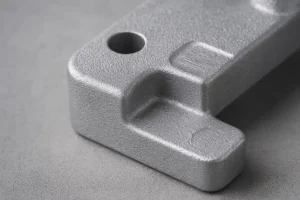
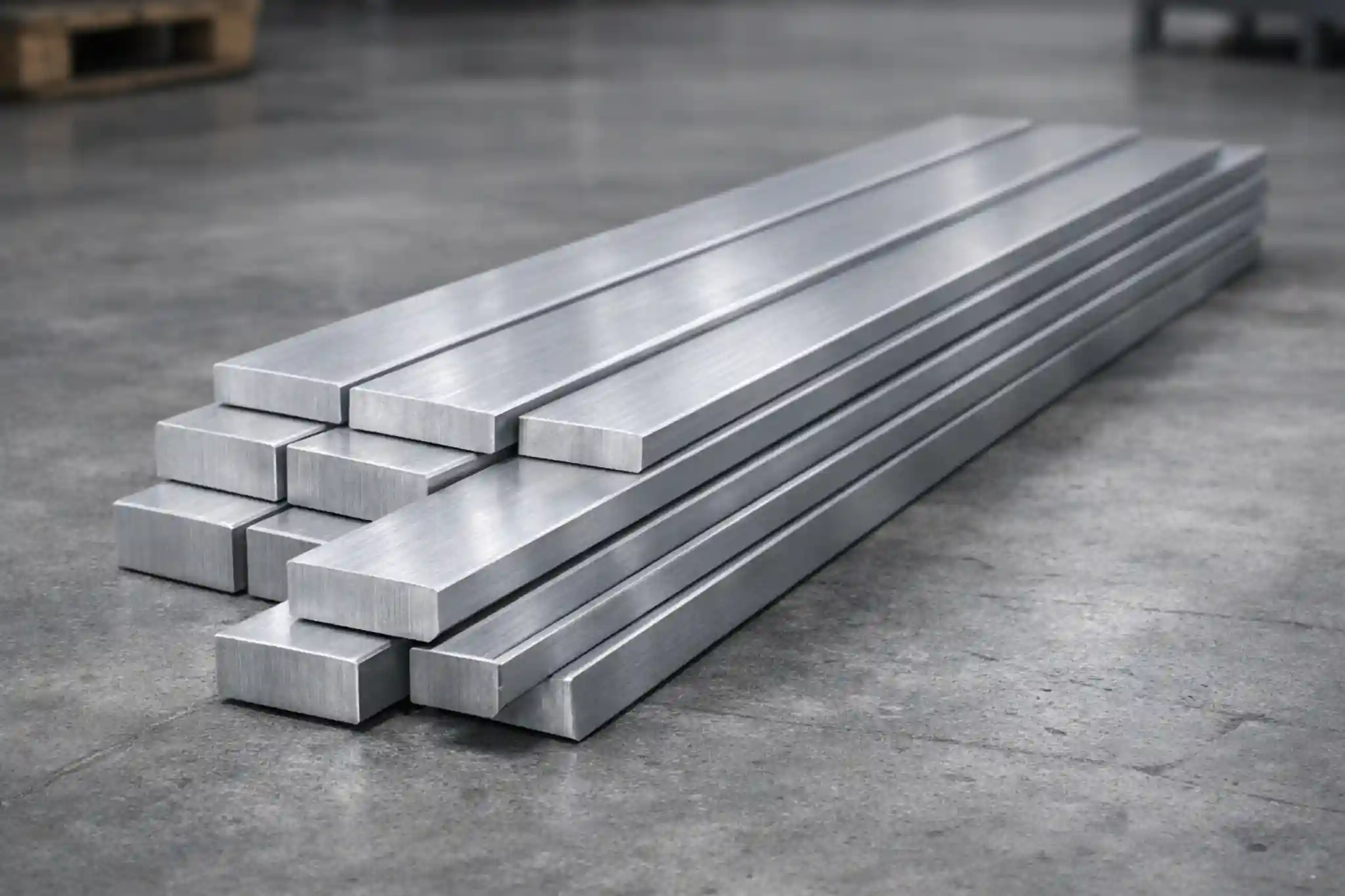
Cast aluminum surface texture close-up
Aluminum casting alloys also exhibit low solidification shrinkage, especially silicon-rich grades, reducing hot tearing and allowing tighter dimensional control in thin sections. Their natural resistance to corrosion and ability to undergo heat treatment further expand their usability in industrial parts such as housings, brackets, and structural components.
In short, aluminum casting offers a combination of light weight, near-net shape forming, dimensional stability, and corrosion resistance—attributes that are difficult to achieve in a single process using other metal systems.
Classification of Aluminum Casting Alloys (100–900 Series)
Casting aluminum alloys use 100–900 numerical categories, each representing a different alloy system. Among them, 300/400 aluminum–silicon alloys dominate industrial casting. The 200 aluminum–copper and 500 aluminum–magnesium series serve specific performance needs.
100 Series: Nearly Pure Aluminum
These alloys contain very high aluminum content with only minor additions. Although corrosion-resistant and electrically conductive, their strength is low, and castability is limited. They are used for specialized applications rather than structural components.
200 Series: Aluminum–Copper Alloys
These alloys can be significantly strengthened through heat treatment and are used in structural or load-bearing components. However, copper content reduces corrosion resistance, often requiring protective coatings for humid or chloride-rich environments. Their use typically requires experienced process control due to higher sensitivity to thermal cracking and heat treatment.
300 / 400 Series: Aluminum–Silicon Alloys
This is the most important category for aluminum casting. Silicon greatly enhances fluidity and lowers shrinkage, enabling complex thin-wall geometries. Widely used grades such as A356, A413, A380, and ADC12 belong to this family. They balance castability, cost, and mechanical properties across gravity casting, low-pressure casting, sand casting, and pressure die casting.
500 Series: Aluminum–Magnesium Alloys
These alloys offer excellent corrosion resistance, especially in marine or outdoor environments. Magnesium can contribute to moderate strengthening, but these alloys exhibit a stronger tendency toward hot cracking, making process control critical. Their casting window is narrower than aluminum–silicon systems.
700 / 800 Series: Specialized Use Alloys
Unlike the widely recognized 7xxx wrought alloys, 700/800 casting alloys see limited industrial use. They are reserved for special applications, and most conventional cast products continue to rely on aluminum–silicon, aluminum–copper, and aluminum–magnesium systems.
Common Aluminum Casting Grades in Industry
In practical engineering, only a few casting grades account for most commercial and industrial parts. Below are brief examples of widely used alloys without performance comparison.
A356 (AlSi7Mg)
A356 is widely used in gravity casting, low-pressure casting, and sand casting. Silicon improves castability, while magnesium enables T6 heat treatment. After T6, A356 achieves strong fatigue resistance and balanced strength, making it suitable for automotive suspension components, pump and valve housings, and structural machine parts.
ADC12 (A383 Family)
ADC12 is the most common die-casting alloy. Known for excellent fluidity, it fills thin and complex cavities at high speed and works well with high-volume production. It is widely used for motor housings, gearbox covers, consumer product housings, and electronic structures. ADC12 is typically not used with high-strength heat treatment due to the porosity characteristics of high-pressure die casting.
AlSi10Mg
Renowned for good dimensional stability and surface quality, AlSi10Mg is common in precision castings and metal additive manufacturing (3D printing). With appropriate heat treatment, it offers balanced strength and ductility for aerospace brackets, functional housings, and lightweight structures requiring geometric accuracy.
Relationship Between Casting Grades and Casting Processes
The same alloy may behave differently depending on the casting process. Filling speed, cooling rate, applied pressure, and mold characteristics all influence shrinkage defects, porosity, and hot cracking.
High-pressure die casting favors highly fluid aluminum–silicon alloys such as ADC12 or A380. Low-pressure and gravity casting often use A356 due to its T6 capability and more uniform microstructure. Sand casting requires alloys with lower gas sensitivity and controlled shrinkage behavior, such as A356 and AlSi10Mg.
There is no single “best alloy” for any process; instead, successful casting is achieved by matching a material’s solidification behavior with an appropriate process window.
International Naming and Designation Differences
Different countries use different naming systems for casting alloys. For the same alloy family, the U.S. may refer to A356, Europe may use EN AC-42100, while Japan may list ADC12. Although names differ, the underlying chemistry and performance ranges are usually comparable. Cross-referencing standards by chemistry, rather than by name alone, is the standard engineering practice when sourcing internationally.
When encountering unfamiliar designations, engineers should verify alloy systems, dominant elements, and applicable standards rather than assuming equivalency based purely on nomenclature.
Summary: Understanding the Systems Matters Most
Aluminum casting grades are not merely numbers but a material system built around castability, solidification behavior, and process compatibility. In practice, aluminum–silicon alloys dominate most applications, while aluminum–copper and aluminum–magnesium alloys serve specific structural or corrosion-driven needs. Understanding alloy systems and process interaction is more valuable than memorizing grade codes.
If you are evaluating a casting design or alloy option, feel free to share your drawings and let our engineering team assist you with material and process recommendations.