


Anodizing is widely used across industries for improving aluminum’s durability, corrosion resistance, and surface hardness. However, when anodizing is applied to cast aluminum instead of wrought aluminum, the results often deviate from expectations: the color becomes darker, uniformity decreases, and issues such as white spots or uneven film formation may appear.
These challenges are not due to anodizing mistakes. They originate from the inherent characteristics of cast aluminum—its alloy composition, microstructural features, porosity, and surface conditions. Understanding these factors is essential to determine whether a cast aluminum component is suitable for anodizing and what quality level is realistically achievable.
1. Can Cast Aluminum Be Anodized?
Cast aluminum can be anodized, but its performance differs significantly from wrought alloys.
Cast aluminum contains higher levels of silicon, iron, and impurity elements. Its microstructure is coarser, and porosity is more common. These traits directly affect anodic film formation, thickness uniformity, light transmission through the oxide layer, and dye absorption.
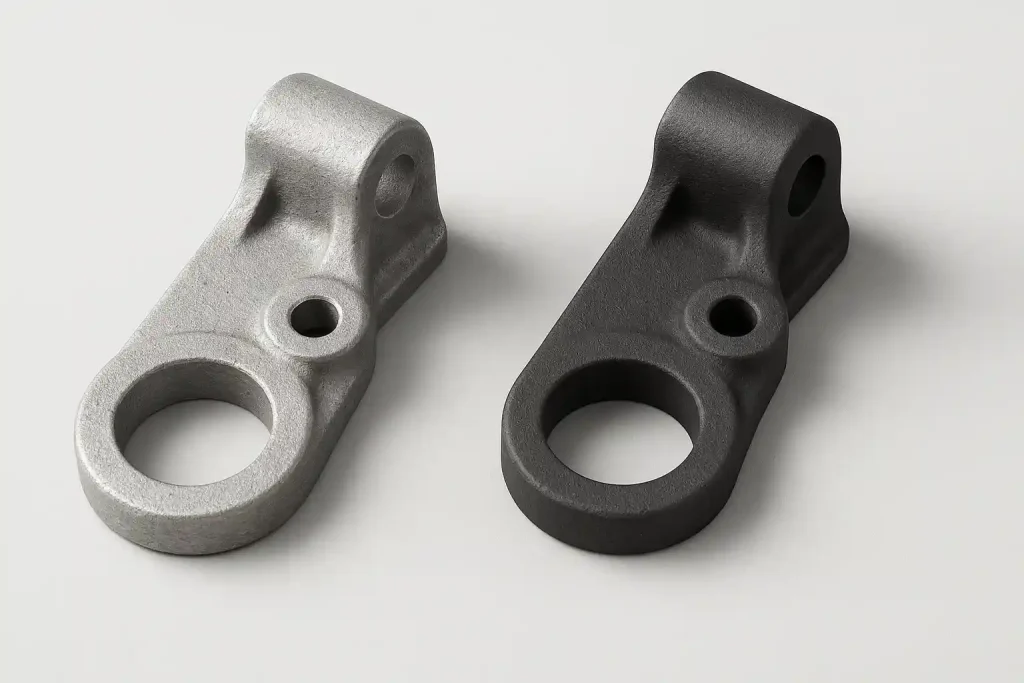
As a result, anodized cast aluminum typically shows a darker, grayer appearance, uneven color across different regions, difficulties in obtaining consistent dyed colors, and a higher chance of white-spot defects caused by porosity.
Engineering conclusion: Cast aluminum can be anodized, but its finish cannot match the optical quality of wrought aluminum.
2. How Different Cast Aluminum Alloys Respond to Anodizing
Different cast alloys behave very differently in anodizing. Silicon content and impurity levels are the primary determining factors.
Suitable Alloys: A356 / ZL101
A356 (ZL101) provides the best anodizing results among cast alloys. With moderate silicon content and relatively uniform microstructure, it forms a more transparent anodic layer. Natural gray tones appear consistent, and black anodizing is typically stable. For applications requiring both protection and appearance, A356 is the preferred option.
Moderate Performance Alloys: A319 / A413
A319 and A413 contain higher silicon levels, producing darker gray colors after anodizing. Although they still form a continuous oxide layer, they are better suited for functional anodizing rather than decorative purposes. When color uniformity is not critical, these alloys are acceptable choices.
Most Difficult Alloys: ADC12 / A380 (Die-Cast Aluminum)
Die-casting alloys such as ADC12 and A380 are the most challenging to anodize. Their high silicon, iron, and impurity levels, combined with casting porosity and a silicon-rich skin layer, limit film transparency and dye uniformity. These alloys generally achieve only dark gray to black finishes. Decorative anodizing is not feasible, though functional black anodizing remains achievable.
Engineering summary: A356 performs best; A319/A413 are workable; ADC12/A380 are limited to functional black anodizing.
3. How Casting Processes Influence Anodizing Results
Casting processes strongly affect anodizing outcomes, even when the alloy itself is appropriate.
Mold Skin Layer
Die-cast surfaces contain a dense, silicon-rich “mold skin” that resists electrolyte penetration during anodizing. If left intact, it produces patchy, shadowed, or non-uniform anodic layers. Removing this skin is one of the most decisive factors in anodizing success for cast aluminum.
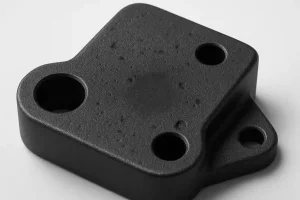
Porosity and White Spot Formation
Casting porosity absorbs electrolyte during anodizing. After sealing, these trapped fluids appear as white spots or mottled areas.Such defects are structural, not process-related, and cannot be fully corrected through anodizing adjustments. For parts requiring consistent appearance, porosity poses a significant limitation.
Surface Roughness and Optical Uniformity
Cast surfaces inherently show higher roughness than wrought materials. Because anodizing emphasizes micro-topography, the final appearance tends toward matte, with diffused light reflection. Achieving a bright or decorative finish is difficult; cast-aluminum anodizing should be approached with expectations of industrial matte finishes.
4. Engineering Requirements for Pre-Anodizing Preparation
Pre-treatment quality largely determines anodizing results. The surface must be uniform, clean, and free of barriers that prevent oxide formation.
Cleaning and Mold-Release Removal
Die-casting lubricants and oils must be thoroughly removed. Residue blocks anodic film growth, causing uncoated patches or weak film adhesion.
Removal of Mold Skin
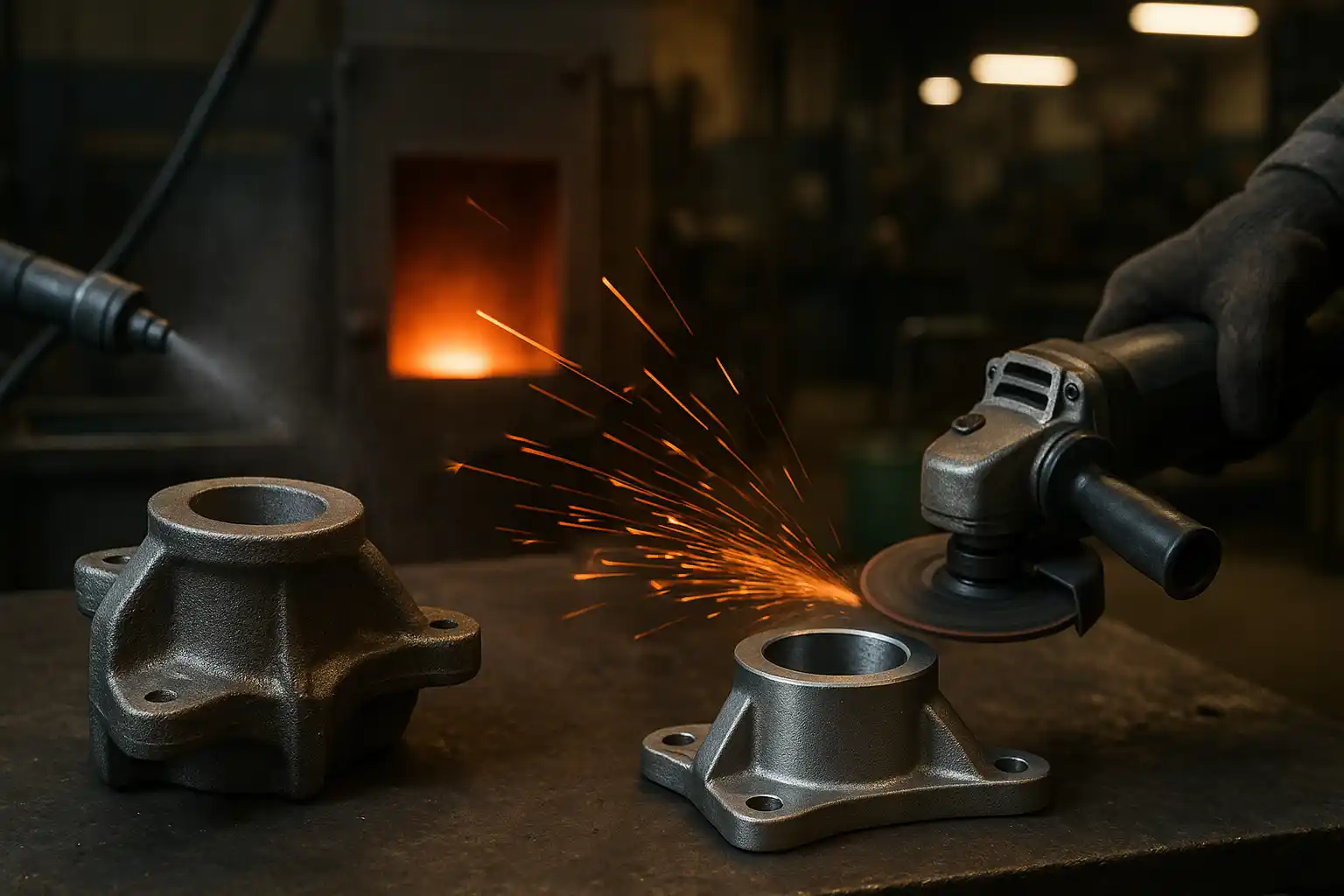
Exposing the raw aluminum substrate is essential. Light CNC machining or abrasive blasting (typically 120–180 grit) removes the silicon-rich surface layer, allowing uniform electrolyte penetration. Without proper skin removal, anodizing results will be inconsistent.
Surface Roughness Control (Ra 1.6–3.2 µm)
Castings usually cannot achieve the low Ra levels seen in wrought aluminum. Through blasting or machining, a controlled roughness range improves film uniformity and reduces granular appearance.
Desmutting for High-Silicon Alloys
High-silicon alloys require more aggressive desmutting. Insufficient desmutting causes dark streaks, spots, and inconsistent color. In many cases, desmutting is the determining step for cosmetic acceptability.
Engineering conclusion: In cast aluminum, pre-treatment quality often matters more than anodizing parameters.
5. What Anodized Cast Aluminum Can and Cannot Achieve
Realistic expectations are essential for successful application.
Achievable Industrial-Grade Results
Black anodizing is the most stable and predictable finish across nearly all cast alloys.
A356 can also achieve relatively uniform natural-gray anodizing. These finishes are suitable for applications focused on corrosion resistance and functional durability.
Unachievable or Unreliable Decorative Finishes
Bright silver, high-saturation colors (red, blue, gold), and reflective or mirror-like finishes cannot be reliably produced on cast aluminum. High silicon content scatters and absorbs light unevenly, preventing uniform dye uptake and consistent optical behavior.
Engineering judgment: Cast aluminum anodizing is functional—not decorative.
6. Frequently Asked Questions
What colors are feasible for anodized cast aluminum?
Natural gray, dark gray, and black. Colored anodizing is inconsistent.
How long does anodized cast aluminum last?
With proper sealing, the anodic layer provides long-term corrosion protection in indoor and moderate outdoor environments.
Will anodized cast aluminum corrode?
It will not rust like steel, but white corrosion or minor pitting may occur due to porosity.
Can ADC12 die-cast aluminum be anodized?
Yes, but it is generally limited to functional black anodizing.
Conclusion
Evaluating the suitability of cast aluminum for anodizing involves three key questions:
- Which alloy is used?
A356 provides the best anodizing quality; ADC12 and A380 are highly limited in optical performance. - What is the surface condition?
Mold skin, porosity, and roughness strongly influence anodizing uniformity. - What is the intended use?
If the goal is functional corrosion protection, anodizing is viable.
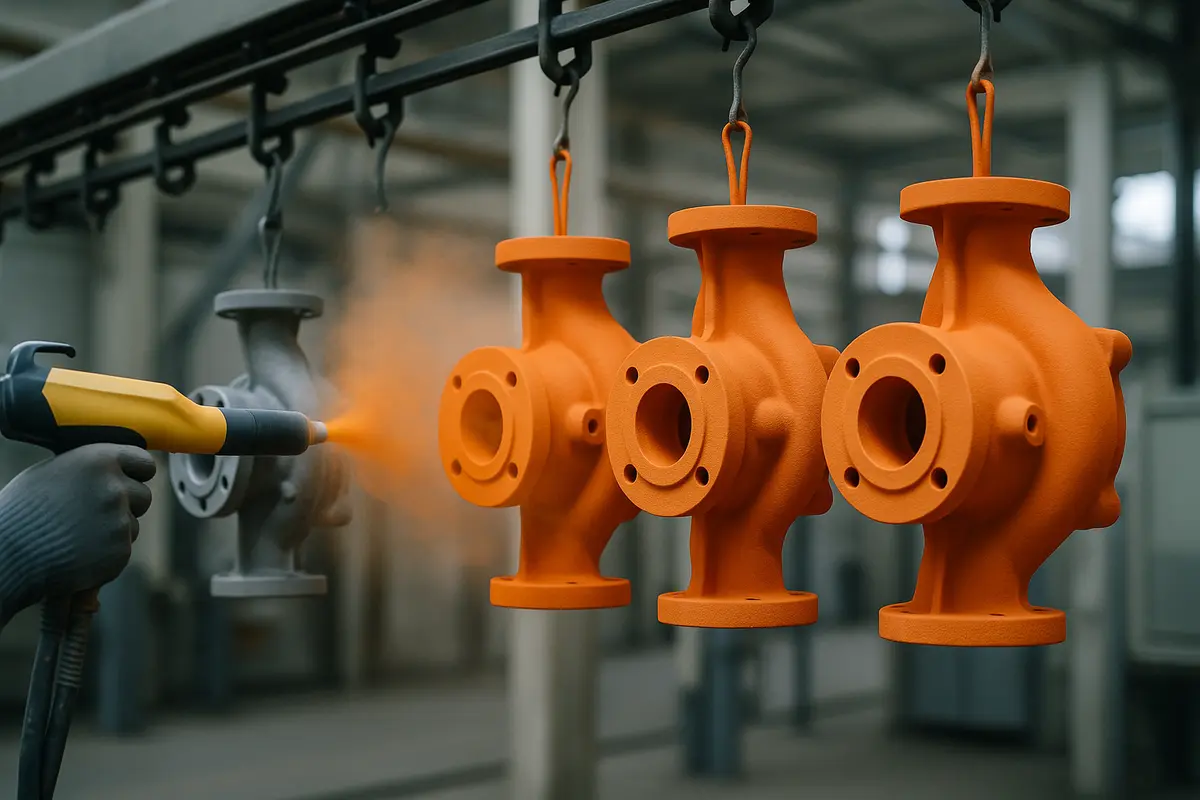
If high aesthetic uniformity is required, powder coating, electrophoretic coating, or other finishing options may be more appropriate.
For alloy-specific feasibility assessments or pre-treatment recommendations, drawings and alloy information can be reviewed to provide a tailored anodizing strategy.