


Investment casting is a high-precision manufacturing process where wax is utilized to create the pattern body, the runner system, and—where necessary—soluble wax cores. Different wax systems are engineered with specific priorities: some are optimized for intricate detail replication, while others emphasize dimensional stability, pattern assembly, or the formation of complex internal cavities. This article will explore the principles of investment casting, the classification of commonly used waxes, and how to select the appropriate material based on part requirements.
What is Investment Casting
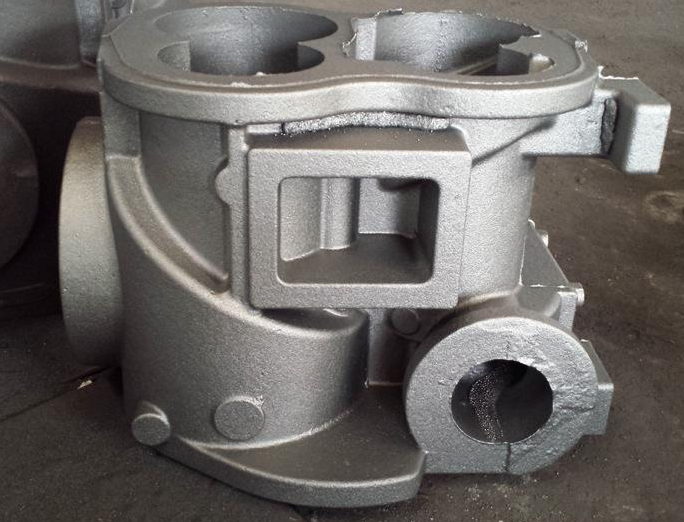
Investment casting, often referred to as lost-wax casting, is a process that involves creating a model from a meltable material and coating it with multiple layers of refractory material to form a shell. Once the shell hardens, the internal model is melted and removed by heating, resulting in a hollow cavity without a parting line. Finally, molten metal is poured into the cavity, and after cooling and solidification, the shell is removed to obtain high-precision metal parts.
The advantage of this process lies in its ability to manufacture parts with extremely complex shapes, excellent surface quality, and precise dimensions. It is widely used in aerospace, medical devices, and precision machinery.
Classification of Waxes for Investment Casting
Based on material composition and functional use, waxes in industrial production are generally classified into the following four categories:
1. Filled Waxes
Filled waxes are materials created by adding a certain percentage of solid filler particles (such as polystyrene or organic acid crystals) to a base synthetic wax.
- Characteristics: The filler particles do not participate in melting or shrinkage during the injection process, providing these waxes with extremely low shrinkage rates and high dimensional stability.
- Applications: Primarily used for manufacturing medium to large parts with strict dimensional tolerance requirements, such as gas turbine blades.
2. Unfilled Waxes
Unfilled waxes are composed of pure synthetic or natural waxes without any solid particles.
- Characteristics: They possess excellent fluidity and surface wetting properties, allowing them to replicate the finest textures of the mold surface, resulting in a very smooth finish after solidification.
- Applications: Commonly used for jewelry, medical implants, and various small precision parts requiring high surface smoothness.
3. Water-Soluble Waxes
Water-soluble wax is a specialized functional material capable of dissolving in water or weak acid solutions.
- Characteristics: It is designed specifically for creating complex internal cavities where mechanical cores cannot be easily removed.
- Applications: A soluble core is made first, and after the outer structure is formed, it is dissolved by immersion in water, leaving behind precise internal passages, such as those in hollow cooling blades.
4. Auxiliary Waxes
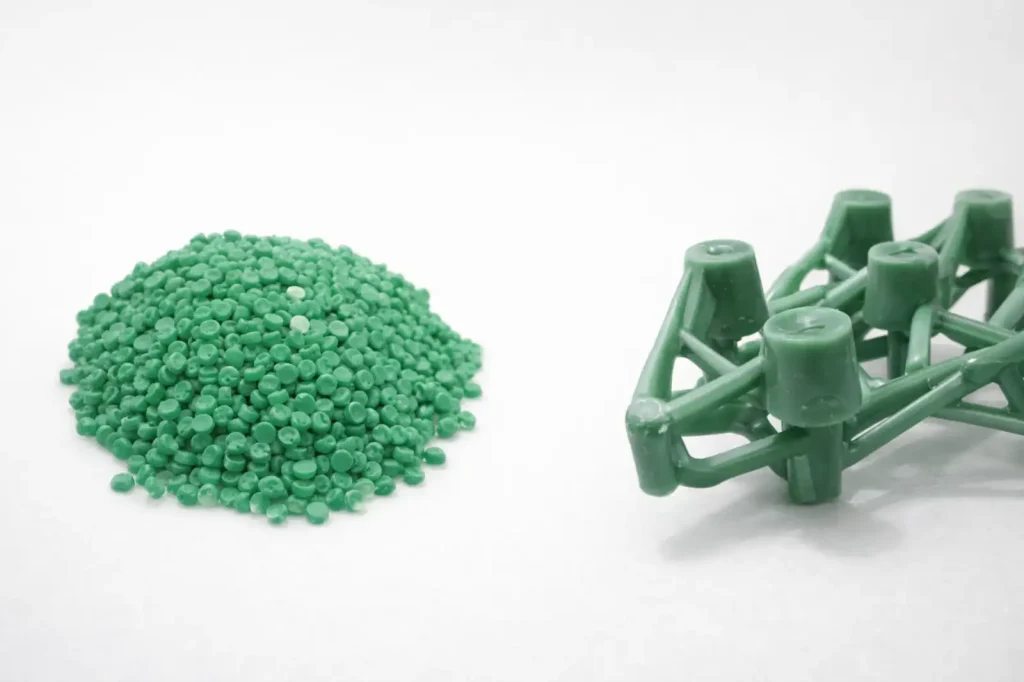
Auxiliary waxes are mainly used for the assembly and post-processing of wax patterns.
- Sticky Waxes: Featuring high adhesive strength, these are responsible for firmly connecting the individual wax patterns to the runner system (the wax tree).
- Patching Waxes: Softer in texture, these are used to repair minor surface scratches or air holes on the wax pattern to improve the final yield of the castings.
Technical Considerations for Wax Selection
In actual production, choosing a wax is more than a simple cost calculation; it is a multi-dimensional trade-off based on part design specifications. The following are the core technical considerations:
- Dimensional Tolerance and Shrinkage Control: The larger the physical dimensions of the part, the more significant the impact of phase-change shrinkage on precision during cooling. In such cases, the dimensional compensation capabilities of filled waxes should be prioritized.
- Implementation of Internal Cavities: For geometric structures with curved passages or deep holes where mechanical coring is impossible, the solubility of water-soluble wax is key to achieving near-net-shape forming.
- Surface Integrity Requirements: If a product pursues micron-level surface precision or aesthetic appeal, unfilled wax, with its superior wetting properties, can replicate the microscopic details of the mold to the greatest extent.
- Material Recycling and Economics: In large-scale production lines, the reclamation rate of materials is a critical cost indicator. Due to their pure composition, unfilled waxes involve relatively simple recycling and purification processes, which helps reduce long-term operational costs.
Conclusion
The choice of wax is the first step in the investment casting process and the foundation for the quality of the final casting. Whether it is filled wax for dimensional precision or water-soluble wax for complex internal cavities, each material has its specific application logic. By scientifically matching wax characteristics with process requirements, manufacturers can effectively optimize production workflows and enhance the overall efficiency of precision manufacturing.
The success of investment casting lies in the perfect match between material and process. For tailored wax selection recommendations based on your production requirements, please reach out for professional technical support.