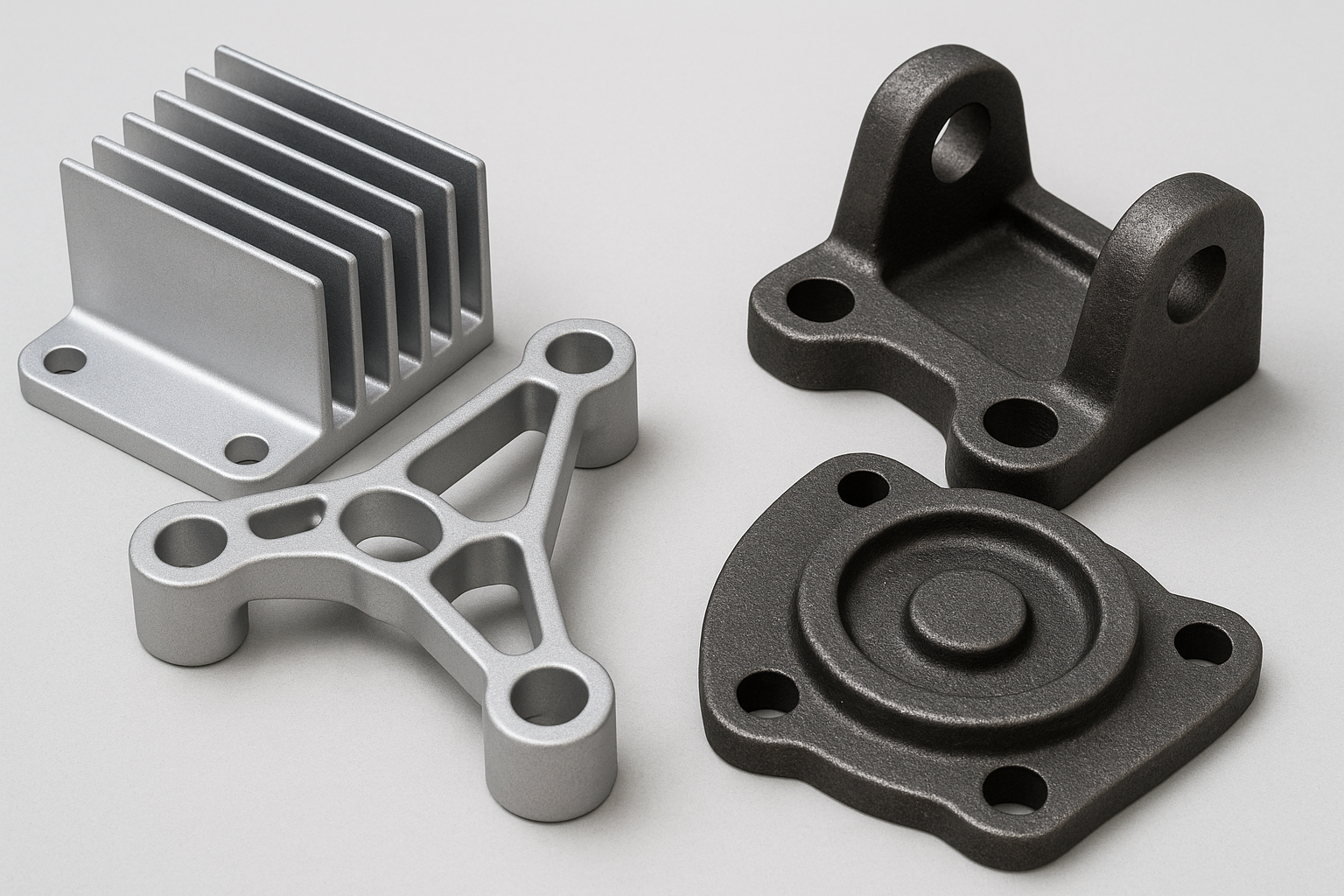



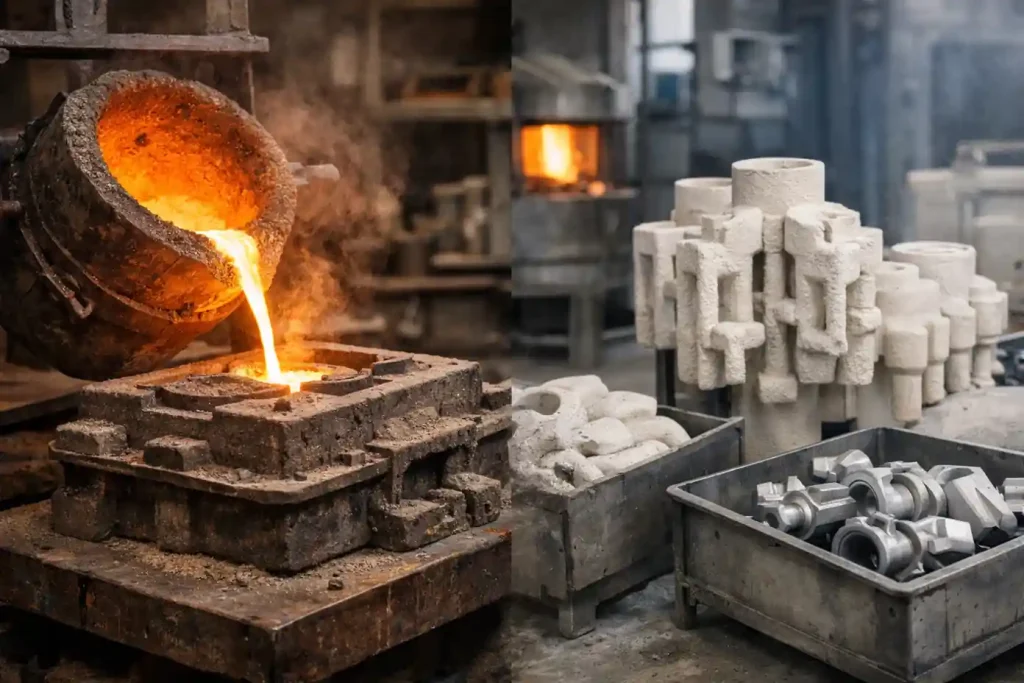
Sand casting and investment casting are both widely used metal forming processes, but they are not suited to the same types of parts. For buyers, product engineers, and project managers, the real question is usually not what a process is, but whether it fits the part’s size, geometry, material, and budget requirements. This article compares sand casting and investment casting in terms of process definition, cost, precision, size capability, and typical use cases.
What Is Sand Casting?
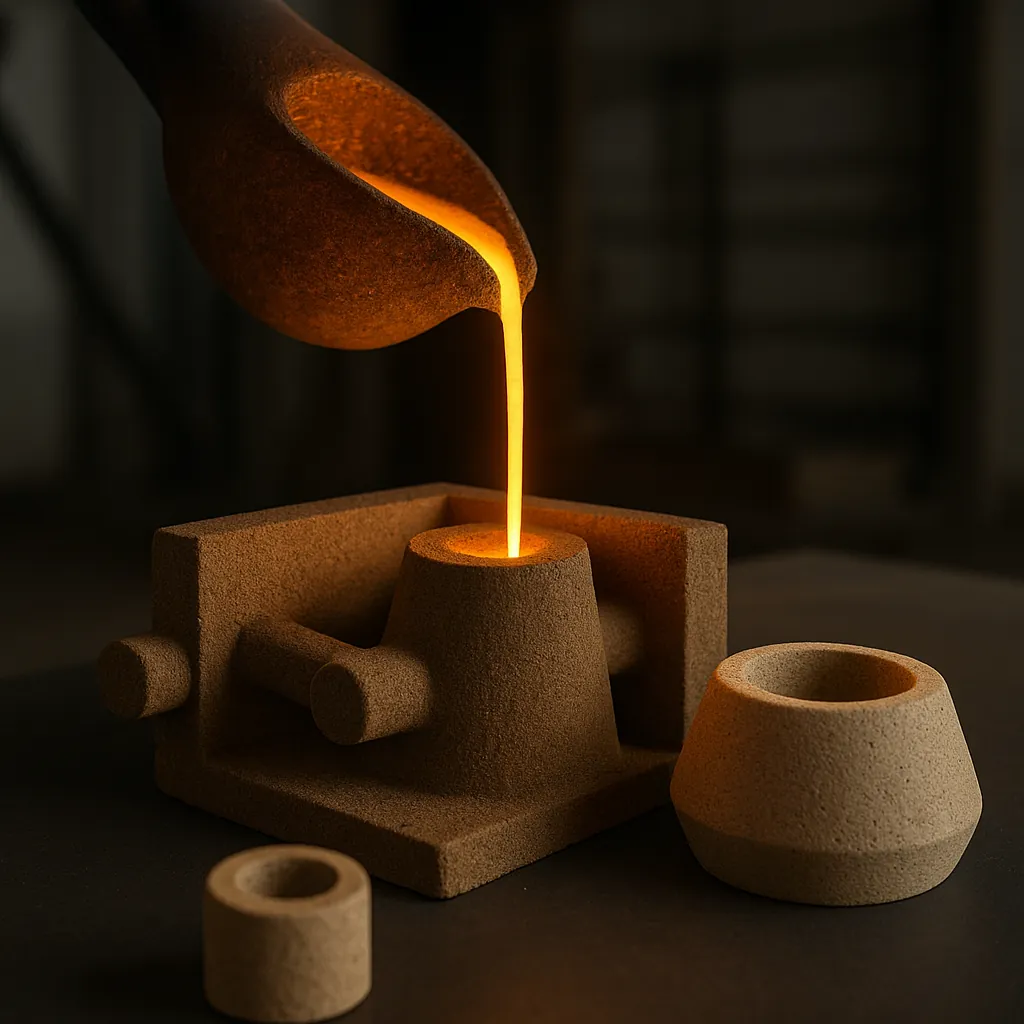
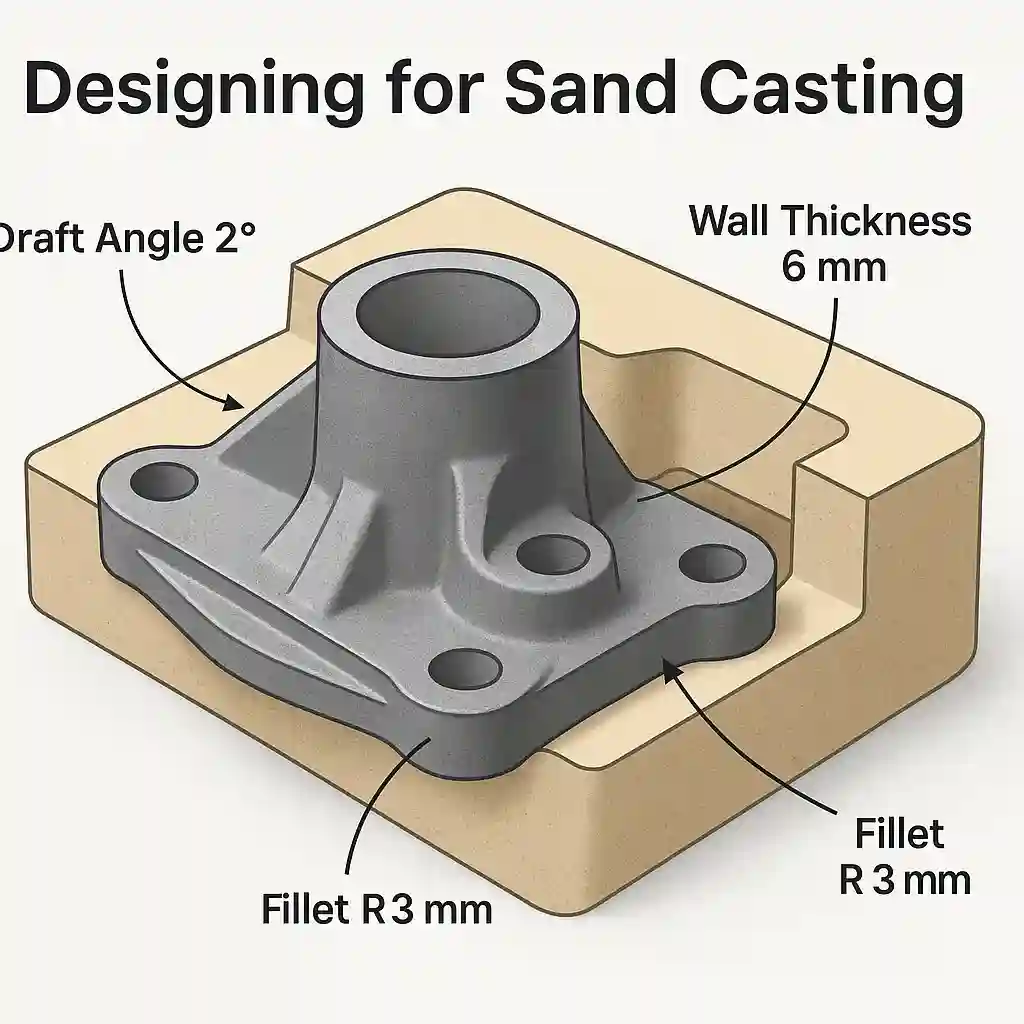
Sand casting is a process in which a mold cavity is formed using sand, and molten metal is poured into that cavity to create the part. After the metal solidifies, the sand mold is broken away, and the casting is cleaned, finished, and machined as needed.
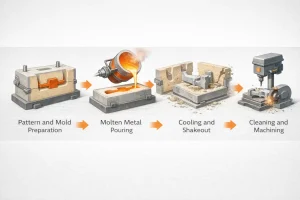
This process is widely used in industrial manufacturing and is commonly applied to cast iron, cast steel, and some non-ferrous metal components.
What Is Investment Casting?
Investment casting, also known as lost-wax casting, is a process in which a wax pattern is first produced and then coated to form a refractory shell. The wax is removed, the shell is fired, and molten metal is poured into the cavity to produce the final part.
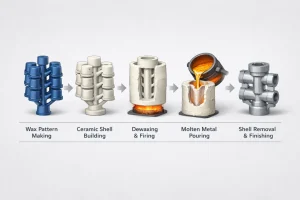
The process typically includes pattern making, shell building, dewaxing, firing, pouring, and post-casting finishing. It is often used for metal parts that require better form definition and finer detail.
Sand Casting vs. Investment Casting
Although both are casting processes, buyers and engineers usually compare them based on cost, dimensional accuracy, part size, and geometric complexity. The advantages of each process do not exist in isolation. They depend on what the part actually requires.
Cost Differences
Cost is usually one of the first factors considered when comparing sand casting and investment casting. In general, investment casting is usually more expensive than sand casting, especially in terms of upfront tooling and process cost. For large parts, relatively simple geometries, or cost-sensitive projects, sand casting is usually easier to justify from a budget standpoint.
However, this does not mean investment casting always results in a higher total manufacturing cost. For parts with complex shapes, reduced machining targets, and higher dimensional or surface requirements, investment casting can sometimes provide better overall manufacturing value.
Dimensional Accuracy and Surface Finish
Investment casting typically offers better dimensional accuracy and a finer surface finish. It is better suited to projects that want to reduce machining allowance, improve feature consistency, or achieve a cleaner as-cast surface.
By comparison, sand cast parts usually have a rougher surface and greater dimensional variation, so more machining allowance is often required. For many industrial structural parts, this is acceptable, but for components with tighter as-cast quality expectations, investment casting usually has the advantage.
Part Size and Weight Range
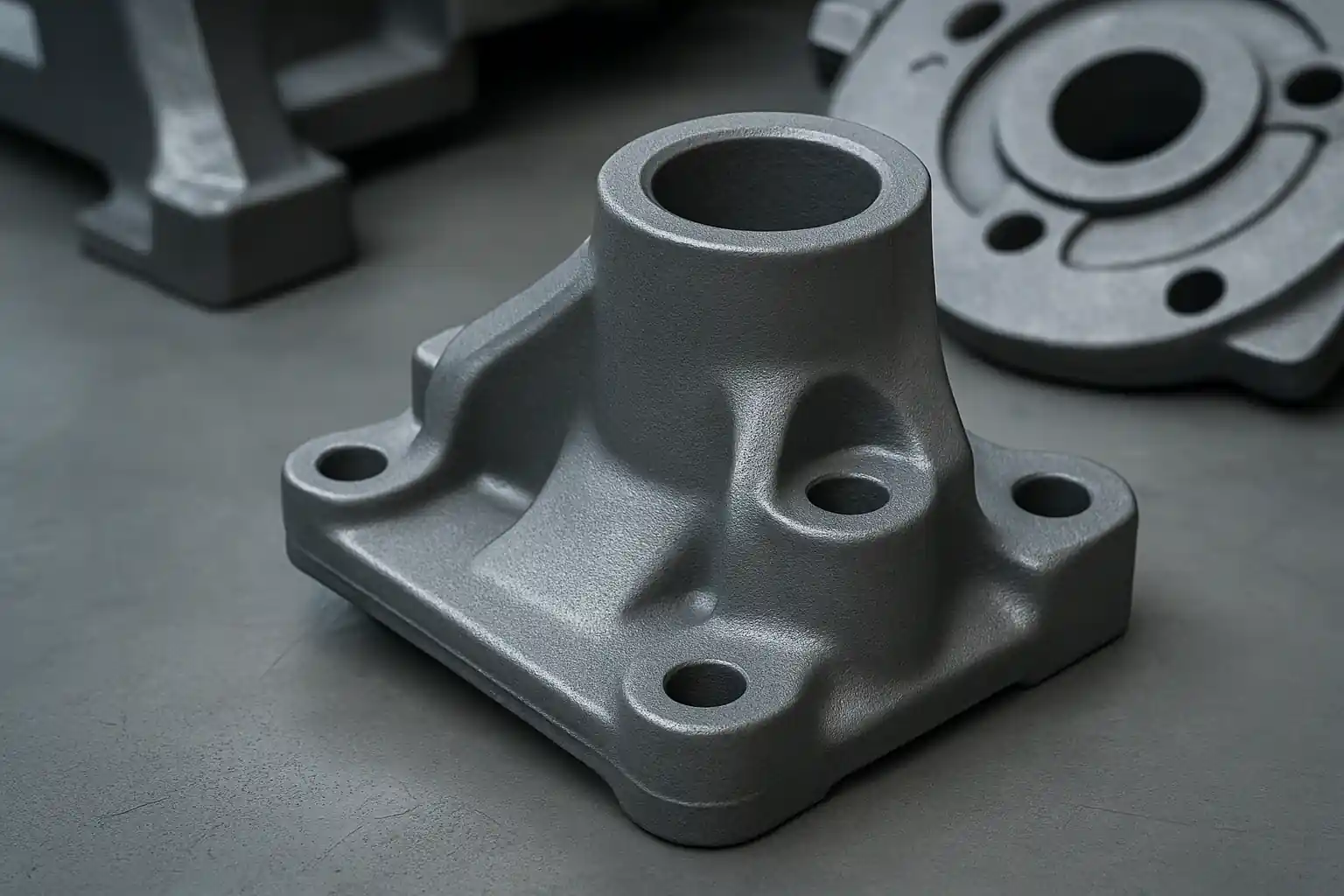
Sand casting is more commonly used for medium to large parts. Large pump bodies, valve bodies, machine housings, bases, and other heavy structural components are often produced with sand casting because the process is more practical at larger sizes.
Investment casting is generally better suited to small to medium-sized parts. As part size and weight increase, wax pattern handling, shell production, and pouring control become more difficult, and costs rise accordingly.
Ability to Handle Complex Geometry
For parts with small features, intricate contours, thinner wall sections, or shapes that are difficult to machine conventionally, investment casting usually performs better. It is closer to a near-net-shape process and can reduce follow-up cutting and finishing work.
Sand casting can also produce complex shapes, but in terms of detail definition, consistency of small features, and thin-wall capability, it is generally less capable than investment casting.
Typical Materials
Sand casting is commonly used for gray iron, ductile iron, carbon steel, and low-alloy steel components, especially in larger industrial applications and cost-sensitive projects.
Investment casting is more commonly used for stainless steel, alloy steel, and components that require better corrosion resistance, tighter tolerances, or improved surface finish.
Advantages and Limitations of Sand Casting
Sand casting is usually better suited to medium and large industrial parts with thicker sections and greater cost sensitivity. Its main strengths lie in tooling economy, size flexibility, and practical manufacturability for conventional industrial castings.
Advantages
- Lower upfront tooling cost in many cases
- Well suited to medium and large parts
- Strong fit for thick-wall and heavy structural components
- Commonly used for cast iron and cast steel parts
- Often more economical for cost-sensitive projects
Limitations
- Rougher as-cast surface
- Lower dimensional accuracy than investment casting in most cases
- More machining allowance is often required
- Less suitable for fine features and thin-wall sections
Advantages and Limitations of Investment Casting
Investment casting is usually better suited to small and medium-sized parts with complex shapes and higher dimensional and surface quality requirements. Its main advantages come from near-net-shape capability and better performance with intricate geometry.
Advantages
- Higher dimensional accuracy
- Better surface finish
- Better suited to complex contours and detailed features
- Can reduce machining allowance
- Well suited to some stainless steel and precision alloy components
Limitations
- Higher upfront cost in many cases
- More complex process flow
- Less economical for larger parts
- Shell making and process control are more demanding
- Not always the best fit for budget-sensitive projects
Conclusion
Sand casting and investment casting are not about which process is better in absolute terms, but which one is more suitable for the part. For medium to large industrial components with thicker sections and stronger cost sensitivity, sand casting is often the more practical option. For small to medium-sized parts with complex geometry, tighter tolerances, and better surface finish requirements, investment casting is often the better route.
In real projects, cost is usually one of the first factors to evaluate, but it should not be considered on its own. The right process choice depends on part size, geometry, machining requirements, material, and overall manufacturing goals.
Minhe Casting Capabilities
Minhe provides custom casting support for a wide range of industrial components. Based on part size, geometry, material requirements, and downstream machining needs, we can help evaluate practical manufacturing routes and support different casting projects with matched production solutions.
Our capabilities cover a variety of industrial casting applications, along with related machining, finishing, and quality control support. To learn more, you can continue to our Sand Casting Services page.