


Low carbon steel maintains a central position in global ferrous metal consumption due to its exceptional process adaptability and high economic efficiency. As a foundational engineering material, it achieves an optimal balance between physical structural stability and manufacturing cost control, serving as the literal skeleton of modern industry. To provide a holistic analysis of this critical material, this article will explore its composition, mechanical properties, standard grades, and engineering applications.
What is Low Carbon Steel?
Low carbon steel refers to carbon steel with a carbon content typically ranging from 0.04% to 0.25%. Due to its relatively soft texture and excellent plastic deformation capabilities, it is commonly referred to in international engineering contexts as Mild Steel.
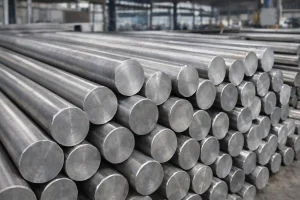
From a metallographic perspective, low carbon steel primarily consists of a large amount of Ferrit and a small amount of Perlit. Ferrite acts as a soft matrix phase providing excellent toughness, while the dispersed Pearlite serves as a strengthening phase to provide necessary tensile strength. In cast forms, this microstructural ratio enables the material to exhibit superior energy absorption capabilities when subjected to impact loads.
Properties of Low Carbon Steel
The mechanical behavior and processing characteristics of low carbon steel are dictated by the chemical nature of its low carbon content. The following properties constitute its competitive advantage as a universal material, allowing for efficient industrial manufacturing while meeting basic structural strength requirements.
Ductility and Plasticity
Low carbon steel possesses extremely high ductility, with an elongation at break significantly higher than that of medium or high carbon steels. This characteristic allows it to undergo significant stretching, thinning, or bending at room temperature without brittle fracture, making it an ideal substrate for cold stamping, deep drawing, and cold drawing processes.
Excellent Weldability
Due to the minimal carbon content, the material is less likely to form hard and brittle martensite structures during the welding thermal cycle. This significantly reduces sensitivity to cold cracking, generally eliminating the need for complex preheating or post-weld heat treatments, and is compatible with almost all major industrial welding processes.
Good Machinability
Low carbon steel generates less frictional heat against tools during machining, and the chips are easy to form and continuous. This favorable cutting behavior ensures high surface finishes and maintains a long tool life, effectively reducing the total processing cost per component.
Magnetic Characteristics
Low carbon steel exhibits excellent ferromagnetic properties with high magnetic permeability and low residual magnetism after the magnetic field is removed. Based on these physical traits, it is frequently used to manufacture relay cores, transformer enclosures, and other electromagnetic components requiring good magnetic conduction.
Specific Grades and Designations
To ensure consistency in engineering design, low carbon steel is refined into specific grades across global technical standards. The table below lists the most representative grades in current major industrial systems and the casting sector:
| Standard | Klasse | Carbon Content (Approx.) | Features and Typical Applications |
| AISI/SAE | 1005 | Below 0.06% | Extra Soft: Extremely high plasticity and permeability; used for precision electrical wire. |
| AISI/SAE | 1008 | Below 0.10% | Standard Forming: Low work-hardening tendency; used for automotive body panels. |
| AISI/SAE | 1018 | 0.15%-0.20% | Machining Grade: High dimensional accuracy in cold finish; ideal for pins and carburized parts. |
| China GB | ZG200-400 | Approx. 0.20% | Steel for Casting: Typical cast carbon steel with good castability and weldability. |
| China GB | Q235B | 0.12%-0.20% | Structural All-rounder: Balanced performance; the cornerstone of domestic construction. |
| Europe EN | S235JR | Below 0.17% | Basic Engineering: Specified impact energy; widely used in European steel structures. |
Advantages of Low Carbon Steel
In casting and manufacturing operations, the widespread use of low carbon steel (cast steel) stems from its value in balancing complex shaping with reliable mechanical performance.
- Extreme Cost-Effectiveness: Its mature smelting process and minimal alloy additions make it the most economical choice for large-scale infrastructure and heavy machinery.
- High Weldability for Repairs: If defects like sand holes or shrinkage occur during casting, the excellent weldability of low carbon steel allows for repair welding, significantly improving yield rates.
- Superior Impact Toughness: Compared to cast iron, low carbon steel castings are less prone to brittle fracture under low temperatures or impact loads, offering higher safety.
- Environmental Sustainability: As a pure magnetic iron-based material, low carbon steel and its riser scrap have clear recycling paths and extremely high melt-reuse rates.
Disadvantages of Low Carbon Steel
Despite its many advantages, the physical limitations of low carbon steel must be fully considered in harsh operating conditions or during the casting production process.
- Limited Absolute Strength: Due to low carbon content, its yield and tensile strength cannot meet the requirements of high-stress or extreme lightweighting applications.
- High Melting Point and Poor Fluidity: Low carbon steel has a higher melting point than cast iron, and its relatively weaker fluidity requires high-standard gating system designs.
- Poor Wear Resistance: The soft matrix results in low hardness, making it prone to deformation and wear in high-friction or abrasive environments.
- Low Chemical Stability: The surface lacks a dense passivation film, making it highly susceptible to oxidation and corrosion (rusting) in the presence of moisture.
Applications of Low Carbon Steel
With its all-around performance support, low carbon steel is deeply involved in various segments of modern industry and heavy machinery:
Construction and Infrastructure
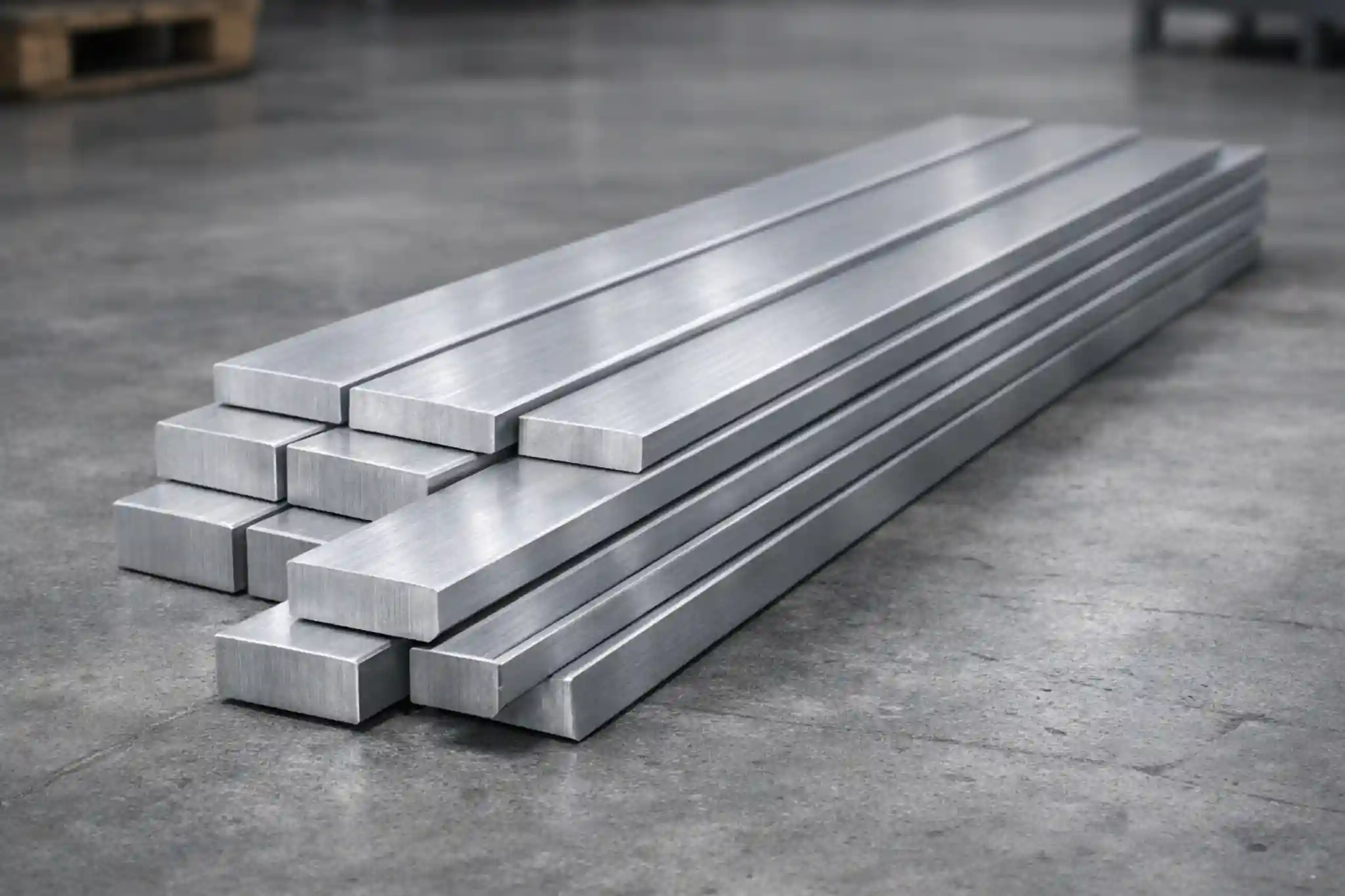
Used to produce rebar, structural shapes (I-beams/channels), welded wire mesh, and steel structure connectors.
Casting and Mechanical Parts
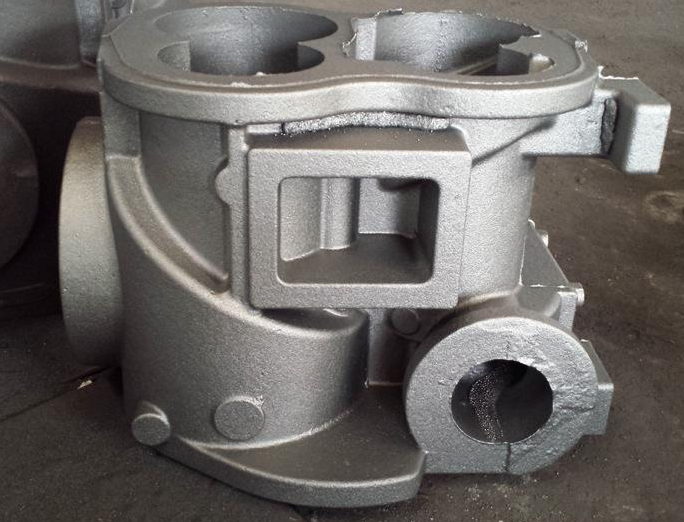
Manufacturing excavator bucket teeth, railway locomotive bolsters, side frames, valve bodies, and large press frames.
Transportation Equipment
Manufacturing automotive body stampings, ship hull plates, railway vehicle underframes, and general axle components.
Mechanical Standard Parts
Production of various grades of bolts, nuts, flat washers, dowel pins, and light-duty transmission components.
How to Identify Low Carbon Steel?
In casting sites or outside the laboratory, experienced technicians often use qualitative and semi-quantitative methods for rapid identification:
From physical characteristics, grinding on an abrasive wheel produces sparks with long streamlines that are red or light red, with very few secondary bursts. Additionally, low carbon steel feels relatively soft, with hardness readings significantly lower than medium or high carbon steels.
From microscopic and chemical perspectives, cast fractures usually appear silver-gray with obvious plastic shrinkage features. The most accurate method is using an optical emission spectrometer to analyze carbon mass fraction; a value between 0.04% and 0.25% accurately defines it.
FAQ
Is 1018 a low carbon steel?
Yes. AISI 1018 is one of the most widely used low carbon steel grades globally. It is frequently used for high-precision mechanical pins due to its excellent cold-drawn surface finish and carburizing potential.
Does low carbon steel rust easily?
Very easily. Because it lacks alloying elements for corrosion resistance, it will rapidly oxidize and form red rust when exposed to the atmosphere without surface protection like paint or galvanizing.
Is low carbon steel good or bad?
No material is inherently good or bad; it depends on the match with design requirements. In scenarios requiring high toughness, superior weldability, and low cost, it is the optimal solution; however, it is unsuitable for environments requiring extreme strength or high corrosion resistance.
What is another name for low carbon steel?
In the International Organization for Standardization and English engineering contexts, its most common informal name is Mild Steel.
Schlussfolgerung
Low carbon steel constructs the toughest foundation of modern industrial civilization by achieving an excellent balance between cost, processability, and basic mechanical strength. Whether in complex casting workshops or grand infrastructure sites, it remains an irreplaceable core material.
For material selection optimization tailored to specific operating conditions, you can contact our materials engineers for professional technical advice, and we will provide you with comprehensive technical support and customized quotation solutions as soon as possible.